Content freshness SEO is the practice of updating a page when searchers need current information. Putting a new date on a page and hoping Google notices doesn’t count.
Evergreen content SEO depends more on complete answers than on changing publication dates.
Freshness matters when the information itself goes stale, like prices and regulations. Pricing pages, regulation explainers and product comparisons are types of SEO content whose accuracy declines as details change.
Most of your other pages don’t need the same attention.
Picture two crates of strawberries on the same shelf at a greengrocer, yours from last week and a competitor’s from this morning. Yours has started to go mouldy, and a fresh price sticker doesn’t change what the customer sees, so they buy the other crate, while a sack of rice on that shelf can sit for a year and nobody minds.
In this context, content freshness SEO means treating your pages as produce on the search results shelf: replace the outdated facts, prices and broken links that are the mould, and leave the rice alone.
Plenty of businesses update pages on a fixed schedule and call it a strategy, then wonder why search positions don’t move. Ask one question instead: would this page mislead a visitor if it were a year old?
What you change should answer that question, and resetting a timestamp doesn’t.
CMAX works like a SEO content writing agency guided by performance data, so pages get updated for what people need and the calendar doesn’t decide.
Content freshness SEO matters when the query needs current information
When recency drives search position
Google’s “query deserves freshness” systems push fresher results for searches where outdated information leads to a worse decision. For prices, regulations and seasonal advice, content freshness SEO means substantive revisions instead of cosmetic date changes.
Evergreen explainers, such as what a material is or how a basic process works, need stronger coverage and clearer answers more than a newer publish date. That is the evergreen content meaning in practice: the answer stays true, so the page stays useful.
Evergreen SEO for stable topics comes down to coverage and clarity.
Local competition also shapes which pages need frequent revision. A SEO agency Gold Coast gets assessed against the Gold Coast market, and Sydney benchmarks don’t apply.
Google freshness gives recency no universal ranking advantage.
Real updates beat date changes
Google states that a sitemap’s lastmod should reflect the last significant update to a page, and it flags changing only a copyright date as insignificant. Ask what is evergreen content and the answer is a page whose information stays accurate without any date changes.
A refresh earns its place when it changes what a buyer can learn: replacing outdated numbers, adding current examples, fixing broken links, updating screenshots, improving the opening answer and strengthening internal links. Good SEO publishing treats an update as an edit to the content.
Date-bumping a stale page can damage trust when visitors find old products, expired offers or superseded rules. A page with a new date and old prices is still a page with old prices.
CMAX updates pages based on performance data
Updates guided by search data
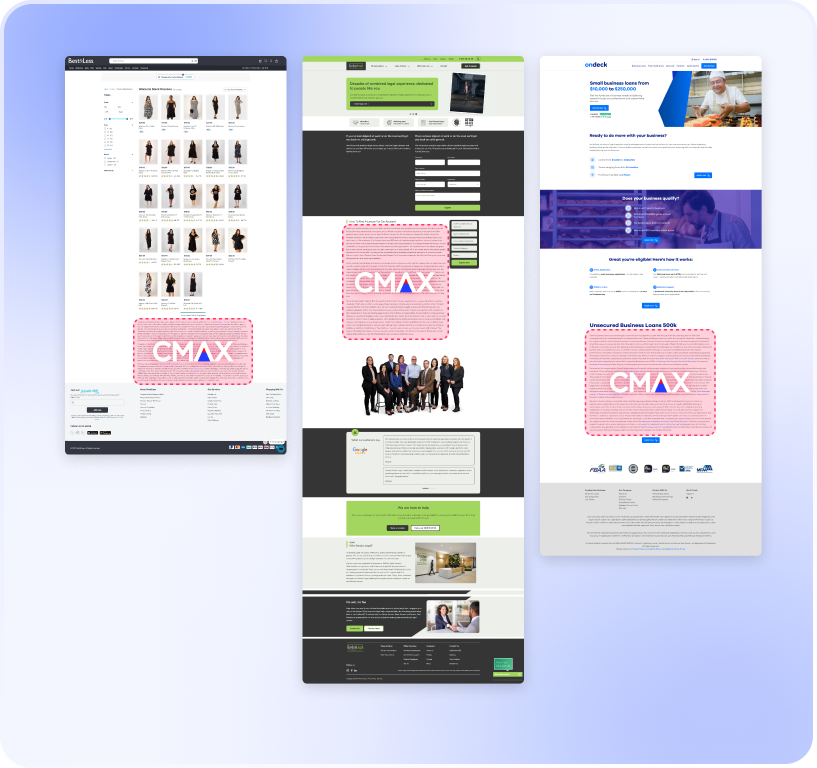
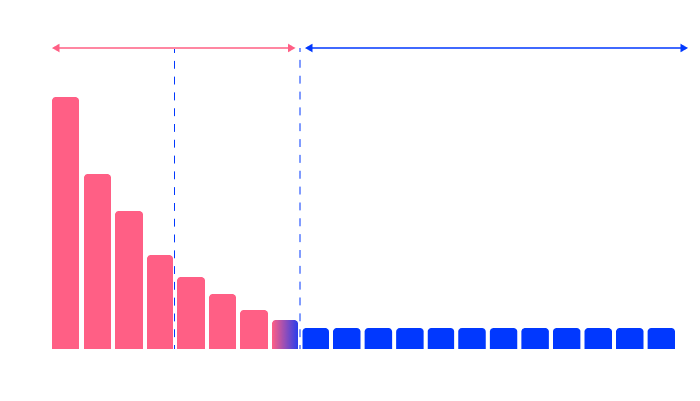
CMAX targets the 90% of search demand in the long tail. We pull Search Console data alongside page performance and query patterns to find where content freshness SEO will move the needle.
That points us to pages with rising impressions but poor clicks, and to queries that sit just outside strong visibility or that the page only partly answers.
For a specialist programme such as SEO for accountants, the work splits into three jobs. We address thin content SEO by expanding pages that miss relevant long-tail demand, refreshing pages with stale facts or examples, and leaving stable pages alone when freshness isn’t the constraint.
Safe refreshes across any CMS
CMAX is trained on human-reviewed, client-approved content, so every refresh stays inside the brand’s tone, evidence standards, legal limits and product boundaries. That matters most in categories like homewares, finance, healthcare and SaaS.
A SEO content audit finds outdated evidence, broken internal links and brand-language gaps before we update pages across any CMS. Dynamic Internal Linking and Full Body SEO update the surrounding context alongside the main copy, so a refreshed buying guide connects to relevant product, comparison and advice pages and doesn’t sit as a one-off edit.
Strong freshness combines better coverage, clearer answers and ongoing maintenance
What meaningful refreshes include
Within a broader SEO strategy, a meaningful refresh passes one test: the page is more useful after the update than before it. Content freshness SEO replaces outdated pricing, screenshots and discontinued products with information that improves the page.
Google treats updates to main content, structured data or links as significant changes. Freshness is an editing discipline tied to usefulness, and a CMS date field doesn’t measure it.
Freshness supports content momentum
Content momentum drives organic performance, because search behaviour shifts, competitors publish, products change and new long-tail searches keep appearing. A content refresh strategy stops your content from decaying.
AI engines split one question into many smaller searches, which makes that upkeep harder to manage by hand. For regulated programmes such as SEO for law firms, CMAX pairs breadth with maintenance so high-value pages stay aligned with current demand while the site keeps building useful coverage.
Frequently Asked Questions (FAQ)
How long does Google take to reflect a content update?
Google says crawling can take days or weeks, and requesting indexing in Search Console doesn’t promise a page will be included straight away. The timeline depends on how often Google crawls the site, how substantial the change is and whether the updated page is useful for the query.
CMAX defines content freshness SEO as meaningful page maintenance, measured through Search Console impressions, clicks and average position. Crawl timing and page usefulness affect when changes appear, and SEO ranking factors reach well beyond how recent an update is.
For an important page, request indexing in Search Console, confirm the sitemap shows the last significant update, and track impressions, clicks and average position before and after. Don’t judge the result from a single day’s movement.
Can a content update hurt a page’s search position?
Yes. A refresh can hurt a page’s search position if it removes detail that already matched search demand, shifts the page’s intent, weakens internal links or replaces specific copy with broad brand language.
A page ranking for “best washable linen quilt cover for hot sleepers” can lose relevance if the update turns it into a generic bedding style guide.
Volatile hiring terms show the risk. When a content update touches them, SEO for recruitment agencies can lose useful query coverage unless you keep the sections that already earn impressions and clicks, improve weak sections with current facts and stronger links, and compare Search Console queries before and after to confirm coverage grew.
A practical SEO content audit template records preserved query coverage, weakened internal links and intent changes before you publish revised copy.
When should I delete an outdated page instead of updating it?
Delete or consolidate when the topic is no longer relevant, search demand has dried up, or another page meets the intent better and can absorb the useful parts. Updating is usually the stronger commercial call when the page still holds a strong search position, backlinks, conversions or a clear role in the site’s topic coverage.
Relevance and intent sit among the most important Google ranking factors when you decide whether to update, consolidate or delete.
If you remove a page, redirect it to the closest relevant replacement and update internal links so the site stops pointing visitors to obsolete content. A redirect protects useful pathways.
Content freshness SEO still applies when the existing page meets a relevant intent.
Content Freshness SEO Starts With Meaningful Updates
The useful test is simple: does the page give someone better, more current information than it did before? A changed date over the same advice, examples and links gives them nothing.
CMAX focuses on the gap between visible updates and useful ones. CMAX is the Agentic SEO Platform, and it uses performance data to keep important pages current, expand coverage where answers are missing and maintain content momentum.
Our content strategy example is built around performance data, missing answers and ongoing maintenance across important pages.
Content freshness SEO goes beyond page-level updates, and entity SEO services address how consistently a business, its products and related concepts are defined across a site.
The quickest way to see which of your pages have gone stale is to look at where customers can’t find you. A review shows you that without asking you to buy anything.
If you’re curious as to how you’re performing on AI, book in a Missing Customer Map review with our Growth Team.
Author
Jeremy Tang
Founder and CEO of CMAX
Jeremy Tang is the Founder and CEO of CMAX. With over 2 decades of experience in business consulting and digital marketing, he has successfully driven seven startup businesses, six of which achieved $1 million in revenue from zero in less than 16 months, 5 of which grew to multi-million dollar a year ventures without any external funding. Jeremy's expertise lies in streamlining business processes through technology and leveraging digital (in particular SEO) for business growth. He resides in Australia, travels extensively, and draws inspiration from his global experiences.