Content pruning SEO decisions go wrong when teams treat low traffic as the only signal worth checking. A page pulling minimal sessions might still hold backlinks, assist conversions, or rank for a narrow query no other URL on your site covers. The real question is whether each page still carries enough search, link, or business value to justify keeping it, or whether it should be updated, merged, redirected, or removed. CMAX works with enterprise teams running exactly these audits across large catalogues, pairing pruning with scalable content coverage.
Content Pruning Is a Page-Level Value Decision
Low Traffic Is Not Enough
Content pruning SEO starts with a page-level value decision, not a traffic threshold. Traffic volume is one signal. It is not a verdict.
A page drawing minimal sessions can still earn its place on the site. It may assist conversions by appearing mid-funnel before a user reaches a higher-traffic page. It may hold backlinks that pass equity to the rest of the domain. It may rank for a narrow, commercially relevant query that a broader page will never target precisely enough. Or it may cover a product, service, or category the site still needs represented, regardless of current volume.
Deleting on traffic alone risks removing pages that are quietly doing real work. The session count in Analytics does not show conversion assists, link equity, or the long-tail queries a page holds that a stronger URL does not.
Judge Pages by Total Value
Content pruning SEO decisions get sharper when each URL is reviewed across multiple dimensions: search demand, conversion contribution, link equity, content freshness, and overlap with other live pages.
Content pruning SEO is sometimes discussed alongside AI engine optimisation, a non-standard phrase that generally refers to the same practice of adapting pages so they are understood and surfaced correctly by AI-assisted search systems.
A weak traffic signal on its own does not reveal whether a page supports rankings elsewhere through internal linking, whether it sits in a conversion path that attribution models undercount, or whether it holds the only backlinks pointing to a particular topic cluster. Reviewing one metric in isolation produces pruning decisions that look clean in a spreadsheet and cause ranking drops in practice.
The stronger approach is a URL-level audit that weighs each of these factors before any action is taken.
Four outcomes usually cover every pruning decision.
Update Pages With Remaining Demand
When a topic still carries search or business value, deletion is the wrong call. The page has earned its place; the content has not kept up.
Update when the information is outdated, when the depth no longer satisfies what searchers now expect, or when the format has drifted from what the query rewards. A product category guide written three years ago may still rank for a commercially relevant term but answer it with half the detail a competitor now provides. That gap is a content problem, not a pruning problem. Refresh the page, match the current format expectations, and the URL keeps its history and any link equity it has accumulated.
Match the Action to Replacement
For every other page, two questions determine the right outcome. Every content pruning SEO decision maps to one of four actions.
First: does another live URL already satisfy substantially the same intent? Second: does the original page hold any unique user, search, or link value worth preserving?
If a strong replacement exists and the original adds nothing distinct, a redirect to that replacement is the cleaner move. If the pages cover overlapping ground but each holds something the other does not, merge the content into the stronger URL before redirecting. If the page has no replacement and no residual value, noindex or remove it and return a 404 or 410 rather than routing it to a category page that does not answer the same need. Each outcome maps to a specific condition. Working through these two questions for every URL keeps the decision consistent and traceable. Content pruning SEO benefits from systematic decision-making, and AI driven SEO tools can help teams classify each URL by demand, overlap, and conversion contribution before assigning it an update, merge, redirect, or removal outcome.
Crawl quality improves when overlap is reduced.
Consolidate Near-Duplicate URLs
On larger sites, near-duplicate pages are a crawl efficiency problem before they’re a content problem. When several URLs target the same query cluster with only minor wording or template differences, search engines receive mixed relevance signals and must work harder to determine which page deserves to rank. Consolidating those URLs into a single, authoritative page removes that ambiguity.
The practical trigger is a cluster of pages that share substantially the same intent, answer the same user question, and differ mainly in phrasing or page structure. Content optimisation for SEO improves when near-duplicate pages are folded into one stronger URL that concentrates link equity, click history, and topical signals onto a single page rather than diluting them across several weak ones. Canonical interpretation also becomes more straightforward when fewer competing URLs exist for the same query, and the surviving page emerges as SEO optimised content with clearer authority on the topic.
Content pruning SEO principles apply beyond editorial content, and teams managing product pages SEO should audit duplicate or near-duplicate product URLs with the same intent-match and replacement-quality checks used for blog or guide pages.
Redirect to the Closest Match
Where consolidation applies, the redirect destination carries most of the value. A redirect to a broad category page or the homepage tells search engines very little about the relationship between the retired URL and its replacement. Pointing retired URLs to the strongest page that answers essentially the same need preserves backlinks, historical signals, and user expectations in one move.
The test is specificity: if a close equivalent page exists, redirect there. If no true replacement exists, a 404 or 410 is more accurate than a loose redirect that misleads both crawlers and users. Routing every retired URL to the homepage is a common shortcut that discards the equity the original page had built.
A numbered correction list makes pruning safer.
Pruning Mistakes and Safer Fixes
A safer content pruning SEO workflow replaces blanket deletion rules with URL-level checks for intent match, replacement quality, link equity, and measurable business contribution. That discipline is what separates pages worth improving from pages ready to consolidate or retire.
Six mistakes account for most pruning damage:
1. Pruning on traffic alone. A low-traffic page may still assist conversions, support internal navigation paths, rank for long-tail queries, or cover a topic no stronger page addresses. Check all four before acting.
Content pruning SEO workflows should account for pages that rank for narrow queries, since a URL dismissed as low-traffic may still be the strongest candidate for SEO longtail coverage that broader pillar pages do not adequately address.
2. Merging pages with different search intent. Combine only URLs that solve the same user problem and can be replaced by one page without weakening relevance for either query set. Forcing two distinct intents into one URL dilutes both.
3. Redirecting every retired page to a category or homepage. Point retired URLs to the closest equivalent page. When no true replacement exists, return a 404 or 410 rather than routing signals to an irrelevant destination.
4. Deleting linked pages without a backlink review. Identify backlinks first. Preserve that equity through an update, a consolidation into the best surviving URL, or a tightly matched redirect.
5. Pruning sitewide in one pass. Run changes in batches by template, intent, or directory so ranking shifts can be traced to a specific decision type rather than guessed at after the fact. Among broader SEO strategies, batch-tested pruning stands out because each change can be traced to a specific page type.
6. Treating outdated content and overlapping content as the same problem. Refresh pages that still meet demand. Consolidate pages competing for the same queries. The diagnosis drives the action.
Do Not Measure Success by Indexed URL Reduction Alone
Measuring content pruning SEO by indexed-URL reduction alone misses the point. A smaller page count is not a proxy for a healthier site. The only way to know whether a pruning programme worked is to compare clicks, conversions, revenue, and query coverage before and after the changes. If indexed URLs drop but revenue falls with them, the site became smaller, not more useful.
Content pruning SEO is ultimately validated by measurable outcomes, and tracking SEO website traffic before and after each batch of changes is the clearest way to confirm whether consolidations and removals improved or harmed overall performance.
50-Post Consolidation Measurement Example
A 50-post consolidation review illustrates why URL count is the wrong headline metric. Before any pages are merged or retired, pull a baseline across four dimensions: total clicks from organic search, number of indexed URLs, conversion volume attributed to organic, and revenue tied to those conversions.
After the consolidation, run the same four numbers. A drop in indexed URLs alongside flat or rising clicks and conversions signals the changes worked. A drop in indexed URLs alongside shrinking query coverage or falling revenue signals that pages with residual value were removed or merged into weaker replacements.
Query coverage deserves particular attention. If the consolidated site no longer ranks for terms the retired pages once held, topical gaps have opened. As LLM SEO reshapes how answers are surfaced, tracking query coverage matters as much as tracking clicks. Those gaps may not show up in revenue data immediately, but they represent demand the site has ceded.
Track these metrics at the page-group level, not just sitewide. Sitewide aggregates can mask localised losses where a specific directory or intent cluster lost ground while the rest of the site held steady.
Measured Pruning Avoids Accidental SEO Losses
Test Pruning in Batches
Pruning the entire site in a single pass makes it nearly impossible to trace a ranking shift to its cause. Run changes in batches grouped by template, intent cluster, or directory instead. When one group of pages is retired or consolidated while the rest of the site stays static, you can compare that group’s performance against the baseline and attribute movement with confidence. A drop in a product-template batch tells you something specific. A drop across 400 simultaneous changes tells you almost nothing.
Batch testing also limits exposure. If a redirect decision turns out to be wrong, the damage stays contained to one segment rather than spreading across the whole crawl.
Content pruning SEO decisions are increasingly informed by AI in search engine optimisation, which can surface crawl patterns, flag low-value URLs, and prioritise which pages deserve consolidation or removal at scale.
Pair Pruning With Coverage Growth
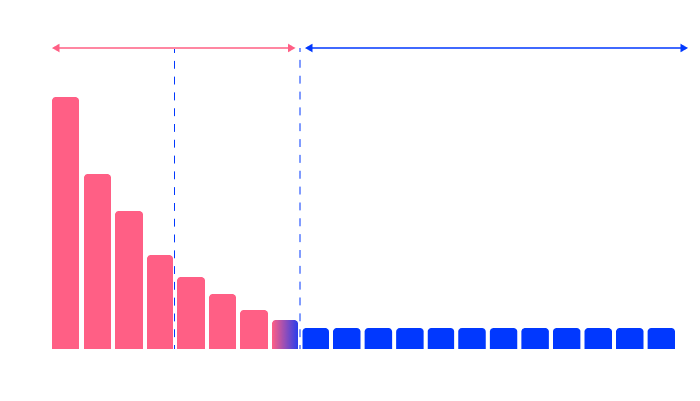
Pruning weak or overlapping URLs frees crawl budget and concentrates ranking signals, but it does not by itself expand the queries a site can win. A disciplined SEO content plan pairs removal decisions with new pages that fill uncovered demand. The sites that see the strongest lift from a pruning programme are typically the ones that simultaneously extend coverage into search demand they were not addressing before.
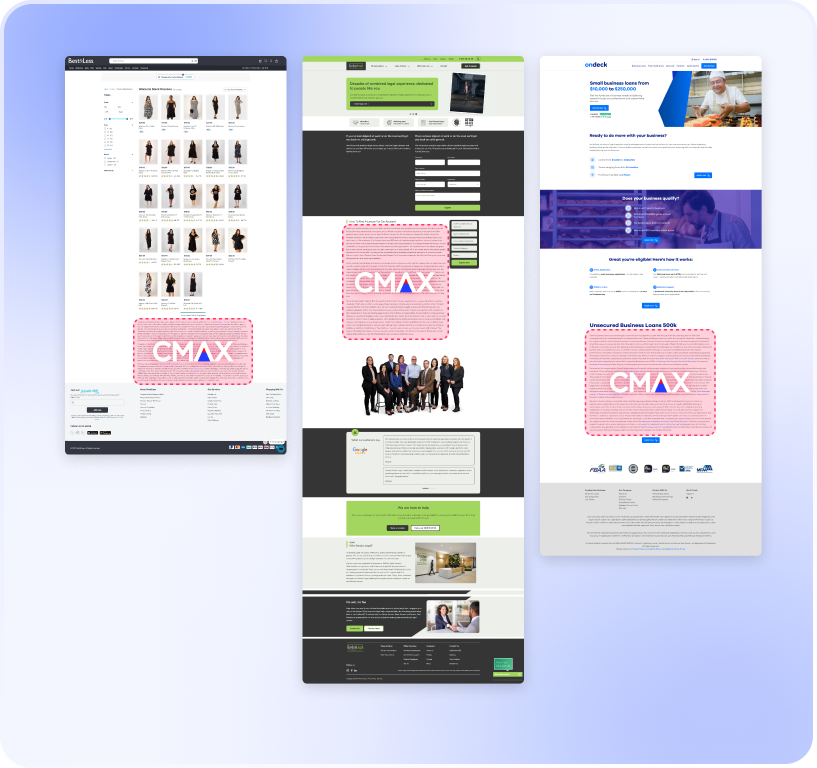
In one CMAX engagement, a B2B omnichannel hospitality retailer added 5,000 long-tail product pages alongside its consolidation work and reached $1M+ per month in incremental SEO revenue within 8 months. The pruning removed noise; the new coverage captured demand. Both moves were necessary. Retiring low-value URLs without filling the gaps they leave in topical coverage trades one problem for another.
Frequently Asked Questions (FAQ)
Does content pruning improve organic traffic?
Content pruning can improve organic traffic when it removes or consolidates pages that split relevance across overlapping URLs. The gain comes from concentrating ranking signals on fewer, stronger pages rather than diluting them across URLs that compete with each other for the same queries. Pages that still satisfy search demand and contribute to the business should be preserved and strengthened, not caught in a blanket cull.
How do I know which pages to prune?
Start with pages that show no durable value across traffic, conversions, backlinks, freshness, and topical uniqueness. Once those are identified, the action follows from two checks: does another live URL already satisfy substantially the same intent, and does the original page hold any unique value worth keeping? The answer determines whether you update, merge, redirect, noindex, or remove.
Should I delete old content that gets no traffic?
No. Zero traffic does not mean zero value. A page may still hold backlinks, support rankings on adjacent queries, satisfy low-volume but high-intent searches, or cover a topic no other page on the site addresses. Check each of those signals before any deletion decision.
How often should you do content pruning?
Content pruning works best as a recurring review tied to content age, site growth, product or inventory changes, and periods of heavy publishing. A one-off clean-up after rankings drop is harder to measure and easier to get wrong.
Why is content pruning important for SEO?
content pruning SEO reduces overlap, strengthens the best page for each intent, and concentrates crawling and ranking signals on URLs with clearer search and business value. Sites with cleaner URL sets give search engines less ambiguity to resolve and more signal to work with.
Content pruning SEO is one component of a broader visibility strategy, and practitioners exploring SEO for AI search should consider how pruned or consolidated URLs are indexed and interpreted by AI-powered search experiences.
More Pages Don’t Always Mean More Growth
CMAX is an agentic SEO platform built for scale, but scale with purpose.
Our AI-powered agents deploy and continuously update content targeting the thousands of long-tail keywords that represent over 90% of search and AI demand. We do this with just two lines of code, and teams typically see results within six weeks. But we also know that not every URL on your site deserves to stay: pages that overlap, stagnate, or dilute crawl quality can hold back the very growth our platform drives.
That’s why content pruning and programmatic content creation aren’t opposites, they’re two sides of the same strategy.
Author
Jeremy Tang
Founder and CEO of CMAX
Jeremy Tang is the Founder and CEO of CMAX. With over 2 decades of experience in business consulting and digital marketing, he has successfully driven seven startup businesses, six of which achieved $1 million in revenue from zero in less than 16 months, 5 of which grew to multi-million dollar a year ventures without any external funding. Jeremy's expertise lies in streamlining business processes through technology and leveraging digital (in particular SEO) for business growth. He resides in Australia, travels extensively, and draws inspiration from his global experiences.