To define search engine optimisation properly, you have to separate what it actually covers from what people assume it means. SEO is the work of making pages discoverable, interpretable and useful in unpaid search results. It is not paid placement, and it does not guarantee a fixed ranking. That distinction matters because it sets the boundary for what you can influence and what stays outside your control. CMAX works within that boundary, using programmatic scale to help search engines find and understand pages that match real queries.
Search engine optimisation means improving unpaid discoverability.
Finding and trusting useful pages
To define search engine optimisation is to describe how pages become discoverable in unpaid search. The work involves improving how easily people can find your pages in unpaid search results, and how clearly search engines can interpret those pages as relevant, useful and trustworthy answers to a specific query. If you have ever asked what is search engine optimisation SEO, the short answer is: it is the practice of earning visibility without paying for ad placement.
Both parts of that definition carry weight. Discoverability without clarity produces pages that get crawled but never ranked. Clarity without discoverability produces pages that answer a query well but never get seen. The definition of search engine optimisation covers both sides: making pages accessible to search engines and making their purpose explicit enough to be matched to the right searches.
When you first try to explain search engine optimisation in plain terms, it helps to explore search engine optimisation as the broader practice of making pages more discoverable, interpretable and useful in unpaid search results.
Not paid placement or guarantees
SEO does not buy sponsored placement. A page that ranks organically earns its position through relevance, authority and usefulness signals, not through a media budget.
It also does not lock in a fixed position. Rankings shift because search engines continuously weigh query intent, competing pages and a wide range of site-level and page-level signals that no single site owner fully controls. A page that ranks well today can slip if a competitor publishes a stronger answer, if search intent around a query evolves, or if a site-wide technical issue reduces crawl access.
That distinction shapes what SEO can realistically deliver: improved discoverability and interpretability for the queries a page targets, with rankings that reflect how well those signals hold up against the full competitive landscape.
SEO Works Through Crawling, Indexing and Ranking
Crawling, Indexing and Ranking
Search engines work in three distinct stages, and each one has to succeed before the next can begin.
Crawling is how a search engine accesses pages. Automated bots follow links across the web, moving from one URL to the next to discover what exists. Indexing is what happens after a page is crawled: the search engine processes the content, works out what the page is about, and stores that interpretation in its index. Ranking draws on that index to decide which stored pages best answer a specific search at a specific moment. To define search engine optimisation with precision, it is worth consulting a clear SEO definition that maps the distinct roles of crawling, indexing and ranking rather than treating them as a single process.
These are sequential dependencies. A page that is never crawled cannot be indexed. A page that is never indexed cannot rank.
Blocked Pages Stay Invisible
Technical barriers break that sequence before it starts. A bakery page blocked by robots rules, orphaned from internal links, or sitting behind other access barriers may never be crawled at all. The search engine has no record of it. That page cannot appear in results for any query, regardless of how relevant its content is or how many people are already searching for what it covers.
This is where the definition of search engine optimisation becomes practical. Improving unpaid discoverability starts with making sure key pages can actually be reached, processed and stored. A page that search engines cannot see cannot compete.
SEO Includes More Than Keywords and Content
What SEO Includes and Excludes
When you define search engine optimisation by what it includes and excludes, the scope becomes clearer. SEO covers the work that improves unpaid search visibility and how clearly search engines can interpret your pages. The boundary is organic discoverability. It does not include paying for placement or promising a fixed ranking for every target query.
What falls inside that boundary:
Crawl access and indexability. Priority pages need to be reachable and storable before anything else matters. A page search engines cannot access cannot rank.
Search-aligned headings, copy and metadata. Clarifying what a page is about, in terms a search engine can match to a recognisable query, moves a page from a vague theme to a specific answer.
Internal linking. Stronger internal links help search engines locate priority pages and place them correctly within the site’s topic structure.
Relevant external links. Earning or attracting links from related sources can reinforce trust, aid discovery and strengthen topical association.
Page usefulness. Clear answers, intuitive navigation and a format that matches what the searcher actually wants all contribute to whether a page performs in unpaid results.
Together, these search engine optimisation techniques cover the full range of work that moves a page from invisible to rankable.
Two things fall outside SEO entirely. Paying a search engine for sponsored placement belongs to paid search. Guaranteeing a number-one ranking for every target query is not something any site can deliver, because no single owner controls the full results page.
The practical implication: SEO work spans technical access, content clarity, site architecture and link signals. Treating it as a keywords-and-copy exercise leaves the structural foundations unaddressed. From a practitioner’s perspective, optimising search engines for better crawl and content signals requires attention to every layer listed above. Whether you define search engine optimisation using UK or US spelling, the scope is the same, and resources that define search engine optimisation consistently show it extends well beyond keywords to include technical access, internal linking and page usefulness.
Excludes Tactics That May Drive Visits Without Improving Unpaid Search Understanding, Such as Unrelated Display Advertising
Semantic SEO and AI
Display advertising can send traffic to a page without doing anything to help search engines find, read or interpret it. That distinction keeps the definition clean: SEO covers work that improves unpaid search understanding, and tactics that drive visits through other channels sit outside that boundary regardless of how much traffic they generate.
Semantic SEO and AI shift how topics are grouped, how content is connected across a site, and how pages can be produced at scale. Neither development rewrites the core definition. A search engine still needs to crawl a page, index it, and decide whether it best answers a specific query in unpaid results. For anyone focused on search engine optimisation Google applies its own layered approach to grouping topics and evaluating relevance, which makes semantic structure more important than ever. AI changes the speed and volume at which relevant pages can exist. The underlying question remains the same: does this page help a search engine match a real query to a useful result?
Defining search engine optimisation today increasingly involves understanding how AI search reshapes the way engines group topics and surface answers, even though the core principle of improving unpaid discoverability remains unchanged.
That consistency is critical for anyone scoping an SEO programme. New tooling and evolving algorithms are worth tracking, but they are inputs to the same problem. Pages still need to be accessible, topically clear and genuinely useful. The mechanism that connects a search to a result has not changed; the sophistication of how search engines evaluate that connection has.
SEO matters because visibility depends on understanding.
Indexing can lift impressions
Why is search engine optimisation important? The mechanism becomes concrete when you look at Search Console data before and after a technical fix. Take a bakery page that was crawlable but vague in its topic signals, no clear heading, no search-aligned copy, no explicit metadata. Once the page becomes properly indexable and explicit about what it covers, impressions for that same query set can rise without a single pound spent on paid placement. The page was always relevant; search engines simply could not confirm it. Fixing that gap is what SEO does.
Defining search engine optimisation in terms of real outcomes becomes clearer when you look at what search engine optimisation what is actually delivers, measurable impressions growth for pages that become crawlable and correctly understood by search engines.
Catalogue-scale proof point
The same logic scales. In one CMAX engagement, a B2B omnichannel hospitality retailer added 5,000 long-tail product pages and reached $1M+/month in incremental SEO revenue within 8 months. The driver was catalogue-scale discovery: thousands of specific product searches that a small set of broad category pages could never cover were now matched to explicit, indexable pages. That pattern holds across any site where specific product, service or solution searches outnumber the pages built to answer them. Broad pages capture broad queries. Specific, crawlable, topic-clear pages capture the rest. This is what it looks like when you define search engine optimisation in measurable terms.
The practical takeaway is what SEO can control.
What SEO can influence
SEO can improve whether important pages are discoverable, interpretable and useful for the queries they target. What it cannot do is directly control how those pages rank against every competing result on a given search. Rankings shift because search engines weigh query intent, competing pages and a wide range of site-level and page-level signals simultaneously. The practical implication is clear: SEO work is about removing barriers to discovery and strengthening relevance signals, not locking in a position.
The simplest way to define search engine optimisation is by what it can and cannot control. The most practical way to apply that definition is to focus on what search engine optimisation means in terms of what you can actually influence, crawl access, indexability and page clarity, rather than outcomes like rankings that no site fully controls. A qualified search engine optimisation specialist is the person best placed to identify which of those levers will have the greatest impact for a given site.
Start with crawl and index checks
Before expanding keyword targets, the first practical check is whether key pages can be crawled, indexed and correctly interpreted. A page that search engines cannot reach or process cannot compete, regardless of how well the topic matches what people are searching for. Crawl access and indexability are the floor. If those conditions are not met, improvements to headings, copy or links will not move the needle. This is often where search engine optimisation services deliver the most immediate value, by resolving technical blockers before any content work begins. Confirm that priority pages are accessible, stored and clearly associated with a recognisable query before adding new targets to the list.
Frequently Asked Questions (FAQ)
Why is SEO important to my business?
Unpaid visibility depends on whether search engines can find, interpret and trust the pages that answer the searches your customers actually make. Whether you need search engine optimisation Sydney businesses rely on or coverage in any other market, the fundamentals remain the same: if those pages are blocked, vague or poorly structured, they won’t appear, regardless of how good the product or service behind them is. SEO is the work that closes that gap.
For anyone just starting out, defining search engine optimisation can feel abstract, so a plain-English resource covering SEO what is SEO can ground the concept in everyday examples before moving on to strategy.
How to choose the right keywords?
The right keywords sit at the intersection of three things: clear relevance to what you offer, a competitive landscape your site can realistically compete in, and search intent that matches the page type. Informational queries suit guides and explainers; transactional queries suit service or product pages. Mismatching intent to page type is one of the most common reasons well-optimised pages still underperform.
How long does SEO take to show measurable results?
Speed depends on crawl access, existing site authority, competition and how much new search coverage you add. Technical fixes, resolving blocked pages or indexing errors, can surface in Search Console relatively quickly. Broader content programmes that build visibility across new query sets typically need more time to gain traction, which is one reason search engine optimisation Melbourne companies trust tends to be scoped as an ongoing engagement rather than a one-off project.
How do SEO and SEM differ, and how do they complement each other?
SEO targets unpaid visibility; SEM commonly includes paid search advertising. They work well together when paid search data identifies high-converting queries and organic pages build unpaid coverage around the same demand, reducing reliance on paid spend over time.
Can anyone explain programmatic SEO?
Programmatic SEO is the repeatable creation of many search-specific pages from a structured template and data source. It fits situations where people search for the same core offer across many products, locations or attributes, and where a small set of broad category pages leaves most of that demand uncovered. Understanding search engine optimisation cost starts with knowing what work is involved, and programmatic approaches can shift the economics significantly when large-scale page creation is required.
Two Lines of Code, Thousands of Keywords
CMAX is an agentic SEO platform built for programmatic scale.
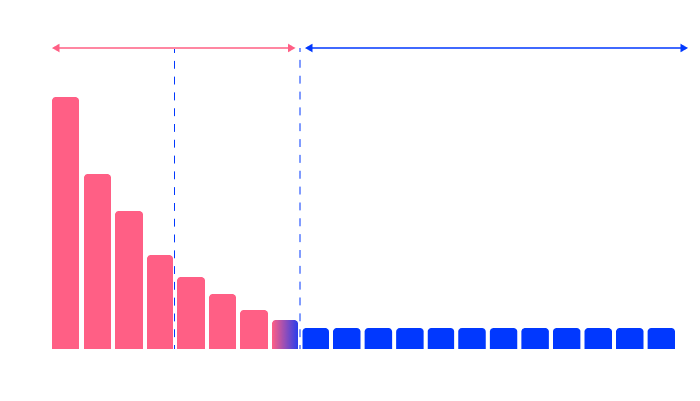
Our AI-powered agents deploy and continuously update content targeting the long-tail keywords that account for over 90% of search and AI demand, the high-intent queries most businesses never reach. CMAX does this with just two lines of code added to your site, no months-long implementation cycles. Teams start seeing measurable results within six weeks.
If you’re defining search engine optimisation for the first time or revisiting what it means at scale, CMAX is where that definition meets execution.
Author
Jeremy Tang
Founder and CEO of CMAX
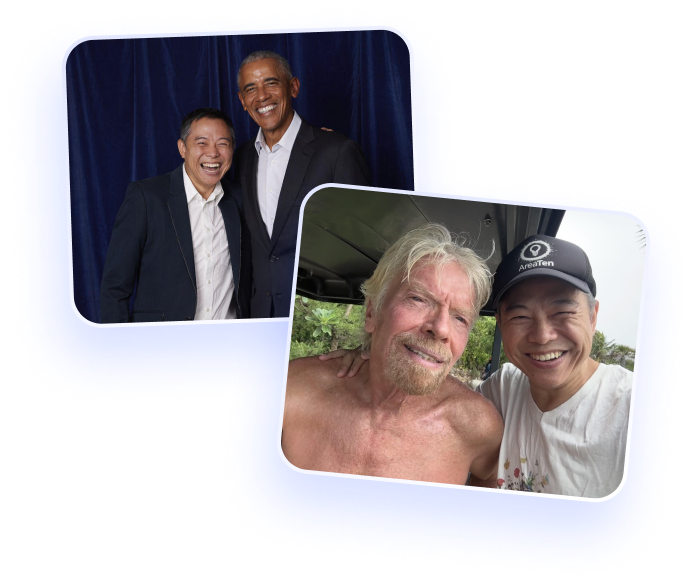
Jeremy Tang is the Founder and CEO of CMAX. With over 2 decades of experience in business consulting and digital marketing, he has successfully driven seven startup businesses, six of which achieved $1 million in revenue from zero in less than 16 months, 5 of which grew to multi-million dollar a year ventures without any external funding. Jeremy's expertise lies in streamlining business processes through technology and leveraging digital (in particular SEO) for business growth. He resides in Australia, travels extensively, and draws inspiration from his global experiences.