Finding the right enterprise SEO agency Adelaide buyers can trust usually stalls on the same problem: recommendations pile up, but pages never ship because no single owner controls the approvals, dev queues, and stakeholder sign-offs. The gap is rarely strategy. It is accountability across implementation. That makes evaluation harder, because the real test is not what an agency promises but how its process prevents the bottlenecks you have already lived through. CMAX works with enterprise teams at that intersection of technical governance, scaled content, and commercial reporting.
Enterprise SEO buyers in Adelaide need accountable ownership.
Shared ownership stalls execution
An enterprise SEO agency Adelaide engagement often stalls when strategy, implementation, and approvals are distributed across teams with no single owner who can clear dependencies. Audits sit in inboxes. CMS changes wait on developer queues. Templates need legal sign-off before they can be touched. Each handoff introduces delay, and the delays compound. The outcome is predictable: a thorough set of recommendations, and pages that never ship.
Accountability has to be structural. Adelaide’s enterprise buyers evaluating SEO services in Adelaide need one owner who can move across technical audits, content governance, stakeholder approvals, and implementation without losing the thread between them. Without that, execution speed is determined by the slowest queue in the chain.
While enterprise SEO agency Adelaide engagements typically centre on broad commercial sectors, niche professional services such as SEO for migration agents Australia illustrate the same core challenge of matching governed long-tail page structures to highly specific audience intent and regulatory context.
Adelaide access affects decision speed
An Adelaide-based working relationship changes how quickly decisions get made. When enterprise teams need stakeholder sign-off, a local point of contact can shorten the escalation path, reduce the back-and-forth that stretches across time zones, and bring direct judgement on Adelaide service areas, suburbs, and business priorities that a remote team would need to research. For buyers shortlisting a SEO agency in Adelaide, that proximity translates directly into faster turnaround on approvals.
Local access is not a ranking factor. Google does not reward proximity. What it does affect is the gap between a decision and its implementation, and in enterprise SEO, that gap is often where momentum is lost. Among SEO companies Adelaide buyers consider, a working relationship that supports faster approvals and clearer escalation paths keeps the work moving when it would otherwise stall at a stakeholder level.
Agency fit depends on enterprise process and proof.
Enterprise process prevents weak page expansion
Ask any agency shortlisted for enterprise SEO work to explain how technical audits, content governance, and stakeholder approvals connect before page production scales. That sequence is critical. Without it, the default outcome is duplicate intent across service lines, thin coverage on high-value queries, conflicting canonicals, and page sprawl that search engines deprioritise and internal teams can’t govern.
The practical test is specific: can the agency show where governance decisions are made before new pages are produced, and who owns each step when a CMS change or legal review creates a bottleneck? Scoping enterprise SEO services at this level of detail separates structured delivery from ad hoc page creation. Enterprise SEO agency Adelaide buyers who also operate in New South Wales may find it useful to review enterprise SEO services Sydney as a benchmark for how comparable agencies scope technical audits, governance frameworks, and commercial reporting in another major Australian market.
Track record needs commercial context
Rankings in isolation tell you almost nothing. A lift on low-intent terms can look strong in a monthly report while contributing zero to pipeline. Meaningful case evidence from an enterprise SEO agency Adelaide includes the starting baseline, the timeframe, the implementation scope, and a commercial outcome: qualified leads, applications, pipeline value, or revenue.
When reviewing an agency’s proof, ask what the site looked like before the engagement, what changed structurally, and what the business measured at the end. A credible enterprise SEO consultant will have those answers ready, tied to specific client engagements. If those answers aren’t available, the track record isn’t verifiable.
Reporting must separate visibility from revenue
Search Console metrics, clicks and impressions, measure visibility. They do not measure commercial impact. Useful enterprise reporting keeps those signals in separate views from lead quality, pipeline contribution, and revenue attribution.
That separation is what tells you whether growth in indexed pages is producing better business outcomes or only more top-of-funnel activity that never converts. Any enterprise SEO expert presenting monthly reports should maintain this distinction between visibility gains and revenue contribution.
A fair shortlist starts with comparable evaluation criteria.
Adelaide enterprise evaluation scorecard
Comparable criteria are what separate a credible enterprise SEO agency Adelaide from a polished pitch deck. Sales conversations are not evaluation criteria. A structured scorecard forces every agency on your shortlist to answer the same questions across six dimensions: technical depth, Adelaide relevance, reporting clarity, access requirements, delivery timelines, and exit terms.
Technical depth means asking how audits, CMS changes, and developer queues connect to actual page delivery. Adelaide relevance means asking whether the agency has worked with service areas, suburbs, and buyer segments specific to the South Australian market. Reporting clarity means asking how the agency separates Search Console visibility metrics from pipeline and revenue signals. Access requirements means asking which systems, credentials, and stakeholder approvals the agency needs before work can begin. Delivery timelines means asking what ships in the first 30, 60, and 90 days. Exit terms means asking what happens to assets, data, and governance documentation if the relationship ends.
The scorecard should also address SEO agency pricing, including fee structure, scope boundaries, and exit terms. Whether you are comparing a SEO agency Melbourne shortlist or a SEO agency Sydney roster, the same scorecard applies. Every agency answers the same six questions. Comparability is the point.
Service-line long-tail mapping process
This process reveals whether an agency can scale long-tail coverage without losing control of page ownership, internal linking, and index quality.
Start by listing every service line, buyer segment, and Adelaide or regional location the site must cover. Flag cases where the same service needs different messaging or proof by segment, because those are not the same page.
Group target queries by intent. Informational, commercial, and transactional searches should not collapse onto one URL or compete with each other for the same canonical destination.
Map each keyword cluster to a page owner, template, and canonical destination before production begins. Governance decisions made after scale introduces duplication are harder to reverse.
For an enterprise SEO agency Adelaide shortlist, any agency pitching service-line expansion should demonstrate a clear methodology for multi location SEO, including how page ownership, canonical logic, and internal linking are governed across each geographic or service variant.
Define internal linking rules between service, location, and supporting pages so authority flows through the structure and users can move from broader topics to high-intent pages without dead ends.
Set duplication controls for titles, copy blocks, and intent overlap before scaling across business units, particularly where templates repeat similar language across many locations or offerings.
Confirm Which Teams Approve Legal, Brand, Product, and Technical Changes So Publication Does Not Stall After Pages Are Drafted and Responsibility Is Not Disputed at Launch
Before any agency touches page volume, map your internal approval chain. Any Australia SEO agency proposing enterprise work should confirm which teams approve legal, brand, and technical changes before drafting begins. Legal, brand, product, and technical sign-off each carry their own timelines and gatekeepers. If those owners are not identified before drafting begins, pages sit in review queues and the agency’s output becomes a backlog rather than a live asset.
Ask directly: who approves metadata changes, who clears copy for regulated services, who owns template decisions, and who has final say on canonical structure? If the answer is “it depends,” that dependency needs to be resolved before scope is agreed, not after the first content batch lands.
Enterprise SEO agency Adelaide prospects evaluating providers across state borders may also compare how enterprise SEO services Melbourne handles stakeholder approval workflows and template governance, since the structural challenges are largely consistent across large Australian markets.
Multi-Location Retailer Prioritisation Test
A hypothetical multi-location retailer is a practical evaluation scenario worth putting to any shortlisted agency. The question is simple: where do you start?
A credible answer addresses templates, internal linking, canonical logic, and service-line ownership first. Page volume comes after governance is in place. If the agency leads with content output, that sequencing tells you something specific: it prioritises delivery metrics over structural integrity, which at enterprise scale means duplicated intent, conflicting canonicals, and index quality problems that compound with every new page.
The prioritisation answer is a buying signal. It reveals whether the agency has run enterprise programmes before or is applying mid-market habits to a larger brief. That clarity is the minimum standard any enterprise SEO agency Adelaide should meet before pages go live.
The right next step is a scoped, evidence-backed review.
Enterprise proof by shared mechanism
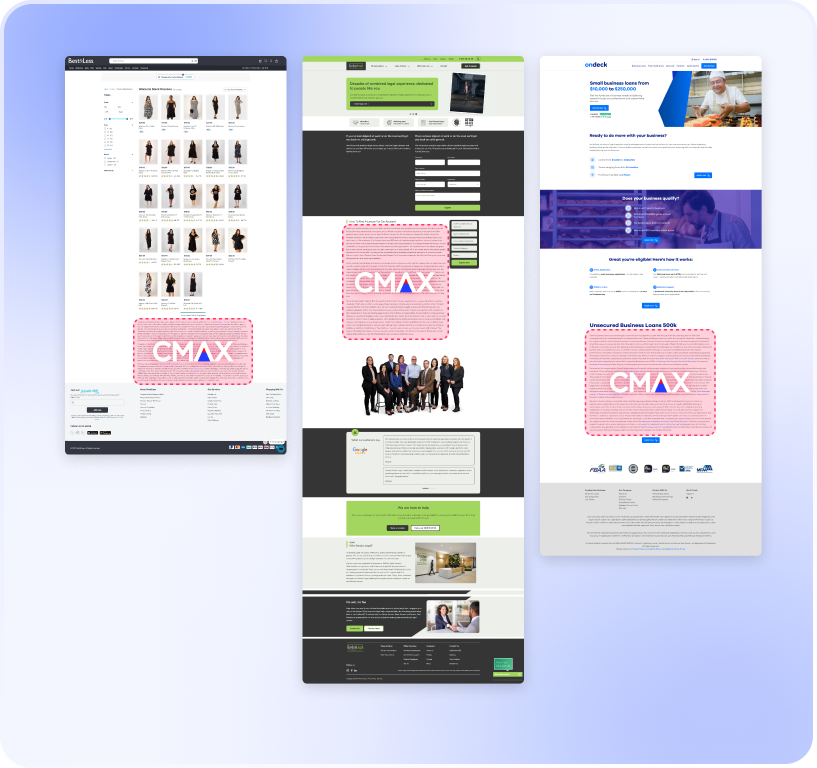
The mechanism matters as much as the number. Based on CMAX’s client reporting, in one CMAX engagement, a B2B omnichannel hospitality retailer with 27 locations added 5,000 long-tail product pages and reached $1M+/month in incremental SEO revenue within 8 months. The driver was catalogue-scale long-tail expansion: governed page production mapped to product queries across locations, with internal linking and index quality maintained throughout.
That same mechanism applies to any enterprise site that needs coverage across large catalogues, service variants, or location combinations. A leading SEO agency demonstrates this with baselines, timeframes, and commercial results. The question to ask any agency is whether their process can replicate that structure for your site, or whether they are proposing content volume without the governance that keeps it from collapsing into duplication and thin coverage.
Scope should be defined before commitment
A credible proposal names milestones, required accesses, reporting methodology, decision owners, and realistic timing before any agreement is signed. Both sides need that clarity to judge delivery risk accurately.
When scoping a proposal with an enterprise SEO agency Adelaide, organisations with a strong technology or innovation focus may also explore AI SEO services Melbourne as a reference point for how AI-assisted platforms approach catalogue-scale page generation and index quality monitoring.
It should also be explicit about dependency: what the agency owns, what the in-house team owns, and what cannot move without developer access or stakeholder sign-off. A proposal that glosses over those dependencies is not protecting you from a slow start; it is deferring the conversation until it becomes a problem. Ask for it in writing before the engagement begins.
Frequently Asked Questions (FAQ)
How do you perform keyword research for an enterprise website?
Enterprise keyword research starts by mapping service lines, locations, audience segments, and search intent. The goal is to identify gaps that deserve their own governed page type rather than forcing unlike queries onto a single URL. The useful output is a page plan that shows ownership, intent, and template fit, not a keyword list alone.
Is Enterprise SEO necessary?
Enterprise SEO is usually necessary when a site has many products, services, locations, stakeholders, or templates. Scale increases the chance of duplicated intent, approval bottlenecks, and reporting that hides commercial impact. The threshold is organisational and structural complexity, not brand size alone.
Enterprise SEO agency Adelaide evaluations increasingly include questions about AI in search engine optimisation, particularly how algorithm shifts driven by machine learning affect crawl prioritisation and content governance at scale.
What is the role of automation in Enterprise SEO?
Automation helps enterprise teams generate, update, and monitor large page sets more consistently, especially where repeated structures exist across products, locations, or service variants. It still needs governance around templates, approvals, internal linking, and index quality, otherwise automation scales existing mistakes rather than fixing them.
What is the purpose of an SEO-friendly CMS?
An SEO-friendly CMS makes it easier to control metadata, headings, canonicals, redirects, schema, and template rules without relying on developers for every routine change. For enterprise teams, the practical benefit is faster implementation and fewer technical bottlenecks between recommendation and release.
When assessing an enterprise SEO agency Adelaide, it is worth asking whether their methodology accounts for SEO for AI search, given that AI-generated answer surfaces are reshaping how enterprise content earns visibility beyond traditional blue-link results.
How can local SEO help businesses in Adelaide attract more customers?
An enterprise SEO agency Adelaide can align landing pages, internal links, and business information with suburb-level search behaviour. Local SEO helps Adelaide businesses capture demand from suburb, service, and near-me searches by matching these assets with the way people search in specific areas. It matters most when location modifies intent, for example, when users want a nearby provider, a local service area, or a suburb-specific offering.
Most Enterprise SEO Fails at Scale, Not Strategy
CMAX is an agentic SEO platform built for enterprise teams that need long-tail coverage across thousands of keyword variations, without the content bottleneck.
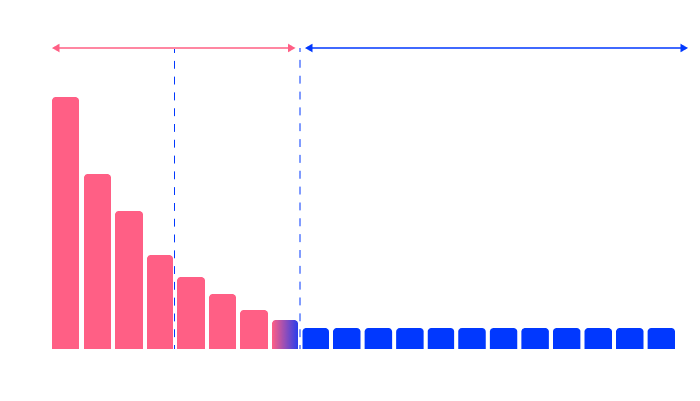
Most agencies pitch strategy decks; few solve the execution gap. CMAX deploys with two lines of code, then its AI agents continuously create and update pages targeting the long-tail queries that represent over 90% of search and AI demand (a figure documented across CMAX campaign data). For Adelaide-based enterprises evaluating providers, that means measurable traction, typically within six weeks of deployment, without scaling headcount or managing freelance content pipelines.
If your board wants organic growth tied to pipeline, not just impressions, CMAX gives you the infrastructure to deliver it.
Author
Jeremy Tang
Founder and CEO of CMAX
Jeremy Tang is the Founder and CEO of CMAX. With over 2 decades of experience in business consulting and digital marketing, he has successfully driven seven startup businesses, six of which achieved $1 million in revenue from zero in less than 16 months, 5 of which grew to multi-million dollar a year ventures without any external funding. Jeremy's expertise lies in streamlining business processes through technology and leveraging digital (in particular SEO) for business growth. He resides in Australia, travels extensively, and draws inspiration from his global experiences.