Most sites still plan content as a flat list of target keywords, one page per phrase. Entity based SEO starts from a different premise: the page exists as part of a connected topic model, where each piece of content explains a specific relationship to a central concept. That shift changes how you structure hubs, supporting pages, internal links, and structured data. Getting it right means search engines recognise the broader subject your site covers, not just individual queries. CMAX helps enterprise teams build that kind of connected page architecture at scale.
Entity-Based SEO Changes How Sites Express Meaning
Topics as Connected Entities
Entity based SEO treats each page as a single node in a wider concept map, so content is organised around relationships rather than keyword variations. Rather than building structure around every possible wording of a topic, the focus falls on the main subject, its attributes, related products or services, adjacent categories, and the problems it addresses.
That shift has a direct architectural consequence. A site no longer needs a separate page for every synonym or near-duplicate phrase. Instead, one well-defined page represents the concept, and its connections to surrounding pages carry the meaning that search engines use to place it within a topic.
Entities vs Keywords
Keywords describe how people phrase a search. Entities define the actual thing being discussed. A keyword is a query string; an entity is the concept behind it.
That distinction gives teams a cleaner way to separate search demand from site structure. “Running shoes,” “trainers,” and “athletic footwear” are different phrasings of the same concept. Treating each as a separate page target produces redundant content and dilutes the signal that any single page sends about the topic it covers. An entity SEO approach means the site can consolidate coverage, build depth on the concept itself, and use internal links to show how that concept connects to related ones, such as shoe types, fit guides, or sport-specific use cases.
Topic Relationships Reshape Content Architecture and Internal Linking
Hub Pages Define Relationships
A strong hub page does two things: it names the primary entity clearly and links out only to supporting pages that carry a defined relationship to it. Those relationships have specific types, specifications, comparisons, use cases, related categories, buyer questions. Each link signals to search engines that the hub and its supporting pages belong to the same topic cluster.
What a hub page avoids is equally important. Broad, undifferentiated linking, where a page connects to dozens of others without a clear relational purpose, dilutes the topic signal rather than strengthening it. Every outbound link from a hub should answer the question: what does this page add to the reader’s understanding of the primary entity? Entity based SEO requires careful decisions about which pages represent distinct relationships, a challenge that overlaps with faceted navigation SEO when large catalogues generate multiple filtered views of the same underlying entity. In enterprise SEO, where hub structures span hundreds of supporting pages, this relational discipline becomes even more critical.
Build True Supporting Pages
Supporting pages earn their place when each one addresses a distinct question about the entity. An attribute page, an alternative, an audience-specific use case, an adjacent concept, each of these represents a real relationship gap that a separate page can fill.
The test is intent separation. If two pages answer the same question for the same audience, one of them is redundant. Publishing multiple thin pages aimed at the same intent fragments topical depth rather than building it. Entity based SEO calls for each supporting page to answer a distinct question about the core concept, a principle that also guides teams evaluating programmatic content to confirm that scaled pages add genuine relationship depth rather than duplicating the same thin intent.
Rebuild Pages as Topic Hubs
A generic product page that lists features and stops there leaves most of its relational context unexplained. Rebuilt as a topic hub, that same page connects out to specifications, category context, comparison content, buyer-question pages, and problem-oriented content. Those links show search engines where the product sits in the wider topic model, context that a standalone page, however well-written, cannot provide on its own.
Search Engines Use Multiple Signals to Infer Entities
Signals That Connect Entities
Search engines infer entity relationships by reading several signals at once: internal links, descriptive anchor text, headings, repeated co-occurring concepts, and external references. No single signal is decisive. What matters is whether those signals point consistently in the same direction.
A page that uses precise anchor text, groups related headings under a clear parent topic, and receives links from thematically aligned pages sends a coherent signal. A page that links broadly, uses generic anchor text like “click here,” and mixes unrelated concepts sends a muddled one. Search engines use that consistency check to decide whether a page reliably belongs to a given topic cluster or sits at its edges.
What Structured Data Clarifies
Structured data supports entity based SEO by labelling the page’s main subject and its type. Google states directly that structured data helps search engines identify which type an entity belongs to and how it relates to other entities on the page, and can enable rich search features.[1] It does not, however, prove content quality or expertise. Markup labels the entity; the content still has to demonstrate depth.
Consistent signals across headings, anchors, and copy reinforce entity relationships, so teams working with SEO dynamic content need to confirm that dynamically rendered text still expresses the same entity relationships that structured data and internal links declare.
Markup vs Content Meaning
Schema.org defines standard entity types and properties that help disambiguate a subject. A product marked up with the correct schema type is easier to classify than one left unlabelled. Google still evaluates the broader meaning of the page through visible copy, headings, and linking context. Markup supports that process, but it cannot compensate for thin content or muddled page relationships. A well-labelled page with weak supporting copy remains a weak page.
Measurable entity coverage needs a staged review process.
Expectations Checklist by Stage
An entity based SEO engagement is easier to assess when teams work through four discrete stages rather than treating the whole effort as a single project: define, map, implement, then review.
Define. The definition stage identifies the primary entity, the audience intent behind it, and the full set of terms that refer to the same concept. That inventory stops teams from creating separate pages for every close variant, which fragments coverage rather than building it.
Map. The mapping stage documents the entity’s attributes, subtopics, adjacent entities, and the type of relationship each one holds to the core subject. The output is a decision: which relationships warrant their own supporting page, and which belong as sections within an existing one. Pages that do not answer a distinct question about the entity do not earn a separate URL.
Implement. The implementation stage applies those decisions across hub pages, supporting pages, internal anchor text, headings, and structured data. The goal is consistency: the same relationships expressed in visible copy and in page markup, so search engines receive the same signal from both.
Review. The review stage checks whether visibility is expanding across related queries rather than staying tied to a narrow keyword set. Broadening query coverage is a stronger indicator of entity recognition than movement on a single target term.
Working through each stage in sequence gives teams a documented basis for assessing progress and a clear point at which to course-correct if coverage gaps remain. For teams focused on SEO Australia, a staged review process anchors progress to measurable entity-coverage milestones. The staged cycle of mapping, implementation, and review that teams managing large sites often look to streamline through automated SEO workflows can track query diversity and internal link consistency at scale.
The review stage checks whether impressions, query diversity, crawl paths, and internal link journeys are widening across related searches, which is a stronger sign of entity understanding than movement on one target term alone.
What to Measure Over Time
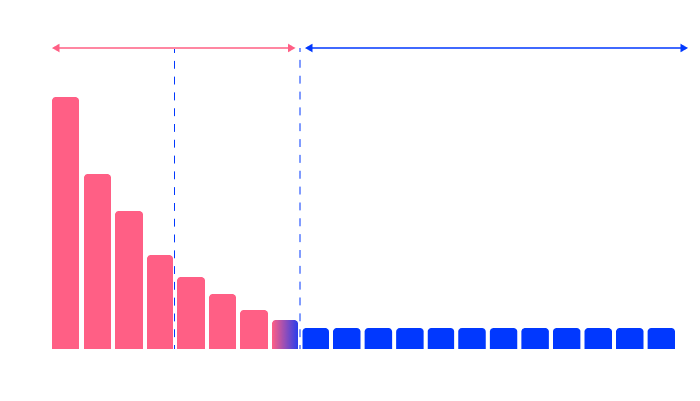
A single keyword moving up three positions tells you almost nothing about entity coverage. Useful measurement looks at whether the site is earning visibility across a broader set of related queries, not just the original target phrase.
In Search Console, pull impression data across a date range and filter by query clusters rather than individual terms. What you want to see is a widening mix: queries that share the same underlying entity but use different phrasing, attribute-level searches, and adjacent concept terms that your supporting pages now address. If that mix is expanding, search engines are reading the topic network. If impressions are concentrated on one or two phrases, the relationships between pages are not registering clearly yet.
Entity based SEO naturally expands a site’s reach across semantically related queries, which is why teams often find that a well-mapped topic model supports longtail SEO by surfacing supporting pages for the full range of specific searches surrounding a core concept.
Crawl path review runs alongside this. Check whether internal links from hub pages reach supporting pages in two clicks or fewer, and whether anchor text on those links reflects the relationship each supporting page represents. Gaps in crawl depth often explain why supporting content earns no impressions despite being published.
Whether the goal is SEO Perth, SEO Sydney, or SEO Melbourne, the same entity-coverage principles apply to local markets. The question is SEO important for small business often comes down to this same check: is visibility expanding across related queries, or stuck on a single phrase?
Example of Entity-Scale Coverage
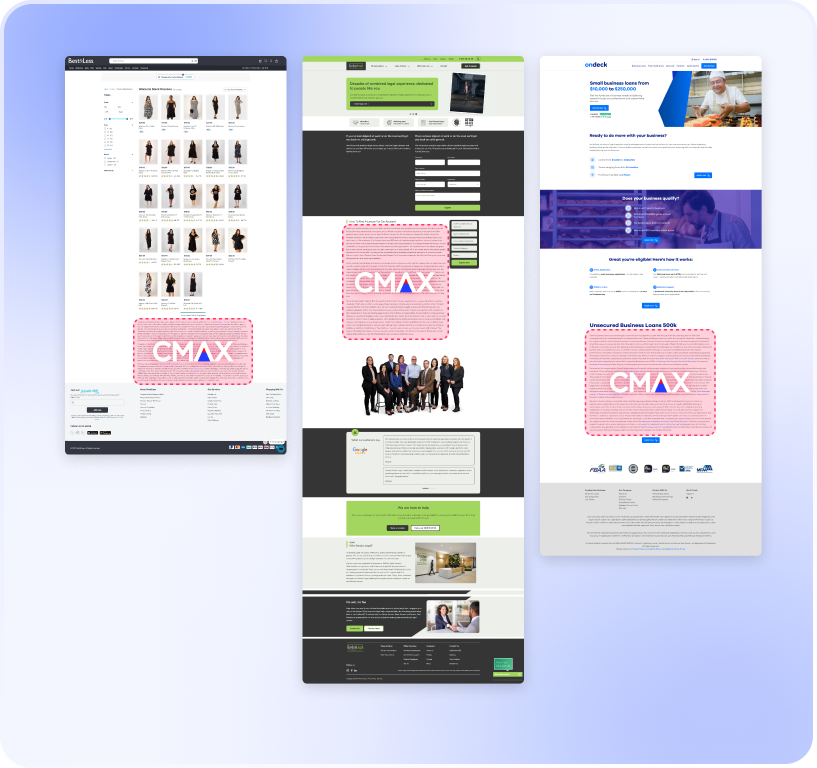
In one CMAX engagement, a B2B omnichannel hospitality retailer added 5,000 long-tail product pages and reached $1M+ per month in incremental SEO revenue within 8 months. The mechanism was connected page coverage at scale: search engines could follow relationships between products, categories, and use cases rather than encountering isolated category pages that left those connections unexplained. Large catalogue sites face the same structural gap. Without pages that explicitly cover attributes, alternatives, and use-case relationships, search engines have no signal to place the core entity in a wider topic model.
The practical takeaway is a connected topic model.
Move from Keywords to Maps
A flat list of target terms tells you what people type. It does not tell you what the site needs to say or how pages should relate to each other.
The shift is structural. Map the main topic first: what it is, what attributes it has, what adjacent concepts it connects to, and what problems it addresses. Then assign each supporting page a specific relationship to that core entity, an attribute, a use case, a comparison, a buyer question. Internal links carry that relationship forward, so every anchor text choice either reinforces or muddies the model.
Teams that plan this way stop publishing near-duplicate pages for every phrasing variation and start building coverage that search engines can actually read as a coherent topic network.
Signs the Model Is Working
The clearest signal is query diversity. When entity-based SEO takes hold, Search Console starts returning impressions and clicks for semantically related searches that were never explicitly targeted, variations, adjacent concepts, attribute-level queries. That spread indicates search engines have mapped the topic network, not just indexed a page for one phrase.
A site still earning visibility only on its original exact-match targets has likely built pages in isolation. Broader query coverage, deeper crawl paths through supporting content, and consistent internal anchor language are the markers that the connected topic model is doing its job. That broader visibility is the clearest sign that entity based SEO is working.
How to measure entity authority?
Check whether the site earns impressions and clicks across a broader set of related queries, not just the original target terms. Supporting pages should cover distinct relationships in useful depth, and internal links should consistently connect the main entity to the subtopics users would expect to find. Widening query diversity in Search Console is a stronger signal than movement on a single keyword.
Entity SEO vs keyword SEO?
Keyword SEO starts with the phrasing people use in search. Entity SEO starts with the underlying concept and builds content, structure, and links that explain what that concept is, what attributes it has, and how it relates to adjacent topics. The practical difference shows up in site architecture: keyword SEO produces pages for every phrasing variant; entity SEO produces pages for every distinct relationship.
Entity based SEO sits at the intersection of semantic structure and machine interpretation, making it a natural entry point for anyone exploring how AI and SEO are reshaping the way search engines process meaning.
How to use structured data for entity SEO?
Use structured data to label the page’s main entity, its type, and its relevant relationships. Keep visible copy, headings, and internal linking aligned so the markup reflects the same meaning the page expresses to users. Markup supports interpretation; it does not substitute for clear, well-linked content.
How to transition to entity SEO?
Audit overlapping pages, decide which primary entity each section of the site should represent, consolidate thin keyword variants that do not serve distinct intent, and rebuild core pages as hubs with supporting content that fills real relationship gaps.
How does entity SEO affect AI overviews?
Entity-based approaches strengthen AI SEO because connected pages give language models clearer context for assembling answers. Consistent terminology and explicit topic relationships help AI systems understand what the site covers and how related concepts fit together. Isolated pages aimed at one exact-match phrase at a time leave those relationships unexplained.
Entity based SEO becomes especially relevant as teams consider how AI search engines rely on connected topic signals rather than isolated keyword matches to surface authoritative content.
From Keywords to Connected Coverage at Scale
Most SEO strategies still treat pages as standalone targets, one keyword, one URL, one hope.
CMAX is an agentic SEO platform built to work differently. It deploys AI-driven agents that create and continuously update content across thousands of long-tail search terms, linking related topics into the kind of connected architecture that entity-based SEO demands. Results typically begin within six weeks of deployment, with just two lines of code to integrate.
When your content strategy shifts from isolated pages to structured topic coverage, you need a platform that can keep pace with that structural change.
References [1] – https://developers.google.com/search/docs/appearance/structured-data/intro-structured-data
Author
Jeremy Tang
Founder and CEO of CMAX
Jeremy Tang is the Founder and CEO of CMAX. With over 2 decades of experience in business consulting and digital marketing, he has successfully driven seven startup businesses, six of which achieved $1 million in revenue from zero in less than 16 months, 5 of which grew to multi-million dollar a year ventures without any external funding. Jeremy's expertise lies in streamlining business processes through technology and leveraging digital (in particular SEO) for business growth. He resides in Australia, travels extensively, and draws inspiration from his global experiences.