Most generative search optimisation efforts start without a baseline, which means there’s no way to tell whether a content change actually improved citation rates or just happened to coincide with a different prompt result. If you’re running edits without a fixed prompt set and a before-and-after record, you’re optimising blind. The gap isn’t tactics. It’s a feedback loop that connects what you changed to what shifted. CMAX works with enterprise teams building exactly this kind of repeatable, evidence-led process across AI search surfaces.
Generative Search Gains Stall Without a Testing Baseline
Baseline Cited Prompts
Generative search optimisation gains stall when teams skip a testing baseline. A fixed set of prompts, run before any content changes, tells you which high-intent queries already cite your brand, which mention it without attribution, which omit it entirely, and which attribute your claims to a competitor. That record becomes the control. Every content refresh you make afterward can be judged against it, so you’re measuring a real before-and-after shift rather than pointing to a single favourable output and calling it progress. Without that baseline, there’s no way to know whether a citation appeared because of your edits or despite them.
Before establishing a prompt baseline for generative search optimisation, it helps to understand the distinctions laid out in SEO vs GEO, since each discipline measures visibility differently and requires its own testing framework.
Test Across Platforms
A single encouraging answer from one model is not durable visibility. Citation behaviour shifts across models, interfaces, and prompt wording, sometimes significantly. The same query run in ChatGPT, Gemini, and Perplexity can return different sources, different answer structures, and different attribution patterns. Different generative platforms can surface different citation patterns per prompt, which is why testing a single interface tells an incomplete story. A useful test reruns the identical prompt set across every platform your audience actually uses, under consistent conditions, so the results reflect real variation rather than a best-case snapshot. What looks like strong generative search visibility on one surface may be absent on the three surfaces where your buyers are actually asking.
Visibility improves when content is easy to retrieve and cite.
Make Pages Retrievable
What is search optimisation in a generative context comes down to making pages retrievable and citable. Crawlable pages, visible source attribution, and stable URLs give retrieval systems a reliable path back to the same source each time. When pages are blocked by robots directives, duplicated across multiple URLs, or moved without redirects, relevance gets split or lost entirely. The fix is structural: one canonical URL per topic, attribution that’s visible in the page content, and a crawl configuration that doesn’t accidentally exclude your most important pages. Generative search optimisation shares its core retrieval principles with GEO generative engine optimisation, meaning crawlable pages, clear source attribution, and query-specific structure benefit both approaches equally.
Build Query-Specific Pages
Broad pages that cover a topic generally make retrieval harder. A generative system pulling a passage to quote or summarise will favour a page where the answer appears near the top, the heading mirrors the query, and the surrounding content stays on-topic. A page built to answer one specific question gives the retrieval layer a clean, quotable passage. Applying proven search optimisation techniques such as tight heading alignment and front-loaded answers makes each page easier for AI systems to extract accurately. Pages where the relevant answer is buried three sections down, surrounded by tangential content, are harder to extract accurately.
Fundamentals Still Matter
Generative search optimisation doesn’t replace core SEO practice; it depends on it. Accessible, indexable, well-structured content is easier for both traditional search engines and AI retrieval layers to find, interpret, and reuse. Schema markup, logical heading hierarchies, fast load times, and clean internal linking all contribute to how reliably a page gets retrieved. Generative search optimisation builds on the same accessible, well-structured content principles central to aeo SEO, so pages that already satisfy traditional indexing requirements are better positioned for AI retrieval as well. Teams that have let technical foundations slip will find that content improvements alone don’t move citation rates. For practitioners asking how to improve search engine optimisation in this new landscape, the answer starts with these same structural fundamentals.
A Prompt-to-Refresh Workflow Makes Generative Search Optimisation Measurable
Generative-Search Visibility Workflow
A prompt-to-refresh workflow makes generative search optimisation measurable by tying each edit to a citation outcome. It starts with a fixed prompt baseline, records citation results, refreshes the pages meant to answer those prompts, and reruns the same set to see whether visibility changed under comparable conditions. Each step is deliberate; skip one and the result tells you nothing repeatable.
Define your prompt set. Build 20 to 30 prompts that reflect the commercial, informational, and comparison queries your audience actually types. Pull from search query reports, sales call transcripts, and support logs, not internal brand language or idealised keyword lists. The prompts need to mirror real intent, or the baseline is fiction. A strong prompt set is the foundation of any generative search optimisation effort, because without it there is no consistent measure of progress.
Run and record. Execute every prompt across the same platforms, interfaces, and locations you plan to compare later. For each result, log one of four outcomes: cited with attribution, mentioned without attribution, misattributed, or absent. Consistency in setup is what makes the second pass meaningful.
Diagnose gaps. Group missed or weak prompts by topic, page type, or entity gap. That grouping tells you whether the problem is missing coverage, weak source clarity, or terminology that doesn’t match how your audience phrases the query. This diagnostic step is where generative engine optimisation differs most from traditional ranking audits, because the failure modes are structural rather than positional.
Refresh with precision. Update the relevant pages with clearer definitions, explicit entity references, visible source lines, tighter headings, and answer passages that address the prompt directly, not the page’s broader theme. Treating each refresh as a controlled test is central to generative search engine optimisation, where a single entity clarification can shift a page from absent to cited.
The prompt-to-refresh workflow at the heart of generative AI search engine optimisation mirrors the iterative content refinement cycle used in GEO optimisation, where each round of edits is validated against a consistent set of test conditions.
Rerun under identical conditions. Wait for recrawl or indexation changes, then run the identical prompt set in the same environments. The second pass tests the edit. A different setup tests nothing. This discipline, sometimes called GEO generative engine optimisation, isolates whether the content change drove the citation shift or whether platform volatility accounts for the difference.
Compare before-and-after citation rate, answer inclusion, and branded-search movement so the result is tied to a repeatable method rather than a one-off screenshot.
Use Comparative Metrics
Impression-style reporting tells you how often a page was seen. It does not tell you whether generative systems are citing your brand, including your answers, or ignoring your pages entirely. Those are different questions, and they need different metrics.
Three measurements give a credible read on progress. Citation rate tracks how frequently your brand appears as a named source across your fixed prompt set, before and after a content refresh. Answer inclusion records whether your content is drawn on in the generated response, even when a direct citation link is absent. Branded-search movement captures downstream behaviour: a reader who encounters your brand in an AI answer may return later through a branded query or direct visit rather than clicking through in the same session.
Run all three against the same prompt set, in the same platforms and interfaces, at each measurement interval. Prompt-level notes add the granularity that aggregate numbers hide: which specific queries improved, which held flat, and which still return no trace of your pages. That breakdown reveals whether the query’s search intent was informational or commercial, and tells you where to focus the next refresh cycle rather than leaving you with a single aggregate score that could move for unrelated reasons.
Tied to a repeatable method, these metrics shift the conversation from “we think visibility improved” to “citation rate on this prompt cluster moved from X to Y after we tightened source attribution and added direct answer passages.”
Evidence Comes From Repeatable Tests, Not Isolated Screenshots
Repeat the Same Prompts
A single favourable citation proves nothing on its own. Repeatable tests are what separate credible generative search optimisation from anecdotal wins. What builds a credible evidence base is rerunning the same prompt cluster after each round of edits, so the comparison is controlled. When you add tighter definitions, explicit entity references, and clearer source lines to a page, then rerun the identical prompts in the same platforms and interfaces, any shift in citation frequency can be traced to those specific changes. A different prompt mix introduced in the second pass contaminates the result. The prompt set stays fixed; the pages change. That discipline is what separates a repeatable finding from a lucky screenshot.
Catalogue-Scale Proof Point
Coverage volume amplifies this effect. In one CMAX engagement, a B2B omnichannel hospitality retailer added 5,000 long-tail product pages and drove over $1M per month in incremental SEO revenue within 8 months. The same principle applies directly to generative engine optimisation: when a brand publishes more specific, query-matched pages, generative systems have more precise source passages to retrieve and cite for narrow prompts. A broad page that loosely covers a topic gives a retrieval layer little to work with. A dedicated page that answers one question plainly, with a visible source line and exact entity references, gives it a clean passage to pull. This approach, sometimes called GEO optimisation, isolates whether edits changed citation frequency across a scaled page set. Scale that across hundreds of topic variants and the citation surface grows proportionally.
Generative search optimisation results observed across Australian markets can be contextualised alongside case evidence from Sydney GEO services, where prompt-level citation testing has been applied to local commercial queries.
Practical Measurement Depends on Consistency, Scope and Honest Interpretation
Separate Visibility Metrics
Prompt coverage, citation share, answer inclusion, and downstream branded-search movement each describe a different stage of generative search visibility. Collapsing them into a single score obscures where progress is actually happening.
Prompt coverage tells you how many of your target queries return any result that includes your brand. Citation share tells you how often your pages are the named source. Answer inclusion captures whether your content appears in the generated response at all, even without a direct link. Branded-search movement, tracked separately in your analytics, shows whether AI exposure is translating into people actively searching for you by name.
Report each metric in its own column. A gain in answer inclusion with no movement in branded search is a different problem than a gain in citation share with flat prompt coverage.
Treat Gains Probabilistically
No tactic produces a guaranteed citation. Generative systems draw from a wide pool of sources, weight them differently across models, and change behaviour as models update. The honest framing is probabilistic: expanding discoverable coverage, clarifying source passages, and maintaining a repeatable test-and-refresh loop improve the likelihood of appearing in generative answers.
That framing is also the defensible one when presenting results internally. A team that can show citation rate moved from 4 out of 30 prompts to 11 out of 30 after a defined set of page edits has a credible story. A team that shows one favourable screenshot does not.
Teams running generative search optimisation programs in Australia can find region-specific implementation support through GEO services Sydney, where local platform behaviour and prompt patterns may differ from global benchmarks.
Consistency in method is what converts a result into evidence. Practical measurement keeps generative search optimisation grounded in evidence rather than assumption.
Frequently Asked Questions (FAQ)
How do you measure AI search visibility?
Run a fixed prompt set across the same platforms and interfaces each time, then log whether your brand is cited, mentioned without attribution, misattributed, or absent. Repeat that check after every content refresh and compare the before-and-after record. Pair those prompt-level findings with branded-search movement to get a fuller picture of downstream impact.
How can I get my brand cited by AI search?
Publish crawlable, query-specific pages that answer the question directly, state the source clearly, and use the exact entities and terms people include in their prompts. Generative systems retrieve passages, so a page that buries its answer three sections down is harder to quote than one that leads with it.
What are actual marketers doing to show up in AI answers?
Most are working across several fronts at once: tightening technical accessibility, expanding long-tail topic coverage, adding direct answer sections, and clarifying entity references. After each content refresh, they rerun the same prompt tests to see which edits coincide with more frequent citations.
Practitioners refining their generative search optimisation strategy often revisit foundational questions covered in discussions of aeo vs SEO, particularly around which signals each retrieval layer prioritises.
How is GEO impacting my site’s analytics?
The effect is often indirect. A user who sees your brand in an AI answer may return later through branded search, direct traffic, or an assisted conversion path rather than clicking a cited page in the same session. Standard session-based reporting will undercount that influence.
How visible is our brand inside LLMs?
Repeated prompt sampling across models and interfaces gives the most reliable read, because no single dashboard captures complete citation coverage across every answer surface. Treat each sampling run as a data point in an ongoing series, not a definitive audit.
Most Search Traffic Is Long Tail, CMAX Was Built for It
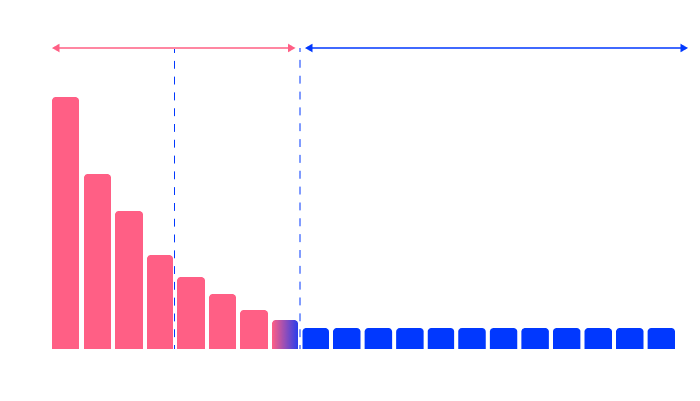
Over 90% of search and AI demand sits in long-tail queries most teams never reach.
CMAX is an agentic SEO platform that deploys and continuously updates content across thousands of keyword variations, including those surfaced by generative search optimisation, with just two lines of code. Our AI-powered agents target high-intent, niche queries at a scale and speed manual workflows can’t match. Results typically begin within six weeks, not quarters.
If your current approach plateaus at head terms while long-tail traffic goes uncaptured, CMAX closes that gap.
Author
Jeremy Tang
Founder and CEO of CMAX
Jeremy Tang is the Founder and CEO of CMAX. With over 2 decades of experience in business consulting and digital marketing, he has successfully driven seven startup businesses, six of which achieved $1 million in revenue from zero in less than 16 months, 5 of which grew to multi-million dollar a year ventures without any external funding. Jeremy's expertise lies in streamlining business processes through technology and leveraging digital (in particular SEO) for business growth. He resides in Australia, travels extensively, and draws inspiration from his global experiences.