To find long tail keywords, look for searches your site already half-answers but hasn’t claimed properly. That includes emerging queries around topics such as gemini SEO.
The best long tail keywords come from your own search data first and a bigger planner export second.
Most marketers treat long-tail research as a tool problem. A bigger spreadsheet is still a spreadsheet.
Beyond keyword research tools, your own click and impression data shows where pages already attract demand without matching what the searcher wanted.
The better starting point is data you already have: which searches bring people to your site, where they click and where they don’t. A planner export tells you which searches exist across the whole market.
Search Console tells you which searches already reached your site and ended without a click. In this context, first-party search data means spotting the searches that already reach your site but have no good answer, so your page can supply one.
Impressions are the proof that people see your page at all.
Search Console shows this for free. The gap between impressions and clicks often points to pages that need a sharper title or a closer match to intent.
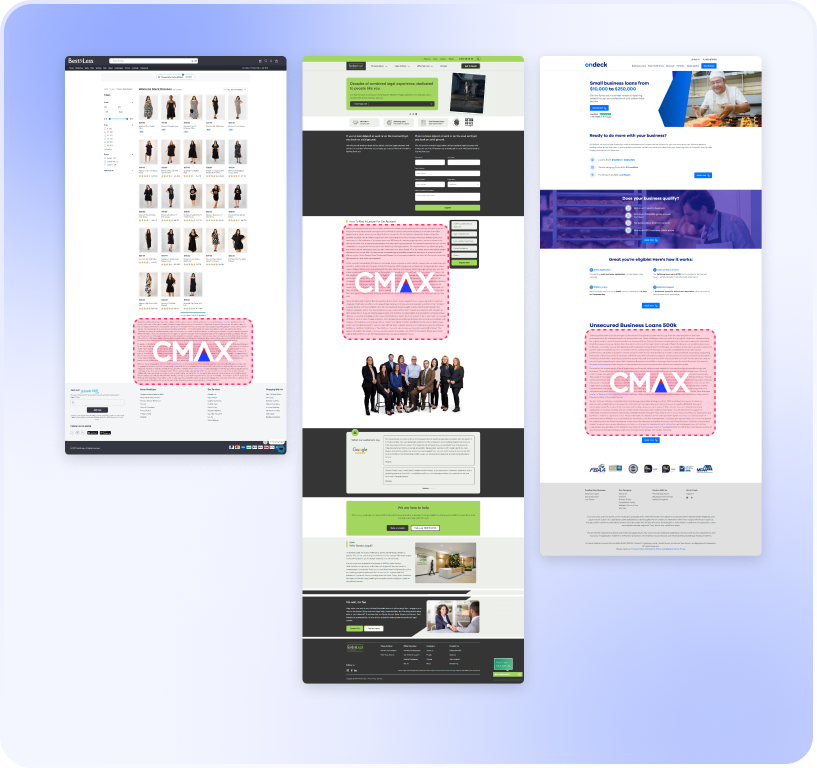
CMAX works from the same first-party signals. We turn that Search Console data into wider content coverage across the specific ways your customers search.
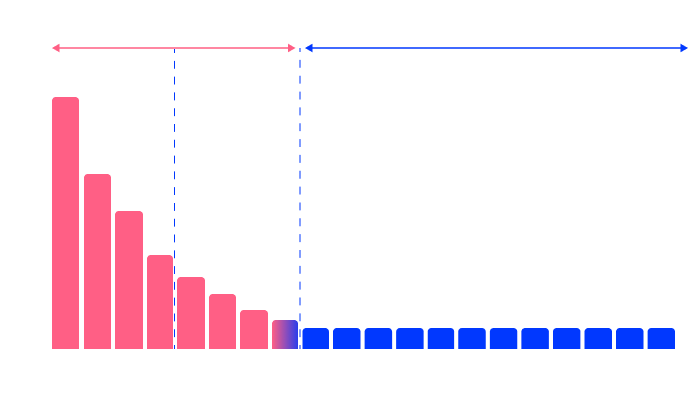
CMAX targets the 90% of search demand in the long tail.
Search Console reveals the searches your site already appears for.
Search Console surfaces hidden long tails.
Search Console is Google’s free tool that shows which searches your site appears for. It reports impressions, clicks, click-through rate and average position for each query and page.
Treat it as an SEO keyword search Google has already run for you, using your own pages. Start with queries that have impressions but few clicks, then check which page ranks for them.
Say a SEO company finds that a product category page appears for “large washable wool rug for living room”, but the page title only says “Wool Rugs”. Demand exists.
The gap is coverage and intent match.
Long tail queries show intent.
Long tail queries tell you what the searcher needs next: a definition, a comparison, a size guide, a product filter, a price cue or a fix. That makes them more actionable than a broad term like “rugs”.
So, what are long tail keywords? They’re detailed phrases about definitions, comparisons, sizes, prices and fixes.
Group queries by intent before you decide what to write. “Best washable rug for pets” needs a buying guide.
“How to clean washable rug” needs care content. “Washable rug 200×300” needs a product or category page.
A SEO keywords list only helps once it’s grouped this way.
Good SEO keywords analysis turns one export into a map of pages, FAQs, sections and merchandising gaps.
Real keyword discovery comes from combining first-party data and search demand.
Combine first-party data and demand.
Keyword tools alone won’t help teams find long tail keywords worth acting on. Keyword research tools, such as a SEO book keyword tool, report volume across the market.
They can’t report what your own customers typed into your site search.
Pull Search Console queries alongside internal site search, paid search terms, customer service tickets, sales call notes and product reviews. The words customers use when they don’t know your category jargon are often the most valuable.
Language varies by market, so demand for SEO agency Wollongong may be phrased differently from comparable demand in Sydney.
In GA4, enhanced measurement captures internal site search through the query parameters q, s, search, query and keyword. The search_term field then shows wording your navigation or content doesn’t yet answer.
Next, check the live SERP. Product grids signal a commercial page.
Guides and comparisons signal a practical buying answer.
Scale research with CMAX.
CMAX is the Agentic SEO Platform. It turns first-party signals from Search Console, analytics, SERPs and customer language into wider content coverage across search and AI visibility.
Free keyword research can expose initial demand. CMAX is trained on human-reviewed, client-approved content, so long-tail expansion stays aligned with how the business is permitted to describe products, pricing, claims, risks and benefits.
That matters for ecommerce, finance, healthcare, legal, education and SaaS teams, where off-brand wording carries real consequences.
The goal of search engine optimisation is a useful answer for each of the many ways customers search for what you sell.
The best long-tail opportunities are the ones worth contenting.
Judge terms before creating content.
A long-tail keyword earns a page when it clears four checks: the intent is clear, the topic fits what the business sells, the answer helps a buyer make progress, and the query needs a distinct page rather than a near-duplicate URL.
Good keyword research for amazon separates a genuinely different product need from a minor wording change that would create duplicate pages. Pricing, sizing and delivery signals point to long tail keywords with more commercial value than broad awareness terms.
Skip separate pages for “blue linen sheets queen” and “queen blue linen sheets” unless the SERP or conversion path differs meaningfully.
Long tail coverage needs freshness.
SEO keyword tracking software records changing positions, but product launches, seasons and competitors still create new content needs. New searches keep appearing as products, seasons, competitors and AI answers shift, so coverage goes stale faster than most teams expect.
Regional terms shift too, so demand for aeo Australia agency can reflect how local terminology and regulations change.
Content surface area is how many of the ways customers search you have a useful answer for. CMAX deploys and updates connected content on new and existing pages using real performance data.
A one-off keyword document goes out of date soon after it’s delivered.
Most SEO programmes run by conventional agencies, using outdated methods, tell clients to expect results in six months. CMAX’s methods allow clients to start seeing clicks in 6 to 8 weeks.
Frequently Asked Questions (FAQ)
Can zero-search-volume long-tail keywords still be worth targeting?
Yes. Keyword tools often miss newer, local, technical or highly specific searches.
Search Console, internal site search, paid search terms and customer conversations can surface real language before third-party databases assign visible volume.
A zero-volume term is worth targeting if it maps to a clear need, fits the site’s topical coverage, and can support a page or section that also ranks for close variants. Validating a specific phrase against a clear customer need is one practical way to find long tail keywords.
If customers type it into your site search or raise it on a sales call, it carries real demand for the business.
Should every long-tail keyword have its own page?
No. Many long-tail queries share the same intent, and splitting them into separate URLs can produce thin or duplicate content that competes with itself.
Put related variants on one strong page when the buyer needs the same answer, such as size, colour and care variations for one product category. Placing SEO keywords in html doesn’t justify separate URLs when several phrases share one intent and answer.
Create a new page only when the query needs a meaningfully different answer, format, product angle or conversion path.
For local pages, separate pages for SEO services Perth and Sydney demand make sense only when each market needs meaningfully different information or a distinct conversion path.
Are long-tail keywords easier to rank for?
Sometimes, but not automatically. Long-tail queries often have clearer intent and less direct competition than broad head terms.
Where a page lands still depends on relevance, page quality, internal context, freshness and connected coverage around the topic.
A specific term is easier to serve well when the page answers that exact need better than a generic page does. AI has raised the stakes here: an AI tool runs several smaller Google searches and builds its answer from what ranks, so missing specific content can mean missing the source material AI engines retrieve from Google.
CMAX helps businesses find long tail keywords that supply that source material.
Primary Keyword: find long tail keywords
Find Long Tail Keywords With Search Console Data
To find long tail keywords, start with the queries Google already shows your site for. CMAX develops SEO long tail keywords from those existing signals, so coverage grows around demonstrated demand.
That data often shows where demand exists but the page doesn’t yet match the search well enough to win the click.
CMAX is built around that gap. In practice, content freshness SEO means turning real search signals into wider, regularly updated coverage across the many specific ways customers search, because you can’t rank for what you don’t talk about.
The quickest way to see which searches your site half-answers is to have someone map them for you. A review does that, and asks you to decide nothing.
If you’re curious as to how you’re performing on AI, book in a Missing Customer Map review with our Growth Team.
Author
Jeremy Tang
Founder and CEO of CMAX
Jeremy Tang is the Founder and CEO of CMAX. With over 2 decades of experience in business consulting and digital marketing, he has successfully driven seven startup businesses, six of which achieved $1 million in revenue from zero in less than 16 months, 5 of which grew to multi-million dollar a year ventures without any external funding. Jeremy's expertise lies in streamlining business processes through technology and leveraging digital (in particular SEO) for business growth. He resides in Australia, travels extensively, and draws inspiration from his global experiences.