Generative search optimisation is often framed as a replacement for SEO, but the relationship is more like an extension. Your pages still need to be crawlable, indexable and trustworthy. What changes is what happens after that: whether the content is clear enough, well sourced enough and structured enough for an AI system to retrieve it, quote it or cite it in a direct answer. That distinction matters when rankings hold steady but your brand stops appearing where answers are served. CMAX works with enterprise teams applying this kind of optimisation at scale alongside their existing SEO foundations.
Generative search optimisation extends SEO rather than replacing it.
AI Answer Visibility
Generative search optimisation is the practice of making a page easy for AI systems to interpret, retrieve and cite in direct answers. That goal is distinct from traditional SEO, where the primary aim is to appear in a ranked list of links. An AI answer surface selects a source, quotes from it or attributes a claim to it, and a page that ranks well can still be passed over entirely if the AI can’t extract a clean, creditable answer from it. Optimising for that selection layer is what generative search optimisation addresses.
Generative search optimisation shares its core goals with generative engine optimisation, since both focus on making pages discoverable, interpretable and citable within AI-generated answers.
SEO Foundations Still Matter
Foundational SEO remains the prerequisite. Before any AI system can surface, quote or cite a page, it has to be able to crawl it, index it and trust it. A page blocked by a robots directive, buried under thin content or lacking credible source material gives AI systems less reliable material to work with. The technical and editorial standards that have always governed SEO, crawlability, clean architecture, authoritative content, carry forward into the AI answer layer. Generative engine optimisation adds requirements on top of those foundations; it does not replace them. The same discipline is sometimes referred to as generative search optimisation (the US spelling), though the underlying practice is identical regardless of regional naming conventions.
The difference lies in how pages become answer-ready.
What Makes Pages Answer-Ready
Traditional rankings lean heavily on relevance and authority signals: does the page cover the topic, and do enough credible sites link to it? For anyone asking what is search optimisation at its most basic, the answer is aligning a page with those two criteria. AI answer selection adds a different layer. The system also checks whether the page states the answer plainly, attributes claims to a named source, and identifies related entities, products, locations or concepts in language a machine can interpret without guesswork.
A page optimised only for search engine optimisation may satisfy those first two criteria and still fall short on the third. If the answer is buried in qualified prose, if claims float without attribution, or if key entities are described inconsistently across the page, an AI system has less to work with when constructing a cited response. Generative search optimisation and answer engine optimisation both treat answer clarity and attributable evidence as prerequisites for being selected in an AI-generated response.
Why Ranking Pages Go Uncited
Ranking and being cited are separate outcomes, and the gap between them is structural. A page can hold a top-three position and still be skipped in an AI-generated answer for any of three reasons: the key point sits too far down the page for clean extraction, the wording is too tangled to quote without distortion, or the claim is broad enough that citing it would introduce risk for the AI system.
The fix is rarely a rewrite from scratch. Generative search optimisation often means moving the direct answer higher, tightening the sentence that carries the core claim, and attaching a named source or documented example to any assertion the page wants an AI to repeat.
Readiness Can Be Tested with a Practical Audit
Generative Search Readiness Checklist
Before optimising for AI answer visibility, a team needs to know where a page currently stands. Generative search optimisation can be tested by walking through a practical checklist that cuts through ambiguity: either the page meets the condition or it doesn’t. Work through each item and treat any “no” as a gap to close.
Crawlability The page can be crawled and is not blocked by robots directives or noindex tags. A page that can’t be accessed can’t be retrieved or cited. Much of this aligns with Google’s published crawlability and quality guidance for discoverability.
Answer placement The primary question is answered clearly near the top of the page, in wording that can stand alone if quoted in an AI answer. An answer buried in paragraph six is easy for a retrieval system to skip.
Claim support Important claims are supported by attributable evidence, named examples or documented sources. Broad assertions give an AI system no safe anchor to cite.
Structural separation Headings and page structure separate topics cleanly enough for an answer system to extract one point without pulling in adjacent content. With the rollout of search generative experience, this kind of clean structural separation has become a direct factor in whether a page is selected for citation.
Entity consistency Products, services, locations or concepts are named consistently throughout. Describing the same thing three different ways across a page creates retrieval ambiguity.
Structured data Structured data is present where it helps search engines identify what the page covers and which entities or page types it contains.
Distinct content The page offers information that differs meaningfully from other URLs targeting almost the same query. Near-duplicate copy reduces the chance any single page gets selected as the clearest answer.
Generative search optimisation readiness audits follow the same crawlability, answer clarity and structured-data checklist regardless of market, and businesses seeking localised support can explore generative engine optimisation Perth as a regionally focused starting point for that process.
Mentions, Citations or AI Referral Patterns Are Being Tracked Alongside Clicks, So Answer Visibility Is Not Mistaken for Demand Loss
When Scale Helps
Click volume dropping while brand mentions in AI answers rise is a measurement gap, not a traffic problem. Teams that track only clicks will misread the signal and cut content that is actively earning citation visibility.
Scaled content closes that gap only under specific conditions. Each page must cover a distinct query with its own evidence or examples. A page that restates what three other URLs already say adds no new answer candidate to the index. AI systems retrieve the clearest, most specific match for a query; a catalogue of near-duplicate pages competes with itself and dilutes that precision.
Intent alignment is equally critical. A page built around a clear search intent gives an AI system a reliable signal about what question the page answers and for whom. Pages that drift across multiple intents are harder to extract cleanly, which reduces their citation suitability regardless of how well they rank.
Structure carries the same weight. An answer that is buried in a long paragraph, mixed with tangential points or spread across several headings is harder to retrieve than one that is stated plainly and separated from surrounding content. Scale amplifies whatever structural decisions are already in place, so a well-structured template produces more precise answer candidates at volume, while a poorly structured one produces more noise.
The practical test: before publishing at scale, confirm each page answers one question, cites its own evidence and uses a structure that lets a machine extract the answer without ambiguity. Providers of search engine optimisation services should apply this same test to every page in a scaled catalogue before treating volume as a proxy for visibility.
Measurement Shifts from Clicks Alone to Answer Visibility
Beyond Click Tracking
Search Console remains a reliable source for query-level impressions and clicks, but those metrics only capture what happens when a user visits a page. As a discipline, AI search engine optimisation accounts for the fact that AI-generated answers can surface your content, quote your copy and name your brand without producing a single click. That gap means a drop in click-through rate may reflect answer visibility, not demand loss.
Measuring AI-era performance requires a second layer: monitoring for brand mentions, source citations and referral traffic from answer surfaces. Teams practising AI search optimisation typically combine manual spot-checks, brand monitoring tools and referral source analysis to build that picture. No single tool covers everything yet, so most combine Search Console data with mention tracking to form a working view of how often their content is being retrieved and cited.
As generative search optimisation expands the measurement frame beyond click-through rates, the relationship between GEO SEO and traditional ranking signals becomes a useful lens for tracking how AI visibility and organic search performance move together.
Retrieval Eligibility Baseline
Google’s published guidance on crawlability, spam policies, structured data and content quality sets a practical floor for retrieval eligibility.[1] Pages that are hard to access, thin, misleading or structured poorly are less likely to be selected for AI-generated answers, regardless of their ranking position.
That guidance is not new, but its relevance is direct: the same technical and quality standards that support indexing also support citation. A page that passes a basic crawlability and quality check is better positioned for retrieval. One that fails on either count is a weaker candidate, even if it holds a strong ranking. Google’s published standards form the baseline that generative search optimisation builds on.
Enterprise content scale changes the citation opportunity.
Enterprise Proof Point
Scale does not automatically improve citation rates, but it does expand the pool of precise answer candidates available to AI systems. When each page maps to a distinct product, buyer need or query variant, the site gives retrieval systems more specific material to draw from rather than forcing a broad page to cover too many angles at once.
For a business needing search engine optimisation Sydney teams can point to as evidence-backed, catalogue-scale pages create more citation candidates. In one CMAX engagement, a B2B omnichannel hospitality retailer added 5,000 long-tail product pages and recorded $1M+ per month in incremental SEO revenue within 8 months. The same catalogue-scale dynamic applies to generative search: a large site with tightly scoped pages creates more opportunities for an AI system to find a page that answers a specific question precisely, rather than surfacing a general page that partially addresses several.
The risk at scale is duplication. Pages that repeat near-identical copy across similar queries dilute that precision and give retrieval systems less reason to cite any individual URL.
A Testable SEO Extension
Generative search optimisation is best treated as an extension of existing SEO work, tested through three measurable dimensions: whether pages are discoverable by crawlers, whether answers are stated clearly enough to extract, and whether citations or AI referrals appear in monitoring data.
When generative search optimisation is applied at enterprise scale, organisations sometimes work with a GEO agency to audit discoverability, answer clarity and citation eligibility across large content catalogues.
Teams that treat it this way can run incremental tests, measure outcomes against a baseline and build a case for further investment without abandoning the rankings and click metrics that boards already track.
Frequently Asked Questions (FAQ)
Any reliable ways to track generative engine optimisation?
Reliable tracking combines Search Console demand data with manual or software-based monitoring of AI mentions, citations and referral visits. Answer visibility does not always produce a click, so impression and click data alone will leave gaps. Tracking needs to account for surfaces where a user reads an AI-generated answer and never visits the source page.
Practitioners researching generative search optimisation will often encounter generative engine optimisation as the American-spelled variant covering the same discipline of improving AI answer retrievability.
How can I improve my brand visibility with AI SEO?
Brand visibility improves when your site answers specific questions directly, supports claims with attributable sources and uses consistent entity language across pages. Publishing pages that match the exact intent behind narrower searches also increases the chance an AI system selects your content as a citation candidate rather than passing over it.
Has anyone tried AEO in practice?
Teams typically treat AEO as a content and technical refinement of existing SEO work. In practice, that means rewriting pages so answers are more explicit, verifiable and easy for machines to extract cleanly, rather than building a separate content programme from scratch.
How do you actually “do” Answer Engine Optimisation?
Start by identifying high-intent questions your audience is already searching. Then build or revise pages so they answer those questions plainly near the top, structure information so topics are cleanly separated and support important claims with documented evidence rather than broad assertions.
Teams already familiar with generative search optimisation will recognise that answer engine optimisation addresses the same challenge of structuring pages so AI systems can extract and cite a clear, supported response.
Does traditional SEO still play a role?
Traditional SEO remains central. Without indexable pages, clean site architecture and credible source material, AI systems have less reliable content to retrieve, interpret or cite. Generative search optimisation adds answer clarity and citation readiness on top of that foundation; it does not replace it.
Traditional SEO Still Matters, CMAX Makes It Ready for AI Answers
Most businesses optimise for rankings but never ask whether their content can be discovered, cited, or surfaced in AI-generated results.
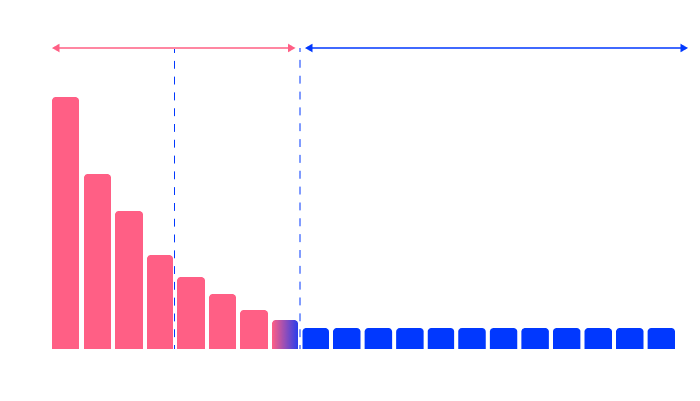
CMAX is an agentic SEO platform that deploys and continuously updates content across the thousands of long-tail queries your customers actually use. Two lines of code connect it to your site. Our AI agents target the 90% of search demand that sits in the long tail, the same layer where generative search optimisation has the highest retrieval potential, and results typically begin within six weeks.
If your pages rank but never get cited in an AI answer, visibility is already slipping. CMAX closes that gap at a scale and speed manual teams can’t match.
References [1] – https://developers.google.com/search/docs/fundamentals/seo-starter-guide
Author
Jeremy Tang
Founder and CEO of CMAX
Jeremy Tang is the Founder and CEO of CMAX. With over 2 decades of experience in business consulting and digital marketing, he has successfully driven seven startup businesses, six of which achieved $1 million in revenue from zero in less than 16 months, 5 of which grew to multi-million dollar a year ventures without any external funding. Jeremy's expertise lies in streamlining business processes through technology and leveraging digital (in particular SEO) for business growth. He resides in Australia, travels extensively, and draws inspiration from his global experiences.