Keyword cannibalization SEO discussions often start with a simple rule: two pages targeting the same term means one has to go. But overlap at the keyword level is not the same as overlap at the intent level, and treating them the same way leads to unnecessary merges, redirects, or deletions that can do more damage than the original problem. The real question is whether two URLs are trying to do the same job for the same searcher. CMAX works with scaled sites where thousands of pages make that distinction operationally critical.
Two URLs Only Cannibalise When Intent Overlaps
Keywords Alone Do Not Prove Overlap
Keyword cannibalization SEO becomes a real issue only when intent overlaps, not when two pages share a term. A blog post explaining what programmatic SEO is and a service page where someone can book a discovery call may share several keywords, yet they serve completely different immediate jobs: one informs, the other converts. Google can rank both without confusion because the searcher’s goal shifts depending on where they are in their decision. Keyword cannibalization only becomes a real problem when two URLs compete to satisfy the same immediate task and neither page has a clear advantage over the other.
SEO keyword cannibalization and content cannibalisation describe the same underlying problem, multiple URLs competing for the same searcher intent, so the diagnosis starts with intent, not keyword matching.
Query-to-Page Patterns Show Intent Ownership
Search Console is where the diagnosis starts. Pull impression and click data at the query level, then check whether the same query cluster is surfacing two different URLs. When Google repeatedly rotates between two pages for one cluster, it signals that neither page has established clear ownership of that job. That rotation is the diagnostic signal worth acting on. A single keyword appearing for two pages is not enough to confirm a problem; the pattern across a cluster of related queries, showing up consistently over time, is what points to genuine intent overlap. Once that pattern is visible, you have the evidence needed to decide whether one page should own the cluster outright or whether both pages can stay live with sharper separation. Left unresolved, cannibalization fragments ranking signals and weakens both pages over time.
The Preferred URL Should Win on Evidence
Use Page Data to Choose a Winner
When two URLs compete for the same query cluster, pick the one that already has the stronger case in the data. Pull the overlapping query set in Search Console and compare both URLs across three signals: impressions, clicks, and average position. Resolving keyword cannibalization SEO cases starts with page data, and the URL that consistently surfaces higher and earns more clicks for those specific queries has already earned partial trust from Google, that’s your starting point.
Clicks alone aren’t enough. Check what visitors do after landing. A page that draws clicks but produces no meaningful next step, no form submission, no deeper navigation, no product interaction, is weaker than a page with slightly fewer clicks but clear forward momentum. The preferred URL should satisfy both the query and the action that follows it. Keyword cannibalization SEO becomes especially complex when dealing with SEO longtail queries, because closely related long-tail variants can make it genuinely difficult to determine whether two URLs are serving distinct intents or splitting signals for the same one.
Homepage and Service Pages Serve Different Jobs
Homepage-versus-service-page overlap is one of the most common patterns on scaled sites, and the fix is usually straightforward. A homepage typically handles brand-navigation intent: visitors who already know the company and want a starting point. A service page handles solution-seeking intent: visitors who want to know what the offer covers, how it works, and what to do next.
When both pages surface for the same solution-seeking query, the service page is the stronger owner. It can address scope, explain the offer directly, and present a clear action. Assign it ownership of that query cluster, then sharpen the homepage’s role around brand and navigation so the two pages stop pulling in the same direction. Even niche verticals like SEO for restaurants face the same homepage-versus-service-page overlap when menus, locations, and booking pages target similar queries.
The Safest Fix Depends on Why Pages Overlap
Each Overlap Type Needs a Different Fix
The right remedy for keyword cannibalization SEO depends on why the pages overlap. Applying a redirect when a rewrite would do wastes link equity and removes a page that still serves a real audience. Applying a rewrite when two pages genuinely cover the same job leaves the problem intact.
Use a rewrite when both pages should stay live but currently blur into each other. If one page targets early-stage evaluation and another targets a specific use case or audience segment, sharper copy and clearer on-page signals can give each URL a distinct job without consolidation.
Resolving keyword cannibalization SEO issues is one of the more direct structural levers for recovering SEO website traffic that has been split across competing URLs instead of consolidating around a single intent owner.
Merge when both pages are attempting to satisfy the same immediate intent and neither does it well enough alone. Combine the strongest elements into one URL and redirect the weaker one.
Reach for a canonical, redirect, noindex, or deletion only when the overlap stems from duplication, an outdated page, or structural redundancy. Weak copy alone does not justify these options.
Canonicals and Redirects Solve Different Problems
These two fixes are not interchangeable.
A canonical fits near-duplicate URLs that still need to exist for users, such as filtered or paginated versions of a page. It tells search engines which URL to credit without removing the other from the site. As search evaluation evolves, considerations like LLM SEO add another layer to deciding which URL should own a query.
A redirect fits cases where one URL should fully replace another. It consolidates both user journeys and accumulated search signals into a single destination, so use it only when the replaced URL has no remaining reason to exist independently.
Choosing the wrong fix can create new problems. A canonical on a page that should be redirected leaves a dead-end user path. A redirect on a page that still serves a distinct audience removes something real.
Keyword cannibalization SEO is a particularly common challenge on large e-commerce sites, where product pages SEO decisions, such as how to handle near-duplicate category and product URLs, directly determine whether pages compete or complement each other in search results.
A repeatable framework prevents sitewide cannibalization drift.
Keyword cannibalization diagnosis checklist.
A repeatable approach to keyword cannibalization SEO keeps scaled sites from drifting back into overlap. Run this check before touching any URL. The sequence matters.
Step 1: Prove intent overlap exists. Pull the query cluster from Search Console for both URLs. If the same queries are sending impressions or clicks to two pages with meaningful frequency, Google is rotating between them for one job. That rotation is the signal. Keyword similarity alone is not.
Step 2: Decide whether one page should own the intent. If both URLs are trying to satisfy the same immediate task, one page needs to own it. If they serve different tasks that happen to share vocabulary, they can stay separate. The distinction drives every decision that follows.
Step 3: Choose the intent owner on evidence. Compare impressions, clicks, and average position across the shared query set. Factor in next-step behaviour: which page gives the visitor a clearer path to the action the query implies? That page is the owner.
Keyword cannibalization SEO diagnosis is increasingly being shaped by advances in AI in search engine optimisation, which can surface intent-overlap patterns across large URL sets faster than manual audits alone.
Step 4: Select the least disruptive fix. Rewrite if both pages stay live but need sharper separation. Merge if both cover the same job. Apply a canonical, redirect, noindex, or deletion only when the cause is duplication, obsolescence, or structural redundancy rather than copy that simply needs tightening.
Run this sequence each time a new URL cluster is added to the site. Folding this check into your broader SEO strategies prevents drift from compounding silently across quarters. On scaled catalogues, drift is incremental: one page at a time, one query cluster at a time, until the pattern is too wide to fix cheaply. Treating the checklist as a core piece of SEO optimisation rather than a one-off audit keeps every new publish cycle aligned with existing intent assignments.
Keyword cannibalization SEO frameworks built for scaled sites today should account for AI engine optimisation signals, since AI-driven ranking systems may respond differently to intent-split URL structures than traditional crawl-and-index pipelines.
Frequently Asked Questions (FAQ)
Do the two URLs solve the same immediate search task, rather than touching related topics, adjacent questions, or different stages of evaluation?
Two pages covering related topics are not cannibalising each other. The test is whether both pages are trying to satisfy the exact same immediate job, the specific outcome a searcher expects the moment they land.
Do the same queries appear for both pages in Search Console often enough to show Google is rotating between URLs for one query cluster?
A single shared impression is noise. A repeated pattern across the same query cluster, where Google consistently alternates between two URLs, signals it has not settled on a clear owner.
Does one URL show the stronger overlap-level evidence, using impressions, clicks, and average position across the shared query set rather than a single keyword snapshot?
Evaluate across the full shared query cluster, not one keyword. The URL with stronger impressions, higher clicks, and a better average position across that set is the stronger candidate.
Does one page offer the clearer next step for the visitor, such as booking, comparing options, filtering products, or moving to a deeper explanation that matches the query’s intent?
The preferred URL should also win on behaviour. If one page leads visitors toward a logical next action that matches what the query demands, that alignment reinforces its case as the intent owner.
Can the pages stay separate if you sharpen the distinction by audience, use case, content format, or decision stage, instead of forcing consolidation?
Consolidation is not always the right call. If a clear distinction exists by audience segment, decision stage, or content format, rewriting to sharpen that separation keeps both pages live without forcing a merge.
If consolidation is the better route, is the least disruptive fix a rewrite, merge, canonical, redirect, noindex, or deletion based on whether both URLs still need to exist?
Match the fix to the cause. A canonical suits near-duplicate URLs that still serve users. A redirect suits cases where one URL should fully replace another. A merge, noindex, or deletion applies when a page is obsolete or structurally redundant.
Large-scale URL ownership proof point.
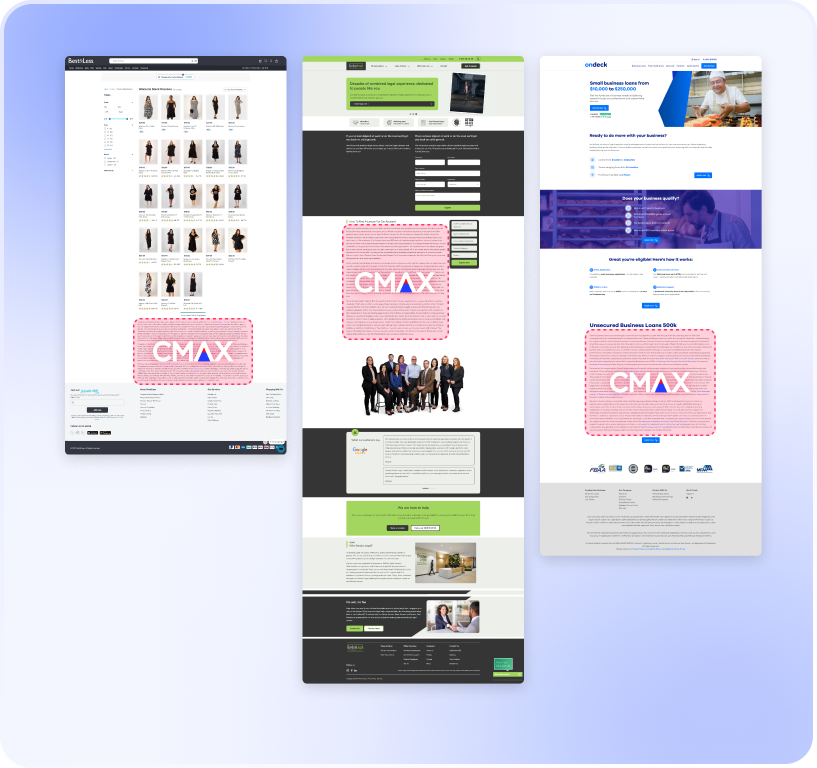
Scale amplifies the problem, and keyword cannibalization SEO problems can intensify as closely related URLs accumulate. In one CMAX engagement, a B2B omnichannel hospitality retailer added 5,000 long-tail product pages and drove $1M+/month incremental SEO revenue in 8 months. On catalogues that size, each URL needs a defined job from the start, or closely related pages begin competing for the same demand before any fix is possible.
As keyword cannibalization SEO practices evolve, site owners managing scaled catalogues are also asking how their URL-level decisions interact with SEO for AI search, where a single authoritative page per intent cluster may carry even greater weight.
How do you identify keyword cannibalization?
Check whether two URLs repeatedly appear for the same query cluster in Search Console and whether both pages are trying to satisfy the same immediate intent, not merely related keywords.
How do you fix keyword cannibalization?
Assign one URL as the intent owner, then choose the least disruptive remedy that matches the cause: clearer differentiation, a merge, a canonical, or a redirect.
How do you prevent keyword cannibalization in large blog ecosystems?
Define each planned URL before publication, the intent it serves, the primary query cluster it should own, and the specific reason it warrants a separate page rather than an extension of an existing article.
Can keyword cannibalization hurt SEO?
Yes. When two URLs split relevance signals, dilute internal-linking focus, or cause Google to alternate between pages, the URL that best matches the query’s job may never rank consistently.
Do multiple pages compete for the same keyword?
Multiple pages can target the same keyword without conflict. It becomes a real problem only when they target the same intent and leave no clear best page for search engines to rank.
Fixing Overlap Starts with Seeing It at Scale
Most keyword cannibalization problems hide in plain sight, buried across hundreds or thousands of URLs that no one has time to audit manually.
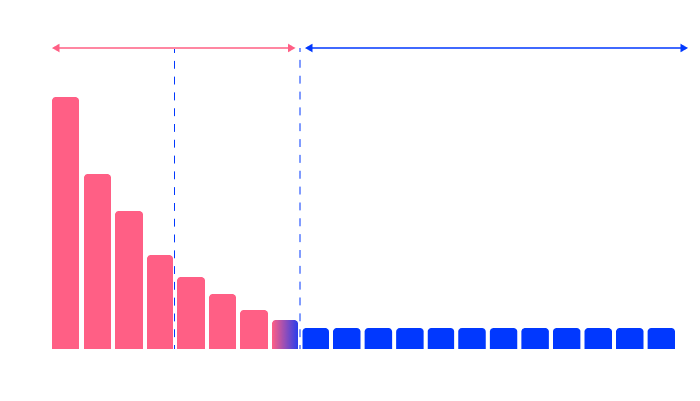
CMAX is an agentic SEO platform built to deploy and continuously update content across the long tail, where over 90% of search demand actually lives. With just two lines of code, it targets thousands of high-intent keyword variations at a speed and scale manual teams can’t match. Because every page is mapped to a distinct intent, the kind of URL-level overlap that causes cannibalization is addressed before it compounds.
If your site already has competing pages splitting clicks and impressions, scaling smarter content, not just consolidating old content, is how you move forward.
Author
Jeremy Tang
Founder and CEO of CMAX
Jeremy Tang is the Founder and CEO of CMAX. With over 2 decades of experience in business consulting and digital marketing, he has successfully driven seven startup businesses, six of which achieved $1 million in revenue from zero in less than 16 months, 5 of which grew to multi-million dollar a year ventures without any external funding. Jeremy's expertise lies in streamlining business processes through technology and leveraging digital (in particular SEO) for business growth. He resides in Australia, travels extensively, and draws inspiration from his global experiences.