Most teams evaluating a link building SEO agency end up comparing promises that sound identical: monthly link targets, domain authority thresholds, and vague references to “white-hat outreach.” The difference between a credible partner and a risky one rarely shows up in the pitch. It shows up in how they prospect, what they reject, and whether their reporting separates gained links from lost ones. Those workflow details are where quality becomes verifiable. CMAX operates in programmatic, long-tail SEO rather than link-building delivery, but the same evidence-first standard applies when choosing any external SEO partner.
Agency quality shows up in workflow, not promises.
Specialist workflow matters
A strong link building SEO agency divides prospecting, outreach, quality assurance, and reporting into separate responsibilities. Each function runs as a distinct checkpoint, so every potential link gets screened, approved, and reviewed through a repeatable process. That structure removes the inconsistency that surfaces when a stretched internal team chases placements across all four functions at once. Australia’s link building services Australia market rewards agencies that maintain this separation at scale, because shortcuts compound faster in high-volume campaigns. When one person owns prospecting and outreach and QA and reporting, corners get cut. A specialist agency builds the process so corners cannot be cut quietly.
A link building SEO agency operates as one specialist layer within a broader search engine optimisation strategy, where prospecting, outreach, and quality assurance each require dedicated workflow rather than ad hoc effort. As a provider of link building services in Australia, the agency should demonstrate that each workflow stage has a named owner and a documented standard before any outreach begins.
Relevance beats link volume
A weak agency leads with speed or a monthly link count. A credible partner screens for topical relevance, editorial fit, audience overlap, and business alignment before a single outreach email goes out. The practical test is straightforward: would this link make sense if there were no SEO objective attached to it? If the answer is no, the placement has no editorial basis and carries risk rather than value. Volume without that filter is not a deliverable worth paying for.
Link risk usually starts with placement and ownership.
Manipulative links raise concern
Paid links, exchanged links, automated placements, forum drops, and over-optimised anchor text all share a common trait: the placement exists to move rankings, not to inform a reader. That distinction is precisely what Google reviews under its link scheme enforcement guidance.[1] A credible link building SEO agency avoids placements that appear built mainly to influence rankings. A link that would never appear without a commercial arrangement or a reciprocal favour carries a different risk profile than one a publisher chose independently. The concern is not the link type in isolation; it’s whether the placement reflects a genuine editorial decision or a manufactured one. When an agency is evaluated for risk management, the underlying link building SEO service should be able to demonstrate how paid, exchanged, or over-optimised placements are screened out before outreach begins.
Editorial context reveals legitimacy
Manipulation tends to be visible when you look at the placement itself. The role of link building in SEO depends on whether the placement reflects an independent editorial mention or a manufactured one. Thin surrounding content, anchor text that reads like a keyword list rather than a sentence, and no discernible audience for the page are consistent signals that a link was placed rather than earned. A legitimate editorial mention sits differently: the copy around it is substantive, the anchor text fits the sentence naturally, the page has a clear topic, and a real readership would plausibly land there. Ownership matters here too. A placement that looks independent but traces back to the same operator or publisher network as three other “separate” sites on the same report is not independent coverage. Reviewing who controls a domain, not just what it publishes, is a basic verification step that separates disciplined prospecting from a bare placements list.
Quality signals become visible in the evidence.
Seven quality signals
The clearest way to assess a link building SEO agency is to review a fixed set of evidence points that show how opportunities are sourced, rejected, approved, acquired, and monitored over time. A monthly link count tells you almost nothing. The evidence behind each placement tells you everything.
Referring domain relevance. Domains closely match the site’s subject matter, buyer intent, or industry. Broad directories and unrelated publisher inventories are a red flag, not a volume win. When evaluating link building SEO services, domain alignment is one of the first indicators of whether placements will hold value over time.
Placement context. Links appear inside relevant editorial copy. Sidebars, author boxes, sponsored blocks, and topically disconnected pages all signal a placement-first approach rather than an editorial one.
A link building SEO agency assessing editorial fit may find that placement quality is strengthened when the surrounding content is produced to the same standard one would expect from a SEO copywriting agency, where copy serves a real readership rather than just an anchor target.
Anchor text restraint. Anchor text reads naturally in the sentence. Repeated exact-match commercial phrasing across multiple placements draws scrutiny and weakens the case for editorial independence.
Rejection records. A credible agency can show why weak placements were declined, citing relevance gaps, ownership concerns, or quality issues. Showing only accepted links is incomplete due diligence.
Site ownership verification. The same network, operator, or repackaged publisher group should never appear as independent coverage. Ownership checks catch this before a placement is approved. For link building services for SEO agencies, this step is especially critical because resold placements from a single network can quietly erode a client’s entire link profile.
Gained-versus-lost reporting. Reporting that separates newly acquired links from lost ones keeps review focused on net movement. Gross monthly totals obscure whether the link profile is actually growing or just churning.
These six evidence points, reviewed together, give a far more accurate picture of agency quality than any headline metric.
Outreach Records Show Prospecting Criteria, Contact Reasoning, and Acquisition Trail, Rather Than a Bare Placements List With No Explanation of How Links Were Obtained
Evidence Beats Raw Totals
A monthly link total tells you one thing: how many links were added. It says nothing about where they came from, why they were approved, or whether they’re still live next quarter.
The evidence that actually informs a quality assessment covers five areas. Referring-domain relevance confirms that publishers match the site’s subject matter or commercial intent, not just a broad domain authority threshold. Placement context shows whether the link sits inside relevant editorial copy or was dropped into a sidebar, author box, or sponsored block with no topical connection. Anchor restraint reveals whether phrasing reads naturally across placements or follows a repeated exact-match commercial pattern that signals manipulation. Site ownership checks confirm that what looks like independent coverage isn’t the same operator presenting multiple properties as separate sources. Gained-versus-lost reporting separates net link movement from gross activity, so a month where ten links were added but eight dropped isn’t reported as ten wins.
A link building SEO agency reviewing outreach records will often find that the strongest acquisition trails lead to placements where SEO website content writing was used to produce genuinely relevant editorial copy, rather than thin filler designed solely to host an anchor.
For any link building agency in Australia, outreach records should show prospecting criteria and acquisition trail. Ask a link building SEO agency for its outreach records, not just its placements list. Those records should show which sites were contacted, why each was selected, and how the acquisition was completed. If the agency can’t produce that trail, the placements list is the only accountability mechanism, and a list without context can’t distinguish an earned editorial mention from a controlled placement dressed to look like one.
Agency value is clearest when outcomes are measurable.
Measure outcomes, not counts
The agency-versus-in-house decision becomes clearer when you move past link totals and evaluate process controls, communication quality, and organic outcomes that connect to revenue. Judging a link building SEO agency on attributable business outcomes rather than activity totals is the only way to separate real performance from noise. Qualified traffic growth and conversion contribution are the metrics worth tracking. A monthly link count that ignores placement quality, acquisition trail, and whether links stayed live tells you almost nothing about commercial impact.
A SEO link building agency contributes most measurably when its work is integrated with a broader website SEO service, so that qualified traffic growth and conversion contribution can be attributed across the full programme rather than to link counts alone.
One documented proof point
In one CMAX engagement, a B2B omnichannel hospitality retailer added 5,000 long-tail product pages and drove $1M+ per month in incremental SEO revenue within 8 months. The buying logic that applies to enterprise SEO applies here too: external support should be judged on attributable business outcomes and disciplined measurement. For any link building Melbourne business can trust, the proof is in results like these. Activity totals are not a proxy for that.
Use a selection test
A practical way to compare agencies is to ask four specific questions before signing anything:
- What are your prospecting criteria, and how are they documented?
- Can you show examples of sites you rejected, and why?
- What exact fields appear in your reports beyond link counts?
- How do you distinguish earned editorial links from placements you influence or control directly?
An agency that answers those questions with specifics has a repeatable process. One that deflects or generalises probably does not. The answers also reveal whether reporting will give you something defensible to present internally, or just a number that raises more questions than it resolves.
The Best Choice Depends on Internal Capability
When In-House Can Win
An internal team may outperform an external agency when three conditions already exist: direct access to subject-matter experts who can brief and vet placements, established media relationships that reduce cold outreach friction, and enough review capacity to apply editorial standards to every opportunity without cutting corners under volume pressure.
When those conditions are in place, in-house teams carry a real advantage. Whether you are an SEO agency Melbourne team weighing in-house capacity or a boutique firm with deep local expertise, the same principle applies: knowing the brand, the audience, and the product feeds better prospecting decisions and more credible outreach.
A link building SEO agency focused on a single market operates under different prospecting and ownership-verification constraints than international SEO agencies, which must account for regional publisher relevance, language fit, and cross-border editorial standards simultaneously.
When Outside Support Helps
External support becomes more useful when outreach volume, verification discipline, and cross-functional reporting all need to scale simultaneously, and the internal team cannot absorb that load without dropping quality controls. For any SEO agency in Sydney scaling outreach across multiple client accounts, this pressure compounds quickly.
The specific risk of scaling without specialist support is a link list that grows in count but degrades in quality, with no clear record of how placements were sourced, why weak sites were rejected, or whether links remain live. A credible link building SEO agency adds prospecting capacity and QA rigour while keeping the internal team in the approval seat, so quality control stays visible rather than delegated entirely.
The practical question is whether the internal team has the bandwidth to enforce standards at scale, or whether volume pressure will push them toward accepting placements they would otherwise reject. That answer, more than any agency pitch, should drive the decision.
Frequently Asked Questions (FAQ)
How can I identify a good link building agency?
A good link building SEO agency can explain how it prospects sites, how it decides to reject a site, how it verifies ownership, and what its reports show beyond a monthly link count. A credible agency can answer all four without hesitation. Reporting should separate gained links from lost ones and include an acquisition trail, so you can see how each placement was obtained, not just that it exists.
What strategies do they rely on?
Credible agencies work through prospecting, editorial outreach, relevance screening, ownership checks, and placement review. Tactics built on bulk placements, link exchanges, or heavily manipulated anchor text are a different category entirely, and one that carries measurable risk under Google’s link scheme guidance.[1]
How do they find good opportunities?
Good opportunities come from matching a target site’s topics, commercial intent, and audience to publishers where an editorial mention would make sense independently. If a site publishes anything for a fee regardless of topic, it is inventory, not editorial coverage.
How do they track links?
Useful tracking records where each link appeared, whether it remains live, how anchor text was used, which referring domains were gained or lost, and whether the placement was editorial, sponsored, or controlled by the agency directly.
How do you handle Google algorithm updates?
The defensible response to an algorithm update is to audit whether existing links still look relevant, editorial, and naturally integrated, then tighten prospecting and approval thresholds. Adding volume to offset a ranking shift treats the symptom rather than the cause.
As a link building SEO agency refines its prospecting criteria, staying current with how AI search surfaces and evaluates editorial mentions is becoming a relevant factor in assessing long-term link value.
CMAX Targets the Traffic Link Building Alone Can’t Reach
CMAX is an agentic SEO platform built for programmatic, long-tail content at scale.
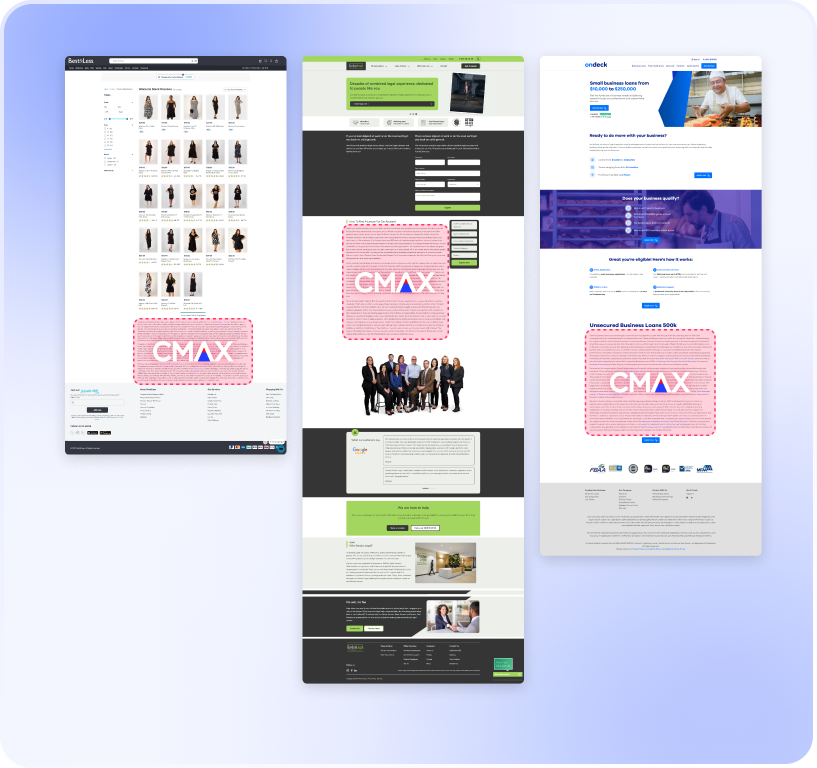
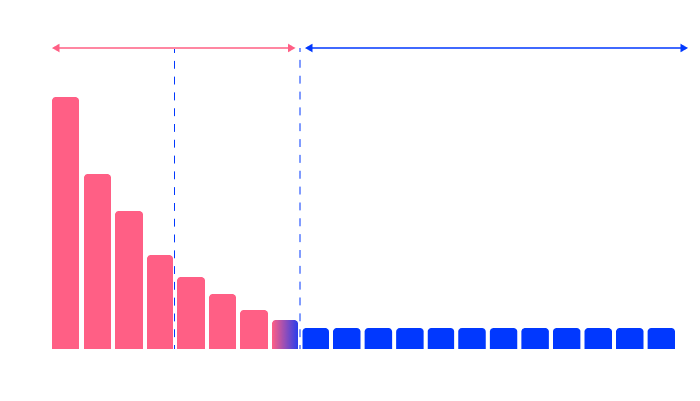
Our AI agents deploy and continuously update pages for the thousands of keyword variations your customers actually type, covering the 90% of search demand that conventional strategies, including link-focused campaigns, routinely miss. With just two lines of code, CMAX generates content that compounds: each new page strengthens the net, capturing more high-intent traffic as it grows. Teams have documented measurable organic gains within six weeks of deployment.
If you’re evaluating a link building SEO agency alongside broader growth options, CMAX sits in a different category, scaled content production, not outreach or placement.
References [1] – https://developers.google.com/search/docs/essentials/spam-policies
Author
Jeremy Tang
Founder and CEO of CMAX
Jeremy Tang is the Founder and CEO of CMAX. With over 2 decades of experience in business consulting and digital marketing, he has successfully driven seven startup businesses, six of which achieved $1 million in revenue from zero in less than 16 months, 5 of which grew to multi-million dollar a year ventures without any external funding. Jeremy's expertise lies in streamlining business processes through technology and leveraging digital (in particular SEO) for business growth. He resides in Australia, travels extensively, and draws inspiration from his global experiences.