Most definitions of a long tail keyword focus on word count or low search volume, but neither tells you whether the query actually needs its own page. The more useful question is whether the searcher expects a distinct answer that your existing content doesn’t already provide. That single test separates queries worth building pages for from variants better handled as a section on a page you already have. CMAX helps enterprise teams apply that distinction at scale, mapping long-tail queries to dedicated pages only when each one earns its place.
A long-tail keyword is defined by search-intent specificity.
Specificity Defines Long-Tail
Word count is a poor proxy for what makes a keyword long-tail. So what are long tail keywords? They are queries defined by intent specificity, not word count. A three-word query can be vague; a five-word query can be razor-specific. The more reliable test is whether the query narrows the answer the searcher expects.
A query like “dog treats” leaves the answer wide open. “Grain-free dog treats for puppies with allergies” points to a product type, an audience, and a problem. That specificity is what makes it long-tail: the searcher has already done part of the decision-making, and the page that ranks needs to meet them there.
The same logic applies across product queries, problem-based searches, location-specific terms, and audience-qualified phrases. If the query constrains what a satisfying answer looks like, it qualifies as long-tail regardless of how many words it contains.
Long tail keyword strategy sits within the broader practice of search engine optimisation, where intent specificity determines whether a query earns its own page or merges with a closely related one.
Shared Intent, One Page
Closely related variants often belong on a single page. When two queries are trying to complete the same task, produce substantially overlapping search results, and can be answered fully by one piece of content, splitting them across separate URLs adds duplication without adding value.
The term long tail keyword and longtail keywords are used interchangeably across the industry, both pointing to the same principle that specificity of intent, rather than word count, is what defines the category.[1]
The practical signal is the SERP. If the same pages rank for both queries, Google has already decided the intent is equivalent. Publishing two pages for the same intent creates competition between your own URLs rather than coverage of distinct needs. One well-built page that satisfies the shared intent outperforms two thin pages chasing minor wording differences.
A dedicated page makes sense when the query needs a distinct answer.
Distinct Query, Distinct Page
Three signals indicate a query has earned its own URL. First, a long tail keyword deserves its own page when it targets a different use case than adjacent terms, meaning the searcher is trying to accomplish something the existing page was never built to address. Second, the search results look meaningfully different: different page types, different brands ranking, different content formats. When Google is already serving a distinct set of results, that’s a reliable signal the query carries distinct intent. Third, the visitor arriving from that query needs a different next step, whether that’s a different example, a different offer, or a different conversion path. If any one of those three conditions holds, a separate page is the right call. Once a long tail keyword passes the distinct-intent test and earns its own URL, the next practical step is SEO page optimisation to align the content structure, title, and on-page signals with what the query demands.
Low Volume Can Still Matter
Choosing long tail keywords for SEO means evaluating whether each query reveals a distinct need your site does not yet answer. Volume is a weak proxy for value. A query pulling 50 searches a month can still justify a dedicated page when it reveals a clear buying decision or a specific problem that no existing page addresses well. A searcher who knows exactly what they need and is ready to act is worth more than a high-volume visitor still browsing options. The real test is intent clarity and coverage gaps. If the query expresses a specific need and your site has nothing that fully answers it, the page has a reason to exist. If an existing page already handles it in a paragraph or a comparison table, a new URL adds duplication without adding value.
A page-versus-section decision becomes clearer when you test overlap.
Page-Worthiness Checklist
Testing whether a long tail keyword warrants a page or a section starts with a short diagnostic. The checklist below tests the three variables that separate a page-worthy long-tail keyword from a variant that belongs inside an existing page.
Before working through the page-worthiness checklist for a long tail keyword, it helps to find long tail keywords systematically so the decision is based on a complete picture of intent variants rather than a single query in isolation.
Intent overlap. Pull the search results for the query and compare them against the results for the closest adjacent term already on your site. If the same URLs appear in roughly the same order, the intent is likely shared and a new page adds duplication, not coverage.
Content gap. Check whether your existing pages already answer the specific need the query expresses. A paragraph, a comparison table, or a subsection may be enough. If the query requires a different example, a different offer, or a different next step that no current page provides, that gap is a signal worth acting on.
Business value. Ask whether a dedicated page supports a real commercial, support, or educational goal. Low volume alone does not disqualify a query. A query that surfaces at a late decision stage, where a visitor is close to converting, can justify its own URL even when monthly search volume is modest.
If the query clears all three tests, a dedicated page is defensible. If it fails one or more, the content belongs as a section on a page that already owns the intent. Publishing before running this check is where cannibalisation starts.[2]
Does the query require a meaningfully different answer from the page you already have, not just slightly different wording?
This is the sharpest diagnostic question in the page-versus-section decision. Slightly different phrasing around the same intent does not justify a new URL. A genuinely different answer does.
Ask what a visitor from this query actually needs to walk away satisfied. If your existing page already provides that answer, a new page adds a duplicate, not a resource. If the query points to a different use case, a different buyer stage, or a conversion path your current page does not support, that gap is what earns a dedicated page.
The distinction is practical. A query like “long tail keyword examples for e-commerce” may share vocabulary with a general long-tail keyword page, but the searcher wants category-specific examples and a clear application to product pages. If your existing page covers the concept without that specificity, the answer is genuinely different and a new page may be warranted. If your existing page already walks through e-commerce examples in depth, a new URL repeats rather than extends.
Wording overlap is not the test. Intent overlap is. Two queries can share several words and still require separate pages when they pull different search results, attract different audiences, or lead to different next steps. Two queries can look distinct on the surface and still belong together when they resolve to the same answer and the same action.
Before creating anything new, pull up the page you already have and read it as the searcher would. If it answers the query fully, the work is done.
Do the current search results differ from adjacent terms in topic focus, page type, or the brands and pages Google prefers to rank?
Pull up the actual SERPs for the query you’re evaluating, then pull up the SERPs for the closest adjacent term. Compare what Google returns.
If the results for both queries surface the same page types (say, product listing pages in both cases), the same dominant topics, and largely the same URLs, Google is treating them as equivalent intent. A separate page for each adds nothing the index doesn’t already have.
The signal to watch for is a meaningful shift in any of three areas: topic focus, page type, or the specific brands and pages Google chooses to rank. A query that returns how-to guides where the adjacent term returns product pages is telling you the searcher’s goal has changed. A query where a niche specialist ranks above a broad authority suggests Google has identified a distinct audience need. Those shifts indicate the query may warrant its own page.
Checking whether the search results for a long tail keyword differ from adjacent terms reveals gaps that a single consolidated page cannot fill. It is also worth considering how AI-driven search results may affect which page types appear for specific queries.
This check keeps the decision grounded in evidence rather than assumption. Two queries can share vocabulary and still produce divergent results because Google has observed different behaviour patterns behind each one. When the SERPs converge, consolidate. When they diverge in topic focus, page type, or ranking preference, that divergence is a concrete signal the query carries distinct intent worth addressing separately.
Would a visitor from this query need a different example, feature set, proof point, or conversion path to complete the next step?
This is the most practical test in the checklist. Strip away the keyword and ask what the visitor actually needs to do next.
A query like “enterprise SEO platform for large product catalogues” pulls someone who needs pricing tiers, integration specs, and a case study showing scale. A query like “what is a long-tail keyword” pulls someone who needs a definition and a decision framework. Both may land on pages that mention the same product, but the next step is completely different. One page cannot serve both visitors without diluting the answer for each.
Run the test across four dimensions. Does the query call for a different example than the one your existing page uses? Does it require a feature set or capability your current page does not surface? Does it need a different proof point, such as a specific industry result or a volume threshold your existing case study does not cover? Does it lead to a different conversion action, such as a demo request versus a content download versus a comparison guide?
If the answer is yes to any of these, the query has earned its own page. If the answer is no across all four, the visitor’s need is already met, and a new URL adds duplication without adding value.
Deciding whether a long tail keyword warrants a separate conversion path is ultimately a question of web search optimisation, since the goal is to match each distinct visitor need to the page best equipped to satisfy it.
The test keeps the decision grounded in the visitor’s task rather than keyword mechanics. A page exists to complete a next step. When the next step changes, the page should too.
Frequently Asked Questions (FAQ)
Is the topic genuinely missing or thin on your site, rather than already handled in a paragraph, comparison table, FAQ, or subsection?
Before creating a new URL, audit what you already have. If the query is answered adequately in an existing section, a new page adds duplication without adding value.
Would a dedicated page support a real commercial, support, or educational goal, even if the query is niche and search volume is modest?
Low volume is acceptable when the intent is clear and the page serves a defined purpose. A query that drives one qualified lead per month can outperform a high-volume page that converts no one.
Merge Close Variants
One page should absorb close variants when they surface the same search results. Long tail keywords such as “healthy dog treats” queries that return identical SERPs belong on one page. Splitting them produces multiple URLs competing for the same answer.
Intent Match Beats Exact Match
A page satisfies a query when it fully addresses the intent behind it. Natural language variants that reflect how people search work better than forcing one exact phrase throughout the copy.
Distinct Pages Need Distinct Queries
In one CMAX engagement, a B2B omnichannel hospitality retailer published 5,000 long-tail product pages and added $1M+/month incremental SEO revenue in 8 months. Each page was mapped to a genuinely distinct buying query. Enterprise sites with large catalogues face the same decision rule: scale only works when each new page answers a separate search need.
Cannibalisation Follows Duplicate Intent
Cannibalisation happens when multiple pages compete to answer the same intent. Overlap in vocabulary is not the problem. Overlap in purpose is.
New Pages Need New Answers
Long-tail targeting works when each new page adds an answer, example, use case, comparison, or path forward that existing pages do not provide. If a new page cannot offer that distinction, it belongs as a section on an existing page.
Do long-tail keywords have higher conversion rates?
Based on CMAX’s client data, long-tail keywords can convert better when they express a specific need or a later decision stage. Conversion rate depends on the fit between intent, offer, and page content, the long-tail label alone does not drive results.
How many long-tail keywords are ideal in a blog post?
Target one primary intent and let close variants appear naturally. Forcing a fixed keyword count into the copy produces awkward phrasing without improving coverage.
After identifying long-tail keywords, what should I do next?
Compare each keyword against existing pages. Decide whether it needs a new page, a new section, or no action because the intent is already covered and a separate URL would add duplication.
Readers who want to go deeper on long tail keyword decisions can explore a search engine optimisation blog for case studies, worked examples, and intent-mapping frameworks that complement the checklist approach.
Should each long-tail keyword have its own page?
No. Many variants can be consolidated when they trigger similar search results and require the same answer, examples, and next step.
Will a long-tail keyword rank for shorter phrases?
A page built for a long-tail keyword can rank for shorter phrases when topic and intent overlap. Broader terms carry more mixed intent and stronger competition, so that overlap is not automatic.
A long tail keyword earns a dedicated page only when it adds an answer existing pages do not provide. When the intent is already served, the smarter move is to strengthen the section that already covers it.
One Query, One Page, Thousands of Opportunities
Most businesses fight over the same handful of high-volume keywords and ignore the long tail entirely.
CMAX is an agentic SEO platform built to target thousands of long tail keyword variations at a scale and speed manual teams can’t match. With two lines of code, our AI agents deploy and continuously update content for the specific ways your customers actually search. Results typically start showing within six weeks, not quarters.
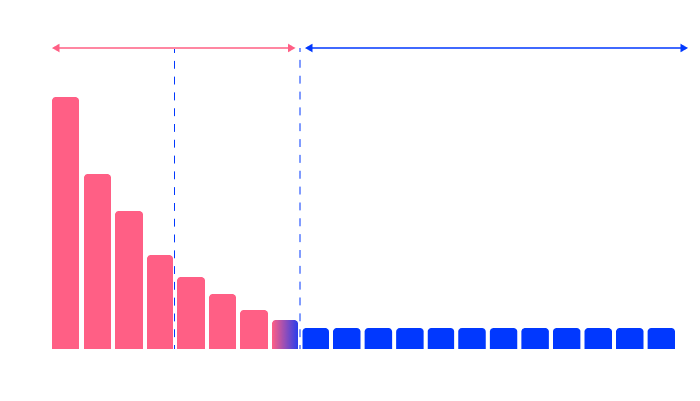
Over 90% of search demand sits in the long tail, and that’s exactly where we work.
References [1] – https://searchengineland.com/guide/long-tail-keywords-seo [2] – https://developers.google.com/search/docs/essentials/spam-policies
Author
Jeremy Tang
Founder and CEO of CMAX
Jeremy Tang is the Founder and CEO of CMAX. With over 2 decades of experience in business consulting and digital marketing, he has successfully driven seven startup businesses, six of which achieved $1 million in revenue from zero in less than 16 months, 5 of which grew to multi-million dollar a year ventures without any external funding. Jeremy's expertise lies in streamlining business processes through technology and leveraging digital (in particular SEO) for business growth. He resides in Australia, travels extensively, and draws inspiration from his global experiences.