Most teams treat SEO longtail as a word-count exercise: find longer phrases, target lower volumes, hope for easier wins. But the queries worth prioritising are defined by intent specificity, not syllable count. A four-word phrase with clear buying context will outperform a seven-word phrase that sits at the research stage. The real question is whether a keyword leads to a click and then a qualified action, or whether it only inflates impressions. That distinction shapes every decision in the process below, and it is the same principle that underpins how CMAX approaches programmatic keyword expansion for its clients.
Qualified Traffic Matters More Than Long Keyword Length
Intent Defines Long-Tail SEO
SEO longtail is better understood as a measure of intent specificity than of word count. A three-word query carrying clear purchase or location intent can outperform a ten-word query that still sits at the broad research stage. The searcher’s job-to-be-done is what separates a qualified visit from an inflated impression count.
That distinction shapes every prioritisation decision. A query like “SEO platform for SaaS onboarding” signals a buyer narrowing options. A query like “what is SEO” signals someone at the start of a much longer path. Both may be long or short in character count. Only one is likely to produce a click that leads somewhere useful for the business.
When building an SEO longtail strategy around intent rather than word count, teams increasingly explore how AI in search engine optimisation is reshaping the way query specificity and user signals are interpreted at scale.
Misaligned Intent Wastes Impressions
When SEO long tail impressions climb but clicks and enquiries stay flat, intent mismatch is usually the cause. The query suggests one job, the SERP rewards a different page type, and the landing page answers neither well enough to earn the click or the follow-on action.
This pattern is common on pages built around volume rather than specificity. A page optimised for a broad informational term may rank, accumulate impressions, and still produce no enquiries, because the visitors it attracts are at a research stage that does not connect to the conversion the business needs. Teams selecting long tail keywords for SEO should evaluate each candidate by the action it implies, not the traffic it promises. Visibility without qualified intent is a reporting metric, not a commercial outcome.
The best terms start with qualified-action intent.
Prioritise use-case and buying-stage terms
Volume is a starting point, not a verdict. The terms worth targeting are those tied to a defined problem, a specific location, a comparison decision, or an implementation task, because a searcher using that kind of query has already narrowed what they need. A searcher typing SEO Melbourne has already narrowed the requirement to a city, which means the intent carries geographic qualification before any content strategy begins. They’re not browsing a topic; they’re moving toward an action. Prioritising longtail terms by the action behind the search is the core principle of search intent SEO, where the goal is matching query purpose to the right page type before any content is published.
That specificity changes the sales conversation. A visitor who searched “CRM software for construction project managers” arrives with a context you can meet directly. A visitor who searched “CRM software” may be a student, a journalist, or a competitor. Both generate impressions. Only one is likely to enquire.
Buying-stage framing helps here. Queries that include comparison language (“vs,” “alternative to”), implementation language (“how to set up,” “onboarding”), or outcome language (“reduce churn,” “automate invoicing”) tend to reflect a searcher closer to a decision. Prioritise those over broad category terms that sit at the research stage indefinitely.
Validate intent in the SERP
Before committing to a keyword, check the live results page. Google’s ranking choices reveal how it currently classifies the query, informational, comparative, or transactional, and that classification tells you which page type is likely to rank. The same principle applies to SEO in Sydney, where reviewing the top results for that location query shows whether Google favours agency listings, directories, or educational content.
If the top results are listicles and explainer guides, publishing a product landing page is unlikely to match what Google expects for that query. If the top results are comparison pages or vendor listings, an educational article may not earn the click either. Matching your page type to the SERP pattern is a prerequisite, not an optimisation detail. Skipping this step is one of the more common reasons content gets published and then stalls. Validating longtail targets against live SERP results becomes even more important as SEO for AI search changes how intent signals are surfaced and ranked across different query types.
A long-tail keyword targeting process keeps prioritisation consistent.
Work backwards from the conversion event
Start with the action you want the page to drive: an enquiry, a demo request, a trial sign-up, an application. Once that conversion event is fixed, every other decision follows from it. Applying SEO longtail thinking means starting from the action, not the query.
Define the conversion event first. A page built around a vague goal produces vague results. Naming the specific action upfront gives you a filter for every keyword you consider.
List the exact queries a buyer uses before taking that action. Think in stages: problem-led phrasing (“why is my organic traffic flat”), comparison phrasing (“best programmatic SEO platform for SaaS”), location or vertical phrasing, and implementation phrasing (“how to set up long-tail landing pages”). Each phrasing type reflects a different point in the buying process, and each may warrant a different page.
Check the SERP before committing. Google’s live results show whether a query is currently rewarded with guides, comparison pages, local packs, or product landing pages. A keyword that looks transactional in a spreadsheet may be treated as informational in practice. Publishing the wrong page type means competing against content Google has already decided fits better.
Match the keyword to the page type that fits its intent. Forcing every term into the same template is one of the most common reasons SEO optimisation produces impressions without clicks. A comparison query needs a comparison page. An implementation query needs a how-to. The format is part of the targeting decision, not an afterthought.
Working backwards from a conversion event is especially relevant for product pages SEO, where buying-stage queries and implementation phrasing often signal the clearest commercial intent.
Working backwards this way means each keyword is judged by its likely contribution to a real business outcome, not by search volume alone.
Measure clicks alongside enquiries, lead quality, or other downstream actions, so a keyword does not survive on visibility alone.
Score keywords by business fit
Volume is a starting point, not a verdict. A keyword ranking at a high position for a large volume of monthly impressions means little if the visitors it attracts never take a next step.
A simple scoring model keeps prioritisation consistent. A scoring model judges each SEO longtail candidate by business fit, not volume alone. Weight each term across four dimensions: business relevance (does this query map to something you actually sell or solve?), SERP match (does the current results page reward the page type you can publish?), likely click-through potential (does the SERP layout leave room for organic clicks, or do ads and features dominate?), and the quality of actions the term tends to drive (clicks, demo requests, enquiries, applications).
Scoring does not need to be elaborate. A four-column spreadsheet with a 1-to-3 rating per dimension produces a ranked list that reflects business outcome, not just search volume. Terms that score high on relevance and action quality but low on volume often outperform high-volume terms that score poorly on SERP match or downstream fit.
Scoring SEO longtail terms by business fit rather than volume alone gives teams a clearer picture of which queries are genuinely contributing to SEO website traffic that converts, rather than simply inflating impression counts.
The practical effect is that keywords compete against each other on criteria that connect to revenue, which stops low-intent, high-impression terms from crowding out the terms that actually move pipeline. Revisit scores when SERP patterns shift or when conversion data from live pages gives you a cleaner read on which queries are pulling qualified visitors.
Evidence Should Decide Whether a Term Stays or Goes
Use Search Console for Quality Signals
Google Search Console tells you a page is visible. It does not tell you whether the visitors arriving on that page are doing anything useful. That gap is where keyword decisions go wrong.
The data becomes actionable when you layer it: pull queries, clicks, and landing page performance from Search Console, then compare that against lead or conversion data from your CRM or analytics platform. A query generating a high volume of impressions but few clicks warrants a different response than one generating fewer impressions but more clicks and enquiries. Rankings and impressions confirm presence; clicks and downstream actions confirm fit.
Reviewing Search Console data to validate SEO longtail performance pairs naturally with how AI driven SEO tools can surface patterns in click, lead, and conversion signals that manual analysis might miss. Traditional SERP validation still anchors most measurement workflows, but the emerging LLM SEO landscape adds a layer where ranking alone may not capture visibility. Platforms like Gemini change how queries resolve, making gemini SEO a factor worth monitoring alongside conventional click data.
If a term is visible but not converting, the problem is usually intent mismatch or page type. Search Console shows you where to look. Your conversion data tells you whether the fix worked. This is how you confirm a SEO longtail term is earning its place.
Proof from a Fintech SEO Programme
In one CMAX engagement, a fintech lender achieved 6X SEO traffic and 6X loan applications within 12 months. The mechanism was expanding into suburb-specific and intent-specific long-tail pages, each targeting a searcher at a defined stage of the borrowing decision.
SaaS teams face a structurally similar position: PPC costs are high, head-term competition is mature, and high-intent search demand in the long tail often goes unaddressed. The prioritisation logic transfers directly. Choosing qualified-action keywords over broad terms that inflate impressions produces stronger downstream results, and the fintech outcome reflects what that shift looks like at scale.
Scaled coverage works when pages add distinct value.
Cluster by job, not phrasing
SEO longtail coverage scales safely when each page serves a distinct user job. Scaling long-tail coverage creates a thin-content problem when the only variable between pages is a swapped modifier or location name. Intent clustering sidesteps this by grouping close variants under pages that serve genuinely different user jobs, and it is one of the most effective SEO strategies for avoiding content bloat.
A searcher learning what onboarding software does has a different task from one comparing two vendors or one ready to book a demo. Those are three distinct jobs. Three distinct pages. Minor wording changes that leave the underlying task unchanged do not justify a new page; they belong on the one that already serves that job.
This approach keeps each page substantive and gives Google a clear signal about what the page is actually for.
Test one narrow SaaS use case
Before scaling to dozens of intent clusters, test the logic on one narrow query first. A SaaS team targeting a broad term like “SEO” can move to a specific onboarding-use-case query, publish a page matched to that intent, then measure clicks, demo requests, and lead quality over a defined period.
If that cluster produces stronger downstream actions than the broad term, the prioritisation model is working and expansion is justified. If it does not, the template or the intent match needs adjustment before the same pattern is replicated across similar pages.
Vertical niches show how narrow use-case pages add distinct value. A page built around SEO for restaurants can target menu-driven search behaviour that a generic “local SEO” page would never address well. Likewise, travel SEO demands content shaped by seasonal demand and destination-specific queries, giving each page a clear reason to exist.
As teams scale long-tail coverage across intent clusters, learning how AI engine optimisation influences content evaluation can help each page add distinct value rather than blending into near-duplicate results.
Publishing dozens of near-duplicates up front removes the feedback loop that keeps quality high. One cluster, measured properly, tells you more than twenty pages published on assumption.
Frequently Asked Questions (FAQ)
How do you prioritise long-tail keywords for SEO?
Start with the conversion action you want the page to influence, whether that’s an enquiry, a demo request, or an application. From there, select queries whose SERP intent, page type, and likely visitor quality align with that outcome. Volume is a secondary filter, not the primary one.
How long does SEO take to show results?
There’s no single fixed timeline. Implementation depends on template readiness, data structure, content governance, and publishing workflow. Planning by rollout stages gives teams a more accurate picture than committing to one end date before those variables are assessed.
How can you scale SEO content without losing quality?
Cluster keywords around distinct intents rather than minor phrasing variations. Use page templates only where the information pattern is genuinely repeatable across queries. Review performance at the query and conversion level, not just at aggregate traffic, so thin pages get caught early.
Will programmatic SEO lead to duplicate content?
It can, if the approach only swaps locations or modifiers without changing the substance of the page. Pages that add distinct information, use cases, or decision support for different buyer stages are far less likely to produce thin or repetitive content.
Do long-tail keywords convert better?
They often do when they reflect a specific need or buying stage. The real test is whether they produce stronger downstream actions than broader terms for your business. Impressions and rankings tell you a page is visible; clicks, enquiries, and lead quality tell you whether it’s attracting the right visitors.
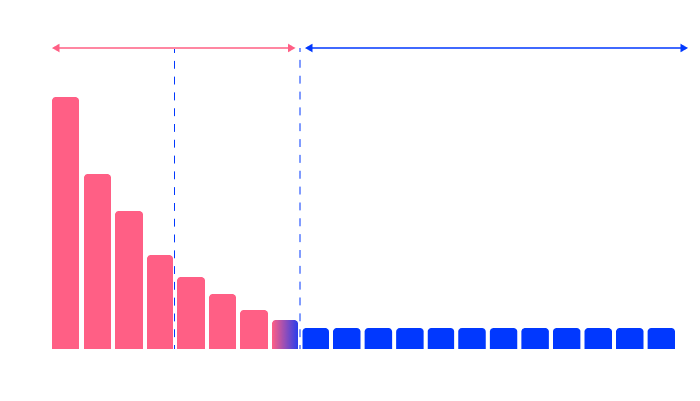
Long-Tail Traffic Is the 90% Most Teams Never Reach
Most SEO strategies stop at head terms and hope for the best.
CMAX is an agentic SEO platform built to target thousands of long-tail keywords at a scale and speed manual teams can’t match. Two lines of code deploy AI-driven content that covers the specific, high-intent queries your customers actually type. Our agents then continuously update that content so pages stay relevant as search behaviour shifts.
The result: broader keyword coverage that prioritises qualified traffic over raw impressions, with early signals observed in as few as six weeks.
Author
Jeremy Tang
Founder and CEO of CMAX
Jeremy Tang is the Founder and CEO of CMAX. With over 2 decades of experience in business consulting and digital marketing, he has successfully driven seven startup businesses, six of which achieved $1 million in revenue from zero in less than 16 months, 5 of which grew to multi-million dollar a year ventures without any external funding. Jeremy's expertise lies in streamlining business processes through technology and leveraging digital (in particular SEO) for business growth. He resides in Australia, travels extensively, and draws inspiration from his global experiences.