Most teams that look into a managed SEO service already have a strategy or an audit sitting somewhere. The gap is rarely insight. It’s the capacity to turn research into published pages, get technical fixes through a dev queue, and keep reporting tied to what actually shipped. When that execution loop breaks, SEO stalls behind other priorities regardless of how strong the plan is. If you’re weighing whether to resource that loop internally or hand it to a partner, CMAX is one provider worth evaluating alongside your options.
A Managed SEO Service Covers Ongoing Execution
What Managed SEO Includes
A managed SEO service covers the full operating loop: keyword and topic research, technical fixes, content briefs or production, publishing workflows, performance measurement, and ongoing optimisation. Work moves from plan to live pages rather than stopping at a slide deck of recommendations.
Research that never becomes a brief, briefs that never become published pages, and technical findings that sit in a backlog unactioned are common failure modes. A managed SEO approach is structured to close those gaps, with each phase feeding the next on a defined cadence.
Fully managed SEO services coordinate the complete publishing workflow, which means sourcing and briefing SEO content writers who can turn keyword research into approved, on-brand pages without stalling the production backlog.
Audit vs Managed Delivery
A one-off audit identifies what is wrong and what could be improved. That is where its scope ends. Managed SEO services pick up where an audit stops: they own the backlog, sequence tasks by impact and dependency, assign owners across content and development, and follow work through to implementation.
The practical difference is accountability. An audit produces a prioritised list. Managed delivery produces shipped work. Technical fixes get tracked to completion. Content briefs move through approval and into the publishing queue. Performance data feeds back into the next round of prioritisation. The operating loop stays live rather than stalling after the initial diagnostic.
For teams that have already run audits and watched the recommendations age without action, managed delivery addresses the execution gap directly.
Outsourcing fit depends on operational capacity.
Signs outsourcing is justified
Clarifying what is SEO management helps distinguish between setting strategy internally and paying for sustained execution externally. Outsourced SEO management becomes a practical fit when internal teams can set direction but cannot consistently execute across research, approvals, content production, technical coordination, and reporting. The gap shows up in a specific way: SEO work gets deprioritised whenever another channel or product initiative competes for the same people. Strategy exists; sustained delivery does not. At that point, engaging a SEO management company closes the gap between intent and output.
SEO readiness checklist
Before committing to a managed SEO service, identify where the real constraint sits. It may be execution capacity, implementation speed, reporting clarity, or specialist coverage. When evaluating SEO management Perth teams can access locally, the readiness checklist below helps clarify fit. Each of the following signals a gap worth addressing:
Content production and publishing. Your team cannot publish net new pages or update underperforming search-led content consistently without delaying other marketing or product work.
Technical implementation. SEO fixes depend on developers with competing roadmap priorities, so crawl, indexation, template, or internal-link changes wait behind other releases. A managed SEO service readiness assessment may reveal that technical coordination and reporting require depth that only an enterprise SEO specialist can reliably provide across crawl, indexation, and template-level fixes.
Keyword-to-brief conversion. Keyword research exists, but no one is reliably turning it into approved briefs, new pages, or refreshes to content that has lost ground.
Reporting attribution. Reporting shows traffic movement but does not connect performance changes to specific actions: page launches, technical fixes, or content updates.
Specialist coverage. Effective execution requires working coverage across content, technical SEO, and measurement. That scope is broader than one in-house generalist can typically execute and govern at the same time. When a managed SEO service needs to scale beyond a generalist’s remit, organisations with complex site architectures or multi-market requirements often evaluate enterprise SEO consultants to close specialist coverage gaps.
If three or more of these apply, the constraint is operational, and managed delivery addresses the execution gap directly.
Delivery quality depends on governance and reporting.
Governance before delivery starts
A managed SEO service without defined governance is a backlog waiting to stall. Strong programmes establish approval paths, implementation checkpoints, escalation rules, and reporting responsibilities before a single brief is written or a technical ticket is raised.
Without that structure, content sits in review queues, developer changes wait on unclear sign-off, and stakeholder feedback arrives after work is already live. The backlog grows; momentum does not.
Governance within a managed SEO service often includes defining how output from an SEO content writing company is reviewed for accuracy, brand consistency, and compliance before anything is published.
Approval paths clarify who reviews content before publication and who has authority to push technical changes to staging or production. Implementation checkpoints confirm that work moved from assigned to shipped, not just from planned to in-progress. Escalation rules define what happens when a dependency blocks delivery, so a missed developer sprint does not silently delay three downstream content tasks. Reporting responsibilities assign ownership over what gets measured, how often, and who receives it.
What separates a reliable managed SEO service from a loose retainer is whether these structures exist before production starts. Retrofitting governance onto an active programme is slower and more disruptive than building it in at the outset.
Human review for AI-assisted SEO
AI-assisted content production can scale output, but scaled drafts introduce specific risks that human review must catch before publication: factual errors, repeated phrasing across pages, unsupported claims, brand drift, and compliance-sensitive wording.
The risk is not that AI produces obviously bad content. The risk is that it produces plausible content that is subtly wrong, off-brand, or legally exposed. A reviewer needs to check what is published and what source material trained or prompted the output.
At scale, that review process needs its own checkpoint in the workflow, with a named owner and a defined scope, not a general instruction to “check before publishing.”
For an SEO service Melbourne businesses rely on, human review of AI-assisted output is non-negotiable. Managed SEO service programmes increasingly intersect with AI in search engine optimisation, making human review checkpoints essential for catching factual errors, brand drift, and unsupported claims before pages go live.
Buying confidence comes from scope, proof, and timelines.
Realistic SEO service timeline
A realistic managed SEO service timeline starts with a research and setup phase: keyword and topic mapping, technical clean-up, and workflow configuration. Once that foundation is in place, the programme shifts into steady-state delivery, which means consistent publishing, implementation follow-through, and regular reporting against agreed KPIs.
Early movement tends to show up in indexation, query coverage, and page-group rankings before larger commercial outcomes are visible. That sequencing is worth communicating to stakeholders upfront. A CFO expecting revenue lift in week three will lose confidence in a programme that is, in fact, running exactly as it should. Transparent SEO services pricing ties monthly cost to defined deliverables, not hours logged, so stakeholders can map spend to output from day one.
When evaluating a managed SEO service, buyers comparing scope and proof points will often research SEO services marketing broadly to benchmark what realistic deliverables, timelines, and reporting cadences look like across providers. For anyone assessing an SEO service Sydney provider has delivered, asking for mechanism-level proof at this stage separates credible programmes from vague promises.
Client proof by mechanism
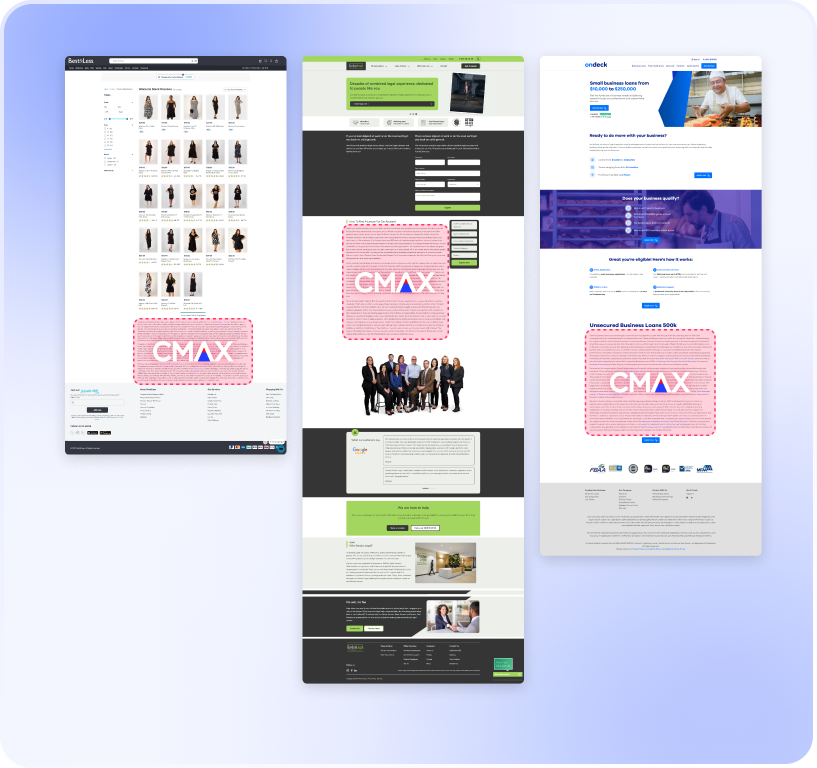
One CMAX engagement with a B2B omnichannel hospitality retailer illustrates what catalogue-scale execution can produce. Based on CMAX’s client engagement data, the programme added 5,000 long-tail product pages and reached $1M+ per month in incremental SEO revenue within 8 months. CMAX delivered this result through the same structured methodology available to enterprise buyers in any market.
The mechanism behind that result applies broadly to enterprise sites with wide product or service catalogues. A typical audit-led approach surfaces the highest-volume gaps and stops there. Hundreds or thousands of specific search variants, each with real commercial intent, go uncovered because the audit does not own execution. A managed programme sequences and publishes against that long-tail demand continuously, which is where the compounding effect on revenue originates. For teams exploring managed services Sydney organisations have adopted at scale, this compounding model is the proof point worth benchmarking against.
Frequently Asked Questions (FAQ)
How do you research and prioritise keywords for our business and seasonality?
Keyword prioritisation weighs commercial intent, current site coverage, internal revenue or margin priorities, and seasonal demand patterns together. The roadmap should reflect how people actually search, which pages already exist, and when demand is most likely to convert, so effort concentrates where it can move commercial outcomes, not just rankings.
How do you adjust when there are algorithm updates or new search features?
After an algorithm change or new search feature, the first step is to review which page types moved, whether the shift is sitewide or isolated, and which quality signals may be involved. Rewriting the whole strategy around short-term volatility is rarely warranted until the pattern is clear.
As managed SEO service strategies evolve, teams tracking algorithm updates and new search features should also monitor SEO for AI search to understand how AI-generated results are reshaping query coverage and ranking signals.
What KPIs will you track, and how often will we see performance reports?
A managed SEO service should track indexed pages, rankings by page group, organic traffic quality, conversions, and implementation progress on a regular cadence. Teams should be able to see what shipped, what changed, and which activities are influencing outcomes, not just a traffic line moving up or down.
What is a realistic timeline for seeing meaningful results?
Results depend on the starting point, implementation speed, site authority, and the volume of new content or technical work required. Early gains typically appear in indexation, query coverage, or rankings before sustained commercial impact is established.
Who owns the content, data, and accounts if we decide to leave?
Ownership terms should be defined in writing before work starts, covering content files, analytics access, search platform accounts, and published page assets. Without that clarity upfront, an exit can create gaps in reporting, content control, or organic visibility that take months to recover.
Your Team Is Small, Your SEO Doesn’t Have to Be
CMAX is an agentic SEO platform built for the long tail.
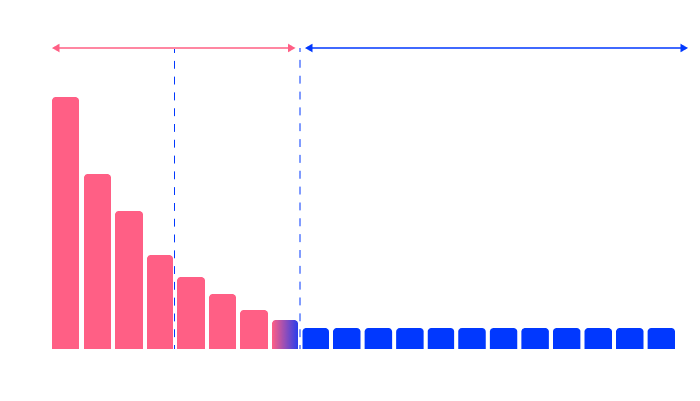
Most businesses compete over a narrow slice of high-volume keywords while the other 90% of search demand goes uncaptured. CMAX deploys AI-powered agents that create, publish, and continuously update content targeting thousands of long-tail keyword variations, with just two lines of code added to your site. That means your lean team gets the output of a full content operation without the headcount.
Results from observed accounts have started surfacing within six weeks of deployment, giving you a reportable timeline a CFO can actually evaluate.
Author
Jeremy Tang
Founder and CEO of CMAX
Jeremy Tang is the Founder and CEO of CMAX. With over 2 decades of experience in business consulting and digital marketing, he has successfully driven seven startup businesses, six of which achieved $1 million in revenue from zero in less than 16 months, 5 of which grew to multi-million dollar a year ventures without any external funding. Jeremy's expertise lies in streamlining business processes through technology and leveraging digital (in particular SEO) for business growth. He resides in Australia, travels extensively, and draws inspiration from his global experiences.