Most teams searching for a marketing SEO definition already sense that SEO sits somewhere between a technical task and a full acquisition channel, but the internal conversation keeps defaulting to one or the other. That gap matters because it shapes how budget gets allocated, how work gets scoped, and whether organic performance is measured like a channel or treated like a maintenance line item. The distinction between organic and paid search is a good place to start, and it’s one that CMAX helps enterprise teams act on at scale.
SEO is organic marketing, not paid placement.
SEO vs PPC placement
A clear marketing SEO definition starts with one distinction: SEO is organic, not paid. An SEO marketing definition centres on unpaid visibility earned when search engines can crawl, render, index, and match a page to a query’s intent. PPC buys sponsored placement for as long as the campaign budget runs. The moment spend stops, so does the exposure. SEO operates on a different model: pages that genuinely satisfy a search need can continue attracting qualified traffic after publication without a cost-per-click attached to every visit.
The broader SEO definition frames the discipline as responsible for earning unpaid visibility through crawlable, intent-matched content rather than paid placement. To define SEO marketing is to separate this earned channel from any media that requires ongoing ad spend to maintain exposure.
Common SEO assumptions
Teams often treat SEO as a website maintenance task. In marketing terms, it functions as an organic acquisition channel with its own research inputs, production requirements, measurement model, and delayed payoff. Several assumptions get in the way of that framing.
Assumed: SEO is paid. SEO earns unpaid visibility from pages that deserve to appear for a query. PPC and other paid media buy exposure for as long as budget is assigned.
Assumed: SEO is just technical fixes. Technical access matters, but rankings also depend on intent fit, content depth, internal linking, and whether the page answers the query better than competing results.
Assumed: any page can rank if it’s indexed. Indexed pages still struggle when they target broad audience messaging instead of a specific search need, such as a comparison, location, feature, or product variant.
Assumed: SEO results appear on launch. Rankings and traffic lag because search engines must discover the page, process its rendering, interpret its topic, and compare it against established results.
Assumed: SEO replaces paid search. SEO and PPC solve different timing and cost problems. Teams often run paid search to test demand while building organic coverage for the same query set.
SEO Work Spans Content, Technical Access, and Measurement
What SEO Work Includes
Marketing SEO covers the full path from mapping real search demand through to measuring business impact. That scope includes site structure, internal linking, indexation controls, content targeting, and performance analysis. Everything in this scope falls under the marketing SEO definition. Going beyond a surface-level SEO definition helps teams recognise that the discipline spans all of these areas as a unified acquisition channel.
Teams that treat SEO as a checklist of copy edits and code tickets tend to plateau. For anyone asking what is SEO marketing, the discipline asks different questions at each stage: which queries signal commercial intent, whether the site architecture surfaces the right pages to search engines, whether those pages are indexed and rendering correctly, and whether organic sessions are converting at a rate worth tracking. Each layer feeds the next. A technically sound site with weak content targeting will rank for the wrong queries. The role of SEO in content marketing is to align each page with a specific search need, and strong content on pages that search engines can’t crawl won’t rank at all.
Measurement closes the loop. Impressions, clicks, indexed-page coverage, and conversion rate from organic sessions each tell a different part of the story, and revenue or lead quality attribution tells the part a CFO cares about. To clarify what does SEO stand for in marketing: it is the practice of earning visibility through unpaid search results. Clarifying what search engine optimisation means in a marketing context reinforces that the work covers far more than code fixes, encompassing content strategy, internal linking, indexation controls, and business-impact measurement. The SEO meaning in marketing (search engine optimisation applied as an acquisition channel) ties every one of those activities back to measurable commercial outcomes.
Generic vs Query-Specific Pages
A generic product or service page is written for a broad audience. It describes what a business offers without matching the specific wording, comparison context, or decision stage behind a real search.
A query-specific page is built around a defined search need: a location, a product variant, a use-case comparison, a feature question. That specificity is what allows the page to match what the searcher expects to find. A visitor searching “project management software for construction teams” and landing on a generic software overview page has already lost confidence before reading a word. The page that answers the exact query wins the click and holds the session.
SEO Performance Depends on Crawlability, Competition, and Time
Why SEO Takes Time
What the marketing SEO definition does not capture at first glance is how long results take to materialise. SEO timelines typically span several months, and that range reflects real technical steps, not vendor hedging. Before a page can rank, a search engine must discover it, crawl its content, render any JavaScript dependencies, index it, and then compare it against established competing pages. Each step takes time, and none of them happen simultaneously.
Beyond the page itself, rankings also depend on broader topic coverage and internal link support. A single well-written page targeting an isolated query often underperforms because search engines weigh the surrounding context: how many related pages exist on the site, how they link together, and whether the site demonstrates consistent relevance across a topic area. Building that coverage takes production time, not just publication.
Marketing SEO definition frameworks are increasingly being revisited as AI search reshapes how results are surfaced, adding another variable to the already lengthy timeline between publication and measurable organic traction.
Teams that expect results at launch are measuring too early. The lag is structural.
Crawlability Can Block Performance
Content quality alone does not produce rankings. A page that search engines cannot reliably access will not perform, regardless of how well it matches a query.
Common access failures include pages buried too deep in the site architecture, key URLs with few or no internal links pointing to them, resources blocked in robots.txt or behind authentication, and JavaScript rendering that prevents search engines from reading the page’s actual content. Any one of these can stop a page from being indexed or interpreted correctly.
One of the clearest SEO marketing examples is a page that was indexed but invisible until internal links gave it crawl priority.
The practical implication: before attributing underperformance to content or competition, audit whether search engines can actually reach and process the pages in question.
Organic and Paid Search Solve Different Channel Economics
When SEO and PPC Differ
PPC earns its place when a team needs visibility now: a product launch, a seasonal push, or coverage for queries where organic rankings don’t yet exist. Paid search also lets teams test messaging and conversion intent quickly before committing to content production at scale.
SEO becomes the stronger economic argument on recurring queries. Whether is SEO marketing worth it depends on how recurring the demand is and what the same clicks cost through paid channels. If the same commercial searches fire month after month, paying per click indefinitely is a cost structure that compounds against you. Organic pages, once they rank, attract qualified visits without a per-click charge attached to each one. The channel economics shift in SEO’s favour the longer a query set stays commercially relevant.
Teams that want to define search engine optimisation in a channel-economics context will find that marketing SEO definition work centres on recurring, unpaid visibility that compounds over time rather than requiring ongoing media spend for every click. The marketing SEO definition matters most when teams weigh channel costs side by side.
The two channels aren’t competing for the same budget slot. PPC covers timing gaps; SEO reduces the cost of owning demand over time. Teams that treat them as substitutes tend to stay dependent on paid spend longer than necessary.
Catalogue-Scale Proof Point
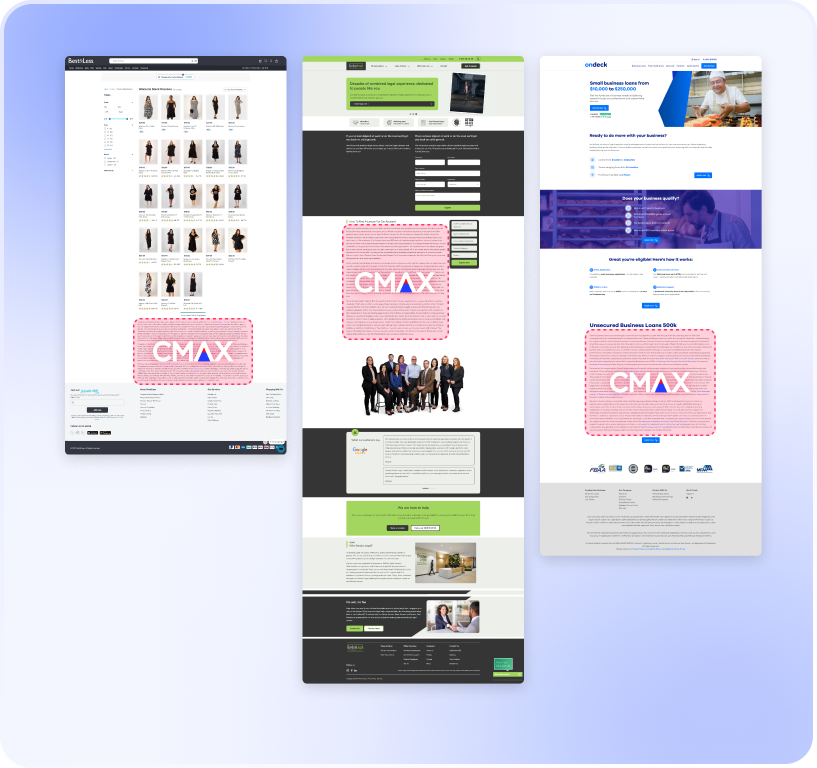
The coverage gap is most visible at catalogue scale. In one CMAX engagement, a B2B omnichannel hospitality retailer built 5,000 long-tail product pages and drove over $1M per month in incremental SEO revenue within eight months.
The underlying problem is common across enterprise teams: a small set of category pages can’t match the full range of high-intent searches a large catalogue generates. Those searches stay covered by paid ads, at ongoing cost, until organic pages exist to capture them. Building that coverage at speed is where programmatic SEO changes the channel economics.
The practical takeaway is to treat SEO as a channel.
When SEO makes sense
SEO works best as a channel when three conditions align: customers search repeatedly before buying, the site can be crawled and indexed without significant technical blockers, and the cost of paying for every relevant click is hard to sustain at scale.
Recurring search behaviour is the clearest signal. If the same queries appear month after month across a buying cycle, organic pages can keep attracting qualified visits after publication without requiring spend each time someone clicks. When those conditions are absent, thin search demand, a site with serious crawlability issues, or a one-off campaign, paid search is often the more practical tool. Teams evaluating SEO marketing Australia can apply the same channel framework to local market conditions, weighing domestic search volume against paid costs.
How teams compare channels
Channel decisions become clearer when teams work through four questions in sequence: How large is the search demand, and what does it look like across query types and intent stages? What implementation work is required to capture it, content production, technical fixes, internal linking, indexation controls? What is the realistic time horizon to traction, given that pages need to be discovered, indexed, and evaluated against competing results? And can SEO reduce dependence on paid search for the same commercial queries over time?
When teams move past asking SEO what is SEO and begin treating marketing SEO definition as a channel decision, they can more clearly compare search demand size, implementation requirements, and time-to-traction against paid alternatives. For a team exploring SEO marketing Melbourne, local search volume shapes the priority list before any content is produced.
That last question carries real budget weight. If a query set is already converting through paid search, it represents proven demand. Building organic coverage for those same terms shifts spend from recurring media cost to a one-time production investment with compounding return. That channel-level view is what gives the marketing SEO definition its practical weight.
Frequently Asked Questions (FAQ)
Can SEO and PPC work together?
Yes. Paid search can test messaging and conversion intent quickly, giving teams real data on which queries convert before committing to organic production. SEO then builds unpaid coverage for the query groups that prove worth owning over time. The two channels address different timing and cost problems, which is why running them in parallel often outperforms either alone.
How does SEO impact the customer journey?
SEO matches page types to search intent at each stage. Educational pages capture early-stage research queries. Comparison and category pages serve evaluation-stage searches where buyers are weighing options. High-intent product or service pages target decision-stage searches where the visitor is close to acting. Each page type needs to match the specific wording and context of the query it targets.
What SEO metrics should I track?
Track impressions and clicks by query group, rankings for commercially relevant terms, indexed-page coverage, and internal page discovery. Add conversion rate from organic sessions and, where attribution allows, revenue or lead quality. Aggregate traffic numbers alone won’t tell you whether SEO is pulling its weight commercially.
How can SEO generate leads?
Pages generate leads when they target searches that signal a defined need, such as a service type, location, comparison, or product variation, and then connect that visitor to a form, call, demo, or purchase path that fits the query context. Intent match drives the lead; the conversion path closes it.
Is SEO really worth investing in?
When search demand is recurring and commercially relevant, strong pages can continue attracting qualified visits after publication without requiring payment each time someone clicks. That compounding dynamic is what separates SEO from paid channels on a long enough time horizon.
Readers exploring search engine optimisation what is as a starting point will find that the marketing SEO definition ultimately answers the same question: a discipline for earning organic visibility by matching crawlable, useful pages to the specific intent behind a search.
SEO Is a Revenue Discipline, We Built the Platform to Prove It
Most teams treat SEO as a checklist of technical fixes. It’s not.
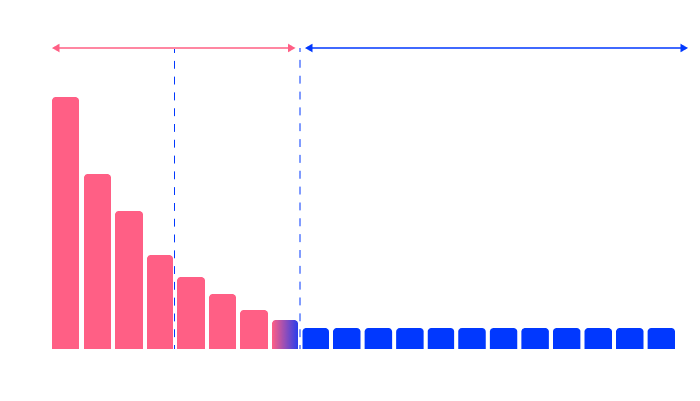
SEO is how you earn organic visibility through useful, crawlable content matched to the ways real people search. CMAX is the agentic SEO platform built to target thousands of long-tail keywords, the 90% of search demand most businesses never reach, at a scale and speed manual workflows can’t match. Two lines of code deploy and continuously update content across search and AI, with measurable traction typically visible within six weeks.
If your current approach has plateaued, the gap isn’t effort, it’s infrastructure.
Author
Jeremy Tang
Founder and CEO of CMAX
Jeremy Tang is the Founder and CEO of CMAX. With over 2 decades of experience in business consulting and digital marketing, he has successfully driven seven startup businesses, six of which achieved $1 million in revenue from zero in less than 16 months, 5 of which grew to multi-million dollar a year ventures without any external funding. Jeremy's expertise lies in streamlining business processes through technology and leveraging digital (in particular SEO) for business growth. He resides in Australia, travels extensively, and draws inspiration from his global experiences.