Search engine optimisation define is the search people run when they want a straight answer without the jargon.
SEO is the work of making your pages easier to find when customers search. It puts you in front of people typing what they need, not only your brand name.
Anyone asking “What is SEO in website?” terms is asking about useful content, pages Google can find and the specific questions customers type.
SEO also sits apart from paid ads. You don’t pay Google for an organic spot.
You earn it with clear content, logical page structure and pages that answer the question properly. That is the SEO meaning in marketing: earned visibility on one side, paid placement on the other.
If you’re comparing an internal team with a generative search optimisation agency, the gap between paid placement and lasting organic visibility matters more than the definition.
CMAX, the Agentic SEO Platform, starts from the same place. We build visibility by answering the specific searches your customers already run.
Search engine optimisation is the work of making your pages easier to find in search.
What SEO means
A plain-English answer to search engine optimisation define starts with clear content, logical headings, internal links, page speed and crawlability. Crawlability means Google can reach and read your pages.
It’s the work behind showing up when a customer searches “cast iron casserole dish for induction cooktop”, not only when they search your brand name. “What SEO means?” in practice is the words on the page, the headings, the links between pages, the speed, and whether the page answers the search clearly.
People who ask what is search optimisation are asking the same question in fewer words.
SEO and paid advertising are separate. A three-day review of Google Analytics and Search Console is a quick way to answer “What is SEO audit?”
It shows what organic search already delivers, with paid results kept out of the picture.
Why visibility matters
Search visibility captures demand that already exists. A shopper typing a detailed product question has already shown intent.
Google recommends making it easy for users to move between broad pages and specific ones, because that path turns a search visit into a decision. A practical test for SEO and generative engine optimisation is whether someone can land on a page, get a clear answer and reach the next relevant page without touching the site menu.
Good search engine optimisation techniques connect broad pages to specific product answers, so no visit has to go through the menu. People asking “How does local SEO work?” are describing the same demand with a suburb attached.
Search visibility improves when your content answers more real searches and stays current.
Long-tail searches matter most
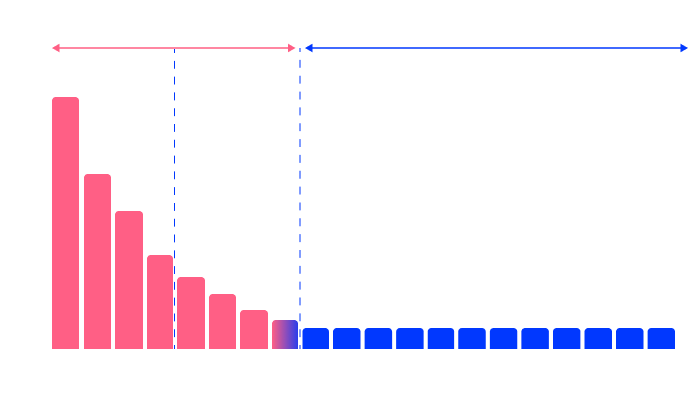
Over 90% of search and AI demand is in the long tail. Picture a cinema that puts only its three biggest films on the front poster.
Most people at the ticket counter ask for something specific: one film, the 4pm session, a wheelchair space. The cinema that can answer that question sells the ticket, and the poster never gets a say.
In this context, long-tail SEO means having a page for each specific question asked at the counter, alongside the poster for the big titles.
Useful search engine optimisation tools reveal the specific, detailed queries people type, like “washable linen quilt cover king size” or “non-stick fry pan for gas stove”. You can’t rank for something you don’t talk about.
Useful, connected, fresh pages win
Google says content should be helpful, reliable and people-first, and that sites should add and update content to maintain search presence. Pages need to answer real buyer questions.
Whether you manage content in-house or through a generative engine optimisation agency, internal links should connect those related questions instead of sending everything to the homepage. Fresh content also encourages Google to crawl the site more often.
That is why search engine optimisation define comes down to connected pages that stay current.
SEO and AI visibility work together
Google confirms the same SEO best practices apply to AI features like AI Overviews and AI Mode, with no extra technical requirements. If your team treats generative search optimisation as a separate project, that is Google’s own position to check it against.
“How much is SEO per month?” depends on how many pages need current answers for search, AI Overviews and AI Mode.
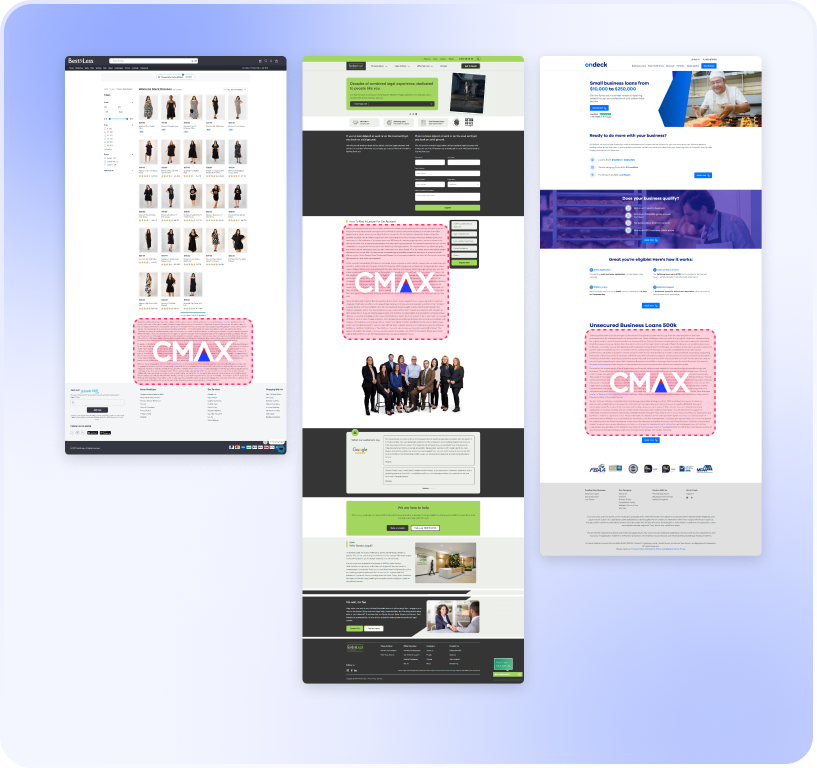
CMAX turns SEO into a measurable visibility system across content, structure, and freshness.
Coverage plus continuous updates
Most campaigns chase a few head terms, the short, broad searches everyone competes for. CMAX targets the long tail, where most search demand sits.
The platform keeps pages updated as searches, products, competitors and customer questions shift.
Human-reviewed content control
A search engine optimisation specialist can set the approved brand facts before CMAX generates content. That keeps the content in line with your facts, tone, category language and compliance needs.
CMAX is trained on human-reviewed, client-approved content. Google advises that AI-generated content should be reviewed by someone with topic expertise, and CMAX is built around that requirement.
Dynamic linking and Full Body SEO
We build each search engine optimisation strategy around Dynamic Internal Linking, so Google can discover related pages and see how topics fit together across the site. Full Body SEO and generative engine optimisation both depend on broad topical coverage.
Search Console tracks queries, impressions, clicks and average position against real demand.
Frequently Asked Questions (FAQ)
How much does SEO cost?
SEO costs vary because the scope varies. A technical clean-up on a small site is a different job to an ongoing programme across thousands of pages, internal links and updates.
Quotes for “How much does SEO cost Australia?” are in Australian dollars. Comparable US scopes are quoted in US dollars.
The main cost drivers are competition, site size, content gaps, technical debt (old site problems nobody fixed), approval complexity and whether you’re targeting a few head terms or broad long-tail demand.
Timelines shift with the work. Any answer to “How long does SEO take to work?” depends on the site, competition and method.
Most SEO programmes run by conventional agencies, using outdated methods, tell clients to expect results in six months. CMAX’s methods allow clients to start seeing clicks in 6 to 8 weeks.
Can I do SEO myself or do I need to hire an expert?
You can handle the basics if you can write clear pages, group topics logically, link related pages and use Search Console to see which queries drive impressions and clicks. A search engine optimisation course can teach those basics.
We treat SEO as a system that connects clear pages, logical topic groups and Search Console data. Start with the pages closest to revenue: category pages, product pages, comparison pages, service pages and common objections.
Bring in an expert when answer engine optimisation needs technical diagnosis, scaled content planning, compliance-safe production or a repeatable system for keeping many pages fresh and connected.
Does SEO require coding?
Many gains come from clearer content, better headings, stronger internal links, fresher pages and answers that match the searcher’s intent. Some tasks need development support: fixing crawlability, indexing problems, site speed or schema (hidden labels in a page’s code that tell Google what things are).
Google states a page only needs to meet normal Search technical requirements to be eligible for AI Overviews or AI Mode. Technical SEO still matters as search interfaces change.
Search engine optimisation define starts with real coverage
If you came here for search engine optimisation define in plain English, the practical answer is simple. SEO works when your site has useful pages for the many specific ways people search.
Among the types of keywords in SEO, specific long-tail phrases widen your content surface area beyond a small set of obvious head terms. That is why we focus on surface area, connected pages and the fresh answers customers need before they choose.
Most demand sits in the long tail, and the growing use of AI in search engine optimisation has made that coverage matter more. As the Agentic SEO Platform, CMAX helps brands build and keep fresh the connected content they need to stay visible across search and AI.
The quickest way to see where your site misses customer searches is to map them. The review shows the gaps, and what you do with them is your call.
If you’re curious as to how you’re performing on AI, book in a Missing Customer Map review with our Growth Team.
Author
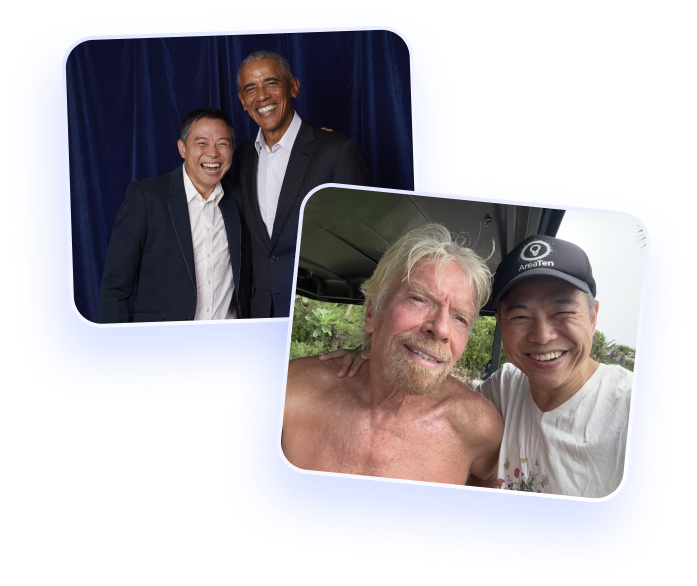
Jeremy Tang
Founder and CEO of CMAX
Jeremy Tang is the Founder and CEO of CMAX. With over 2 decades of experience in business consulting and digital marketing, he has successfully driven seven startup businesses, six of which achieved $1 million in revenue from zero in less than 16 months, 5 of which grew to multi-million dollar a year ventures without any external funding. Jeremy's expertise lies in streamlining business processes through technology and leveraging digital (in particular SEO) for business growth. He resides in Australia, travels extensively, and draws inspiration from his global experiences.