In plain English, search optimisation makes your pages easier for Google to find and choose when someone searches for what you sell. It’s a practical discipline, and keywords stuffed into a page don’t make it work.
A useful SEO definition covers how pages become discoverable and understandable to Google, and eligible to appear when Google considers them relevant. For a retailer, it comes down to one question: when a customer types what they want in their own words, does one of your pages show up and answer it?
That is what SEO meaning looks like in practice. A page appears for a detailed request such as cool queen-size sheets for hot sleepers.
Most businesses lose ground here because they have no page at all for hundreds of the specific searches customers use. A competitor outranking them on one big term is the smaller problem.
We build SEO around that gap. Our agents cover the long tail of searches with content that stays updated as buyer questions change.
Search Engine Optimisation Means Making Pages Easier to Find and Choose
Search engine optimisation means helping Google find your pages, classify each one and show them when a searcher wants that answer. Ask what is SEO in digital marketing and this is the core of it.
The work makes a product, category, service or guide page eligible to appear when a buyer searches in their own words.
Start with how people search
Start with the searches your customers type. Your team’s internal phrases are another matter, and nobody searches for “premium soft furnishings range.”
Effective keyword research starts with Search Console data. Search Console is Google’s free tool that shows which searches your site appears for.
It lists the queries, clicks and impressions already triggering your pages, so you can see where Google finds demand but your content is too thin to earn the click. Whether the work stays in-house or goes to search engine optimisation companies, sort queries by high impressions and low clicks first.
Then check whether the page title, content and offer answer that exact search. That check shows where a better SEO ranking is within reach.
Make pages crawlable and relevant
Technical SEO matters when Google can’t discover a page, store it in its index (the list of pages Google knows about) or read its purpose. Google mainly finds pages through links from pages it has already crawled.
Internal links point Google and visitors toward the specific pages that answer detailed buying questions. Off page SEO works the same way from outside, because links from other sites also lead Google to you.
A useful check: can a buyer reach your most valuable product, comparison or advice page from a related page in one or two clicks, using anchor text that says what the destination is about?
Search Engine Optimisation Grows Visibility Through Long Tail Coverage and Fresh Content
SEO grows visibility by adding content surface area. That answers “How does SEO work?” in part: you cover more of the ways customers describe needs, locations, budgets and products.
For effective website search optimisation, the biggest growth gap for most commercial teams is often having no page at all for hundreds or thousands of specific searches.
The long tail drives demand
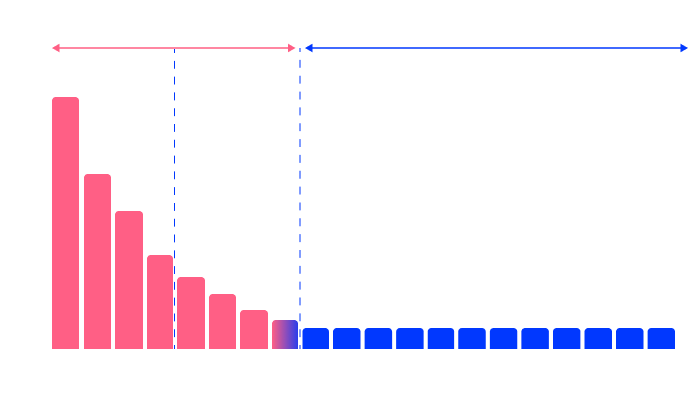
Over 90% of search and AI demand is in the long tail. Picture a bakery that sells only white and wholemeal loaves.
Customers keep asking for seeded sourdough and gluten-free rolls, and the bakery down the road bakes exactly those orders. Each order is small, yet together they make up most of the trade, and the bakery with a loaf for each order takes the sale.
In this context, search engine optimisation means building a page for each specific order buyers place, such as washable rugs for pets in apartments, and covering broad terms such as “rugs” as well. Local SEO follows the same rule, because a search for a bed frame with delivery in Parramatta is another specific order.
One by one these searches look small, but together they map how buyers compare, hesitate and decide.
Freshness and connected pages matter
Content is perishable, so SEO best practices include updating changed prices, product ranges, titles, internal links and next steps before pages decay. Freshness also means checking that the page still matches the decision the searcher is making.
Google uses links to discover pages and place them within a topic. So web search optimisation should connect definitions, comparisons and product pages in a clear order.
A strong topic cluster lets a visitor move through definition, comparison and product page without guessing what to do next.
CMAX Turns Coverage, Freshness and Internal Linking Into Business Growth
Our position is that visibility comes from breadth first, then freshness and connection. For CMAX, search engine optimisation means expanding discoverability through broader content coverage, regular updates and connected pages.
The commercial effect is wider discoverability across relevant searches, better coverage of buyer questions and less reliance on a small set of expensive, high-competition terms.
Built for long-tail coverage
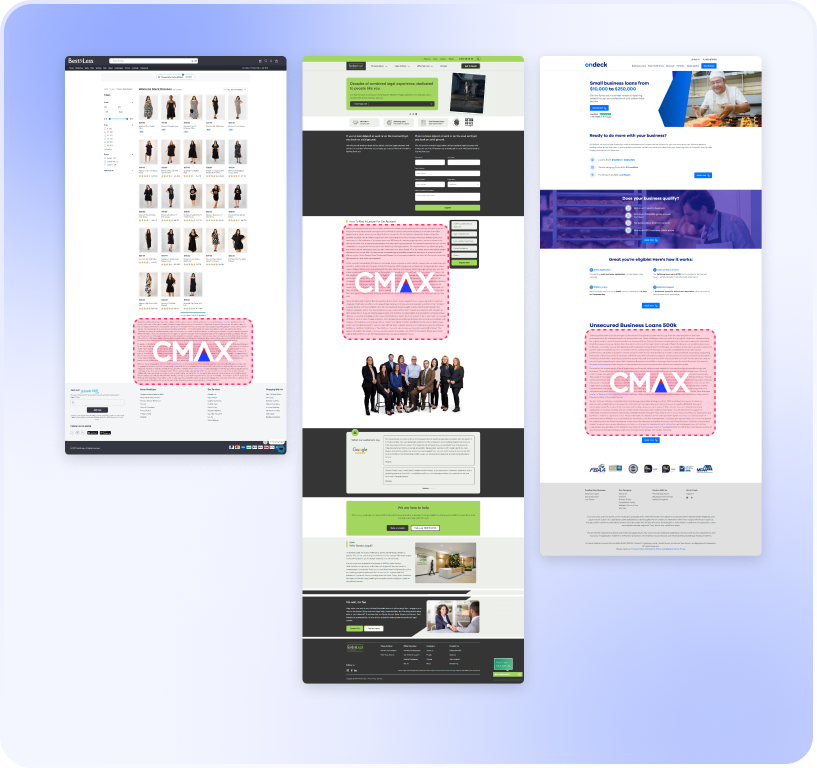
CMAX targets the bulk of search demand that sits in the long tail. Our SEO strategy combines long-tail content, Dynamic Internal Linking and Full Body SEO.
The agents deploy and constantly update content for the thousands of ways customers search for what you sell, across search and AI. They build and maintain enough useful, connected pages that more specific searches have somewhere relevant to land.
Agentic SEO, with earlier click visibility
If you ask us to define search engine optimisation, we’d add the control that sits around it. CMAX is trained on human-reviewed, client-approved content, so the brand sets the standards and our Agentic SEO Platform applies them across more searches and keeps content updated.
The answer to the question how long does SEO take depends on the site, the competition, existing authority and how the work is done. Most SEO programmes run by conventional agencies, using outdated methods, tell clients to expect results in six months.
CMAX’s methods allow clients to start seeing clicks in 6 to 8 weeks.
Frequently Asked Questions (FAQ)
How do I measure SEO ROI?
A commercial SEO audit connects Search Console clicks and impressions with Analytics and CRM records for leads, pipeline, sales and assisted conversions. At board level, search engine optimisation means connecting organic pages and queries to qualified visits, revenue and opportunities for incremental growth.
Four questions work at board level. Which organic pages bring qualified visitors?
Which queries create revenue? Which pages attract visitors but fail to convert?
Where would extra content coverage or updates add incremental value?
Does SEO still matter in the age of AI search?
The question why is SEO important still has an answer. AI search has changed the interface and left the need for discoverable, useful web pages in place.
Google says AI Mode uses query fan-out. That means an AI tool runs several smaller Google searches and builds its answer from what it finds.
One broad question can trigger many specific searches behind the scenes, so content coverage matters more.
Across SEO, AEO and GEO, a useful search engine optimisation definition still centres on discoverability, relevance, authority, freshness and coverage. The required surface area is now wider.
Why isn’t my website converting with SEO?
A site can win impressions and still lose the sale. Search engine optimisation means more than matching the keyword when the page doesn’t support the buyer’s next decision.
Common causes include content that answers an early research question with no path to a product, titles that promise one thing while the page delivers another, weak proof, unclear pricing or eligibility signals, and internal links that strand visitors instead of moving them to deeper commercial pages.
Diagnose by query and page. What did the searcher ask, what did the page answer, what objection remains, and what is the obvious next step?
Search engine optimisation means matching each query with a useful answer, resolving the remaining objection and providing that next step.
Search Engine Optimisation Means Covering More Buyer Searches
At CMAX, search engine optimisation means building enough useful, connected content to show up for the specific ways people search, instead of relying on a short list of obvious terms. We apply on page SEO through long-tail content that covers specific questions, comparisons and product-fit needs.
Coverage comes first, because without a page for the question a buyer is searching, you can’t win the click.
Beyond initial coverage, freshness and internal linking support conventional SEO and generative search optimisation by keeping relevant pages current, connected and discoverable. We help brands expand their content surface area and keep it current, so search and AI visibility can grow without leaning on a handful of expensive head terms.
The quickest way to see which buyer searches have no page yet is to look at your own gaps. That’s a diagnostic, so you leave knowing where you stand.
If you’re curious as to how you’re performing on AI, book in a Missing Customer Map review with our Growth Team.
Author
Jeremy Tang
Founder and CEO of CMAX
Jeremy Tang is the Founder and CEO of CMAX. With over 2 decades of experience in business consulting and digital marketing, he has successfully driven seven startup businesses, six of which achieved $1 million in revenue from zero in less than 16 months, 5 of which grew to multi-million dollar a year ventures without any external funding. Jeremy's expertise lies in streamlining business processes through technology and leveraging digital (in particular SEO) for business growth. He resides in Australia, travels extensively, and draws inspiration from his global experiences.