If you typed “SEO engine optimisation” into Google, you were asking how search engine optimisation works and why it matters for your brand. That is a reasonable question, and a clear SEO optimisation definition starts here: SEO already stands for search engine optimisation, so there is no separate discipline hiding behind the phrase.
SEO is the work of helping Google understand your pages and helping buyers find them when they search. That means answering the exact questions buyers type, especially the specific, detailed searches people type when they are close to a decision.
Most brands cover the obvious terms and leave the rest of the market untouched. That gap matters more as AI tools retrieve their answers from the same Google results your pages either appear in or don’t.
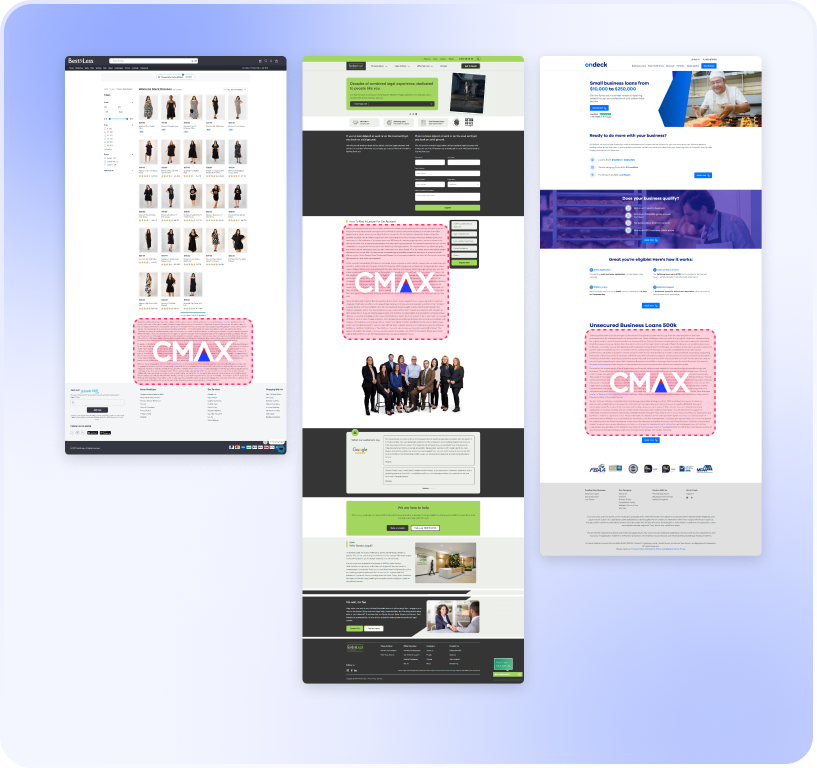
CMAX is built around that reality. We provide a search engine optimisation service focused on publishing and maintaining long-tail coverage across new and existing pages, so the demand your competitors ignore becomes the visibility you own.
What SEO means in plain English
SEO means search visibility
In practice, a SEO search engine optimisation definition comes down to three things: matching the words your customers use, answering their question clearly on the page, and making it easy for Google to trust that your result belongs in the results. That last part, trust, is where most sites fall short.
Clear answers improve keyword search ranking because each page is matched to one well-defined search intent rather than trying to satisfy several at once.
Visibility comes from useful answers
Google’s own starter guide says SEO best practices help search engines crawl, index, and interpret content. A thorough on page SEO analysis checks whether Google can crawl, interpret and trust the answer on each page.
A page gains visibility by giving a complete answer to one search intent. Chasing vague optimisation tricks that doesn’t solve the searcher’s problem does not.
Long-tail coverage and freshness drive measurable visibility
The long tail drives demand
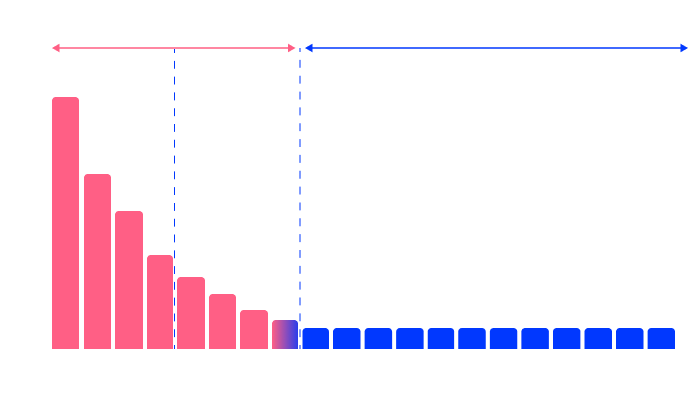
Over 90% of search and AI demand is in the long tail: product comparisons, pricing questions, use-case queries, “best for” searches. An effective on page SEO process maps each of those queries to a separate, useful answer.
These are the searches buyers run when they are close to a decision, which makes them the searches closest to revenue.
Breadth, freshness and links matter
Here is the practical picture. Think of a library that stocks only its twenty most borrowed titles.
Anyone who walks in looking for something specific, a regional cookbook, a niche technical manual, a less popular author, leaves empty-handed. Give that library a catalogueue system that makes it practical to stock thousands of titles, and it can serve every visitor who arrives, not just the ones with mainstream tastes.
In that same way, SEO search engine optimisation means publishing the answers that were never worth writing before, because producing them is now practical.
Three levers determine how much of Google’s index a brand occupies: the number of topics covered, how recently those pages were updated, and how clearly they link to each other. Brands that cover only the obvious terms still leave most relevant demand unanswered, regardless of what they call the work.
AI search still depends on SEO
AI engines retrieve from Google. Strong, crawlable pages support AI recommendations independently of link building outreach, which remains a separate off-site activity.
GEO and AEO extend SEO fundamentals. A brand that wants to appear in AI recommendations needs pages that are easy to crawl, easy to read, and strong enough to rank for the questions buyers actually ask.
How CMAX helps brands scale search coverage
Built for continuous updates
CMAX is the Agentic SEO Platform, built for brands that need content updated continuously as search demand changes. New searches appear every week, old pages go stale, and most teams stall waiting on briefs, approvals, and optimisation work before anything gets published.
Designed for long-tail scale
CMAX targets the vast majority of search demand sitting in the long tail. Our approach to SEO page optimisation builds coverage around the specific searches buyers use when they compare, shortlist and decide.
CMAX automates the key on page SEO steps through Dynamic Internal Linking, Full Body SEO, and client-approved content, so coverage expands without the manual bottleneck.
Control for sensitive brands
CMAX is trained on human-reviewed, client-approved content, so regulated and brand-sensitive teams can scale with more control. Legal, compliance and brand stakeholders get a clear approval path.
Claims, terminology and tone stay aligned to the way the business already speaks.
Faster starts than conventional programmes
Most SEO programmes run by conventional agencies, using outdated methods, tell clients to expect results in six months. CMAX’s methods allow clients to start seeing clicks in 6 to 8 weeks.
The mechanism is straightforward: we publish more relevant content faster, because the platform is built for that rather than managing it manually.
Frequently asked questions
Why isn’t my site indexed?
Before SEO content optimisation can improve visibility, Google must be able to discover and crawl the relevant pages. Blocking rules, duplication, orphaned URLs or pages too thin to interpret all stop that from happening.
Search Console, Google’s free tool showing which searches your site appears for, lets you submit sitemaps, inspect individual URLs and review index coverage so you can confirm Google has the freshest view of your site.
How do I recover organic search performance after a site migration?
Search performance drops after a migration when old URLs aren’t mapped cleanly to new ones, internal links change without redirects, or Google has to relearn your site structure. A search engine optimisation business can investigate migration losses by checking redirects, sitemaps, crawl data and pre-migration query performance.
Recovery means resubmitting your sitemap, reviewing crawl errors in Search Console and comparing which pages and queries fell away against your pre-migration baseline.
How do I measure SEO ROI?
Search Console shows which queries generate impressions, clicks and average position, making it useful for tracking whether non-brand visibility is expanding. The commercial value of AI SEO optimisation becomes clearer when you connect search performance to leads, pipeline and revenue in your analytics and CRM systems rather than reducing it to a ranking report.
Visibility that doesn’t connect to revenue is just a number on a slide.
What is link building and does it still matter?
Understanding how to link building in SEO refers to earning or acquiring links from other sites that point to yours. Google treats links as signals of trust and authority.
For an ecommerce site, a link building ecommerce website strategy means earning links from publishers, product reviewers and industry directories relevant to your category. What is link building services in practice?
It is the outreach, relationship building and content creation that earns those links. A link building reseller manages this on your behalf.
Links still matter, and the on page SEO score checker results you see in most auditing tools factor in link authority alongside content and structure.
Search engine optimisation: where to start
SEO works when a brand has useful answers for the many specific searches buyers actually run, not just the few obvious terms everyone chases. That is the gap we focus on: coverage you don’t have yet, across the searches that drive real demand.
For the work described as search engine optimisation Google visibility depends on, the practical truth is the same: useful, crawlable answers must meet buyers at the questions they already ask.
CMAX is the Agentic SEO Platform, built to expand that coverage and keep it fresh as search behaviour changes. Whether you call it SEO search optimisation or search engine optimisation, organic performance depends on publishing enough relevant content, connecting it clearly, and updating it often enough to stay visible across search and AI.
If you want to use a free Google website ranking checker to see your current gaps, that is a reasonable first step. The more complete picture, including where your brand appears and where it doesn’t across AI and search, is harder to see without a structured review.
The simplest way to find out where your long-tail gaps are is to look at the data together.
If you’re curious as to how you’re performing on AI, book in a Missing Customer Map review with our Growth Team.
Author
Jeremy Tang
Founder and CEO of CMAX
Jeremy Tang is the Founder and CEO of CMAX. With over 2 decades of experience in business consulting and digital marketing, he has successfully driven seven startup businesses, six of which achieved $1 million in revenue from zero in less than 16 months, 5 of which grew to multi-million dollar a year ventures without any external funding. Jeremy's expertise lies in streamlining business processes through technology and leveraging digital (in particular SEO) for business growth. He resides in Australia, travels extensively, and draws inspiration from his global experiences.