SEO experts get hired for many reasons. For enterprise brands, only one matters: does the work move revenue, or just search positions?
Search engine optimisation earns its budget when specific pages and queries connect to leads and sales. Most reports show position changes for a handful of keywords while ignoring the thousands of specific searches that disciplines like faceted navigation SEO are built to handle.
That gap is where budgets get questioned. A page sitting at the top of results means little if it never connects to a sale.
The real test is simple: can someone point to a query, a page, and a commercial result? Or is the report just describing movement?
CMAX works from that same standard, scoping programmes around long-tail demand and reporting that ties search coverage back to pipeline and revenue.
SEO experts should show how they improve visibility and search performance.
Map head and long-tail demand
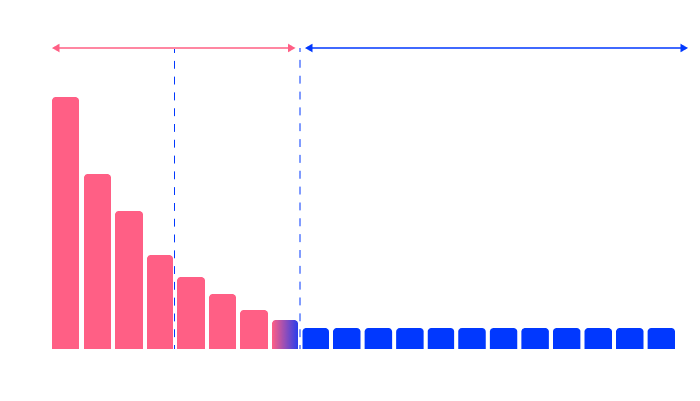
Before looking at existing search positions, SEO experts should map product, problem, comparison, and use-case demand. Over 90% of search and AI demand is in the long tail, the specific, detailed searches people type rather than short general terms.
A plan built around a handful of category terms leaves most of your buying process uncovered.
Here is where most brands underestimate the problem. Think of it like gold mining.
The big surface nuggets, the high-volume keywords everyone can see, were picked up years ago by the brands with the deepest roots in your category. What remains is tiny specks through tonnes of dirt.
You can pan for them one at a time, or you can run the dirt through industrial machinery that processes thousands of queries at once. In this context, covering the full range of searches that drive revenue means volume and automation, not manually picking a short list of keywords.
The goal is a stronger content surface area: how many of the ways customers search you have a useful answer for, from early research through to late-stage comparisons with artificial intelligence SEO. An SEO consultant should identify useful answers missing from early research, product comparisons, and late-stage buying decisions.
Tie SEO work to revenue
Effective SEO experts connect technical fixes, content production, and internal linking to qualified pipeline, influenced revenue, and lower dependency on paid acquisition. As Google’s interface shifts toward AI answers, visibility across more searches carries more commercial weight than a position report on a small set of queries.
A credible SEO services company shows which pages support revenue-producing activity, which updates moved engagement or leads, and where visibility is still leaking to competitors. If the marketing team cannot point to a page, a query set, and a sales outcome, the report is not decision-ready.
Strong SEO experts prove their value through process, breadth, and measurable accountability.
Combine research, execution, and iteration
A useful SEO audit becomes implemented content updates, technical fixes, and internal links, not a static PDF. Strong SEO experts use artificial intelligence in SEO to translate findings into implemented changes, then monitor what shifts and refine the programme as search behaviour evolves.
For enterprise sites, that means coordinating content updates, technical fixes, and internal linking across multiple teams. Ask any prospective partner three things: who actually ships the work, how often are pages refreshed, and what happens when a page stalls?
Report metrics that matter
Useful reporting names what is being measured, explains why it matters, and shows the commercial outcome. Transparent SEO pricing should reflect implementation breadth, reporting depth, and the number of revenue-producing queries covered.
Search Console, Google’s free tool showing which searches your site appears for, should sit alongside analytics and CRM data. If a dashboard cannot show which queries grew, which pages earned clicks, and which leads were influenced, it is not decision-ready reporting.
CMAX Targets the 90% of Search Demand in the Long Tail With Content That Keeps Learning
Cover Long-Tail Demand at Scale
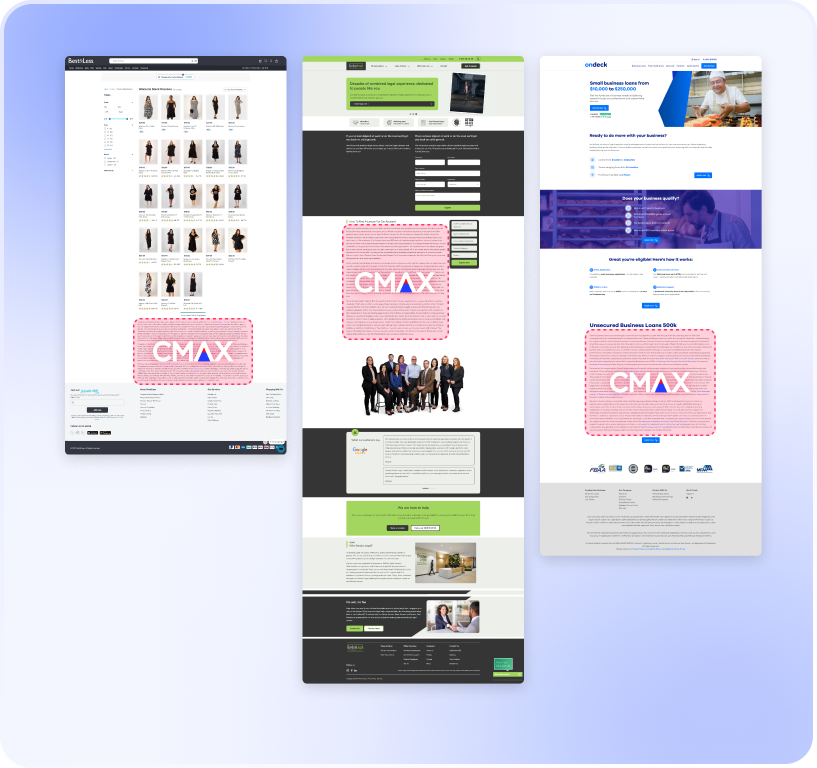
CMAX is the Agentic SEO Platform, built to support an enterprise SEO strategy by injecting, refreshing, and expanding content across the thousands of ways customers search for what you sell. The platform targets the vast share of search demand in the long tail that most programmes leave uncovered.
With AI Overviews reaching more than 2.5 billion users a month and AI Mode passing 1 billion monthly users (Google figures reported by TechCrunch, May 2026), the number of search paths that can surface your content has grown well beyond a handful of head terms.
Nike sits at the top of US results for running shoes, yet according to SEMrush it captures around 70,900 visitors a month from non-brand searches related to running shoes, out of more than 8.5 million monthly US searches in the category. That is under 1% of the actual search demand, for the most dominant brand in the market.
The opportunity is in the long tail.
Keep Content Fresh and Connected
CMAX is trained on human-reviewed, client-approved content, so large brands scale output without drifting from approved messaging, product facts, or regulatory constraints. An SEO specialist who implements at scale while protecting approved messaging meets the practical definition of what SEO experts should deliver.
Dynamic Internal Linking and Full Body SEO mean new and existing pages are evaluated as a connected system, and the platform keeps learning from performance rather than leaving published content static.
Frequently Asked Questions (FAQ)
How long does it take to see SEO results?
Timelines depend on your starting point, implementation speed, and how much content coverage already exists across your category. Any assessment of SEO services pricing should account for implementation speed, existing content coverage, and approval constraints before estimating programme maturity.
CMAX programmes typically deliver first clicks in 6-8 weeks, with programmes maturing around month six. Enterprise sites move more slowly when approvals, CMS constraints, or legal review delay publishing cycles.
Sites with strong authority but thin coverage may see an AI answer SEO strategy gain traction as obvious information gaps are filled before the programme expands into more competitive searches.
Does an SEO expert need full admin access to my website?
Discovery work can run on read access to analytics, Search Console, and a technical crawl, with implementation handled by your internal team or a development partner. Well-governed SEO consultant services define analytics access, CMS permissions, security controls, and approval responsibilities before implementation begins.
Clarify access levels before the engagement starts so governance, security, and approval workflows stay intact. Handing over full admin rights before those questions are answered is, in fairness, the one thing most vendors forget to ask about.
What happens to my website after an SEO expert contract ends?
A well-run programme, including structured disciplines such as knowledge graph SEO, leaves published assets, documented decisions, reporting baselines, and a clear maintenance view. Published assets, documented decisions, and reporting baselines distinguish accountable SEO experts from providers whose work never reaches the CMS.
Confirm upfront who owns the content, where dashboards live, and what refresh processes are needed. If nothing lands in the CMS or your team’s workflow, performance gains are harder to sustain.
SEO Experts Show Revenue Through Coverage
SEO experts earn trust when they can show where visibility is missing, what got implemented, and how that work connects to revenue. CMAX is built around that standard: broader coverage across the long tail, reporting tied to sales, and execution that does not stop at a recommendations deck.
Across Australia, comparisons between Sydney providers and an SEO agency Newcastle may involve local market knowledge, but enterprise selection still comes down to implementation capability, search coverage, and commercial reporting. The same commercial lens applies when an SEO consultant Sydney is compared with a Melbourne provider.
For enterprise teams, growth rarely comes from a few headline terms. CMAX helps brands expand and refresh content across the many searches buyers actually use, so search performance has more surface area and a clearer commercial line.
The simplest way to see where your coverage gaps are is a diagnostic review, not a sales conversation. If you’re curious as to how you’re performing on AI, book in a Missing Customer Map review with our Growth Team.
Author
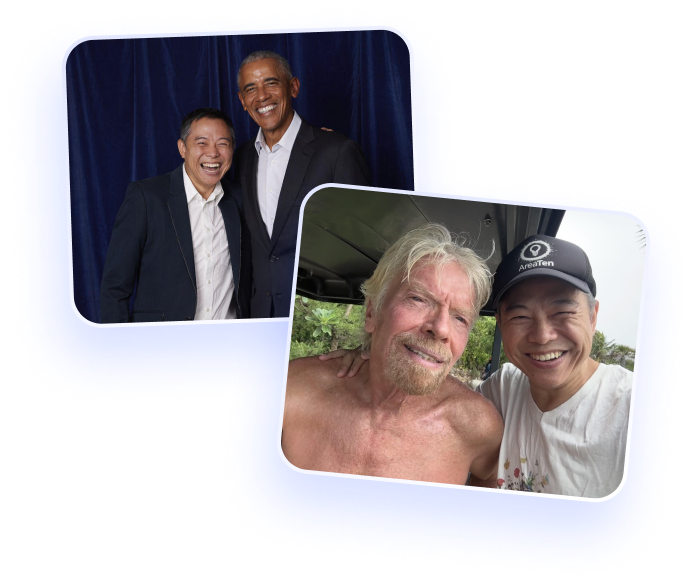
Jeremy Tang
Founder and CEO of CMAX
Jeremy Tang is the Founder and CEO of CMAX. With over 2 decades of experience in business consulting and digital marketing, he has successfully driven seven startup businesses, six of which achieved $1 million in revenue from zero in less than 16 months, 5 of which grew to multi-million dollar a year ventures without any external funding. Jeremy's expertise lies in streamlining business processes through technology and leveraging digital (in particular SEO) for business growth. He resides in Australia, travels extensively, and draws inspiration from his global experiences.