Most people hear SEO explained as “add keywords and publish,” but pages that follow that advice often sit in Google’s index without earning a single impression. The gap between being indexed and being visible is where the real work happens: helping search engines understand what a page covers, why it’s credible, and whether it genuinely fits what someone searched for. CMAX is a programmatic SEO platform built to close that gap at scale, and the foundations below start with how search engines actually decide which pages deserve to show up.
SEO Helps Search Engines Understand Useful Pages
What SEO Actually Does
When SEO explained in practical terms, the job is helping search engines discover a page, interpret what it covers, and decide whether it is a credible match for the words and intent behind a search.
That last part is where most definitions stop short. The work is not adding keywords to a page. It is making the page understandable enough that a search engine can confidently connect it to the right query, and useful enough that it is worth showing over the alternatives already in the results. The SEO meaning in marketing comes down to this: making a page visible inside the channel where people actively look for answers.
Getting SEO explained clearly often starts with pinning down the SEO definition, the practice is about making pages understandable and credible to search engines, not just adding keywords.
SEO Myths, Corrected Plainly
Several common SEO beliefs break down in practice.
Publishing a page does not guarantee indexing or rankings. Search engines still need to find the page, process it, and judge whether it deserves to appear for a query. A page with no internal links pointing to it may never be crawled.
Keywords clarify a topic; they do not rescue a weak page. Thin information, poor structure, or a page that answers a different question from the one the searcher asked will underperform regardless of how precisely the target phrase appears. The SEO meaning in business is tied directly to whether a page can convert the visitor it attracts, and no keyword density fixes a mismatch between content and commercial intent.
Ranking and indexing are different outcomes. A page can sit in Google’s index and still attract zero impressions for its target queries if other pages match the search more closely.
Backlinks help, but they are rarely the first problem. Many pages underperform because of unclear topic focus or no obvious reason to choose them over existing results.
SEO changes improve eligibility, not outcomes. Google compares every page against other available options for the same search. Eligibility is the entry condition; winning is a separate decision.
SEO explained in plain terms is the same discipline as search engine optimisation, the practice of helping search engines discover, interpret, and decide whether a page is worth showing for a given query.
Crawling, indexing, and ranking are different stages.
Crawl, index, and rank
These are three separate stages, and conflating them is one of the most common reasons SEO efforts stall. With SEO explained as a sequence of stages, it helps to define search engine optimisation so that each step has a clear purpose to anchor it.
Crawling is discovery. A search engine bot follows links across the web and finds a page. Indexing is interpretation and storage: the engine reads the page, processes what it covers, and decides whether to add it to its database. Ranking is the final, competitive step: when a user runs a search, the engine evaluates every indexed page it considers relevant and decides which ones to show, and in what order. For anyone asking what is serp in SEO, the search engine results page is exactly where this ranking stage plays out, the ordered list a searcher actually sees.
A page has to clear all three stages before it can generate organic traffic. Clearing one does not mean the next follows automatically.
Why pages stay invisible
Crawling a page does not place it in the index. Search engines can crawl a URL and still exclude it from the index if the page is thin, duplicates existing content, or signals through directives that it should not be stored.
Indexing a page does not produce rankings. A page can sit in Google’s index and attract zero impressions for its target queries if other indexed pages do a better job of matching the query, the format, or the answer the searcher expects. The engine is always comparing options, and a page that is technically present can still lose that comparison on every search.
When SEO backlinks explained as credibility signals, pages without links from other trusted sites often lack the authority needed to compete, even after clearing the crawl and index stages.
Visibility requires passing all three stages and then competing on relevance and quality against whatever else is already indexed.
Relevance, Quality, and Signals Shape Visibility
How Search Engines Judge Fit
Search engines do not match a page to a query based on keyword presence alone. They compare the query, the page copy, and the broader site context together. A page about one service can repeat a related phrase dozens of times and still fail to surface for a loosely connected search, because the engine reads the whole picture: what the page is actually about, what the site around it covers, and whether that combination genuinely answers what the searcher asked.
Whether is SEO important depends on how well a page matches what the searcher actually needs. SEO explained at its core is exactly what SEO what is SEO resources set out to answer, a question about how relevance, quality, and signals combine to determine whether a page earns visibility for a given search.
Topic focus carries more weight than keyword density. A page that clearly covers one subject, sits within a well-linked site structure, and addresses the specific question behind a query is a stronger candidate than a page that mentions the right words but answers a different question.
Why Keywords Alone Fail
Inserting target phrases into a page is a starting point, not a strategy. Several practical gaps explain why keyword-optimised pages still underperform.
A page that no other page on the site links to is hard for search engines to find and contextualise. Weak internal linking limits both discovery and the signals that establish what a page is about.
Matching the searcher’s real intent matters more than matching their exact words. A page targeting “SEO explained” that reads like a product pitch rather than a plain-language answer will lose to a page that directly addresses the question.
Detail is the differentiator. If a page offers no information that materially improves on what is already ranking, search engines have little reason to prefer it. That gap is exactly what SEO explained at a deeper level reveals.
A Simple Diagnosis Process Makes SEO Easier
Four-Step SEO Page Check
When a page underperforms, the cause usually sits in one of four places: the page can’t be found, it hasn’t been indexed, it doesn’t match the query, or it matches but offers nothing better than what’s already ranking. Working through those four questions in order stops you from optimising the wrong layer. With SEO explained as a diagnosis sequence, each step isolates a different barrier.
Running a practical page diagnosis becomes much more productive once you have a clear answer to search engine optimisation what is, because each step, checking discovery, indexing, relevance, and usefulness, maps directly to what SEO is actually trying to achieve.
Start with discovery. Can search engines reach the page through internal links, or is it sitting in isolation? Move to indexing. Is the page actually stored in Google’s index, or has it been excluded by a directive, a crawl budget issue, or thin content signals? Then check relevance. Does the page genuinely address the query, or does it repeat a keyword while answering a different question? Finally, assess usefulness. Does the page give the searcher something specific and complete, or does it cover the same ground as every competing result?
Each question narrows the diagnosis. Fix the right layer first.
Beginner Fixes That Can Help
Four changes tend to move the needle at the page level. Stronger internal links make a page easier for crawlers to find and signal its relationship to related content. Clearer page titles tell search engines and searchers what the page actually covers. Targeting topics people genuinely search for, rather than topics that seem relevant, aligns the page with real query demand. More specific on-page detail gives search engines something to evaluate and gives searchers a reason to stay.
For businesses pursuing SEO Australia audiences rely on, local relevance starts with accurate location data and region-specific content. When local SEO explained at the page level, the same four-step check applies, but discovery and relevance carry extra weight for location-specific pages.
None of these fixes guarantee rankings. They improve a page’s eligibility to compete.
Real Examples Show How SEO Progress Appears
Search Console Signs of Progress
Search Console makes the crawl-to-click sequence visible in a way that raw rankings data cannot. Early progress rarely starts with clicks. It starts with discovery: Google finds the URL. Then indexing: the page enters the index. Then impressions: the page begins appearing for relevant queries, even if no one has clicked yet. Clicks follow only once the page earns enough relevance and position to attract them.
Watching SEO explained through a real Search Console sequence, discovery, then indexing, then impressions, then clicks, is one of the clearest illustrations of what search engine optimisation means in practice rather than in theory.
That sequence tells you exactly where a page is stalling. No impressions after indexing points to a relevance or competition problem. No indexing after crawling points to a quality or structure problem. No discovery at all points to an internal linking or sitemap gap. Each stage is a distinct diagnostic signal.
Client Proof Point
In one CMAX SEO services engagement, a B2B omnichannel hospitality retailer published 5,000 long-tail product pages and recorded a 255% organic traffic increase within 12 months.
The mechanism is straightforward. A small set of broad pages cannot match the specificity of thousands of distinct searches. When each search has a page built to answer it precisely, the site becomes eligible for query volume that generic pages never reach. That catalogue-scale dynamic applies across any vertical where buyers search with specific intent and existing pages cover only the broadest terms.
Frequently Asked Questions (FAQ)
How do you measure SEO success beyond just rankings?
Rankings are one signal, but they don’t show whether visibility is expanding or producing business value. Once SEO explained in terms of measurable signals, success becomes clearer than rankings alone suggest. Indicators include indexed page growth, query impressions, qualified clicks, and conversions. The range of searches a site becomes eligible to appear for also counts, a site ranking for 50 queries is in a fundamentally different position from one appearing across 5,000 relevant searches, even if the average position looks similar.
Can you rank without backlinks?
Yes. When a topic is narrow, the page closely matches the query, and the site makes that content easy for search engines to discover and connect to related pages through internal links, backlinks become less decisive. Many pages underperform for more basic reasons, unclear topic focus or weak internal linking, long before backlink volume becomes the limiting factor.
Will AI replace SEO?
AI may change how content is produced and how results are presented. SEO still matters because search engines and answer systems need reliable pages they can crawl, interpret, compare, and cite. That dependency on structured, discoverable content doesn’t disappear when the interface changes.
SEO explained through the lens of modern discovery still matters even as AI search evolves, because answer systems and AI-powered results still depend on crawlable, interpretable pages to surface reliable information.
How do you scale SEO for large websites?
Large-site SEO scales through repeatable templates, strong internal linking, consistent metadata rules, and content models that map many query variations to genuinely useful pages, rather than forcing different searches onto the same generic URL.
How do you scale SEO content without losing quality?
Quality holds at scale when each page targets a distinct search intent, includes details that genuinely change by topic or location, and avoids near-duplicate copy that gives search engines little reason to index or rank every variation.
SEO Explained in Seconds, Scaled in Thousands
CMAX is an agentic SEO platform built for one thing: capturing the long-tail search traffic most businesses never reach.
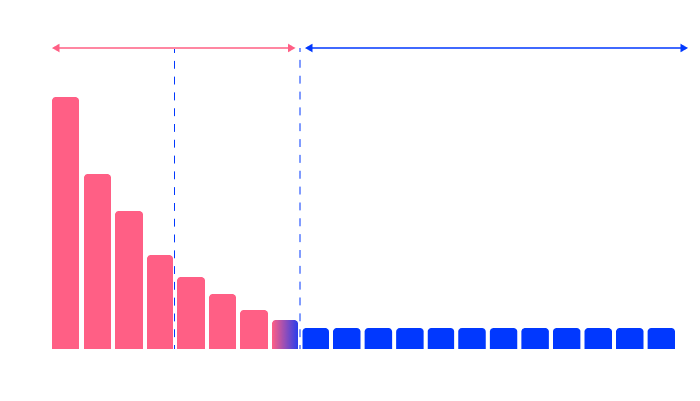
Over 90% of search demand sits in long-tail queries, the thousands of specific ways people look for what you sell. CMAX deploys AI agents that create, publish, and continuously update content targeting those queries at a scale and speed manual teams can’t match. Two lines of code connect it to your site, and results typically start showing within six weeks.
If SEO explained simply is the starting point, CMAX is what comes after you stop explaining and start executing.
Author
Jeremy Tang
Founder and CEO of CMAX
Jeremy Tang is the Founder and CEO of CMAX. With over 2 decades of experience in business consulting and digital marketing, he has successfully driven seven startup businesses, six of which achieved $1 million in revenue from zero in less than 16 months, 5 of which grew to multi-million dollar a year ventures without any external funding. Jeremy's expertise lies in streamlining business processes through technology and leveraging digital (in particular SEO) for business growth. He resides in Australia, travels extensively, and draws inspiration from his global experiences.