Most SEO pitches sound identical until you ask that question.
Strong enterprise SEO services cover what happens to your existing pages when search intent shifts, not just how many new pages get published. That distinction matters because Google actively favours fresher content for queries where recency counts, and search engine optimisation rewards teams that keep pages aligned with what people are actually searching today.
If a firm’s pitch stops at launch and has nothing to say about month three or month six, you are buying half a service. Even the largest SEO companies need to explain that ongoing stage clearly.
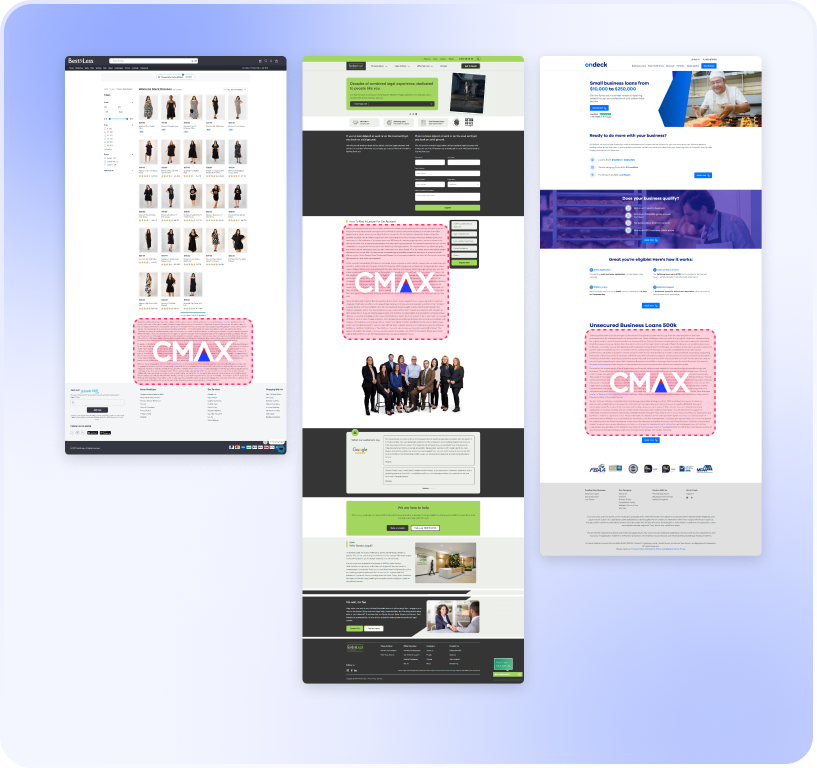
CMAX is built around that same logic. The Agentic SEO Platform refreshes content inside your existing CMS rather than treating launch as the finish line.
Start by judging whether an SEO firm can explain how it works, not just what it sells.
Separate strategy from delivery
A credible SEO firm names who owns each piece: technical fixes, content briefs, template updates, and reporting. Among SEO firms, CMAX stands apart by combining strategy and implementation inside an existing CMS without requiring migration.
That clarity matters most when work stalls in approval chains, because a sound plan does nothing for your rankings until someone actually pushes changes live and confirms they hold.
Ask for proof, not promises
Google states plainly that there are no secrets that automatically rank a site first. When assessing an enterprise SEO firm, useful proof looks like case studies, a documented methodology, and measurable outcomes.
Evidence from an SEO consultant should show what the firm does when a page underperforms after launch, not just what it plans to publish before it.
Look closely at implementation, because even good plans fail when CMS and approvals slow the work.
Test the implementation path
Ask any SEO firm to trace exactly how a recommendation moves from their document into your live site, covering your CMS, development queue, legal sign-off, and brand approvals. Think of it like a recipe: the instructions are only useful if someone actually cooks the meal.
Approval workflows often separate SEO firms that implement changes from providers that stop after delivering a document. If they cannot trace that path, you are buying advice.
Check the freshness plan
Google uses freshness signals to surface newer content where a search expects it. About 15% of the searches Google sees every day are entirely new, meaning queries your original brief never anticipated.
A firm needs a clear method for revisiting existing pages, retiring outdated claims, and picking up long-tail demand that emerges after launch. A freshness plan strengthens SEO services for small business and large sites alike, because the long tail never stops growing.
A brief framed as SEO for my website still needs an ongoing plan for discovering searches that did not exist when the work started.
Consider CMAX for constrained CMS setups
CMAX is the Agentic SEO Platform built to inject and refresh content inside your existing CMS rather than requiring a rebuild. CMAX supports SEO marketing by deploying approved content into your CMS and refreshing it in response to performance data.
CMAX is trained on human-reviewed, client-approved content, which keeps output on-brand and prevents inaccurate claims from reaching your pages.
Compare agency models by whether they can keep coverage growing after launch.
Ask how they learn over time
Google sees more than 5 trillion searches annually and 15% of the searches it sees every day are brand new. Unlike one-time content suppliers, SEO firms need a monthly process for reviewing performance and expanding coverage as new searches appear.
In regulated fields, SEO for law firms requires the same controlled review process: launch is not the end of the obligation.
Watch for one-time publishing models
If a firm mainly talks about keyword targets and initial publication, it is underweighting the ongoing work. Unlike link building services, which focus on off-site signals, a sustainable publishing model concentrates on refreshing, connecting, and improving content already on your site.
A practical test: ask whether the provider talks about version 1, version 2, and what happens when the first draft does not perform.
Weigh CMAX against traditional firms
For brands that want more coverage without a CMS migration, CMAX turns search engine optimisation strategy into live implementation by injecting and refreshing content within your existing environment. The practical difference is whether the model stops at delivery, or keeps reading what the market, the search results, and the site itself are telling you.
Frequently Asked Questions (FAQ)
How long should I give an SEO firm to show results?
Ask what leading indicators will move before revenue does. Technical changes need to be crawled, content indexed, and new pages given time to earn visibility.
A 6-to-8-week window for first clicks is a practical initial benchmark for SEO firms, while programmes may mature around month six. Before then, watch for more indexed pages, rising impressions on long-tail queries, and clicks from searches you had no previous presence in.
Work tied to ChatGPT SEO Australia may also involve different regulatory and market considerations from comparable programmes in the US or Canada. A provider who cannot name those milestones upfront will be difficult to hold accountable.
Can an SEO firm guarantee first-page rankings?
No credible firm can, because Google states there are no secrets that automatically rank a site first. Guarantees remain unreliable for link building services Australia, just as they do for any provider operating in any market.
Ask instead how the firm prioritises technical fixes, content coverage, and measurement so you can judge whether the work is sound even when rankings shift. A repeatable process is the only promise worth holding a firm to.
What happens to my SEO when the contract ends?
That depends on whether the firm leaves behind implemented improvements, published content, documented decisions, and reporting access your team can keep using. Whether a programme covers conventional search or SEO for ChatGPT, momentum slows quickly once updates stop if the value sits in external know-how rather than assets already live on your site.
Implemented content and accessible reporting provide a stronger legacy from SEO firms than recommendations held in a document you can no longer ACT on.
SEO Firms Need Freshness Plans Early
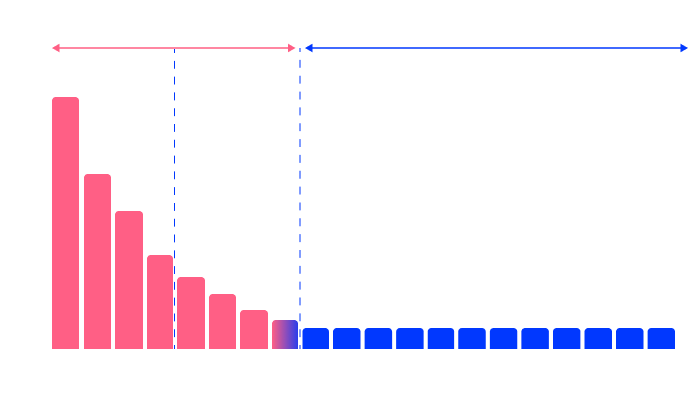
When comparing SEO firms, ask how they keep content current after launch, not just how they plan the first release. Over 90% of search and AI demand is in the long tail.
CMAX targets the 90% of search demand in the long tail, which means the queries arriving after your initial brief are often more valuable than the ones you planned for. Pages that are never revisited miss that demand entirely.
If your comparison includes an Australia digital agency, apply the same test used throughout this article: can updates move from recommendation to live page without losing momentum?
CMAX’s agentic approach supports evolving areas such as ChatGPT SEO by deploying content, evaluating performance, and refreshing pages within your existing CMS so coverage can grow as search and AI discovery change. The best way to see where your current gaps are is to look at your own data first.
If you’re curious as to how you’re performing on AI, book in a Missing Customer Map review with our Growth Team.
Author
Jeremy Tang
Founder and CEO of CMAX
Jeremy Tang is the Founder and CEO of CMAX. With over 2 decades of experience in business consulting and digital marketing, he has successfully driven seven startup businesses, six of which achieved $1 million in revenue from zero in less than 16 months, 5 of which grew to multi-million dollar a year ventures without any external funding. Jeremy's expertise lies in streamlining business processes through technology and leveraging digital (in particular SEO) for business growth. He resides in Australia, travels extensively, and draws inspiration from his global experiences.