SEO for estate agents works when your website answers the questions vendors and buyers type into Google. Good real estate digital marketing covers valuation questions, suburb comparisons and local searches before a vendor contacts an agency.
Most agency websites cover the brand and the branch locations. They miss the searches that happen before anyone picks up the phone.
That gap is where enquiries get lost. Answer “how much is my house worth in [suburb]” and lead generation for real estate starts before the phone rings.
A homepage tells people who you are. It won’t answer that question or help a buyer choose between two neighbourhoods.
CMAX delivers SEO services for real estate agents by covering long-tail local search with content tied to real pages and specific topics. The rest of this page shows how that coverage is structured and how it’s measured against actual enquiries.
Cover the Searches Vendors and Buyers Actually Use
Beyond Branch Pages
A homepage and branch pages cover the brand and the main locations. They leave gaps where vendors research valuations, buyers compare suburbs and landlords check local expertise.
Useful SEO keywords for real estate go past brand names to property valuations, neighbourhood comparisons, cladding questions and nearby agencies. The searches that matter happen before anyone contacts you: “houses for sale in [suburb],” “property valuation [area],” “best streets in [neighbourhood],” “selling a flat with cladding” and “estate agents near me.”
Long-Tail Search Matters
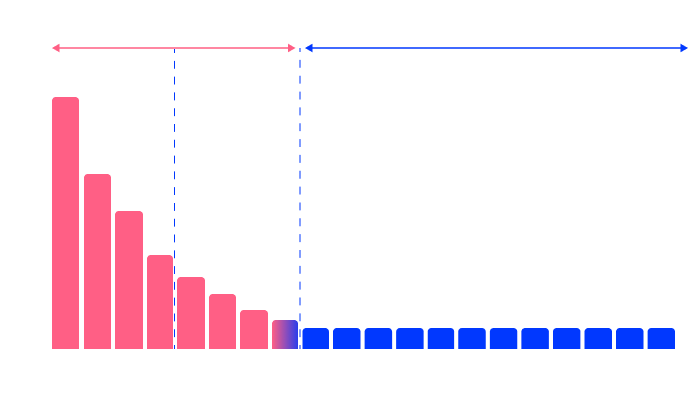
Over 90% of search and AI demand is in the long tail. These are the specific searches people type, like “how much is my terrace worth in Balmain” instead of “estate agent.”
Answering them is the daily work of SEO for real estate agents Australia, and it makes online marketing for real estate agents relevant where the demand sits. Agencies that chase only broad terms compete in the hardest part of the market and miss thousands of lower-volume searches with clearer intent.
CMAX targets that long tail, where most of the demand sits. Our agents build the signs.
Connect Suburb Coverage, Service Pages and Fresh Local Content
Build Local Page Coverage
A practical structure has branch pages for staffed offices, suburb pages for target areas, valuation pages for sellers and neighbourhood guides for buyers still choosing where to live. That gives real estate content marketing a distinct job for each decision.
A “property valuation in Richmond” page and a “living in Richmond” guide serve different visitors at different stages. Google ranks local results mainly on relevance, distance and prominence, so local SEO for real estate needs separate pages for staffed branches, target suburbs and valuations.
Keep Content Fresh and Linked
A suburb guide quoting last year’s median price is a time capsule nobody asked for. A closed school catchment does the same damage, and it erodes trust before a vendor calls.
Current market commentary, recent sales themes and accurate school information make SEO for estate agents more useful than static guides. Link each guide to the relevant branch, valuation and nearby-area pages, because SEO for real estate works better when Google can interpret the connected pages around it.
Scale Safely With CMAX
Scaling breaks down when agencies publish thin location templates that swap only the suburb name. CMAX is trained on human-reviewed, client-approved content.
That lets real estate website SEO scale suburb and valuation coverage with approved tone, local proof points and the questions buyers and vendors actually ask.
Measure SEO by the Enquiries It Produces
Measure Page Contribution
Search Console is free. It shows which searches your site appears for, with clicks, impressions, average position, queries, pages, countries and devices.
That data also informs entity SEO, because it shows which queries and pages Google already associates with an agency, its services and its locations. For estate agents, tracked valuation form fills, click-to-call actions, branch enquiries, saved-property actions and serious buyer sessions tie lead generation for real estate agents to the pages producing commercial outcomes.
Match that data with your analytics and lead tracking before you write off a suburb guide as purely informational.
Spread Authority Across the Site
Isolated branch-page optimisation has a limit. SEO for estate agents connects valuation pages, suburb guides, branch pages, property service pages and supporting FAQs through Dynamic Internal Linking.
A single high-ranking branch page won’t capture vendors and buyers who enter through different searches. Users and Google both need a clear path from research to enquiry, whether a buyer starts with “best commuter suburbs near Parramatta” or a seller starts with probate valuations and reaches the right branch contact.
Set Realistic Expectations
Judge SEO by evidence: tracked valuation forms, branch enquiries and page-level contribution, with position reports as a side note. That is how you would judge the best SEO company for real estate.
Content marketing for real estate and SEO real estate marketing face the same test: do they produce enquiries?
Most SEO programmes run by conventional agencies, using outdated methods, tell clients to expect results in six months. CMAX’s methods allow clients to start seeing clicks in 6 to 8 weeks.
Set the commercial test upfront for suburbs, valuation terms, service pages and enquiry actions. Then entity SEO services can separate low-value visits from genuine local demand.
Frequently Asked Questions (FAQ)
Can Estate Agents Have Their Own Google Business Profile?
Eligible agents can. Google’s guidelines list real estate agents as examples of eligible individual practitioners.
The agent needs a public-facing role and direct contact at the verified location during stated hours. The agent can’t be support staff or a lead-generation agent for a corporation.
Local discovery through these profiles is one part of SEO for estate agents, alongside branch pages and genuine location coverage. It matters most when senior agents or principals carry strong local reputations, because their profiles can support local discovery when they meet Google’s rules.
Can Multiple Estate Agents Have Google Profiles at the Same Address?
They can. Google requires one profile per business, and eligible individual practitioners can hold separate profiles from the main organisation.
Experienced real estate SEO experts separate staffed offices and eligible practitioners from virtual offices when they structure verifiable profiles. Virtual offices are not eligible, so entity based SEO should reinforce only a real public-facing business or eligible practitioner with a verifiable identity and location.
Do Google Reviews Help Estate Agents Rank Locally?
Reviews can help. Google states that more reviews and positive ratings can improve local ranking, and review signals feed prominence in local results.
Recent reviews that mention valuations, communication and local knowledge strengthen the evidence behind SEO for estate agents in Google’s local results. A vendor comparing three agencies may pick the one whose reviews mention valuations, sale price and local knowledge before visiting the website.
SEO for Estate Agents Starts With Local Coverage
SEO for estate agents works when an agency covers the suburb, valuation, buyer and seller searches people use before they enquire. Judge local SEO by that coverage.
A real estate SEO agency exists to deliver it.
Our Agentic SEO Platform expands content surface area across the long tail, then keeps important pages fresh and connected as new searches appear. That supports digital marketing for real estate companies.
It also suits SEO for real estate agencies with many branches and real estate agent SEO for a single principal.
The quickest way to find the side streets with no sign is to look at your own coverage. The review maps where customers search for you and don’t find you.
If you’re curious as to how you’re performing on AI, book in a Missing Customer Map review with our Growth Team.
Author
Jeremy Tang
Founder and CEO of CMAX
Jeremy Tang is the Founder and CEO of CMAX. With over 2 decades of experience in business consulting and digital marketing, he has successfully driven seven startup businesses, six of which achieved $1 million in revenue from zero in less than 16 months, 5 of which grew to multi-million dollar a year ventures without any external funding. Jeremy's expertise lies in streamlining business processes through technology and leveraging digital (in particular SEO) for business growth. He resides in Australia, travels extensively, and draws inspiration from his global experiences.