SEO for migration agents runs into problems that generic playbooks don’t account for. Compliance rules limit what you can claim, trust expectations are higher than in most service categories, and the wrong language on a page can create both regulatory and ranking risk. Most migration agents end up with sites full of broad visa summaries that don’t match how people actually search or what makes them enquire. The gap is usually between what looks like SEO and what actually builds credibility in a regulated space. CMAX works with regulated sectors where compliant content needs to scale without cutting corners on trust.
Trust and Compliance Shape Migration-Agent SEO Outcomes
SEO Boundaries for Migration Agents
The way SEO for migration agents differs from standard SEO is that it operates inside two overlapping frameworks: OMARA’s advertising expectations and Google’s search-quality guidance. Both penalise the same failure modes. Pages that imply guaranteed visa outcomes, obscure who is providing the advice, or present procedural or legal guidance without clear accountability create compliance exposure and erode the trust that converts a visitor into an enquiry.
OMARA’s advertising rules prohibit misleading representations about outcomes. Google’s quality guidance, particularly its E-E-A-T criteria, rewards pages where expertise is visible and attributable. For any SEO migration agency, those two requirements point in the same direction: accountable, qualified, conditional copy.
SEO for migration agents must account for jurisdiction-specific advertising rules, and practitioners operating locally will find that SEO for migration agents Australia addresses the OMARA compliance and trust-signal requirements particular to the Australian regulatory environment.
Trust Signals Generic SEO Misses
A generic SEO playbook optimises for search volume and page count. Migration searches don’t reward that approach. A user researching a partner visa refusal or an employer sponsorship obligation arrives with a specific, high-stakes question. Before they enquire, they need to see visible expertise, accurate Australian migration context, and claims language that reflects how migration outcomes actually work.
Broad traffic terms can pull in volume. They rarely pull in the right applicant at the right decision point. For an individual SEO migration consultant, pages earn enquiries when they demonstrate who wrote the content, what registration or review sits behind it, and why the guidance applies to the reader’s specific situation. That combination is what generic SEO skips, and what migration-specific SEO has to get right from the first page.
Credible pages show expertise before they chase demand.
Bylines, reviewers, and MARN details
High-stakes pages carry a different burden than a standard service page. When someone is weighing a visa application, a refusal risk, or a sponsorship obligation, they are not scanning for information alone. They are deciding whether the source is accountable enough to act on.
Clear bylines tell the reader who prepared the content. Reviewer notes show that a second qualified eye checked it. MARN details confirm that a registered migration agent stands behind the advice, not an anonymous content team. This is what makes SEO for migration agents credible. Together, these elements let a reader verify accountability before they enquire, which is exactly the check a cautious user runs on a page they have never seen before.
Pages that omit this information do not miss a trust signal alone. They create a gap that a more credible competitor fills.
Privacy-safe proof of experience
Client confidentiality is non-negotiable, but that does not mean a migration agent’s pages have to read like they were written by someone with no case history.
Anonymised examples can describe the type of visa issue involved, the evidence gap that needed addressing, or the procedural pathway the matter followed, without naming the client, referencing a file number, or including any detail that could identify the individual. The reader does not need to know who the client was. They need to know that someone with a similar problem came to this agent and that the agent knew what to do with it.
That is the proof that converts a cautious reader into an enquiry.
Useful content beats broad keyword coverage.
Assumed vs in-practice SEO
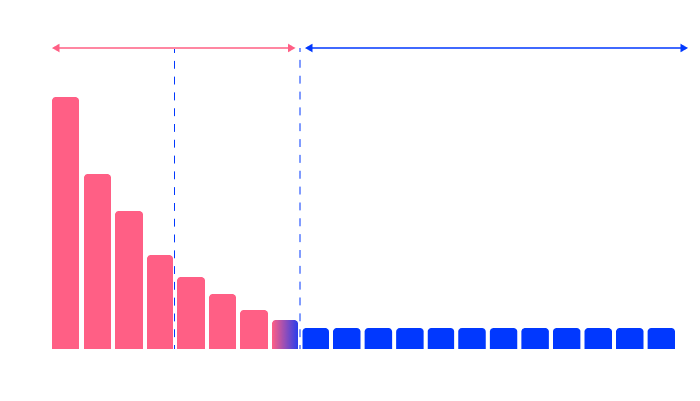
The default migration SEO playbook, publish a page for every visa subclass, load it with the visa name, repeat, rarely produces qualified enquiries. Users searching for migration help are not browsing a visa catalogue. They are trying to resolve a specific problem: whether they qualify, what evidence they need, what happens after a refusal, or how long the process takes given their circumstances. In practice, SEO for migration agents performs better when it answers real decision questions rather than chasing broad visa-name coverage. Pages that answer those questions outperform pages that simply name the visa.
SEO for migration agents increasingly requires content built around genuine expertise and clear answers, which aligns closely with the principles behind SEO for AI search, where retrieval systems reward depth and credibility over keyword repetition. As AI SEO agents become more common for producing draft content at scale, every page still needs to meet migration compliance standards before publication.
Four assumptions are worth replacing directly.
“Ranking for more visa names wins”, Cover the questions users ask before they enquire: eligibility thresholds, required evidence, likely process steps, costs, timing dependencies, and review or refusal pathways. A page that answers “what evidence do I need for a partner visa” does more conversion work than a generic partner-visa overview.
“Guaranteed visa” language builds confidence”, Conditional guidance is more credible. Explain what the outcome depends on: the applicant’s facts, the relevant criteria, the strength of the evidence, and current policy settings. Absolute claims create compliance exposure and erode trust with users who know migration outcomes are never certain. With LLM SEO outputs increasingly feeding answer panels, any large-language-model generated migration content requires human review by a registered practitioner before it goes live.
“Anonymous copy is fine”, Pages should show who wrote or reviewed the advice, including role, review responsibility, and registration context where appropriate. Authorship is a trust signal, not a formality. Evolving search features also reward these expertise signals, and gemini SEO developments in particular surface authoritative, well-attributed content more prominently.
“Generic service pages convert”, Pages built around a specific intent angle perform better. Employer sponsorship evidence, partner-visa relationship proof, character issues, health requirements, and next steps after a refusal each represent a distinct user problem that warrants its own focused page.
Replace Client-Identifying Success Stories With Anonymised Examples That Explain the Issue Addressed, the Documents or Criteria Involved, and the Process Followed Without Exposing Confidential Details
Intent Clusters Over Visa-Page Sprawl
A one-page-per-visa structure assumes users already know which subclass they need. Most don’t. They arrive with a specific obstacle: a sponsorship condition their employer can’t meet, a document gap in a partner visa application, a health requirement they weren’t expecting, or a question about what happens after a refusal. Pages built around those entry points match the actual search, not the administrative taxonomy behind it.
Intent-cluster thinking applies beyond migration work; SEO for recruitment agencies follows a similar pattern of matching real candidate or employer questions rather than broad job-title pages. A page targeting employer sponsorship evidence, for example, can address nomination criteria, supporting documentation, and common refusal triggers in one place. That depth signals expertise to both the reader and Google’s quality systems in a way that a brief subclass overview never will.
SEO for migration agents, like SEO for retailers, benefits from intent-matched content that addresses specific decision points rather than broad category pages, though migration contexts add the additional requirement that every claim be compliant and attributable.
The same logic applies to proof of experience. An anonymised example that describes the visa category, the evidence problem, the documents assembled, and the procedural steps taken gives a prospective client something concrete to assess. The issue and the method carry the credibility. Stripping out names, file numbers, and identifying facts keeps the example compliant without reducing its usefulness.
For migration agents, this means auditing existing content against real search behaviour: which pages answer a decision question, and which pages simply name a visa? The pages that answer questions are the ones worth building on.
Evidence Shows Compliant Scale Can Still Grow Visibility
Conditional Guidance Builds Trust
Migration outcomes turn on the applicant’s facts, eligibility, evidence, and current policy settings. A page that explains the condition behind an answer does more credibility work than one that sounds certain. Sourced or clearly qualified guidance signals that the agent knows the limits of a general answer and respects the reader enough to say so.
That framing also reduces compliance risk. Absolute claims about visa outcomes sit uncomfortably against OMARA advertising expectations. Conditional language, such as explaining what a result depends on rather than what it will be, keeps pages accurate and defensible without stripping them of useful guidance.
SEO for migration agents is evolving alongside broader shifts in how search engines work, and learning about AI in search engine optimisation helps practitioners anticipate how content quality and trust signals are being weighted in regulated niches.
Compliance-Approved Scale in Practice
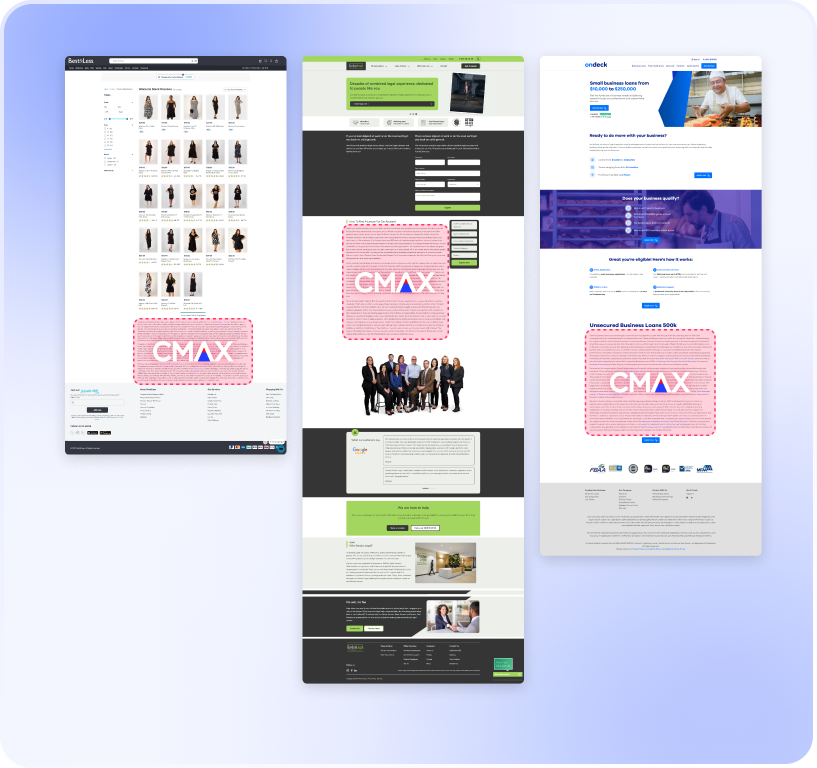
Regulated industries can scale content without sacrificing accuracy. Across CMAX’s client engagements, one online pharmacy engagement achieved 457% year-on-year non-brand organic growth in under 12 months. The approach: pages trained only on compliance-approved copy, scaled programmatically across a tightly controlled content framework.
The same regulated-content dynamics apply to SEO for migration agents because both sectors need careful expansion inside a regulated environment, where a single non-compliant claim can create liability, erode trust, or trigger a complaint. Based on CMAX’s client results, this pharmacy example shows that compliance-first content and meaningful organic growth are compatible priorities. The discipline that keeps pages accurate is the same discipline that makes them rankable: specific answers, qualified claims, and clear accountability at every level of the content.
SEO for migration agents shares a core challenge with other regulated digital environments, scaling content without sacrificing accuracy, and the compliance-first content architecture used in SEO services for ecommerce website illustrates how structured, policy-aware page growth can drive organic visibility without introducing misleading claims.
An honest framework makes migration SEO easier to assess.
Lead quality over raw rankings
Raw rankings are a vanity metric for migration agents. A page ranking for a broad visa term can pull in researchers, offshore applicants, or users looking for a different jurisdiction entirely, none of whom will enquire, and none of whom convert.
What moves the needle is a smaller, sharper pool of enquiries: people with the right visa problem, the right location context, a matching eligibility profile, and enough urgency to act. That kind of lead quality comes from pages built around specific intent, eligibility obstacles, sponsorship conditions, refusal pathways, rather than pages optimised for search volume alone.
SEO for migration agents is most valuable when it attracts enquiries from people with a genuine visa need, making SEO for lead generation a useful framework for aligning content intent with the qualification signals that indicate a prospective client is ready to act.
Effective SEO strategies for migration work start with compliance and lead-quality filters, not traffic volume.
A practical SEO review framework
A practical review framework gives SEO for migration agents a clear quality benchmark. A migration-SEO audit should move through five checks for every page:
- Claims language, Does the page use conditional, evidence-aware wording, or does it imply guaranteed outcomes?
- Authorship and review, Is there an identifiable byline, reviewer note, or MARN detail that lets a reader verify who stands behind the advice?
- Attribution, Are legal or procedural assertions attributed to a source, or do they read as unsourced absolutes?
- Intent match, Does the page answer one specific question clearly, or does it spread across multiple unrelated visa topics?
- Next step, Does the page give the reader an appropriate action without overstating what that action will deliver?
Each of these checks doubles as an SEO optimisation lens, flagging where on-page quality falls short of what both users and search engines expect from regulated advice.
Any page that fails two or more of these checks is a trust liability before it is an SEO problem.
Frequently Asked Questions (FAQ)
Can SEO help migration agents attract qualified leads?
Yes, when pages target the real reasons people search. A user who might seek migration agent help online is often driven by a specific eligibility concern, not a generic browse. Sponsorship requirements, refusal concerns, and missing evidence are the signals that indicate readiness to enquire. Broad traffic terms rarely carry that intent, so ranking for them produces volume without conversion.
Can migration agents use multilingual SEO content?
Multilingual content can reach users who search in another language, but each version needs jurisdiction-accurate wording, the same compliance review applied to the English page, and clear authorship. A translated page that introduces imprecise claims creates the same liability as a poorly written English one.
How do reviews affect local SEO for migration agents?
Reviews add third-party detail that rankings alone cannot supply: responsiveness, clarity, and service experience. An agent offering SEO Melbourne visibility needs the same compliance-first approach to review management as to page content. Users choosing between agents in the same city or region routinely compare this detail before making contact, and firms investing in SEO in Sydney face similar expectations from prospective clients. A stronger review profile supports both local visibility and conversion confidence.
SEO for migration agents and SEO for travel agents both serve trust-sensitive audiences researching high-stakes decisions, but migration SEO carries the additional layer of regulatory compliance and authorship accountability that shapes how every page must be structured and reviewed.
Which keywords should migration agents target for visa services?
Prioritise keywords that reflect real decision points: eligibility thresholds, refusal pathways, evidence documents, employer sponsorship conditions, and location-specific service intent. Practitioners focused on SEO geelong or regional areas should ensure their keyword lists mirror the visa subclasses most relevant to local employer demand. Visa subclass names alone rarely capture the specificity of what a ready applicant is actually searching for, and the same principle applies to SEO queensland campaigns where state-nominated pathways shape search behaviour.
Can SEO help migration agents serving corporate and individual clients?
SEO can support both audiences when the site separates business-facing topics, such as sponsorship obligations and compliance requirements, from individual matters, such as partner, student, or skilled-migration pathways. Each page should match a distinct search intent rather than attempting to serve both audiences from a single generic page.
Regulated Search Demands More Than Generic SEO
Migration agents operate under strict advertising and compliance rules that most SEO platforms ignore.
CMAX is an agentic SEO platform built to deploy and continuously update content across the thousands of long-tail queries your prospective clients actually search. Our AI-driven agents create topic-level coverage that aligns with trust signals like authorship, registration credentials, and jurisdiction-accurate guidance, because in regulated industries, content that lacks compliance doesn’t just underperform, it creates risk. With two lines of code, CMAX targets the long-tail demand where high-intent searchers look for specific, qualified answers.
If your SEO strategy can’t scale trust and compliance together, it’s not built for regulated markets.
Author
Jeremy Tang
Founder and CEO of CMAX
Jeremy Tang is the Founder and CEO of CMAX. With over 2 decades of experience in business consulting and digital marketing, he has successfully driven seven startup businesses, six of which achieved $1 million in revenue from zero in less than 16 months, 5 of which grew to multi-million dollar a year ventures without any external funding. Jeremy's expertise lies in streamlining business processes through technology and leveraging digital (in particular SEO) for business growth. He resides in Australia, travels extensively, and draws inspiration from his global experiences.