Enterprise teams that look at enterprise SEO services usually start with one question: why isn’t the site bringing in more sales from Google? SEO for my website begins with matching a specific search, such as “washable linen quilt cover king” to a useful page.
Most teams reach for more tactics: more blog posts, more fixes from the last audit. On larger sites, SEO optimisation starts with coverage.
Does a useful page exist for each way customers search, and can Google find, crawl and keep revisiting those pages?
Think of your site as a library. Readers walk in asking for one specific book each.
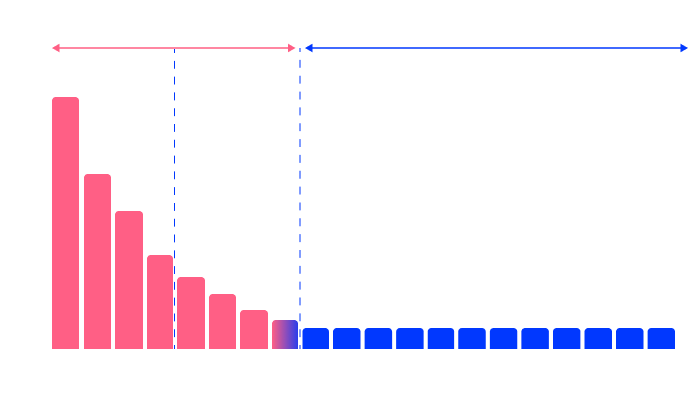
If the shelves hold only the bestsellers, most of them leave empty-handed, and a better sign on the door changes nothing. In this context, coverage means having a useful page on the shelf for each specific search, because a better sign on the door never fills an empty shelf.
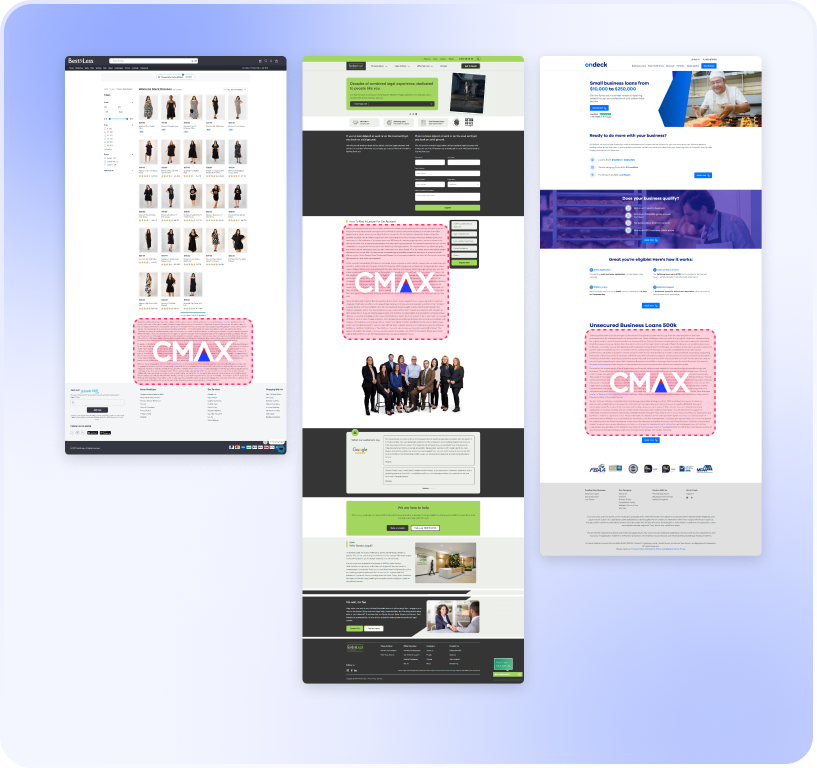
Coverage matters more than any single tactic, because SEO ranking work means tying Search Console data to sales rather than visits alone. CMAX works with enterprise and mid-market teams on this problem.
We build out long-tail coverage and internal linking so your reporting traces back to sales.
Your site needs coverage before it needs more tactics.
Match pages to real demand.
The first check is simple. List the searches customers actually type and see which ones have a page.
Content surface area is how many of the ways customers search you have a useful answer for. A B2B SEO strategy needs enough of it to answer specific questions about products, use cases, constraints and buying decisions.
If the page doesn’t exist, no title tag or report can make it rank.
Fix crawlability, links and freshness first.
Before rewriting your busiest pages, an enterprise SEO firm should check whether Google can discover the pages that matter.
Search Console, Google’s free tool, shows which searches your site appears for, flags pages with impressions but weak clicks, and surfaces sections with indexing issues. Typing “website SEO analyser free” into Google returns plenty of generic graders.
A website SEO score checker gives you a grade for the site. Search Console gives you the real queries, impressions and clicks.
If important pages are buried, stale or disconnected, growth stalls before content quality matters.
The work that moves results is structural.
Give each page a clear target.
Good on page SEO optimisation gives each page one clear intent. An intent map turns SEO for my website into structural work: merge the competing guides and find the missing pages for specific customer needs.
On large sites, missed growth often looks like five similar buying guides competing for “best running shoes” while no strong page exists for “running shoes for flat feet.” Competing guides are a meeting where everyone presents the same slide.
A reliable intent map helps SEO firms merge duplicates, map pages to intent and create specific pages where customer language is more precise than your navigation.
Scale long-tail coverage and internal links.
Over 90% of search and AI demand is in the long tail: the specific searches buyers type by size, problem, material, use case, location and constraint. An AI SEO strategy gains broader coverage when the Agentic SEO Platform connects long-tail pages through Dynamic Internal Linking.
In regulated programmes such as SEO for law firms, CMAX is trained on human-reviewed, client-approved content. That matters when brand accuracy and compliance approvals can’t be left to generic AI output.
Measure success by business value.
Measure quality, leads and revenue.
Visit counts are the wrong scorecard. Revenue reporting makes SEO for my website more useful by connecting Search Console clicks with conversions, calls, store visits and assisted sales.
A local SEO strategy should connect those clicks with calls, store visits and revenue before anyone judges commercial value.
A SEO ranking monitor tells you where a page sits. Revenue tells you whether that position paid.
Any SEO ranking report free of charge shows the first and rarely the second.
Fit the plan to the site.
The right plan starts with the bottleneck in your site. CMAX approaches SEO for ecommerce stores through category, product, comparison and buying-guide coverage rather than a single sitewide template.
Regulated brands need approval-safe content and tighter claims control. Multi-market sites need genuine localisation, and planning for ChatGPT SEO Australia must reflect local language and regulatory expectations.
A one-off audit rarely closes a coverage gap across thousands of changing searches. Find the actual constraint first: missing pages, duplicate intent, poor internal links, stale content, slow approvals or measurement that stops at visits.
Frequently Asked Questions (FAQ)
Does my website need a blog to rank on Google?
No. A Google ranking website has pages that match what people search for, and Google can discover, crawl and index them. The practical answer to how to improve website SEO is to create pages that match demand and keep them easy to find.
Can a small website rank high on Google?
Yes, when it targets searches it can answer better than larger sites.
Across emerging discovery channels, SEO for ChatGPT still benefits from narrow, high-intent pages that answer specific needs better than broad pages. Size helps with breadth.
Relevance, crawlability, freshness and clear internal links still decide what each page can rank for. CMAX defines SEO for my website as building discoverable product, service, category, comparison, FAQ and location pages around clear demand.
How long does SEO take to work?
There’s no fixed timeline. Results depend on the site, the competition and how the work is done.
Technical fixes can help Google process pages faster. Durable gains come from adding missing coverage, improving targeting, connecting pages properly and keeping content fresh.
Once coverage is filled and internal links are stronger, SEO for my website becomes an ongoing programme rather than a one-off fix. A SEO diy guide can help a small site prioritise narrow, high-intent pages, crawlability, freshness and clear internal links.
SEO for My Website Starts With Coverage
SEO for my website usually improves when the site covers more of the searches customers use. Tweaking the same few pages again rarely moves it.
That is the core idea behind CMAX: often the competitor has no better SEO. It has pages you don’t.
CMAX helps teams expand useful content across the long tail, keep it fresh and connect related pages so Google can find and read them. A useful SEO strategy checklist covers the same practical ground.
For larger sites, a sound foundation for ChatGPT SEO likewise depends on precise page targeting, strong internal linking and useful answers for specific demand.
You can’t fix a gap you haven’t seen. A short review of where your site is missing from search and AI answers shows you which pages to build first.
If you’re curious as to how you’re performing on AI, book in a Missing Customer Map review with our Growth Team.
Author
Jeremy Tang
Founder and CEO of CMAX
Jeremy Tang is the Founder and CEO of CMAX. With over 2 decades of experience in business consulting and digital marketing, he has successfully driven seven startup businesses, six of which achieved $1 million in revenue from zero in less than 16 months, 5 of which grew to multi-million dollar a year ventures without any external funding. Jeremy's expertise lies in streamlining business processes through technology and leveraging digital (in particular SEO) for business growth. He resides in Australia, travels extensively, and draws inspiration from his global experiences.