Most buyers and sellers search six or eight times before they contact an agent. They compare suburbs, check rental yields, read auction guides, and ask appraisal questions.
Your site either answers those searches or a competitor’s site does. That is the whole game for real estate digital marketing.
Most agency sites cover the obvious keywords and the listings feed. The rest of that search demand, the suburb comparisons, the buyer guides, the “is now a good time to sell” questions, goes elsewhere.
Fixing that gap is where real estate marketing produces measurable enquiry growth.
We focus on expanding and refreshing the website content that earns search visibility. SEO services for real estate agents done well connect that content directly to enquiries you can count.
Real estate SEO helps the right local audience find you when they are ready to enquire.
Intent-led local searches
Google ranks local results on relevance, distance, and prominence. A page titled “3-bedroom homes in Marrickville” performs better than a generic listings hub because it matches both the place and the specific search.
SEO for real estate agents Australia works the same way: the more precisely your pages match what someone is actually searching, the better they perform in local results.
The searches that carry the clearest commercial intent, suburb plus property type, appraisal terms, rental yield questions, come just before a call or form submission. Those are the ones worth targeting.
Pages for each enquiry stage
Think of your site like a staffed shop floor. A customer looking at sofas needs different help than one who has already decided and wants to know delivery times.
Routing every visitor to the homepage is the equivalent of pointing everyone to the front door.
Within digital marketing for real estate agents, seller pages, suburb pages, market updates, and buyer guides each serve a different stage of the decision. Real estate content marketing gives each of those page types a defined role before the appraisal request lands.
Strong real estate visibility comes from broad coverage, not a few obvious keywords.
More than listing pages
Most buyers and sellers do not start with an agent search. They start with a suburb.
The real estate SEO keywords that capture that early-stage research sit in suburb comparisons, school zone guides, price trend articles, and rental yield pages, not in listing feeds that every competing site also publishes from the same shared data.
SEO keywords for real estate gain far more weight from a unique suburb guide than from a duplicated listing page. Inspection advice, market commentary, and question-led content answer the searches that happen before the agent decision.
That is where the enquiry actually begins.
Fresh, connected content wins
Internal links are the paths Google follows from one page to the next. A well-linked site lets Google see that your suburb pages, seller advice, and market updates all belong to the same authoritative source.
That is central to SEO for estate agents: a connected content system lifts the authority of the whole site, not just the pages you happened to update last month.
Isolated keyword targeting produces isolated results. A system that builds and connects content across suburb guides, market updates, and long-tail searches, meaning the specific, detailed searches people type before they make a decision, compounds over time.
We build real estate SEO around content momentum and measurable enquiry growth.
Built for long-tail coverage
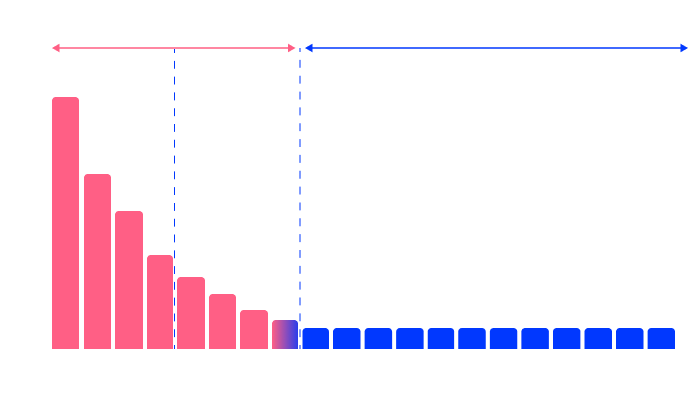
Over 90% of search and AI demand is in the long tail. A real estate SEO agency working at scale needs systems, not a manual publishing team trying to cover thousands of suburb, property-type, buyer, seller, landlord, and investor queries one page at a time.
Our agents use Automated Content Generation, Dynamic Internal Linking, and Full Body SEO to build that coverage across the searches that manual teams usually leave untouched. Those queries often carry the clearest intent.
Digital marketing for real estate companies that ignore the long tail leave most of their addressable demand on the table.
Agentic SEO, tied to outcomes
CMAX is the Agentic SEO Platform. For SEO services for real estate industry teams, that means content built from your approved brand assets, continuous updates as the market moves, performance reporting tied to enquiries, and no off-brand output at scale.
Content is generated from your approved brand assets, preventing hallucinations and off-brand output.
Across digital marketing for real estate industry programmes, we focus on the website pages and the search visibility that connect directly to enquiry growth. You do not have to guess which pages are working.
Frequently Asked Questions (FAQ)
How long does real estate SEO take to show results?
Clients see first clicks in 6-8 weeks, with programmes maturing around month six. The pace depends on the site’s existing content coverage, technical health, local competition, and how much useful content Google has already indexed.
An established suburb page on a well-linked site moves faster than a new market guide on a thin one.
Entity based SEO, which means helping Google understand what your agency is, where it operates, and which topics it covers, still requires Google to crawl, evaluate, and connect each page to related local content. That process takes time regardless of the platform.
Does IDX hurt real estate SEO?
IDX listing feeds underperform when the pages reuse the same content found on many competing sites and add no local context. Google does not reward duplication.
SEO for real estate websites improves IDX performance by wrapping listing pages in unique suburb content, local market insights, and strong internal links that give each page something the feed alone cannot provide.
Do real estate agents need a Google Business Profile?
For most agencies, yes. Google states that adding and verifying a Business Profile helps customers find your business on Search and Maps, with local results based on relevance, distance, and prominence.
An accurate, maintained profile supports map visibility alongside your website.
Any local SEO cost assessment should account for Business Profile management alongside website coverage, because the two work together. In local search, a verified Business Profile also supports entity SEO services as one of several signals that reinforce an agency’s identity across Search and Maps.
The more consistently those signals align, the better your local visibility holds.
Coverage Beats Clicks
SEO for real estate works when it matches the way people actually search before they call, from suburb comparisons to appraisal questions and buyer or seller guides. CMAX is the Agentic SEO Platform, built for the 90% of demand that sits in the long tail.
Our agents deploy and continuously update content for the thousands of ways buyers, sellers, landlords, and investors search, across suburb pages, market updates, and buyer or seller guides. CMAX applies SEO real estate marketing through Automated Content Generation, Dynamic Internal Linking, and Full Body SEO across suburb pages and market updates. That’s a connected system working together, rather than a template dumped online and left.
Content is generated from your approved brand assets, so scale doesn’t mean losing control of your message. Publishing creates the first version; entity SEO improves performance when a system keeps checking what’s working and updating what isn’t.
You still can’t rank for something you don’t talk about. CMAX helps your site cover the searches that lead to real enquiries, with content kept current as those searches change. Get in touch to see how CMAX can help your agency turn broader search coverage into measurable enquiry growth.
Author
Jeremy Tang
Founder and CEO of CMAX
Jeremy Tang is the Founder and CEO of CMAX. With over 2 decades of experience in business consulting and digital marketing, he has successfully driven seven startup businesses, six of which achieved $1 million in revenue from zero in less than 16 months, 5 of which grew to multi-million dollar a year ventures without any external funding. Jeremy's expertise lies in streamlining business processes through technology and leveraging digital (in particular SEO) for business growth. He resides in Australia, travels extensively, and draws inspiration from his global experiences.