The SEO optimisation definition most people search for runs into an immediate problem: the phrase itself is redundant. SEO already stands for search engine optimisation, so “SEO optimisation” says optimisation twice. Marketers use it anyway, usually as shorthand for a bundle of work that includes content changes, technical fixes, and performance review. The gap is not the label but whether the work behind it is specific enough to evaluate. CMAX works with enterprise teams running exactly that kind of structured SEO at scale.
The phrase is redundant but still widely used.
Why the phrase is redundant
The SEO optimisation definition is technically redundant, but the phrase persists for practical reasons. SEO stands for search engine optimisation. The moment you add “optimisation” after it, you’re repeating the last word of the acronym. Any search engine optimisation definition will confirm the same point: “SEO optimisation” is, technically, “search engine optimisation optimisation.” No separate discipline sits behind the phrase, no distinct methodology, no additional layer of work that plain “SEO” doesn’t already cover. The redundancy is real, and anyone who has caught it mid-sentence has caught it correctly.
One of the clearest ways to resolve the SEO definition debate is to define search engine optimisation from first principles, which quickly reveals why adding “optimisation” to the acronym repeats rather than extends its meaning.
Why marketers still say it
Precision and common usage rarely travel together, and this phrase is a clear example. In practice, the SEO optimisation meaning most people intend is shorthand for a bundle of work: content changes, technical fixes, internal linking improvements, and performance review. Marketers reach for it when they need a phrase that signals active, hands-on effort rather than the broader discipline of SEO as a field. It implies something was done, a page was touched, a problem was addressed, rather than describing SEO as a strategic function. That distinction drives its staying power in briefs, status updates, and client reports, even when the wording doesn’t hold up to scrutiny.
The phrase usually refers to several distinct SEO jobs.
When marketers say “SEO optimisation,” they’re rarely talking about one thing. The phrase typically bundles several categories of work that each operate on different parts of a site and produce different kinds of results. Working through the SEO optimisation definition in practical terms means revisiting the SEO definition itself, since the two phrases describe the same underlying discipline of improving a page’s relevance and discoverability.
What on-page SEO changes
What is SEO optimisation, in practical terms? On-page SEO covers the edits made directly to a page’s content and structure. That includes rewriting titles and headings to reflect the actual query, updating body copy to answer the question more directly, adjusting internal links to connect related pages, and aligning the page’s purpose with the search intent behind the query. The SEO optimisation definition becomes concrete at this level: reduce the distance between what a user is looking for and where they find it on the page, fewer clicks, less scrolling, a clearer answer earlier.
Technical and off-page SEO scope
Technical and off-page SEO operate at the site and ecosystem level rather than the page level. Technical work addresses whether search engines can crawl, index, and render pages correctly. Anyone asking what is SEO optimisation will find that off-page work covers external authority signals that influence how search engines evaluate a site’s credibility. Reporting sits across both: without it, a team cannot tell whether a visibility change followed from the work done or from something else entirely.
A page with strong content still underperforms if search engines cannot process it cleanly or if the site lacks the signals that support discovery. Both layers need to be in scope before “SEO optimisation” can be called complete.
Meaningful optimisation shows up in observable changes.
What page-level optimisation looks like
A page is more SEO-optimised when the changes are visible and verifiable. Effective SEO optimisation for website content means the title reflects the actual query. The answer is structured so the core point surfaces quickly on both mobile and desktop. Internal links connect the page to related content, supporting both user navigation and crawler discovery. Mobile usability issues are resolved rather than deferred.
Grounding the SEO optimisation definition in real, inspectable changes becomes more straightforward when a team knows what search engine optimisation means at the page and site level, rather than treating it as a vague quality label.
These are changes a team can inspect in a CMS, a crawl report, or a search console. They are not claims about intent or effort. That is what a working SEO optimisation definition comes down to.
A measured example of optimisation
The CMAX engagement with a B2B omnichannel hospitality retailer illustrates what scaled, observable optimisation produces. The retailer added 5,000 long-tail product pages and reached $1M+ per month in incremental SEO revenue within 8 months. Organic traffic for the retailer grew 255% over 12 months.
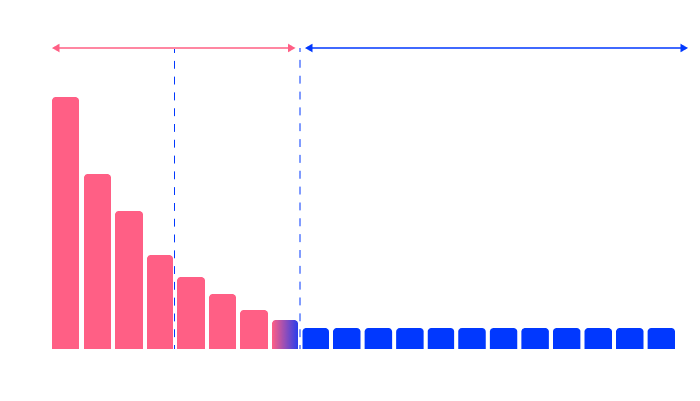
The mechanism behind those numbers is page coverage. A small set of head terms can only capture a narrow slice of search demand. Thousands of pages targeting specific long-tail queries reach the searches that head terms miss entirely, each one a discrete match between a user’s exact phrasing and a page built to answer it. Thorough SEO website optimisation at this scale is the lever for enterprise teams. Broader coverage improves discoverability across the full range of searches a business can realistically serve, rather than concentrating visibility on a handful of high-competition terms where movement is slow and marginal.
Clear wording avoids confusion about scope.
When to use each term
“SEO” is the precise name of the discipline. “SEO optimisation” works as business shorthand when the audience already knows what it covers. “SEO-optimised” only carries weight when the specific changes are named alongside it, rewritten titles, improved internal links, resolved indexation issues. Without that specificity, the phrase describes a status rather than a result, and status labels do not hold up in a board review. A useful SEO optimisation definition pairs the label with the specific changes completed.
Choosing precise language around the SEO optimisation definition is easier once a team has worked through search engine optimisation what is as a shared reference, so everyone agrees on scope before debating which changes count as optimisation.
SEO completion checklist
Before calling SEO work complete, a team should be able to point to four things: the user problem addressed, the exact changes made, the evidence reviewed, and the gaps still outside scope. If any of those are missing, the work is not finished, it is paused.
Use this checklist to verify:
- Query and page purpose are agreed. The team knows whether the page should define a term, compare options, or capture a product search.
- Title and headings match search intent. The page delivers on-page what it promises in the SERP.
- The main answer is easy to scan. The core point is visible quickly on both mobile and desktop.
- Internal links connect related pages. Users and crawlers can reach the next question, supporting content, or conversion-relevant destination.
- Crawl, indexation, and rendering have been checked. Weak performance is not being misread as a content problem when it is a discovery issue.
- Success metrics are defined before judging the outcome. Visibility, traffic, or conversion signals are chosen based on the page’s actual role.
- Post-launch performance is reviewed after recrawl. Publication is the starting point, not the result.
SEO is an iterative process, not a finished state.
Why changes take time
Publishing an SEO change starts a process, not a result. Search engines still need to recrawl the page, reprocess its content, and reevaluate how it fits against competing pages before any shift in visibility appears.[1] That recrawl cycle varies by site authority, crawl budget, and how frequently the page is updated. For teams pursuing SEO optimisation Australia businesses rely on, pairing the label with documented changes is what separates implementation from impact. Meanwhile, competing pages are not standing still. A title rewrite published today may take weeks to register, and by then the competitive landscape may have shifted. Treating publication as the outcome conflates implementation with impact.
The practical takeaway
“SEO-optimised” is only a useful phrase when it describes something specific. Pair it with the actual changes made, the evidence reviewed after recrawling, and the gaps that remain outside the current scope. A page with a rewritten title, resolved indexation issue, and improved internal links is SEO-optimised in a documentable sense. A page labelled optimised because someone reviewed it is not. As a practical standard for SEO optimisation Australia, the distinction is critical when reporting to stakeholders who need to know what changed, what was measured, and what comes next. SEO work that cannot be described in those terms has not been completed; it has been started.
As the SEO optimisation definition continues to evolve, practitioners are increasingly watching how AI search reshapes the signals and formats that influence organic visibility over time.
Frequently Asked Questions (FAQ)
How long until I see impact in search results?
SEO impact can appear in days for minor fixes, such as a title rewrite on an already-indexed page, or take considerably longer for competitive queries. The timeline depends on crawl frequency, indexation status, site authority, and how substantial the change was. Launching a new page or repairing sitewide technical issues operates on a different timescale than a single on-page edit.
How do you define and measure success in SEO?
SEO success is defined by measurable changes in relevant rankings, qualified organic traffic, conversions, indexed page coverage, and the visibility of pages that match business goals. The right mix of metrics depends on the page’s role: capturing discovery, supporting evaluation, or driving a specific action each calls for different signals.
What are the three types of SEO?
The three broad types are on-page SEO, technical SEO, and off-page SEO.[2] Together they cover page content, site accessibility for search engines, and external authority signals. All three types feed into any practical SEO optimisation definition. Most uses of “SEO optimisation” refer to some mix of all three, not copy edits alone.
What is the difference between SEO and SEM?
SEO improves unpaid visibility through relevance and site quality. SEM typically includes paid search activity, such as search ads, alongside broader search marketing tactics. SEO earns placement; SEM can also buy it through ad spend.
Is SEO worth it?
SEO can be worth it when search is a genuine discovery channel for the business. Useful pages can keep attracting relevant traffic after publication, rather than stopping the moment ad spend stops. The real question is whether the business has recurring search demand it can serve with pages that deserve to be found.
Readers who arrive at the SEO optimisation definition from a broader curiosity often benefit from exploring SEO what is SEO as a foundational starting point before moving on to the specific work the phrase describes.
SEO Has a Definition Problem, CMAX Has a Scale Solution
Most teams know what SEO means. Fewer agree on what “SEO optimisation” actually covers, or how to do it across thousands of pages without burning out a small team.
CMAX is a programmatic SEO platform built to target long-tail keywords at a speed and scale manual workflows can’t match. Two lines of code deploy AI-driven agents that create, publish, and continuously update content for the thousands of ways your customers actually search. Results have been observed in as few as six weeks.
If you’re weighing whether to build content in-house or find a platform that does the heavy lifting, CMAX is worth a closer look.
References [1] – https://developers.google.com/search/docs/fundamentals/seo-starter-guide [2] – https://developers.google.com/search/docs/fundamentals/seo-starter-guide
Author
Jeremy Tang
Founder and CEO of CMAX
Jeremy Tang is the Founder and CEO of CMAX. With over 2 decades of experience in business consulting and digital marketing, he has successfully driven seven startup businesses, six of which achieved $1 million in revenue from zero in less than 16 months, 5 of which grew to multi-million dollar a year ventures without any external funding. Jeremy's expertise lies in streamlining business processes through technology and leveraging digital (in particular SEO) for business growth. He resides in Australia, travels extensively, and draws inspiration from his global experiences.