A SEO optimisation definition should answer a simple question: why does showing up on Google matter for sales? The real issue is not whether your brand appears at all.
It is whether your site appears across the searches that actually drive buyers to a purchase.
Most brands chase a handful of head terms and assume that is the job done. Keyword research tools can identify those head terms, and they matter.
But meaningful demand extends across thousands of detailed product, use-case and problem-led searches that a short keyword list will never capture.
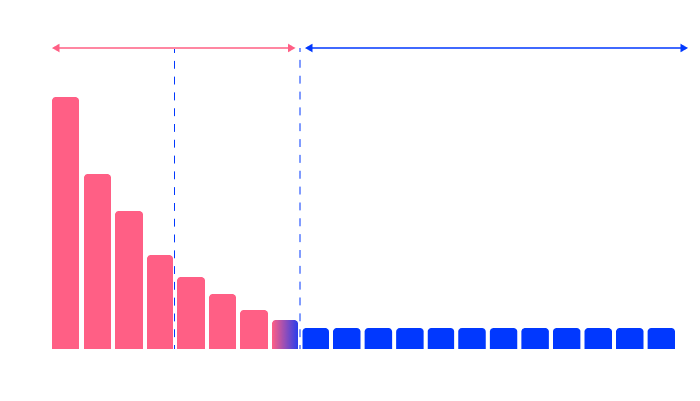
The bigger gains sit in the long tail: the specific, detailed searches people type when they are close to comparing, choosing or buying. Over 90% of search and AI demand is in the long tail, and even category leaders capture only a sliver of it.
AI tools retrieve answers from Google’s index, so a gap in long-tail coverage shows up in both places at once.
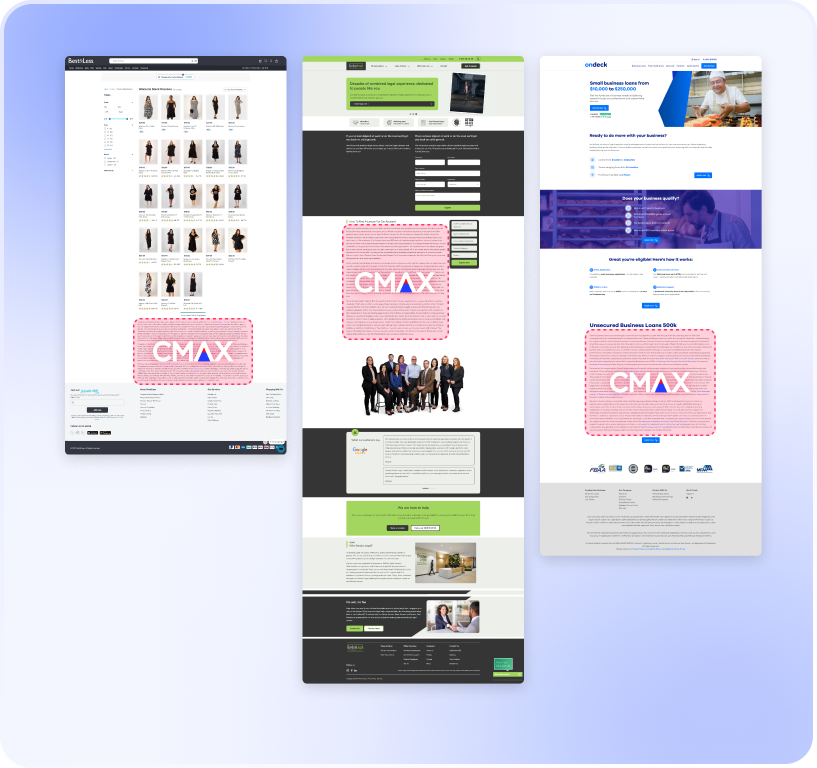
CMAX works on exactly this problem: expanding how much of that long-tail demand your existing site can answer, without a rebuild or a new team.
What Search Engine Optimisation Really Means
What SEO Actually Means
The standard term is search engine optimisation (SEO). The SEO search engine optimisation definition is not a separate discipline from SEO; it is SEO.
“SEO search optimisation” is a clumsy way of saying the same thing. Google defines it as helping search engines find your content and helping users visit your site.
A practical on page SEO analysis examines whether your content, structure and internal links help Google surface each page for the right queries. The on page SEO process starts by connecting revenue-driving topics to pages that answer specific questions clearly.
That is the foundation. Everything else builds on it.
What Strong SEO Includes
In practical terms, SEO search engine optimisation combines useful content, clean site structure, internal linking and technical foundations that help Google crawl a site. Google’s own guidance ties SEO to content discovery and discoverability, not metadata or keyword placement alone.
Picture a shopping centre with a main entrance everyone uses. Most retailers decorate that entrance and leave it there.
The shoppers who arrive through the side door, the car park entrance and the food court escalator, each following their own route, find nothing waiting for them. In SEO, the head term is your main entrance.
The trigger events that lead people to need your product create other routes, each with its own search, and those routes are mostly uncontested. In this context, on page SEO optimisation means building a useful answer at every entrance your customers actually use, not just the one you already know about.
Durable gains come from covering more customer questions, keeping important pages fresh, and making each page support the next one.
The Biggest Search Gains Come from Long-Tail Coverage
Why Long-Tail Coverage Matters
Long-tail searches are the specific, detailed queries people type when they are close to a decision. The vast majority of search and AI demand is in the long tail.
Real demand spreads across thousands of product types, use cases and problem-led searches that no short keyword list captures.
The numbers make this concrete. Nike tops the results for “running shoes” in the US, yet according to SEMrush it captures around 70,900 visitors a month from non-brand running-shoe searches, out of more than 8.5 million monthly US searches in the category.
That is under 1% of actual search demand, for the most dominant brand in the market. Brands that target only head terms miss most of the market, even when they win those terms outright.
How CMAX Expands Coverage
CMAX is the Agentic SEO Platform built for brands that need broader content surface area: more of the ways customers search have a useful answer on your site. CMAX targets the large majority of search demand in the long tail through continuous deployment, Dynamic Internal Linking and ongoing content refreshes across new and existing pages, supporting Full Body SEO where new and existing pages work together to cover more of the category.
CMAX is trained on human-reviewed, client-approved content. That means your brand keeps control over accuracy, tone and regulatory sign-off while SEO page optimisation closes the long-tail gap that AI discovery now rewards.
Clients see first clicks in 6-8 weeks, with programmes maturing around month six.
SEO Still Matters Because AI Discovery Still Depends on Search Results
Why AI Still Depends on SEO
Google states its generative AI features are rooted in its core Search ranking and quality systems and draw on content from Google’s index. Query fan-out is the mechanism: when you ask an AI tool a question, it runs several smaller Google searches and builds its answer from what it finds.
One question to AI is eight to twelve queries on Google. Miss those searches and you miss the AI answer too.
TechCrunch reported AI Overviews now reach more than 2.5 billion people a month, and AI Mode passed 1 billion monthly users in May 2026. Breadth and freshness carry more weight than ever.
AEO and GEO address specific surfaces, but SEO content optimisation builds the indexed content and topic coverage that all of those surfaces draw upon.
Why CMAX Fits This Shift
On 10 September 2025, Google cut what AI engines could see from the top 100 results to the top 10. Search positions tightened immediately.
That makes the quality and relevance of individual pages more consequential, not less. AI SEO optimisation at scale requires clear page roles and strong internal linking so Google can distinguish broad category pages from comparison pages and problem-led articles.
CMAX implements that structure directly across existing CMS platforms, which is a different undertaking from technical SEO training that explains the concepts without applying them.
Frequently Asked Questions
How Long Does SEO Take to Show Results?
Google states some changes can be reflected within hours, while others take several months, and it recommends waiting a few weeks before assessing whether work had a beneficial effect in Search. Crawl frequency, site authority, competition and content surface area all affect timelines, which is why SEO engine optimisation performs better as an ongoing programme than a one-off fix.
On an established site, the first signs of progress are typically new impressions and clicks on long-tail queries. Clients see first clicks in 6-8 weeks, with programmes maturing around month six.
Which SEO Metrics Matter Beyond Search Positions?
A keyword search position tells you where you sit. It does not tell you whether anyone chose you.
Search Console, Google’s free tool showing which searches your site appears for, covers clicks, impressions, click-through rate and average position. That combination gives a more useful read than rank tracking alone.
Connect those signals to landing-page sessions and assisted conversions and you can see whether coverage is expanding into new demand, which is the number that connects back to revenue.
Can Multiple Pages Rank for the Same Keyword?
Yes, Google can show more than one page from the same site when those pages satisfy different intents, formats or levels of specificity. Overlapping pages compete with each other when they target the same need with near-identical information.
Clear differentiation between pages is the real decision point. Across a large site, clear page roles and strong internal linking allow Google to distinguish broader category pages from comparison pages and problem-led articles, completing the structural work that on page SEO steps and a strong on page SEO score checker can confirm are in place.
What is link building services in this context? It is the practice of earning links from other sites to signal authority, which complements on-page work.
Link building outreach, link building ecommerce website campaigns and link building reseller arrangements all address that same signal, though their scope and cost differ.
SEO Search Optimisation Starts With Long-Tail Coverage
SEO search optimisation is one discipline, and the gains usually come from covering more of the specific searches buyers actually use. SEO search optimisation applied broadly, across the full range of queries your buyers type, is what the category leaders have not yet done.
A search engine optimisation service that addresses only head terms leaves most of the category uncontested. That is the gap CMAX is built to address.
CMAX is the Agentic SEO Platform. It expands content surface area across new and existing pages, keeps content current and connects related pages so Google has more useful paths into your site.
The most direct way to see where your gaps are is to look at them.
Book a Free SEO Fast Track or ask us to Show me my long-tail gap, and we will map where your site is missing buyers it could be reaching.
If you’re curious as to how you’re performing on AI, book in a Missing Customer Map review with our Growth Team.
Author
Jeremy Tang
Founder and CEO of CMAX
Jeremy Tang is the Founder and CEO of CMAX. With over 2 decades of experience in business consulting and digital marketing, he has successfully driven seven startup businesses, six of which achieved $1 million in revenue from zero in less than 16 months, 5 of which grew to multi-million dollar a year ventures without any external funding. Jeremy's expertise lies in streamlining business processes through technology and leveraging digital (in particular SEO) for business growth. He resides in Australia, travels extensively, and draws inspiration from his global experiences.