Most people searching “SEO services what is” already know the basics. The real question is which tasks sit with an external team and which ones stay with yours. That boundary between research, recommendations, and actual implementation is where most engagements either work or stall. Getting it wrong means months of audits that never reach production, or content that ships without search data behind it. CMAX works with enterprise teams to coordinate that handoff across technical fixes, content, and measurement at scale.
What SEO services actually cover is broader than audits.
Core SEO workstreams
What SEO services what is really asking is which workstreams sit inside a typical engagement. Most teams encounter SEO services through a single deliverable: an audit report, a keyword list, or a set of on-page recommendations. The actual scope runs wider. A functioning SEO engagement coordinates technical fixes, keyword and content planning, page optimisation, authority building, and measurement inside one operating rhythm. That coordination is the point. Without it, teams collect disconnected recommendations across separate workstreams and spend more time triaging than executing. When the workstreams run together, the team can rank issues by what’s actually blocking visibility and move in a sequence that compounds rather than restarts. At its core, what is SEO strategy is the planning layer that sequences these workstreams so each one builds on the last.
SEO services routinely include content production as a core workstream, and SEO content writers are often the practitioners responsible for turning keyword briefs and page outlines into published, search-optimised copy. For teams asking what is SEO content, this is the workstream: research-backed pages built to match specific queries and structured for search engines to crawl and index efficiently.
Visibility, not guarantees
SEO services are designed to improve search visibility and qualified traffic over time. To clarify what is SEO marketing, it is the practice of earning organic search traffic through technical, content, and authority work rather than paid placement. Rankings are an output, and what is SEO ranking in this context refers to where a page appears in organic results for a given query. No provider can contractually commit to a specific position, because three variables sit outside the engagement: the level of real search demand for the target queries, the strength of the pages already ranking for them, and whether the recommendations get implemented on the live site. A technically sound strategy with slow developer deployment or inconsistent content publishing will produce slower results than the same strategy with fast, complete execution. That dependency on implementation is one of the most consistent factors separating SEO programmes that move from those that stall.
SEO services have evolved well beyond traditional tactics, and learning about AI in search engine optimisation helps clarify how modern search algorithms now factor in machine-generated signals alongside conventional ranking inputs.
The in-house boundary determines who owns each task.
Service scope and ownership boundaries
A practical SEO engagement works only when the handoff is explicit. Clarifying SEO services what is included helps define who owns each task before work begins. The external team typically handles research, prioritisation, and recommendations. The in-house team owns the systems, approvals, and releases that turn those recommendations into live changes. Without that clarity upfront, work stalls at the exact points where SEO has the most to gain. SEO services at larger organisations often require a more structured ownership model, which is where enterprise SEO consultants typically step in to coordinate research, prioritisation, and recommendations across complex internal teams.
Technical recommendations, crawl fixes, redirects, canonicals, internal linking rules, are defined within SEO work, but developers still assess dependencies, fit changes into release cycles, and deploy them. The SEO team can specify what needs to change; it cannot push code.
Keyword research, page briefs, and optimisation priorities are often produced externally, but editors and product owners decide whether the final messaging accurately reflects the product, the market, and the brand. That sign-off stays internal. Accordingly, SEO services pricing usually reflects which tasks the external team owns versus what stays in-house.
New landing pages and long-tail content may be drafted within the SEO programme, but subject-matter experts review claims, factual accuracy, and compliance before anything goes live. That review step is non-negotiable in regulated or technically complex categories.
Measurement frameworks can be configured as part of SEO work, but access to GA4, Google Search Console, and CRM reporting typically stays with the in-house team. Attribution and commercial readouts depend on internal data access, which means the external team can build the framework, but the numbers only become meaningful when the right people inside the business can pull and act on them.
Knowing where each boundary sits before the engagement starts is what separates a programme that ships from one that produces recommendations no one implements.
Link Earning and Digital PR Within SEO Scope
Link earning ideas and digital PR support may sit inside SEO scope, but brand, legal, and communications teams often control who can be contacted, what can be said publicly, and which approvals are required before outreach starts.
Approvals Stay With Internal Teams
An external SEO team can identify link opportunities, draft outreach angles, and map the publications or partners worth targeting. A firm offering what is SEO consulting services will typically produce these deliverables as part of its retainer, but the recommendations still require internal sign-off before anything goes out. Brand teams own the voice. Legal teams own the risk. Communications teams own the relationships. Until those approvals clear, outreach sits in a queue.
This is one of the more predictable friction points in SEO work. Developers control release timing for technical fixes. Editors and product owners control whether a page’s messaging is accurate before it goes live. Subject-matter experts control factual sign-off on content that touches regulated or commercially sensitive territory. When a business asks what is a SEO consultant responsible for in these situations, the answer is preparing the strategy and materials, then waiting for the internal gatekeepers to approve each step. Each of these checkpoints is legitimate, and each one is a place where SEO momentum can stall.
SEO services that include content at scale frequently involve a dedicated SEO content writing company to handle the volume of page briefs, drafts, and revisions that internal editorial teams cannot absorb alongside their existing workload.
The practical implication: link earning and digital PR timelines are rarely set by the SEO team alone. Scope conversations at the start of an engagement should map which internal teams hold approval authority for outreach, what the sign-off process looks like, and how long each stage typically takes. Without that clarity, the external team produces work that waits rather than work that ships.
SEO work follows a repeatable cycle of research, fixes, publishing, and measurement.
From audit to implementation
The question SEO services what is becomes concrete once the cycle of research, fixes, and measurement is visible. A small SEO team rarely works on everything at once. In practice, the cycle starts with audit findings and search research, which surface the highest-priority gaps in crawlability, content coverage, and authority. Those priorities get turned into implemented fixes and published pages, and then Google Search Console and GA4 become the feedback layer: query coverage, impressions, clicks, and landing-page engagement show whether the work is moving the site in the right direction.
That rhythm is important because SEO progress is cumulative. Each implemented fix or published page either adds to the site’s coverage or removes a barrier that was suppressing it. Without a closed loop between what gets built and what the data shows, teams lose the signal that tells them where to focus next. The role of what is SEO copywriting becomes clear when briefs turn into indexed landing pages that match query intent, closing the gap between research and measurable organic performance.
Example of scaled long-tail growth
The cycle changes character at scale. In one CMAX engagement, a $500M+ B2B omnichannel hospitality retailer added 5,000 long-tail product pages and grew incremental SEO revenue by $1M+/month in 8 months.
That result reflects a structural shift in how SEO work operates once a site moves beyond a narrow set of head terms. At that point, the work stops being about optimising individual pages and starts being about managing long-tail coverage across thousands of query-specific pages simultaneously. The research, publishing, and measurement cycle stays the same; the volume and coordination requirements do not.
SEO services built around long-tail growth and scaled page production often benefit from the focused expertise of an enterprise SEO specialist who can manage prioritisation, implementation coordination, and measurement across a large site architecture.
Progress Appears in Leading Indicators Before Revenue Moves
Early Signals in Search Data
Search data moves before revenue does. Impressions, clicks, and the number of queries or pages appearing in Google Search Console often shift first, because search visibility can improve while conversions are still catching up. Revenue depends on more than rankings: the visits need to be qualified, the rankings need to hold, and enough users need to reach the right landing pages to convert. A business needing SEO services Sydney can track the same leading indicators to gauge whether its programme is gaining traction, even before commercial results arrive. Watching only revenue in the early months of an SEO programme means watching the wrong metric at the wrong time.
As SEO services expand to track impressions, clicks, and query coverage, teams increasingly need to account for SEO for AI search and how AI-driven results pages may shift visibility patterns before traditional metrics reflect the change.
What Changes the Timeline
For teams evaluating SEO services in Sydney, timeline factors include four variables that determine how quickly those leading indicators translate into commercial outcomes.
Implementation speed. Recommendations that sit in a backlog do not move rankings. The faster technical fixes and new pages go live, the sooner search data can respond.
Existing authority. A site with established domain authority can see query coverage expand more quickly than one starting from a thin backlink profile.
Content relevance. If existing pages are genuinely useful for the target query, optimisation compounds what is already there. If coverage gaps are significant, new pages need to be built and indexed before the site can compete.
Coverage breadth. Competing beyond a narrow set of head terms requires enough query-specific pages to capture demand across the full search landscape. That volume takes time to plan, approve, and publish.
None of these variables are fixed. Implementation pace is the one most directly within a team’s control. That sequence is what SEO services what is ultimately about in practice.
Frequently Asked Questions (FAQ)
What is your approach to SEO?
At its core, SEO services what is comes down to defining the business goal and the in-house boundary first. From there, technical fixes, content opportunities, authority work, and measurement get prioritised in the order the team can realistically approve, build, and publish. Sequencing matters as much as scope.
How long does SEO take to show results?
Early movement often appears first in crawl, indexing, impression, or query-coverage data. Traffic, leads, and revenue usually take longer because they depend on implementation speed, how much content goes live, and how competitive the target queries are.
How do you define SEO success?
SEO success is defined by a mix of leading indicators, such as indexed coverage, impressions, and qualified clicks, alongside commercial outcomes: conversions, revenue contribution, or lower dependence on paid acquisition for the same demand.
How does SEO connect to revenue and growth?
SEO supports revenue when pages that match real search intent bring in qualified visits that can convert. The link to growth becomes clearer when search data is connected to GA4, CRM, or sales reporting rather than viewed as rankings in isolation.
SEO services sit within a broader growth strategy, and SEO services marketing helps frame how search visibility connects to demand generation, qualified traffic, and commercial outcomes when presenting the programme to internal stakeholders.
Is hiring a professional for SEO worth it?
Hiring a professional is usually worth it when the constraint is deciding what to fix first, coordinating developers and content owners, and measuring whether implemented changes are improving qualified search demand consistently.
SEO Services Cover the Basics, CMAX Covers the Other 90%
Most SEO services bundle the same deliverables: keyword research, on-page fixes, a handful of content pieces, and a monthly report.
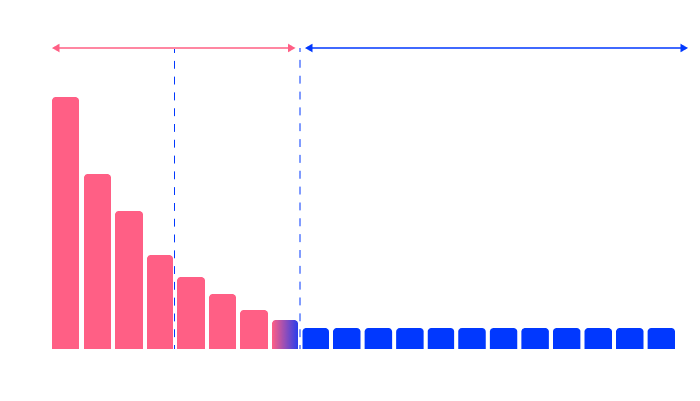
That work matters, but it targets a narrow slice of how people actually search. Over 90% of search demand sits in long-tail queries, thousands of specific, high-intent phrases your current strategy probably isn’t reaching. CMAX is an agentic SEO platform that deploys and continuously updates content across those thousands of queries, using two lines of code and no additional headcount. Results typically start appearing within six weeks.
If you’ve hit a plateau with conventional SEO services, the gap isn’t effort, it’s scale.
Author
Jeremy Tang
Founder and CEO of CMAX
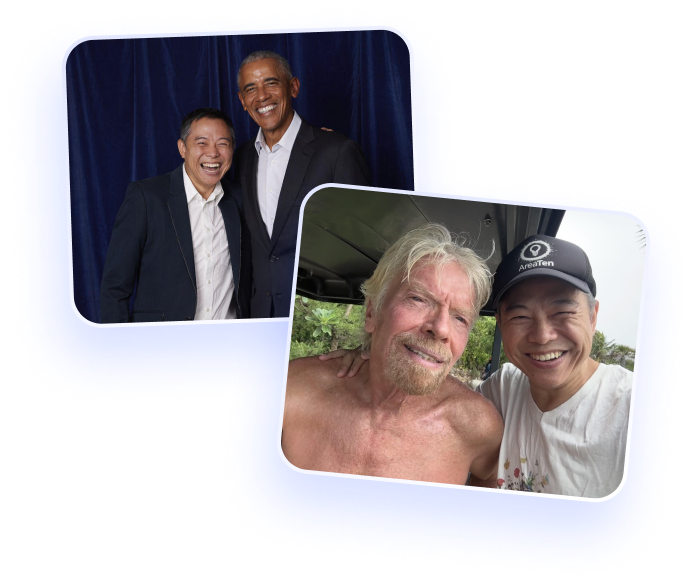
Jeremy Tang is the Founder and CEO of CMAX. With over 2 decades of experience in business consulting and digital marketing, he has successfully driven seven startup businesses, six of which achieved $1 million in revenue from zero in less than 16 months, 5 of which grew to multi-million dollar a year ventures without any external funding. Jeremy's expertise lies in streamlining business processes through technology and leveraging digital (in particular SEO) for business growth. He resides in Australia, travels extensively, and draws inspiration from his global experiences.