Most website copy does one job well and ignores the other. It either reads cleanly for visitors or targets the right search terms, but rarely handles both at once. SEO website copywriting closes that gap by aligning what someone searches with what the page asks them to do next. When those two things solve the same problem, pages tend to rank for the queries that actually lead to conversions. CMAX approaches this as a structural discipline, pairing search intent with on-page persuasion so each page earns both visibility and action.
SEO Website Copywriting Serves Two Intents at Once
Discovery and Persuasion
General web copy has one job: persuade the visitor who already arrived. SEO website copywriting carries a second job before that one even starts. The copy must align with the words people actually type into search, signal to Google what the page is about, and then meet the decision the visitor is trying to make once they land.
Those are three distinct requirements, and they pull in different directions. A headline written purely for brand impact can miss the query entirely. A page stuffed with exact-match terms can rank briefly and then fail to move anyone toward action. SEO website copywriting holds both demands at once, which is what separates it from general web copy or keyword-optimised content that treats persuasion as an afterthought.
SEO website copywriting is built around the same principles that underpin search engine optimisation, aligning page content with what people search for while guiding them toward a meaningful next step.
Matching Both Intents
So what is SEO copywriting in practice? A page performs better when the query that brings someone in and the next action the page asks them to take solve the same job. A visitor searching to compare providers before committing needs comparison evidence and a low-friction next step, such as booking a call, not a hard sell aimed at someone already decided. A visitor researching options before requesting a demo needs enough depth to feel informed, not a stripped-back page that assumes they’re ready. These are common SEO copywriting examples: pages where the search query and the on-page action point in the same direction.
SEO website copywriting and web search optimisation address the same core challenge, making sure the right people find a page and that the page gives them a compelling reason to act once they arrive.
The match between search intent and page intent is where most copy falls short. Getting one right without the other leaves traffic that doesn’t convert, or persuasive pages that qualified visitors never find.
Rankings and Conversions Depend on More Than Keywords
Useful Pages Beat Keyword Stuffing
Google’s published search guidance is explicit: helpful, reliable, people-first content ranks above pages engineered around repeated keyword phrases.[1] That means SEO website copywriting has to do more than place a target term in the headline and first paragraph. The copy needs to answer the query directly, address the decision points a reader is working through, and avoid patterns that signal search manipulation rather than genuine usefulness. SEO website copywriting becomes easier to explain and apply once you have a working SEO definition that separates keyword placement from the broader craft of matching search intent with persuasive, people-first content.
Practically, this looks like covering the comparison criteria a reader actually weighs, not restating the category term. A page that repeats “SEO website copywriting” across every subheading without adding new information reads as thin to both Google and the visitor. Effective SEO optimisation for website pages means explaining the craft distinction, supporting claims with evidence, and moving the reader toward a logical next step. That is the work rankings reward.
Access and Trust Still Matter
Persuasive copy can still underperform when the conditions around it are weak. Proper SEO website optimisation matters here: if search engines cannot crawl or interpret the page correctly, the content may never surface for the queries it targets. If the copy answers a different intent than the query suggests, qualified visitors will leave before they act. If the page experience itself gives someone a reason to pause, such as slow load times, unclear structure, or a CTA that does not match where the visitor is in their decision, conversion drops regardless of copy quality. Anyone seeking SEO services for my website should weigh these page experience factors alongside the copy itself.
Rankings and conversions are both outputs. Copy is one input. Technical access, intent alignment, and page experience are the others. SEO website copywriting works best when it is supported by a capable search engine optimisation platform that can surface crawl issues, track intent alignment, and measure how copy changes affect visibility over time.
Good SEO copy uses evidence, structure, and persuasion.
Ranking and conversion evidence rundown
A single page can carry a lot of weight. It needs to pull in the right visitor, hold their attention long enough to make a case, and point them toward an action that fits where they are in the decision. That’s a tighter brief than most copy assignments.
The clearest way to audit SEO website copywriting is to run three checks against any page you’re evaluating.
Does the page answer the search? The headline and opening lines should reflect the specific problem, comparison, or category the query signals. A broad brand statement in the H1 tells Google and the visitor very little about whether this page is the right result.
Does the page support its claims? Assertions without backing, no examples, no data, no source attribution, no concrete mechanism, give a sceptical reader no reason to stay. Copy that states a claim and then immediately grounds it in a specific detail is harder to dismiss and easier for search systems to interpret as reliable.
Does the page offer a next step that fits the search? A visitor who searched to compare options and lands on a hard-sell page faces a mismatch. The call to action should match the decision stage the query implies: still researching, actively comparing, or ready to enquire.
Whether you need SEO copywriting Melbourne agencies recommend or copy for a national audience, the same evidence test applies. SEO website copywriting benefits from a shared vocabulary across teams, and resources that define search engine optimisation help stakeholders agree on what the copy is actually trying to achieve before drafting begins.
Run those three checks and the gaps in a page’s SEO website copywriting become visible fast.
Does the headline reflect the exact problem, comparison, or category the query suggests, rather than a broad brand message?
A headline written for brand awareness and a headline written for search serve different jobs. When someone searches “SEO website copywriting vs. web copy” or “how to write copy that ranks and converts,” they arrive with a specific question already formed. A headline that answers that question directly confirms they landed in the right place. A headline that leads with a brand tagline or a generic value proposition makes them work harder to decide whether to stay.
The test is straightforward: read the headline, then read the query that brought the visitor in. If the headline could sit on a homepage hero section for any company in the category, it is doing brand work, not search work. A business investing in website SEO Perth locals actually search for needs a headline that names the exact problem. A page targeting a comparison query needs a headline that names the comparison. Similarly, a company focused on website SEO Melbourne audiences rely on should see the target query reflected word for word in the headline. A page targeting a problem query needs a headline that names the problem.
This does not mean stripping personality from the headline. It means the primary signal, the first thing a visitor reads, should resolve the uncertainty the query created. Brand voice can carry through word choice, sentence rhythm, and framing. What it cannot do is replace the relevance signal the headline is responsible for delivering.
One practical check: paste the headline and the target query side by side. If a reader could reasonably ask “is this the right page?”, the headline has not done its job.
Does the introduction confirm what the visitor came to learn, compare, or evaluate within the first few lines?
A visitor who lands on a page after searching “SEO website copywriting vs web copy” or “how to write copy that ranks” has already formed a question. If the opening paragraph answers a different question, or worse, opens with a brand statement that ignores the query entirely, most readers leave before the page has a chance to earn their attention.
The introduction carries a specific job: confirm, within the first two or three sentences, that the page covers exactly what the search suggested. That confirmation does not require restating the keyword verbatim. It requires addressing the decision or gap the visitor arrived with, whether that is learning a distinction, comparing approaches, or checking whether a method fits their situation.
A page that opens with a broad claim about the value of great copy delays that confirmation. A page that opens by naming the specific tension the visitor is trying to resolve, such as why a well-written page can still fail to rank, or how intent alignment affects conversion, signals immediately that the content is worth reading closely.
This is also where the introduction sets the scope of the page. If the copy covers both ranking mechanics and persuasion structure, the opening should indicate that. Readers who skim first and read second use the introduction to decide whether the rest of the page is worth their time. That early confirmation is what separates SEO website copywriting from a generic brand intro.
Are key claims backed by evidence, examples, source attribution, or concrete explanation instead of repeated assertions?
A page that repeats “industry-leading” or “best-in-class” without a supporting data point, case reference, or named mechanism gives a reader no reason to believe it. Repeated assertions are not evidence. They are noise that trained readers filter out quickly.
Backing a claim does not require a commissioned study. It requires specificity. A before-and-after metric from Search Console, a named comparison with a documented outcome, a cited source, or a concrete mechanism all carry more weight than a superlative restated three times. During a website SEO migration, claims about preserved rankings need before-and-after Search Console data, not assertions.
The test is straightforward: take any sentence that makes a performance or quality claim, then ask what a sceptical reader would need to see before accepting it. If the answer is “more detail,” the copy has not done its job. If the answer is “nothing, the explanation is already there,” the claim is earning its place.
Source attribution also signals credibility to search engines. Google’s published guidance on helpful content explicitly favours pages that demonstrate expertise and support claims with verifiable information.[1] A page that cites its reasoning, links to primary sources where relevant, and explains the mechanism behind a claim is more likely to be treated as reliable than one that asserts authority without grounding it.
For SEO website copywriting specifically, this means every persuasive claim about a product, service, or outcome should be followed immediately by the evidence that makes it credible: a timeframe, a documented result, a named methodology, or a concrete example a reader can evaluate independently.
Frequently Asked Questions (FAQ)
How many keywords should you use in one piece of content?
Use as many keyword variations as the topic needs to sound complete and precise. If a page covers project management software, it will naturally include terms like task tracking, team workflows, and deadline visibility because those are part of the subject. Stop when exact-match repetition starts distorting headings, forcing awkward phrasing, or making examples feel constructed around a term rather than around the reader’s actual question.
What are your favourite SEO copywriting tips?
Start with the searcher’s exact question, then organise supporting proof under clear subheadings so a skimming reader can locate what they need without reading every line. Use semantic variants where they fit the sentence naturally. Match the CTA to where the visitor is in their decision: a reader still learning needs a different prompt than one actively comparing providers or ready to enquire.
Where can I find a copywriter with SEO knowledge for my website?
SEO website copywriting requires a copywriter who can explain their intent research process, walk through how they structure pages for scanning, and describe how they validate claims. A skilled SEO website copywriter will talk about outcomes in Search Console or conversion data rather than promising ranking positions. An SEO copywriter Australia businesses trust will show Search Console data rather than promise rankings.
What’s your perspective on GEO (generative search optimisation)?
GEO extends SEO copywriting rather than replacing it. Pages that answer narrow questions clearly, define distinctions plainly, and support claims with evidence are easier for generative systems to interpret and reference accurately.
SEO website copywriting is increasingly shaped by how AI search systems interpret and surface page content, making clarity, structure, and well-supported claims more important than ever.
How long does it take a copywriter to write a website?
The timeline depends on the number of page templates, the depth of research required, and the number of stakeholder review rounds. A capable SEO website writer will also need time for messaging work, intent mapping, or source validation before drafting starts, so factor that in before setting a deadline.
SEO website copywriting is one of the most searched aspects of digital marketing, and pages that clearly address SEO what is SEO questions tend to attract readers who are still building their understanding and need both definition and practical guidance.
Copy That Ranks Is Only Half the Problem
Great SEO website copywriting matches search intent to a clear next action, but doing that across thousands of long-tail variations is where most teams stall.
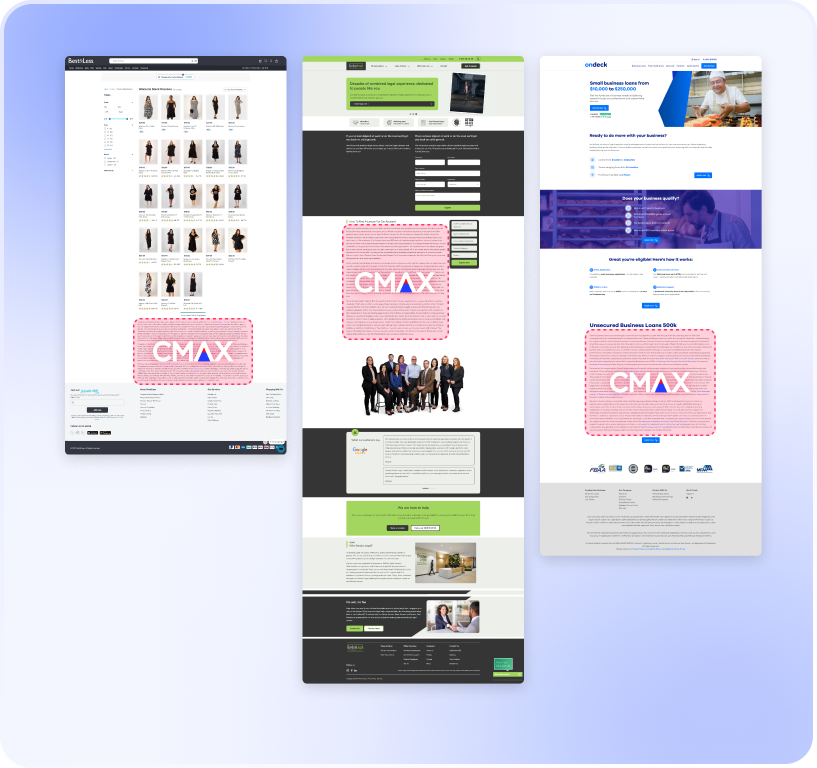
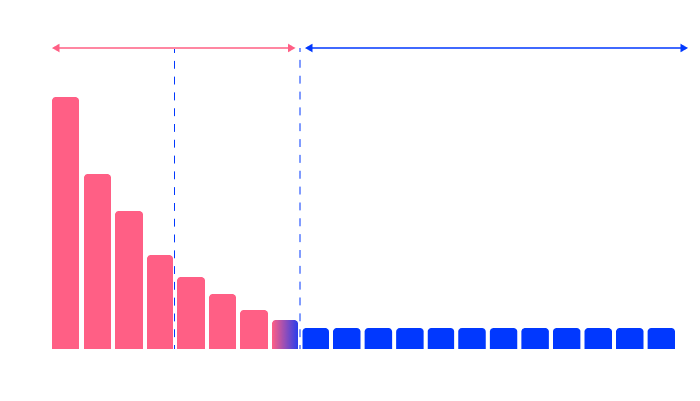
CMAX is an agentic SEO platform built to deploy and continuously update content for the thousands of ways your customers actually search. Two lines of code connect it to your site. Our AI agents target the long-tail keywords that represent over 90% of search and AI demand, the high-intent queries conventional programs rarely reach at scale. Teams typically see measurable results within six weeks.
If your copy converts but only covers a fraction of relevant queries, you’re leaving qualified traffic on the table.
References [1] – https://developers.google.com/search/docs/fundamentals/creating-helpful-content
Author
Jeremy Tang
Founder and CEO of CMAX
Jeremy Tang is the Founder and CEO of CMAX. With over 2 decades of experience in business consulting and digital marketing, he has successfully driven seven startup businesses, six of which achieved $1 million in revenue from zero in less than 16 months, 5 of which grew to multi-million dollar a year ventures without any external funding. Jeremy's expertise lies in streamlining business processes through technology and leveraging digital (in particular SEO) for business growth. He resides in Australia, travels extensively, and draws inspiration from his global experiences.