SEO copywriting services exist to earn visits through unpaid search results. But when growth stalls, the number you’re looking at may not tell you what you think it does.
A large share of what analytics labels “direct” is actually organic demand your platform couldn’t trace back to a search. Direct means visits your analytics can’t assign to a source, and when referral tags get stripped in transit, those sessions land in the wrong bucket.
So SEO can be working harder than your report suggests. Accurate search engine optimisation measurement separates what Google Search Console shows from what ends up labelled direct, and that gap is usually worth knowing.
Even when visits are counted correctly, a bigger number doesn’t always mean more sales. Visits from people with no purchase intent carry little weight compared to visits from people close to a decision.
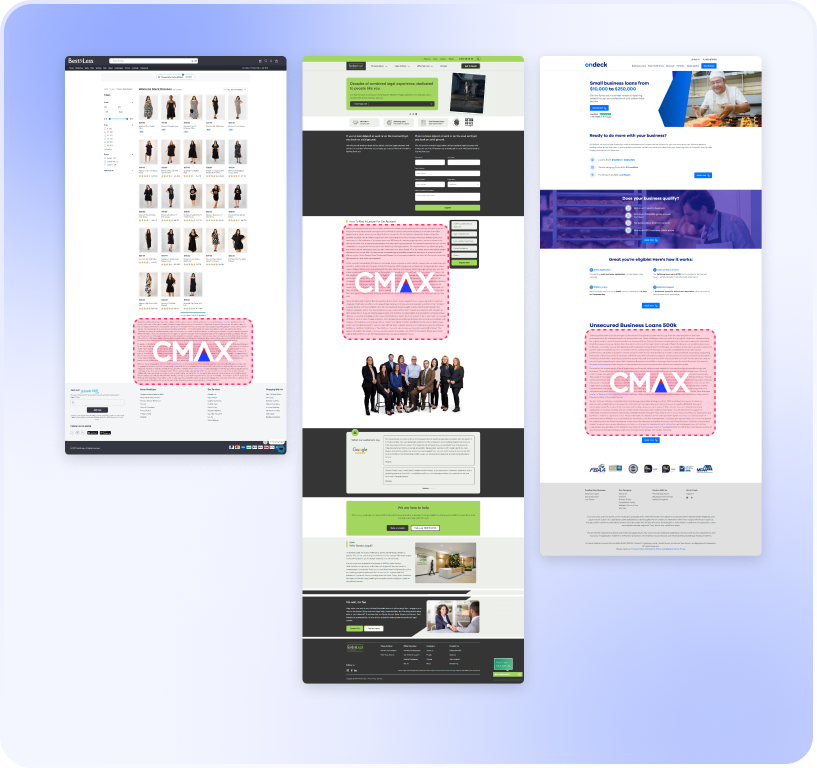
Growth comes from three things: covering the specific searches your buyers actually type, keeping existing pages current, and connecting pages so Google can see how they relate. CMAX is built around that problem, using long-tail content and internal linking to increase website visits over time.
SEO website visits are unpaid search visits, but not all visits are equal.
Organic vs direct
Organic website visits come from unpaid search results. Direct usually means the source couldn’t be identified, which is less likely to be someone typing your URL from memory than it is a tracking tag that got stripped along the way.
Think of a market stall with no receipt printer: you made the sale, but if the customer paid cash, the system has no record of who they were or how they found you. SEO often ran the first three legs; the attribution just never caught up.
In this context, organic search visits means visits that Google logged in Search Console but your analytics counted under “direct” because the handoff lost the tag.
SEO copywriters use Search Console to examine the actual searches, clicks, impressions, click-through rate and average position behind your visits. That makes it a more reliable tool than analytics alone for confirming whether demand is genuinely coming from search.
Quality matters more than volume
Inside CMAX reporting, SEO website visits are measured against non-brand sessions, assisted conversions and revenue contribution, not raw visit totals. 5,000 irrelevant visits can be worth less commercially than 500 that move the pipeline. For any SEO decision, conversion rate, assisted conversions and revenue contribution are stronger checks than session count.
Visit growth depends on coverage, freshness, and internal connections.
Long-tail demand drives growth
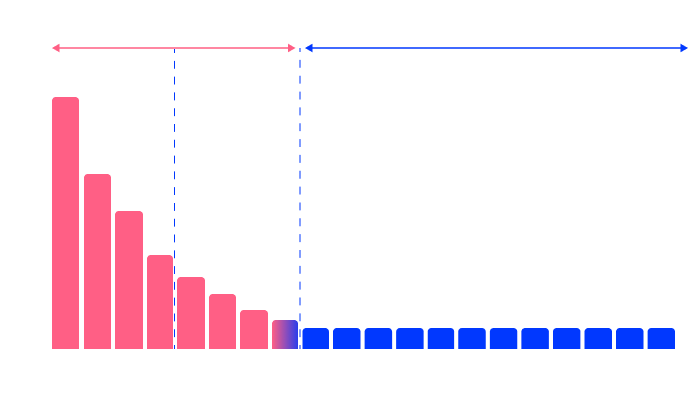
Long-tail searches are the specific, detailed queries people actually type: product variants, use cases, comparison questions, problem-led searches. BrightEdge puts long-tail keywords at over 90% of all search queries.
A search engine optimisation strategy built around a handful of obvious head terms leaves most available demand uncovered, including the highest-intent searches from buyers further along. Covering product variants, comparisons and problems is where growth actually lives.
The vast majority of search and AI demand is in the long tail. CMAX targets that share of search demand, which is the part most agencies don’t touch.
An SEO ranking monitor pointed at head terms alone will miss most of the picture, because keyword search ranking for those few terms reflects only a fraction of what buyers are actually searching.
Freshness and links expand discovery
What is organic traffic, past the basic definition? It’s unpaid search visits, but the volume depends on seasonality, how current your pages are, and how well they connect to each other.
Updated specifications, current examples and internal links help SEO website visits grow across a broader set of relevant pages. That directly expands your content surface area, which is how many of the ways your customers search you have a useful answer for.
A useful way to think about it: internal links are the aisles in a large store. A product buried in an unmarked aisle doesn’t sell, even if it’s exactly what the customer wants.
Clear internal connections let Google find and credit every page that deserves to be seen.
How CMAX approaches scale
CMAX is the Agentic SEO Platform built to cover that long-tail demand. Unlike a SEO copywriting company that publishes pages once and leaves them static, CMAX is trained on human-reviewed, client-approved content and continuously keeps pages fresh, connected and aligned to real search behaviour.
Most SEO programmes run by conventional agencies, using outdated methods, tell clients to expect results in six months. CMAX’s methods allow clients to start seeing clicks in 6 to 8 weeks.
Measurement shows whether visits are qualified and growing.
Use Search Console and analytics together
Search Console records clicks from organic search results and shows which queries and pages earned impressions and clicks in Google Search. Analytics adds the business layer.
For any SEO website copywriting programme, the question isn’t just whether visits went up: it’s whether non-brand sessions, assisted conversions and revenue impact are moving in the same direction. An SEO keyword ranking report that combines both sources gives you a far more complete read than either tool alone.
Track surface area, not spikes
A seasonal spike flatters a single month. The stronger signal is whether more pages are earning impressions and clicks across the queries that matter to your business over time.
SEO website visits that hold and grow across multiple commercially relevant pages are worth more than a peak that drops away. A keyword ranker focused only on your top ten terms won’t surface that broader growth; you need to see the SEO ranking of website across the full query set.
An SEO keyword ranking checker that covers long-tail queries as well as head terms gives you that fuller picture.
The real comparison point
When comparing SEO options, effective search engine optimisation strategies keep adding relevant pages, updating ageing content and strengthening internal connections without diluting brand control. Sustainable SEO website visits come from a larger body of connected content that keeps earning search demand as the query set shifts.
Frequently Asked Questions (FAQ)
Why are organic visits down when positions haven’t moved?
Average positions can stay flat while visits fall because search demand for a query has dropped, click-through rate has declined from the same impressions, or the shift is isolated to a specific device, country or search feature. Google recommends filtering Search Console by query, page, country, device and search type, then cross-checking Google Trends to separate a market-wide demand drop from a seasonal dip.
Can a website redesign cause organic visits to drop?
Yes. URL changes without proper redirects, removed pages that were holding positions, and weakened internal linking can all reduce SEO website visits after a redesign.
A brief dip after a major structural change can be normal, but a website SEO service may need to investigate whether a sustained or steep decline comes from migration mistakes, missing content or lost internal signals.
How long can it take to recover organic visits after a site migration?
Recovery depends on site size, number of URLs, server speed and how cleanly redirects and canonicals were handled. That affects how do i increase website traffic after a migration.
Google notes that a small to medium-sized site can take a few weeks for most pages to process; larger sites take longer. SEO website visits recover once Google recrawls redirected URLs and processes their canonicals.
SEO Website Visits, Built Through Broader Coverage
SEO website visits usually stall when a site has captured the obvious terms but still misses the thousands of specific searches buyers use. A plan to increase traffic to website pages can use CMAX to add long-tail content and connect it to established category pages, tying that work back to the real measure of search growth: more qualified demand finding the right pages over time.
For businesses asking which SEO services for my website will expand coverage, CMAX focuses on content surface area, freshness and internal connections rather than a short list of headline keywords. CMAX uses Dynamic Internal Linking and Full Body SEO to keep that content earning demand as search behaviour shifts.
Growth comes from adding useful answers across more of the query set that matters, and keeping that content current. As the long tail keeps expanding across search and AI, the sites that cover it keep growing.
The clearest way to find out where your coverage gaps are is to see the data for your own site. If you’re curious as to how you’re performing on AI, book in a Missing Customer Map review with our Growth Team.
Author
Jeremy Tang
Founder and CEO of CMAX
Jeremy Tang is the Founder and CEO of CMAX. With over 2 decades of experience in business consulting and digital marketing, he has successfully driven seven startup businesses, six of which achieved $1 million in revenue from zero in less than 16 months, 5 of which grew to multi-million dollar a year ventures without any external funding. Jeremy's expertise lies in streamlining business processes through technology and leveraging digital (in particular SEO) for business growth. He resides in Australia, travels extensively, and draws inspiration from his global experiences.