Technical SEO covers a lot of ground, and most teams have felt the frustration of fixing the wrong thing first. A page can have strong content and solid backlinks but still underperform because search engines can’t crawl it, can’t pick the right canonical or can’t render it properly. The challenge is knowing which issues actually block visibility and which ones just look urgent. CMAX works with enterprise teams dealing with exactly these prioritisation problems at scale.
Technical SEO Covers the Systems Behind Organic Visibility
Technical SEO Core Areas
Technical SEO covers the site conditions that let search engines crawl, render, index and interpret pages. That scope includes crawlability, indexation, performance, site architecture and structured data, the mechanisms that determine whether a page can be fetched, processed and kept in search.
Content planning, link earning and local profile management sit outside this scope. Those disciplines change topical relevance, authority or local prominence. Technical SEO changes access. Misattributing a problem to the wrong discipline wastes time and delays the fix that would actually move the needle.
Technical SEO sits within a broader discipline, and SEO marketing encompasses the content, authority and local strategies that build on the access and indexation foundations that technical work establishes.
How the Boundary Is Defined
The technical SEO essentials that define this discipline come down to one practical question: does this task improve search engine access, interpretation or discoverability?
If yes, it belongs in technical SEO. Crawl access determines whether a page can be fetched at all. Rendering determines whether the content inside it can be processed. Canonicalisation determines which version of a page is eligible to appear in search. Indexation determines whether that version is kept. Each of these is a gate, and a failure at any one of them stops a page from reaching the stage where relevance can even be evaluated.
That framing keeps technical SEO focused on what it actually controls, and it gives teams a repeatable test for deciding where a given issue should be owned. Activities such as keyword targeting, content refreshes and backlink campaigns fall under SEO optimisation, which operates on the relevance and authority layers that sit beyond the technical boundary.
The Highest-Impact Issues Usually Affect Access First
Access Blockers That Suppress Visibility
Blocked resources, broken canonicals, misplaced noindex tags and duplicate URL paths share one consequence: they stop valuable pages from being crawled, rendered or indexed. Strong content on those pages still fails to appear in search because the page never reaches the stage where relevance can be evaluated. A search engine that cannot fetch a page, or that fetches it but cannot process its key resources, has nothing to rank. The content quality is irrelevant at that point.
Why Access Fixes Come First
Crawl access, indexation signals and page experience take priority in technical SEO over lower-impact enhancements because search engines cannot rank pages reliably if they cannot fetch them, process important resources or choose the correct canonical version with confidence. Fix a rendering block and a page becomes eligible for evaluation. Fix a broken canonical and the right version enters the index. Fix a misplaced noindex tag and pages that were invisible become rankable.
This sequencing reflects Google’s published guidance across its SEO fundamentals documentation, indexing documentation and page experience recommendations.[1] It also reflects practical audit logic: issues that affect crawl access or indexation at the template level can suppress visibility across thousands of URLs simultaneously, while isolated on-page fixes typically affect one URL at a time. Prioritising by blast radius keeps teams focused on the fixes most likely to move organic performance at scale.
A boundary map prevents teams fixing the wrong problems.
What technical SEO includes and excludes
A scope map shows which issues sit in technical SEO and which sit elsewhere. When teams know which issues sit in technical implementation and which belong to content, authority or local optimisation work, they stop routing the wrong problems to the wrong people.
The table below draws that line.
Included in technical SEO
| Area | Why it’s in scope | |—|—| | Crawl directives, robots rules and status codes | Control whether search engines can request a URL, access its resources and continue revisiting it | | Indexation controls: canonicals, noindex tags, duplicate handling | Determine which version of a page is eligible to appear in search | | Site architecture, internal linking and pagination logic | Shape discovery paths, distribute importance signals and determine how deep valuable pages sit from key hubs | | XML sitemaps and feed hygiene | Surface important URLs, reflect preferred canonical destinations and signal when key page sets have changed | | Performance, rendering and mobile usability | Heavy scripts, blocked assets, slow templates or unstable layouts can interfere with rendering, reduce processing efficiency and weaken page experience |
Excluded from technical SEO
Content briefs, backlink outreach and Google Business Profile management sit outside this scope. Each primarily changes topical relevance, authority or local prominence rather than the site’s technical accessibility. They matter, but they belong to different workstreams with different owners and different success metrics.
Technical SEO defines the access and indexation layer of a site, while AI SEO approaches extend that foundation by applying machine learning to pattern detection, content gap analysis and large-scale crawl prioritisation.
Keeping that boundary clear means technical fixes get prioritised on their own terms, and content or authority gaps don’t get misdiagnosed as crawl problems.
Content Briefs, Backlink Outreach and Google Business Profile Management
Content briefs, backlink outreach and Google Business Profile management sit outside technical SEO’s scope. Each discipline changes something different: content briefs shape topical relevance, backlink outreach builds authority, and Google Business Profile management affects local prominence. None of them change whether a search engine can access, render or correctly interpret a page. That distinction is what places them in separate workstreams.
Technical SEO deliberately excludes content production from its scope, though SEO content writing remains a closely related discipline that depends on the crawlable architecture and indexation controls that technical work puts in place.
Technical Ownership of Discovery Systems
Internal linking, XML sitemaps and faceted navigation look like content or UX decisions on the surface, but they frequently require technical ownership. Teams managing SEO Australia portfolios often need technical control over template logic and crawl paths. When template logic controls how internal links are generated, when parameter handling determines which faceted URLs get crawled, or when sitemap feeds are built from database queries, the decisions that shape search engine discovery are happening at the code level.
At catalogue scale, this matters considerably. A faceted navigation system across thousands of product or listing pages can produce URL variants that fragment crawl budget, split indexation signals or bury high-value pages behind parameter strings that search engines treat as duplicates. Fixing that requires changes to crawl directives, canonical logic or template rules, which is technical work regardless of how the pages were originally briefed or written.
XML sitemaps carry the same dynamic. A sitemap that reflects outdated canonical destinations or omits recently published page groups gives search engines an inaccurate picture of which URLs are intended for indexing. Keeping those feeds accurate and current is a technical maintenance task, not a content one.
A practical audit sequence makes prioritisation defensible.
Five-step audit sequence
A defensible technical SEO audit checks crawl access first, then moves through indexation, duplication, site structure and performance. That sequence works because each layer depends on the one before it. Fixing page speed on a URL that carries a misplaced noindex tag recovers nothing. Resolving duplication before confirming crawl access means working on pages search engines may never fetch.
Starting with crawl access surfaces the issues most likely to suppress visibility across many pages simultaneously. A single misconfigured robots rule or a blocked resource in a shared template can affect thousands of URLs at once. Isolated page fixes, by contrast, move the needle on one URL at a time and rarely justify the same priority. In sectors like hospitality, technical SEO for hotels surfaces issues such as duplicate listing pages and parameter-heavy booking URLs that compound quickly across large property catalogues.
Technical SEO audits are increasingly supported by automated tooling, and SEO AI platforms can help teams run recurring crawls, detect template-level regressions and prioritise fixes by the number of URLs affected.
Audit scenario with measured change
A before-and-after audit scenario illustrates why sequence and scope both matter. When index bloat is removed and orphaned pages are reconnected through internal linking, crawl focus improves because search engines allocate more attention to URLs that are internally referenced, clearly intended for indexing and easier to consolidate into the correct canonical set.
The result is broader ranking coverage, not from adding new content, but from making existing pages reachable and interpretable. Pages that were previously undercrawled or excluded from the index become eligible for evaluation. That recovery depends on fixing access and indexation signals first, then confirming that site structure routes crawl budget toward the pages that carry the most organic demand.
Measured Examples Show How Technical Foundations Support Scale
Client Proof by Mechanism
In one CMAX engagement, a B2B omnichannel hospitality retailer added 5,000 long-tail product pages and reached $1M+/month in incremental SEO revenue within 8 months. That result depended on crawlable architecture, indexable templates and internal linking capable of surfacing a large page set efficiently. Without those foundations in place, search engines would have struggled to fetch, process and consolidate thousands of new URLs into the index at the pace the programme required. For enterprise SEO programmes, catalogue-scale growth stalls when the technical layer cannot keep up with content volume.
Technical SEO provides the structural foundation that makes content discoverable at scale, and AI for SEO tools are increasingly used to surface crawl anomalies, flag indexation gaps and prioritise fixes across large page sets.
What the Example Actually Shows
The revenue figure reflects what happens when technical SEO removes barriers on page groups that already align with organic search intent. Technical SEO did not generate demand from scratch. It cleared the crawling, indexing and discovery obstacles that were preventing existing demand from converting into ranked, visible pages. That distinction shapes how teams should frame technical investment internally: the return comes from recovering or unlocking pages with real search intent behind them, and the architecture has to be capable of handling the volume those pages require. technical SEO matters most when it removes barriers on pages aligned with real search intent.
How often should you run a technical SEO audit?
Most sites need continuous monitoring for critical errors alongside a deeper audit after migrations, template releases, CMS changes or visible indexing shifts. Those events can change crawling and indexation behaviour across many URLs at once, so a point-in-time audit run months earlier will not catch regressions introduced by a single deployment.
How to prioritise technical SEO for large sites?
Large sites get the clearest return by prioritising issues by blast radius first. Problems affecting crawl access, indexation or template-level duplication across high-value page groups carry more weight than isolated page fixes, because a single template error can suppress thousands of URLs simultaneously.
Does technical SEO affect AI search visibility?
Yes. AI SEO depends on pages that are reachable, parseable and canonicalised correctly.[2] Clear internal structure helps AI systems identify the right page and extract usable information from it, so the same technical foundations that support traditional search also support AI-driven results.
Technical SEO shapes how pages are discovered across all retrieval environments, including AI search engines, which still depend on reachable, canonicalised and well-structured pages to surface accurate answers.
How to automate technical SEO at scale?
Automation at scale typically combines recurring crawls, log analysis, sitemap validation, template QA and rule-based alerts. That stack lets teams detect regressions in access, duplication or rendering before they propagate across thousands of URLs.
What is the ROI of technical SEO improvements?
ROI is usually highest when a fix unlocks revenue-driving pages that already exist but are undercrawled, wrongly canonicalised, orphaned or excluded from the index. The gain comes from recovering visibility on pages with existing demand, which requires less time and resource than building net-new assets from scratch.
Technical SEO increasingly intersects with emerging search technologies, and understanding AI and SEO helps clarify how foundational crawlability and indexation signals carry over into newer discovery systems.
Strong Technical Foundations Need Scale Behind Them
CMAX is an agentic SEO platform built for teams that have already done the foundational work.
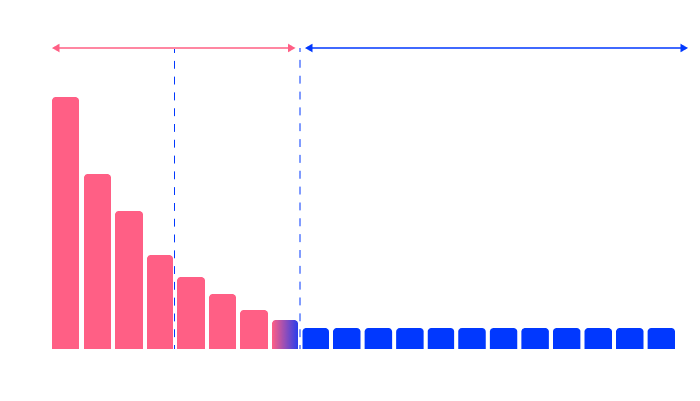
We deploy AI-driven agents that create, publish, and continuously update content targeting the long-tail keywords where over 90% of search and AI demand actually lives. The platform integrates with two lines of code, so technical overhead stays minimal while output scales to thousands of pages. Results typically begin surfacing within six weeks of deployment.
When your technical SEO is sound, CMAX turns that infrastructure into measurable organic growth.
References [1] – https://developers.google.com/search/docs/appearance/ranking-systems-guide [2] – https://developers.google.com/search/docs/appearance/ranking-systems-guide
Author
Jeremy Tang
Founder and CEO of CMAX
Jeremy Tang is the Founder and CEO of CMAX. With over 2 decades of experience in business consulting and digital marketing, he has successfully driven seven startup businesses, six of which achieved $1 million in revenue from zero in less than 16 months, 5 of which grew to multi-million dollar a year ventures without any external funding. Jeremy's expertise lies in streamlining business processes through technology and leveraging digital (in particular SEO) for business growth. He resides in Australia, travels extensively, and draws inspiration from his global experiences.