Finding a leading aeo agency Melbourne businesses can actually hold accountable starts with one question: what exactly is being reported, and can you trace each result back to work the agency shipped? Most AEO reporting mixes monitoring with recommendations the client still has to implement, making it hard to judge what the agency actually moved. Transparent reporting separates those workstreams, ties visibility to a fixed prompt set, and names who owns each fix. CMAX approaches Melbourne AEO engagements with that structure, linking every reported change to a specific deliverable.
Transparent AEO reporting starts with measurable prompts and owned deliverables.
Owned workstreams matter.
A leading aeo agency Melbourne separates monitoring, implementation, content governance, and citation management into distinct workstreams. That separation is critical because it lets a buyer trace each reported gain back to work the agency actually shipped, rather than a recommendation that still sits in the client team’s backlog waiting for someone to act on it.
When those workstreams blur together, reporting becomes untraceable. A visibility uptick could reflect a prompt shift, a competitor’s content drop, or a fix the client’s own developer pushed three weeks ago. Separating owned deliverables from client-side dependencies is what makes a report auditable rather than decorative. Whether the engagement is run by an SEO agency south Melbourne or a national team, the same owned-workstream standard applies.
Goals need fixed benchmarks.
Local and national AEO goals are only credible when they are tied to a consistent prompt set, entity coverage checks, citation accuracy, and qualified business outcomes. Without those fixed reference points, a reported improvement can mean almost anything.
No agency can responsibly promise inclusion in a specific AI answer. Answer engines select sources based on crawlability, content relevance, entity clarity, and timing, none of which any single agency controls entirely. What a credible partner can commit to is a defined scope: the prompts being tracked, the entity signals being corrected, and the qualified outcomes being measured. That scope is what separates a reportable engagement from a vague “AI visibility” retainer.
A leading aeo agency Melbourne should be evaluated within the broader landscape of aeo services in Australia, where credible partners are distinguished by owned workstreams and traceable, benchmark-tied reporting.
Answer-engine visibility should be tracked across changing prompts.
Use a 15-prompt baseline.
A leading aeo agency Melbourne tracks answer-engine visibility across a consistent prompt set rather than relying on one-off screenshots. AI answers shift. The source cited for one prompt on Monday may not appear for the same prompt on Friday, and a hand-picked screenshot proves nothing about consistent visibility. A 15-prompt baseline fixes that problem by locking in a defined set of queries before any work begins, then running the same set at each review cycle.
That consistency is what makes reporting auditable. When brand mentions, source citations, answer prominence, and local-versus-national coverage are measured against the same prompts each time, a buyer can see whether visibility actually moved or whether the agency simply swapped in more favourable examples. Buyers who have worked with a best SEO agency Melbourne before will recognise the shift: AEO reporting tracks prompt visibility, not ranking positions alone. One-off screenshots and cherry-picked results cannot support that comparison. A credible SEO agency in Melbourne may also monitor how content performs under GEO generative engine optimisation frameworks, as generative engines increasingly draw on structured, entity-rich sources when composing answers.
Readiness affects answer reuse.
Tracking prompts reveals where visibility stands. Readiness determines whether it can improve.
Answer engines pull from sources they can crawl, reconcile, and trust. If a site has crawlability gaps, inconsistent structured business data, thin page coverage, or content that hasn’t been updated to reflect current offerings, engines are less likely to reuse that information when generating answers across different intents. A SEO Melbourne agency tracking prompt visibility across local and national intents may reference how GEO services Sydney approaches generative-engine source selection, since both disciplines depend on consistent entity signals and crawlable, structured content.
Each of those factors is addressable: crawl access, schema accuracy, useful page coverage for the specific queries the business needs to appear in, and a content update cadence that keeps information current. A credible AEO engagement tracks readiness signals alongside prompt visibility, because prompt data alone won’t tell a buyer why visibility isn’t moving or what to fix next.
A credible review process should explain every reported change.
Melbourne AEO stage checklist
Stage-by-stage evidence is what makes a leading aeo agency Melbourne credible to the buyer reviewing the engagement. A credible AEO engagement doesn’t hand over a summary slide and call it reporting. It shows stage-by-stage evidence: what was measured, what changed, who implemented it, and what moved in prompt visibility or qualified outcomes after the work was done.
That starts before any optimisation begins. Baseline prompts are fixed across local and national intents at the outset, so every subsequent report compares the same test against itself rather than shifting the goalposts midstream.
From there, entity details, citation consistency, and location data are reviewed for mismatches or gaps. The same citation-consistency review that a local SEO Melbourne engagement requires applies to AEO, because answer engines reconcile business information from multiple sources; conflicting data across directories, schema, and on-page signals can cause them to surface outdated or inaccurate details, regardless of how well the rest of the site performs.
Priority content, schema, and crawlability issues are then assigned to a named owner. A local SEO expert Melbourne or an AEO specialist should be accountable for location-data accuracy checks. Vague shared backlogs are where AEO work stalls. When a fix has no owner, it rarely ships.
When assessing a leading aeo agency Melbourne, buyers can apply the same stage-by-stage evidence checklist used to evaluate any aeo Australia agency, confirming that each reported change is tied to a named owner and a measurable prompt outcome.
Finally, each implemented fix or published asset is linked back to the specific prompts or pages it was meant to improve. That linkage is what lets a buyer judge whether the work actually addressed the stated problem, rather than taking the agency’s word for it. If a report can’t draw that line, the review process is producing status updates, not accountability.
Review cycles show what changed since the last report, what did not move, and what the next test will be, so reporting stays tied to decisions rather than status updates.
Report readiness, not guarantees.
AI answers shift with prompt phrasing, crawl timing, and how each engine selects and weights sources on any given day. A credible review cycle accounts for that variability rather than papering over it.
That means each reporting period should answer three questions: what changed in source visibility or citation frequency since the last prompt run, what was implemented but has not yet moved, and which prompts or content gaps will be tested next. Without all three, a report becomes a status update with no decision attached to it.
Credible reporting focuses on source visibility, content readiness, and implementation progress. It does not claim a fixed placement can be secured, because no agency controls when an engine recrawls a page, how it reconciles updated entity signals, or which sources it draws on for a given answer variant. Framing outcomes in those terms is commercially honest and practically useful: a buyer can act on “citation accuracy improved across eight of fifteen prompts after the schema update” in a way they cannot act on a vague visibility score.
A leading aeo agency Melbourne that publishes transparent review cycles, showing what moved, what did not, and what the next test will be, is applying the same accountability standards used to assess the highest rated aeo agency within the consultancy sector Australia.
Buyers comparing SEO Melbourne prices should expect review-cycle reports that link each cost to a specific deliverable and outcome. Review cycles that track what moved, what stalled, and what comes next give a Head of Digital something concrete to bring to a board conversation, without overstating what the agency can guarantee.
Melbourne Credibility Shows in Implementation Ownership and Proof
Show Who Fixes What
Diagnosis without execution is where most AEO engagements quietly stall. A credible agency names the owner of every action item: who handles schema fixes, who updates location data, who creates missing pages, and who manages content refresh cycles. When ownership is vague, those tasks sit in a backlog indefinitely while reports continue to arrive.
Ask directly: does the agency ship the work, or does it hand you a prioritised list and step back? The answer tells you whether you’re buying implementation or advice. A leading SEO agency backs its AEO recommendations with named owners for every fix. For a Melbourne business targeting both local and national prompts, that distinction is operational. Schema errors don’t self-correct, and location data mismatches don’t resolve through a slide deck.
Businesses comparing options across the country sometimes evaluate a leading aeo agency Melbourne alongside an aeo agency Sydney to assess whether implementation ownership and reporting standards are consistent across markets.
Relevant Proof Should Match Mechanism
The proof an agency offers should connect to the mechanism being sold. For AEO, that mechanism is content coverage: having enough specific, well-structured pages for the many ways people phrase local and national prompts.
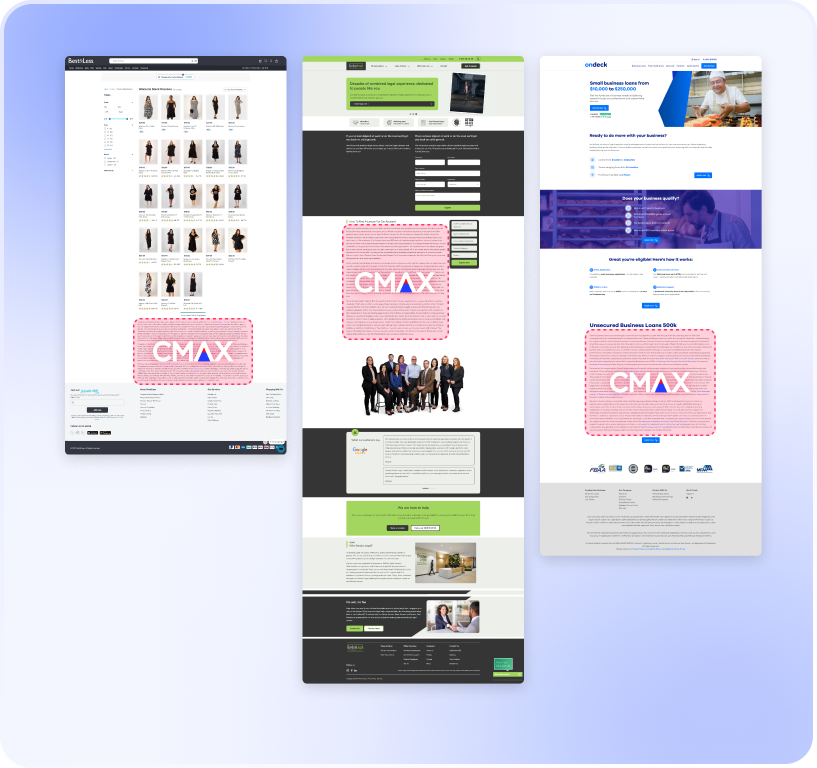
In one CMAX engagement, a B2B omnichannel hospitality retailer added 5,000 long-tail product pages and reported $1M+ per month in incremental SEO revenue within 8 months. The same principle applies to answer-engine visibility. AI systems draw on reusable, specific content when generating answers. Thin coverage across prompt variants leaves gaps that no amount of schema alone can fill. Volume of relevant, structured content is what gives answer engines enough material to cite consistently across different intents and phrasings. Relevant proof matched to mechanism is the standard a leading aeo agency Melbourne should meet.
Frequently Asked Questions (FAQ)
How do you measure AEO success?
AEO success is measured against a stable prompt set rather than a one-off snapshot. The metrics that carry weight are citation and mention visibility, answer prominence, local-versus-national coverage, and qualified outcomes such as relevant enquiries. No credible agency promises inclusion in every AI result, because answer engines select sources dynamically based on prompt, timing, and content quality.
What does an AEO agency report?
A useful report from a leading aeo agency Melbourne should show the prompts tracked, the pages or entities assessed, citation issues found, fixes implemented, and the visibility changes that followed each action. If a report cannot link a specific fix to a specific prompt or page, it is a status update, not an accountability document.
How long does AEO optimisation take to show results?
Early movement can appear once technical, content, and citation issues are corrected. Actual timing depends on when engines recrawl the site, recognise updated entity signals, and encounter the revised content across relevant prompts. There is no fixed window, but unresolved crawlability or citation gaps will delay any movement regardless of other work completed.
How do you track AI citations?
AI citations are tracked by running a consistent prompt set over time and recording which sources are referenced, how often the brand is mentioned, and whether those references appear in local or national answer variants. Consistency in the prompt set is what makes the data comparable across reporting periods.
What is the difference between AEO and SEO?
SEO targets visibility in search results pages. AEO focuses on making business information clear, structured, and citable enough to be reused inside generated answers and summary experiences. The two are complementary: strong content coverage and crawlability support both.
Buyers evaluating a leading aeo agency Melbourne often start by reviewing aeo vs SEO, since the two disciplines target different visibility surfaces and require distinct measurement approaches.
CMAX Built for the 90% of Search Traffic You’re Not Reaching
Most SEO platforms target the same crowded head terms your competitors already own.
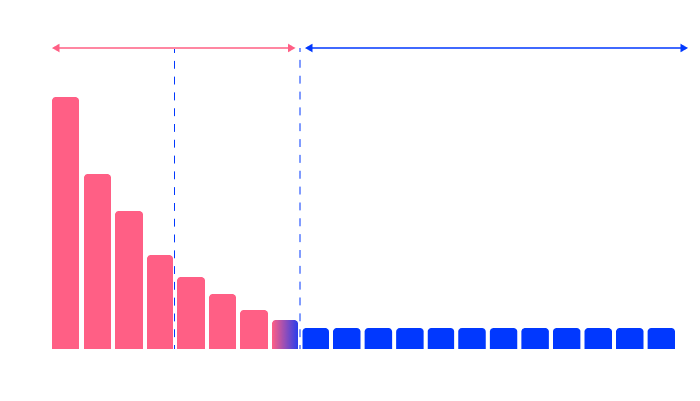
CMAX is an agentic SEO platform that deploys and continuously updates content across thousands of long-tail keywords, the queries that represent over 90% of search and AI demand. Integration takes two lines of code, and teams have reported measurable traction within six weeks. For Melbourne-based businesses evaluating an AEO agency partner, that scope matters: answer-engine visibility depends on structured, crawlable content that covers the full range of ways customers actually search, locally and nationally.
We built CMAX so lean teams can capture high-intent traffic at a scale manual methods simply can’t match.
Author
Jeremy Tang
Founder and CEO of CMAX
Jeremy Tang is the Founder and CEO of CMAX. With over 2 decades of experience in business consulting and digital marketing, he has successfully driven seven startup businesses, six of which achieved $1 million in revenue from zero in less than 16 months, 5 of which grew to multi-million dollar a year ventures without any external funding. Jeremy's expertise lies in streamlining business processes through technology and leveraging digital (in particular SEO) for business growth. He resides in Australia, travels extensively, and draws inspiration from his global experiences.