SEO AI is what people call it when they can’t tell whether AI changed search or just renamed it. AI search optimisation covers the overlap: using AI to support SEO work, and improving visibility in AI Overviews.
Most of the time, AI based SEO means one of those two things.
Both run on the fundamentals Google has always used. A page that isn’t crawlable or useful won’t start appearing because AI is involved.
The shift is scale, and it comes from query fan-out. Query fan-out means the AI breaks one customer question into several smaller Google searches and checks your site the way a mechanic checks the car, one part at a time, so your site needs a page that answers each part.
That changes how broad your content coverage needs to be. It doesn’t change whether SEO applies.
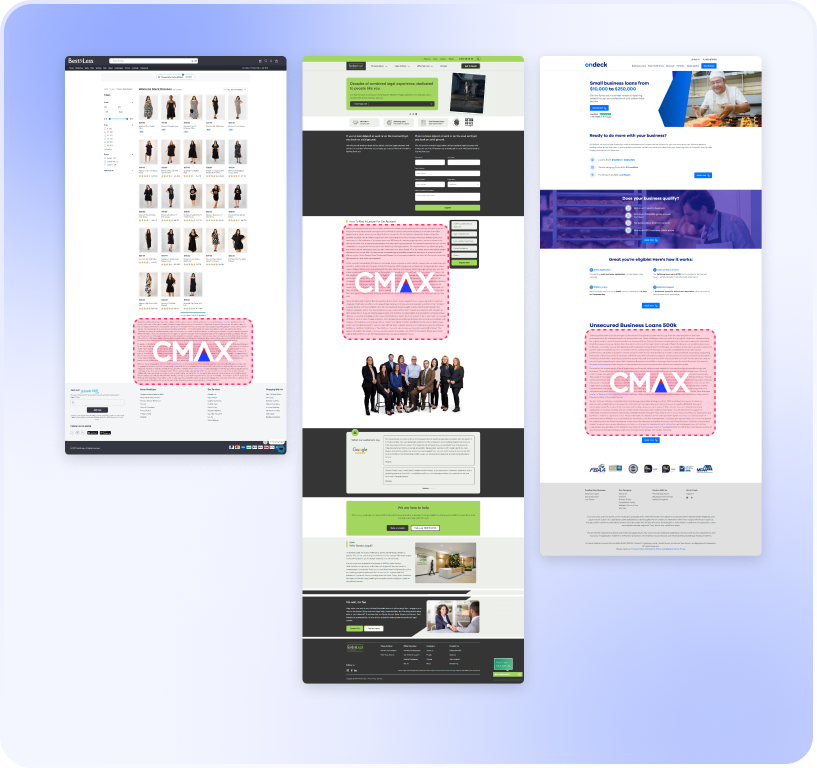
CMAX works from that principle and builds long-tail coverage across a site, so more of those specific questions have a real answer attached.
SEO AI Still Means SEO, and AI Widens Where People Search
Two Meanings, Same Fundamentals
In practice, SEO AI covers AI-supported workflows and optimisation for experiences such as Google AI Overviews. Both are SEO, so you don’t fund a second channel.
Google’s AI features run on the same search systems, so pages still need to be crawlable, useful, internally linked and kept current.
Search for generative engine optimisation GEO or answer engine optimisation AEO and you’ll find the same work under new names. People who ask “What is generative engine optimisation?” get the same short answer: SEO aimed at AI answers.
Long-Tail Coverage Drives Visibility
Long-tail coverage is the centre of AI powered SEO. Good SEO AI tools target the specific searches people type, like “best modular sofa for small apartment.”
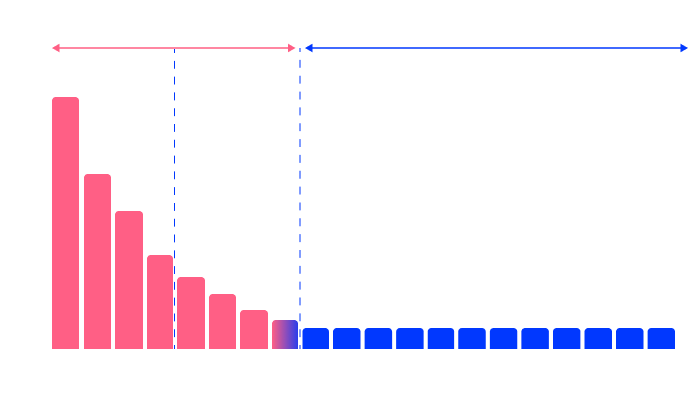
Few people type just “sofa.” Over 90% of search and AI demand is in the long tail.
AI Overviews and AI Mode may use query fan-out, running several smaller Google searches to build one answer from what ranks. You can’t rank for something you don’t talk about, and AI raises the number of detailed questions your site needs to answer.
Breadth and Freshness Matter More Than Generic Automation
Scale Helps, Thin Automation Hurts
AI can help a team cover more detailed searches. Publishing more pages doesn’t create more useful coverage.
A weak SEO AI programme typically produces near-duplicate pages that swap a product name, suburb or use case and say very little. Near-identical sofa pages are one sofa page with a filing problem.
The result is noise, harder reporting, and fewer clear reasons for Google to revisit and surface those pages. An AI SEO content generator can write those pages quickly, which is why the checking matters.
When AI SEO specialists assess content quality, the better test is whether each page answers a real search intent, adds information the buyer would use, and connects to related pages around it. Buyers often ask “Is AI content bad for SEO?”
The answer depends on whether each page adds useful information and connects logically to related content.
CMAX Scales Controlled Long-Tail Coverage
CMAX targets the long tail, where most search demand sits and where many conventional SEO programmes run out of coverage before demand runs out. For AI content management, CMAX is trained on human-reviewed, client-approved content, which matters in regulated sectors including finance, healthcare and legal services.
For ecommerce, finance, healthcare, legal, education and SaaS brands, the risk at scale is saying the wrong thing, not just saying too little.
CMAX Keeps Search and AI Coverage Connected, Current and Measurable
Linking and Body Copy Strengthen Discovery
Dynamic Internal Linking connects related category, product and use-case pages, so Google can map which pages belong together across a category, product range or use case. That is where SEO AI gains practical value.
Full Body SEO pushes optimisation into the main copy. A generative engine optimisation agency may recommend broader topic coverage there: comparisons, materials, sizes, locations, buyer objections and “best for” scenarios.
More useful content gives you more places to be found, and it can support perplexity AI SEO by giving retrieval systems useful answers across more specific topics. Tools like aioseo work at page level, and coverage across a whole site needs a plan above that.
Faster Feedback, Clearer Measurement
Most SEO programmes run by conventional agencies, using outdated methods, tell clients to expect results in six months. CMAX’s methods allow clients to start seeing clicks in 6 to 8 weeks.
Timelines still depend on the site and its competition.
Performance data helps teams optimise content for AI search. Search Console shows which topic clusters are gaining impressions and clicks, so reporting can guide decisions about page depth, refreshes and stronger internal linking.
Good AI search visibility optimisation depends on that feedback loop. When you compare AI search engine optimisation tools, check that they report against data you can verify yourself.
Frequently Asked Questions (FAQ)
Can Google Search Console track AI Overview impressions?
Yes. Google says sites appearing in AI Overviews are included in Search Console reporting, with impressions counted under the Performance report within the Web search type, and standard impression rules apply.
The effects of AI SEO optimisation show up inside Google Search performance data. There is no standalone AI channel report.
Google’s Performance report treats SEO AI as part of Web search visibility.
Can Search Console separate clicks from AI Overviews?
Google’s public documentation counts AI Overview clicks as part of total Web search performance data. A click on an external link inside an AI Overview registers as a click, but Search Console won’t tell you whether that click came from a classic result, an AI Overview, or another Google interface.
How do I attribute leads to AI search?
One report won’t do it. Search Console shows search visibility and clicks.
Lead data lives in analytics and CRM systems. To evaluate AI driven SEO, cross-reference Search Console trends with landing-page performance, query themes, assisted conversions and CRM lead quality.
Reliable answer engine optimisation services connect those same sources.
Where you control the link, use UTM-tagged URLs so Google Analytics can identify where the visit came from. Some AI-assisted visits will still appear as direct visits, meaning your analytics can’t trace them to a source, even when search visibility influenced the lead.
Together, Search Console, analytics and CRM evidence make SEO AI measurable without a standalone AI channel report.
SEO AI Starts With Broader Coverage
SEO AI works better when you treat search and AI as one visibility problem built on the same fundamentals. CMAX brings AI and SEO into one coverage strategy because customers search in thousands of detailed ways across conventional and AI-assisted experiences.
That is why we focus on the long tail, where most demand sits and where many SEO programmes run out of surface area. As the Agentic SEO Platform, CMAX helps brands expand, connect and keep content current across search and AI.
That includes answer engine optimisation Australia for teams that need local spelling and wider service-market coverage.
A short review shows which of your customers’ questions your site already answers and which it leaves open. You see the gaps first, and decide what to do about them after.
If you’re curious as to how you’re performing on AI, book in a Missing Customer Map review with our Growth Team.
Author
Jeremy Tang
Founder and CEO of CMAX
Jeremy Tang is the Founder and CEO of CMAX. With over 2 decades of experience in business consulting and digital marketing, he has successfully driven seven startup businesses, six of which achieved $1 million in revenue from zero in less than 16 months, 5 of which grew to multi-million dollar a year ventures without any external funding. Jeremy's expertise lies in streamlining business processes through technology and leveraging digital (in particular SEO) for business growth. He resides in Australia, travels extensively, and draws inspiration from his global experiences.