You usually hire an ecommerce SEO consultant when your category and product pages aren’t earning their keep in Google.
The gap shows up quietly. Organic visits flatten, Google Ads spend climbs, and the report from your ecommerce SEO company stops matching actual sales.
The work in SEO for ecommerce starts with the pages that make money. A consultant checks whether your collection and product pages match how customers really search, beyond the broad terms everyone chases.
A practical ecommerce website SEO strategy builds useful pages for specific demand, such as linen quilt covers and machine washable rugs.
That means asking whether those searches have a useful page at all. Positions for a handful of head terms don’t answer that question.
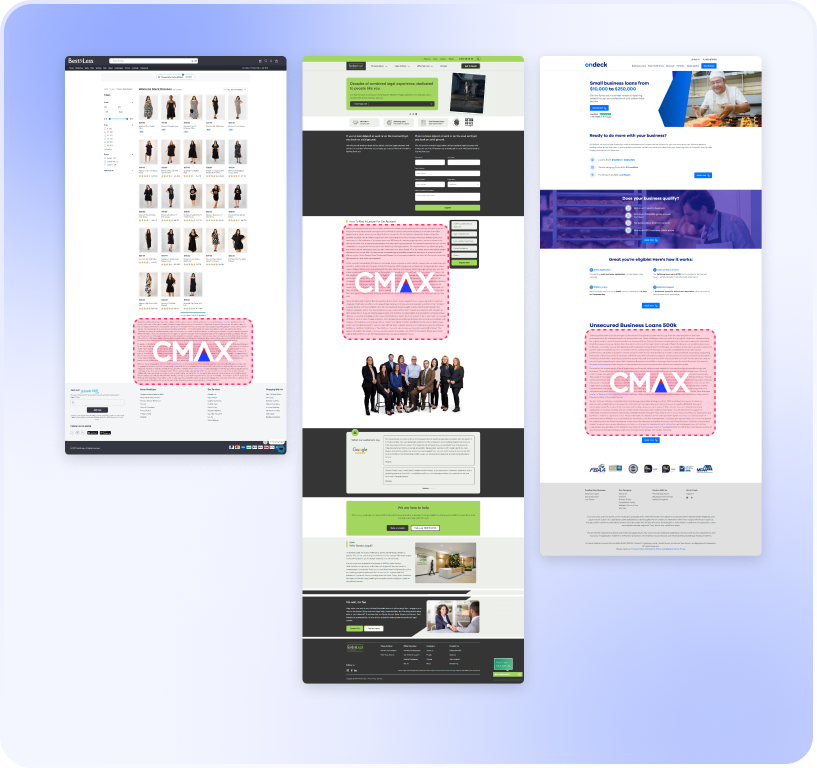
CMAX, the Agentic SEO Platform, works this way. We scope the work from your existing Analytics and Search Console data, then connect it to sales reporting.
An ecommerce SEO consultant helps you capture more product-led demand.
Audit category and product pages
A consultant starts with the collections that earn revenue. The audit checks category, collection and product pages for four problems: missing buyer intent, duplicate variants that confuse Google, thin collection copy that doesn’t explain the range, and important pages buried too deep in the site to be found.
Google’s own ecommerce guidance ties site structure, easy access for its bots and clear page meaning to how well it finds and ranks ecommerce content. In an ecommerce SEO audit, those three show whether products are buried in filters or stuck behind unsupported product grids.
Walk into a homewares shop and you expect linen quilt covers, king single sheets and machine washable rugs each to have their own shelf. A good ecommerce SEO strategy means ensuring that searches for those terms have a useful, connected page.
Focus on buyer-ready searches
A few broad positions are the wrong scorecard. Ranking for “rugs” makes a very nice slide.
The valuable demand sits in buyer-ready searches built around size, material, room, compatibility, colour, use case and price. Mapping those to commercial pages gives any SEO strategy for ecommerce website a buyer-ready structure.
Ask one question: do you have a useful page for the way customers describe what they want to buy?
The right support goes beyond keywords and into site structure.
Build structure Google can read
Ecommerce SEO gets technical on Shopify. Good Shopify SEO services deal with filters, pagination, canonicals, variants, schema and internal links before content production expands.
A canonical is the tag that tells Google which of several similar pages to count. Schema is the hidden code label that tells Google what a page contains, including product name, price, stock status and reviews.
A Shopify SEO specialist knows how these behave on the platform. A useful consultant reviews faceted navigation rules, collection hierarchy, canonical handling, schema and internal links, so ecommerce SEO services produce an implementation plan you can hand to a developer.
Prioritise long-tail coverage
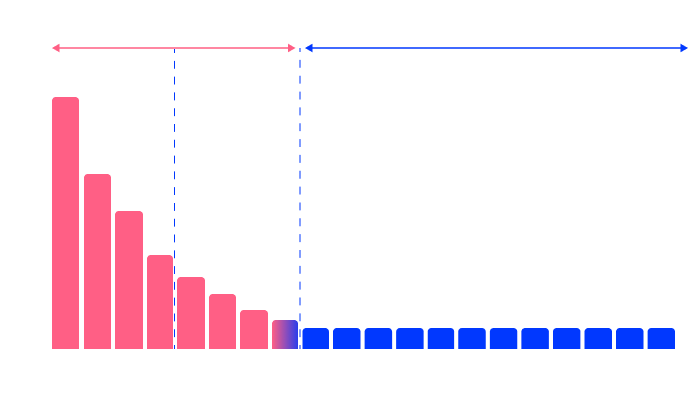
Over 90% of search and AI demand is in the long tail. An ecommerce SEO consultant maps those specific, detailed searches to useful commercial pages.
Before implementation, an ecommerce SEO audit checklist records the missing pages: room size, fabric, delivery timing, pet suitability and care instructions. Those gaps are common when a site only targets “rugs” and “bedding”.
Content surface area is the number of those searches you have a useful page for. It drives ecommerce growth.
CMAX connects SEO work to sales reporting and long-tail growth.
Keep category content fresh at scale
A one-off technical audit goes stale. A consultant working with CMAX can tie category updates to changing ranges, seasonal priorities and approved brand content.
A collection page written for last season’s range stops matching what customers search now. As ranges, seasons and search behaviour shift, CMAX makes SEO services for ecommerce website more responsive by deploying and updating content across existing and new pages.
Amazon’s 134 million long-tail pages are a concrete ecommerce SEO guide example: 46.9% of its non-brand organic visits come from long-tail pages.
Tie visibility to revenue signals
Reporting should connect SEO work to commercial movement. Ranking screenshots alone don’t.
Using Search Console and analytics data, ecommerce SEO audit services can prioritise which collections to expand, refresh, consolidate or leave alone. Useful reporting groups pages by business purpose, such as collections, product types, buying guides and discontinued products.
It then tracks clicks, landing-page engagement, assisted revenue signals and whether fresh content is gaining traction. Ask any ecommerce SEO agency what the SEO audit cost buys, and ask to see the report format before you sign.
Frequently Asked Questions (FAQ)
How long does ecommerce SEO take to show results?
Timelines depend on the site, its competition and how the work is done. The partner who aligns technical fixes, category coverage and sales reporting is an ecommerce SEO consultant.
Technical fixes can be recognised faster. New category coverage, rewritten product-supporting content and internal linking changes need time for Google to find and reassess them.
Most SEO programmes run by conventional agencies, using outdated methods, tell clients to expect results in six months. CMAX’s methods allow clients to start seeing clicks in 6 to 8 weeks.
That timeframe applies only to CMAX’s approach to ecommerce SEO marketing. Project quotes for Shopify SEO Australia use AUD, while comparable US scopes use USD and still depend on the site, competition and implementation.
Should out-of-stock product pages stay live for SEO?
If a product is temporarily unavailable, keeping the page live is usually safer than deleting it. A retailer can hire Shopify SEO expert support to keep those pages live while adding stock messaging, alternatives, similar variants or email alerts.
The page keeps its search equity, explains the stock position and helps shoppers choose a next step. Google Merchant Centre says temporarily unavailable products can be marked as out-of-stock, and backordered products should show an availability date.
Add alternatives, restock messaging, similar variants or email alerts so the page doesn’t become a dead end.
What should I do with discontinued product pages for SEO?
When a product is permanently discontinued, SEO for ecommerce websites needs a decision based on search demand, backlinks and user value. Google Merchant Centre recommends removing discontinued products from product data and says not to mark them as out-of-stock.
For organic search, keep the page live with a clear discontinued notice and replacement paths if it still answers useful queries. If a true match exists, redirect it to the closest equivalent product.
Once a discontinued page has a clear notice, replacement path or appropriate redirect, an ecommerce SEO consultant can preserve its remaining customer value. Avoid redirecting everything to a generic category page.
Ecommerce SEO Consultant Starts With Buyer Ready Coverage
For retailers, it’s crucial for category, collection and product-supporting pages to match how people search, including size, material, use case and delivery timing.
CMAX is built around the gap. Without useful content for the searches that matter, your site misses Google visibility and the AI answers that pull from it.
So we focus on content surface area, freshness and reporting tied to sales signals. In that model, ecommerce category page SEO builds qualified visibility across commercially relevant searches.
For ecommerce SEO Australia, CMAX reports sales signals in AUD, while its US client work uses USD across category and product-supporting coverage.
Searches like ecommerce SEO services near me or SEO consultant Sydney return long lists of providers. The useful comparison is how each one shows you your coverage gaps.
The quickest way to find your gaps is to have someone map the searches your customers make against the pages you already have. That is what the review does.
If you’re curious as to how you’re performing on AI, book in a Missing Customer Map review with our Growth Team.
Author
Jeremy Tang
Founder and CEO of CMAX
Jeremy Tang is the Founder and CEO of CMAX. With over 2 decades of experience in business consulting and digital marketing, he has successfully driven seven startup businesses, six of which achieved $1 million in revenue from zero in less than 16 months, 5 of which grew to multi-million dollar a year ventures without any external funding. Jeremy's expertise lies in streamlining business processes through technology and leveraging digital (in particular SEO) for business growth. He resides in Australia, travels extensively, and draws inspiration from his global experiences.