Most teams already have a search optimisation strategy for Google rankings, but the same pages often fail to surface in AI answer systems. The gap is rarely about missing content. It is usually about how that content is structured, whether it answers specific queries cleanly, and whether anyone is measuring retrieval separately from rankings. Getting both right starts with the same technical foundations, then splits into distinct workflows for content, measurement, and quality control. CMAX works with enterprise teams building that kind of dual-visibility programme at scale.
A shared foundation supports Google and AI visibility.
Shared Technical Foundations
Any search optimisation strategy starts with pages that can be crawled, indexed, and understood. Google rankings and AI answer systems draw from the same retrieval infrastructure. Both depend on pages that can be crawled, indexed, and parsed cleanly. When key pages are blocked by robots directives, duplicated across multiple URLs, orphaned from internal links, or too thin to answer a real query, retrieval fails before any ranking or citation decision is made.
That means technical readiness is the prerequisite, not a parallel workstream. A page that can’t be reached can’t rank. A page that can’t be parsed can’t be quoted. Fixing crawl access, resolving duplication, and building out thin pages are the conditions under which everything else in a search optimisation strategy can work.
Building a search optimisation strategy on strong technical foundations aligns closely with the principles of search engine optimisation, since crawlability, indexation, and useful content underpin both disciplines.

Clear, Attributable Answers
What is search optimisation if not making pages easy for both humans and retrieval systems to read and act on? AI retrieval changes how an answer is displayed, but the selection criteria favour the same qualities that support strong organic rankings: a direct answer stated plainly, facts separated from opinion, and a clear source so the passage can be quoted without inference.
Teams new to search optimisation strategy often begin by revisiting the SEO definition to confirm that their planning scope covers technical access, content quality, and query-level relevance from the outset.
A page that buries its answer in three paragraphs of context, mixes verified data with editorial commentary, or omits attribution gives a retrieval system less to work with. Pages that state the answer in the first sentence, use structured formatting to separate claim types, and cite sources explicitly are easier to extract and reference accurately. That applies whether the output is a ranked result or a generated answer panel.
Query-level answers make search content easier to retrieve.
Answer Blocks and Comparisons
What is SEO strategy in the context of search retrieval? It starts with how search systems extract passages, not pages. When a user asks a specific question, compares two products, or wants a quick attribute check, the retrieval system looks for a clean, self-contained passage that answers the query directly. A dense, narrative-heavy page makes that extraction harder.


Direct answers, comparison tables, and scannable fact sections give both Google and AI systems something they can lift and display without reinterpreting the surrounding text. A comparison table that lists attributes side by side is a strong SEO strategy example, answering a comparison query in one pass. A bolded direct answer at the top of a section answers a definition query without requiring the system to infer meaning from context. Structure does the work that prose alone cannot. A search optimisation strategy that targets specific query intents naturally extends into web search optimisation, where each URL is structured to answer one question clearly rather than covering multiple intents on a single page.
Split Broad Pages by Query
A single service page that covers pricing, alternatives, use cases, and definitions at once forces every retrieval system to guess which part of the page answers which query. That ambiguity costs rankings and citations.
Splitting that page into a dedicated comparison URL and linked question-specific pages gives each URL a single, clear intent to target. The comparison page ranks and gets cited for comparison queries. The question pages rank for definition and use-case queries. Internal links between them pass authority and guide users who arrive at one intent but need another. When a search optimisation strategy includes splitting broad pages by intent, the same logic that drives website search optimisation applies, each page should resolve a distinct user query rather than competing with itself across multiple topics.
The practical test: if a page would need to answer two different user questions to justify its existence, it should be two pages.
A Google-and-AI search strategy build sequence keeps execution measurable.
Owners, Baselines, Query Groups
A search optimisation strategy becomes measurable only when owners, baselines, and query groups are set before publishing begins. Most search strategies stall because teams start publishing before they’ve agreed who owns what or recorded where they started. Without a baseline, a rankings lift in month four is just a number, you can’t tell whether it came from a technical fix, a new content cluster, or a query group that finally got proper coverage.
A practical build sequence runs in this order:
Assign owners first. Technical SEO, content production, and reporting each need a named owner before any work begins. Shared responsibility across all three usually means none of them gets done consistently.
Record the baseline. For any Google search optimisation effort, pull current rankings for priority queries, total indexed pages, organic traffic by segment, and the conversion metrics the business actually cares about. This snapshot is what every later result gets measured against.
Group queries by intent. Separate comparison queries from informational ones, and product or service-led searches from definitional ones. Each group behaves differently in both Google rankings and AI retrieval, so treating them as one pool makes prioritisation guesswork.
A search optimisation strategy built around a query map and measurable baselines provides the structural groundwork that AI search optimisation also depends on, since both require clear intent grouping and attributable content before scaling.
Prioritise by commercial relevance. Not every query group deserves equal effort. Stack-rank them by how closely they connect to revenue, where search behaviour signals high intent, and where existing content leaves the biggest gaps.
Define success separately for each channel. Rankings, AI citations, traffic volume, and conversions are four distinct signals. Teams practising search engine optimisation Google need to separate these metrics early so they can isolate what’s working when results start moving.
Agree on update rules, approved sources, and review checkpoints before scaling content.
Build from the Query Map
Before a single page goes live at scale, the architecture needs a clear brief: which queries it serves, what intent each URL targets, and how pages link to one another. Effective search engine optimisation strategies start here, with technical readiness, content structure, and internal linking all following the query map directly.
That means hubs, supporting pages, and cross-links are built around the exact questions and comparisons users search for. A hub page for a product category earns its place because it answers a real cluster of queries, not because it fits a tidy site hierarchy. Among the most reliable search engine optimisation techniques is linking supporting pages back to the hub because they answer related sub-queries, rather than because a site audit flagged an orphan.
The alternative, restructuring around a generic site tidy-up, produces cleaner navigation but rarely improves retrieval. Pages end up grouped by internal logic rather than by what users actually search, and the architecture stops reflecting demand.
Locking the query map before scaling also makes update rules and review checkpoints easier to enforce. When every page traces back to a specific query group, teams can schedule reviews by intent cluster, flag pages that no longer match their target query, and retire or redirect URLs without guessing at their original purpose. Approved sources and citation standards apply at the cluster level, so a single policy covers dozens of related pages rather than requiring page-by-page decisions as volume grows.
Separate measurement reveals what visibility is actually improving.
Track Rankings, Retrieval, Traffic Separately
Search Console, server logs, and AI citation tracking each answer a different question. Treating them as one combined metric obscures what’s actually moving.
Search Console shows ranking movement on target queries and flags indexation gaps. Server logs reveal whether crawlers are reaching priority pages or hitting dead ends before they get there. AI citation tracking tells you whether your pages are being pulled into generated answers, which is a separate signal from ranking position entirely.
As a search optimisation strategy matures into separate tracking for rankings, traffic, and retrieval, teams often find that AI search engine optimisation introduces additional measurement considerations, particularly around how AI systems cite and surface answer-led pages.
Keeping these three data streams distinct lets teams diagnose with precision: a crawl issue won’t show up in rankings data until pages drop, and a citation gain won’t appear in organic traffic if the AI surface answers the query without a click. Commercially useful visits, the ones that convert, require a fourth lens, and any search engine optimisation business relies on are best evaluated through this dedicated conversion layer. Tracking search engine optimisation cost per acquisition alongside impression growth and citation frequency turns leading indicators into actionable return metrics.
Proof Point by Mechanism
In one CMAX engagement, a B2B omnichannel hospitality retailer added 5,000 long-tail product pages and reached $1M+ per month in incremental SEO revenue within 8 months.
The data showed what a search optimisation strategy can deliver when query sets map to specific, crawlable pages. The mechanism is specific: large query sets perform better when each query maps to a dedicated, crawlable page rather than a small set of broad URLs trying to cover everything. One page targeting pricing, alternatives, use cases, and definitions simultaneously ranks weakly for all of them. Based on CMAX’s client engagement, five thousand pages, each answering one question cleanly, give retrieval systems a precise match for each query. That’s the architecture behind the result, and it applies directly to enterprise search optimisation strategy at scale.
Strong quality controls protect visibility as content scales.
Source and Update Controls
Scaling content without governance creates a specific, compounding risk: the same error gets published across hundreds or thousands of pages simultaneously. Teams running search engine optimisation Australia campaigns need source and update controls before scaling content. Approved source lists, mandatory citation checks, and scheduled update rules address this directly. When every writer and every automated workflow draws from the same vetted sources, scaled content stays factually consistent. When update rules define how often pages are reviewed and who triggers a revision, outdated claims get corrected before they accumulate across a large URL set. Without these controls, a single unsupported claim or a piece of messaging that contradicts approved positioning can propagate at the same speed as the content itself.
Separate Success Criteria
Publishing volume, indexed page counts, and impression growth are outputs, not outcomes. Teams that treat them as proof of progress can scale aggressively while qualified traffic and conversions stay flat. Separate success criteria for rankings, AI citations, and conversions keep each metric answering its own question. Rankings tell you whether target queries are moving. Citation tracking tells you whether AI surfaces are pulling from your pages. Conversions tell you whether the visits that arrive are commercially useful. Keeping these three distinct stops a spike in one from masking a gap in another, and gives leadership a clear, defensible read on where the search optimisation strategy is actually delivering.
Frequently Asked Questions (FAQ)
How are we staying ahead of algorithm updates and industry changes?
The most durable approach holds across every update cycle: keep technical access clean, content genuinely useful, and claims well-evidenced. Ranking features shift. AI answer formats change. What stays constant is that retrieval systems need pages they can crawl, parse, and reference with confidence. Teams that maintain those three foundations absorb algorithm changes without rebuilding from scratch each time.
A well-structured search optimisation strategy should account for how content surfaces across both traditional results and AI search, where answer retrieval depends on crawlable, clearly attributed pages.
What’s our strategy for building and maintaining quality backlinks in 2025?
Backlink work in 2025 performs best when it targets pages worth citing on merit. Original research, well-structured comparison resources, and pages that answer a specific question clearly are the ones other sites link to without prompting. Thin pages published purely to expand coverage rarely attract links that carry weight.
How can I improve my brand visibility with AI SEO?
A search optimisation strategy that improves brand visibility in AI search starts with clear, answer-led pages. Keep brand and entity information consistent across key URLs, and make every claim attributable. An AI system quotes a page it can read plainly. When the answer has to be inferred, the citation goes elsewhere.
How strong are long-tail titles for SEO?
Long-tail titles are effective when they mirror a precise query and match the page content closely. A sound search engine optimisation strategy uses comparisons, product attributes, locations, and specific use cases to craft titles that remove ambiguity about what the page answers. Vague titles force retrieval systems to guess.
Is there enough demand to justify a page?
A page is easier to justify when it targets a distinct intent, attribute, comparison, or location that users search for differently from adjacent topics. Demand spread across many smaller queries still adds up, and a page that answers one question precisely will outperform a broad page trying to cover several.
Two Lines of Code, Thousands of Keywords
Most teams hit a ceiling: rankings plateau, content pipelines stall, and the long tail stays untouched.
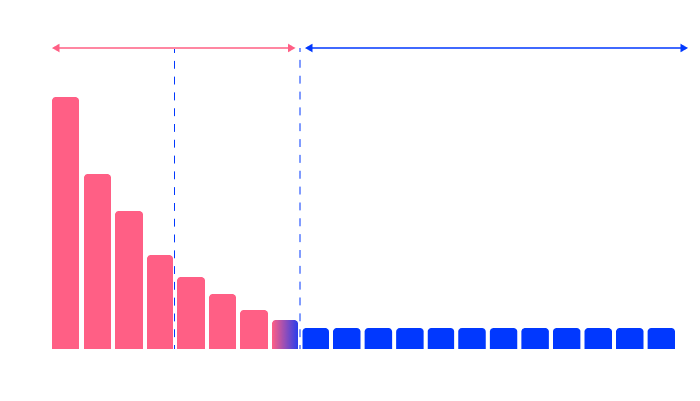
CMAX is an agentic SEO platform built to target thousands of long-tail keywords at a scale and speed manual workflows can’t match. Our AI-powered agents deploy and continuously update content across the ways your customers actually search, on Google and in AI-generated answers. Results typically start showing within six weeks.
If your search optimisation strategy needs to cover more ground without multiplying headcount, CMAX is worth a closer look.