Search Engine Optimisation Definition: What a Complete SEO Definition Includes

Updated: 05/08/26

Most working definitions of search engine optimisation definition stop at keywords and rankings, which leaves out half the system. A complete definition covers four connected conditions: technical access, relevance, usability, and credibility. Miss one and the others lose impact, because search engines evaluate pages as a whole, not in isolated parts. That connected view is central to how CMAX approaches organic growth at scale.

Search engine optimisation is broader than keywords.

What a complete SEO includes

A complete search engine optimisation definition covers more than keyword placement. It spans four distinct checks, and keyword placement is only a fraction of one of them.

First: can search engines crawl, render, and index the page? Without that access, nothing else on the page influences visibility. Second: does the content answer the query directly, with enough specificity to satisfy what the searcher actually came to resolve? Third: can a visitor navigate the page and complete the task they arrived with? Fourth: does the page demonstrate clear ownership, reliable sourcing, and genuine subject knowledge?

A definition that stops at “using the right keywords” fails three of those four checks entirely. The discipline covers the full chain from technical access through to demonstrated credibility, and each link depends on the one before it.

Working through the search engine optimisation definition reveals that a rigorous SEO definition must account for crawlability, relevance, usability, and credibility rather than any single factor alone.

Optimisation and optimisation mean the same

Search engine optimisation and search engine optimisation describe the same discipline. The spelling follows the English variant in use: British and Australian English use “optimisation,” American English uses “optimisation.” The underlying work is identical in either spelling: improving a page’s discoverability and usefulness so search engines can assess it accurately and people can act on it confidently.

Both terms appear across industry guidance and platform documentation. Treating them as separate concepts, or assuming one is more technical than the other, adds confusion without adding precision.

A complete definition must cover the full system.

Technical access comes first

Technical access is the first condition in any complete search engine optimisation definition. Search engines cannot assess a page they cannot properly crawl, render, or index. That means improvements to copy, layout, or internal linking carry no weight for that page until access is resolved. Fix the foundation before anything else. Effective search engine optimisation strategies address all four layers of the system: access, relevance, usability, and credibility. The search engine optimisation definition applies equally across spelling conventions, so efforts to define search engine optimisation in American English describe the same four-part system.

Relevance requires clear answers

A working search engine optimisation definition treats relevance as content that resolves the searcher’s question with enough specificity to satisfy the query. Repeating the keyword without explaining the topic, addressing the likely sub-question, or matching search intent gives search engines and readers no clear reason to prefer that page over a competing one. Specificity is what separates a page that ranks from one that stalls.

Usability supports interpretation and intent

Page structure, navigation, readability, and mobile use all affect whether a visitor can complete the task they came for. Applying the right search engine optimisation techniques to these elements, such as improving load speed, simplifying navigation, or refining mobile layouts, directly supports both user satisfaction and search engine interpretation. Those same signals help search engines recognise the page’s purpose and how it fits within the broader site. A page that frustrates users also frustrates the systems trying to categorise it.

Credibility reinforces search visibility

Credibility strengthens visibility when a page makes authorship and ownership clear, cites reliable sources where the topic requires evidence, and demonstrates first-hand or practitioner knowledge. Unsupported assertions give search engines little to work with when evaluating whether a page deserves to rank for a given query. A complete search engine optimisation definition answers the same underlying question as search engine optimisation what is by confirming that the discipline spans technical access, content quality, usability, and demonstrated credibility.

The mechanism becomes clear in a worked example.

Fix SEO problems in sequence

A concrete search engine optimisation example makes the sequence visible. Take a service page with three common problems: crawling is blocked by a misconfigured robots directive, the copy names the service without explaining it, and there are no references or authorship signals to support the claims made. Each problem sits in a different layer of the SEO system, and fixing them out of order produces limited results. Managing search engine optimisation cost starts with knowing which layer to fix first, because resources spent on credibility signals while crawling is still blocked deliver no return.

The worked example of a service page with blocked crawling and vague copy illustrates precisely what search engine optimisation means in practice, that visibility depends on fixing access, relevance, usability, and credibility in sequence.

Search engines need access before they can evaluate anything else on the page. Once crawling and indexing are resolved, relevance becomes assessable. Only then can credibility signals, authorship, sourcing, demonstrated knowledge, reinforce what the content already establishes. Skipping ahead, or treating any one layer as sufficient on its own, leaves the others unable to do their work.

Proof point by shared mechanism

This is what a working search engine optimisation definition looks like in practice. Google’s own Search guidance prioritises helpful, reliable, people-first content.[1] When it comes to search engine optimisation Google aligns that framing directly with the four-part system: access, relevance, usability, credibility.

The same mechanism shows up in practice. In one CMAX engagement, a search engine optimisation business operating as a B2B omnichannel hospitality retailer added 5,000 long-tail product pages and recorded a 255% organic traffic increase over 12 months. The driver was expanding crawlable, query-specific coverage across the full range of ways customers search, rather than concentrating effort on a narrow set of head terms. Search visibility grew because each layer of the system was addressed at scale.


The sequence is the same whether a site has ten pages or ten thousand.

A completeness test can reveal definition gaps.

Can your definition pass?

A practical way to stress-test any search engine optimisation definition is to run it through a short checklist that checks whether it describes SEO as a connected system, rather than a single tactic or channel.

Run through it quickly. Does your definition account for whether search engines can crawl, render, and index the page? Does it require content that answers a specific query clearly and in enough detail to satisfy intent? Does it address whether a visitor can navigate the page and complete the task they came for? Does it include signals of authorship, sourcing, and subject knowledge?

If any of those checks are missing, the definition is incomplete, and the gaps tend to show up in performance. A team optimising only for keywords while ignoring crawl access, or producing detailed content on a page with no clear authorship, is working from a partial picture. The parts they skipped don’t disappear; they just go unmanaged.

A definition that covers all four checks, technical access, relevance, usability, and credibility, gives a team a diagnostic frame they can actually use. When evaluating search engine optimisation services against this frame, the question becomes which condition is failing, not whether to add more keywords or publish more content.

Running a completeness test against the search engine optimisation definition is a practical way to approach the question of SEO what is SEO, because it shifts the focus from a single tactic to the full connected system.

A search engine optimisation specialist can use this test to audit any existing definition and identify exactly where to look first.

Yes or no, does your definition mention whether search engines can crawl, render, and index the page?

If the answer is no, the definition skips the first condition search engines apply before anything else is evaluated.

A page that blocks crawling through a disallow rule, fails to render JavaScript correctly, or sits outside the index is invisible to search regardless of how well-written or relevant its content is. Copy quality, internal linking, and credibility signals are all assessed after access is confirmed. Without access, none of those factors reach the evaluation stage.

This is the check most keyword-focused definitions omit entirely. They describe SEO as a content or copy discipline and leave out the technical layer that determines whether content is reachable at all.

A complete search engine optimisation definition names crawlability, renderability, and indexability as the starting condition, not an optional technical footnote. If yours does not, the definition describes only part of the system and will produce incomplete diagnoses when applied to a real site.

Yes or no, does it require content that answers a specific search query clearly and in enough detail to satisfy intent?

If your definition stops at “content that matches the keyword,” it’s incomplete.

A search query carries intent. Someone searching “search engine optimisation definition” wants a clear, authoritative answer with enough specificity to act on, not a paragraph that restates the phrase in different words. A definition that doesn’t account for this misses the mechanism that drives relevance.

Ask directly: does your definition require content to resolve the searcher’s actual question? Repeating a target term without addressing the likely sub-question, the context behind the query, or the level of detail the searcher needs gives search engines no clear signal to prefer that page over a more specific one.

Satisfying intent means the content covers the query at the right depth. A definitional query needs a precise answer. A how-to query needs steps. A comparison query needs criteria. The format and depth should match what the searcher came to do, not what’s easiest to produce.

If your definition doesn’t specify this, it leaves a gap that keyword density, meta tags, or internal linking alone won’t close. Relevance is earned at the content level, and it requires a deliberate match between what the searcher asked and what the page actually delivers.

Frequently Asked Questions (FAQ)

How does SEO work exactly, and how can you make the most of it?

SEO works by helping search engines access, interpret, and index pages, while giving users content that matches the reason they searched. A reliable search engine optimisation definition should describe how these steps connect. In practice, the clearest gains come from removing crawl and indexing barriers first, then improving relevance, usability, and credibility in that order. Each layer builds on the one before it: a page search engines can’t access won’t benefit from better copy, and better copy won’t compensate for a page visitors can’t use. Whether work is manual or falls under AI search engine optimisation, the underlying system still requires crawlability, relevance, usability, and credibility.

Is SEO really that important?

People search long before they’re ready to contact sales or buy. Whether you need search engine optimisation Perth teams can deliver or coverage in any other market, a site that appears only for a small set of obvious terms misses the informational and commercial queries that shape consideration earlier in the decision process.

How long does SEO take to work?

Timelines depend on what’s broken, how competitive the search landscape is, and whether the work involves technical fixes, content improvements, or broader site expansion. Some technical changes can be recognised relatively quickly; gains from better coverage and stronger credibility typically take longer to compound. This holds true regardless of whether you’re investing in search engine optimisation Sydney businesses rely on or targeting less competitive regions.

What’s the difference between SEO and SEM?

SEO improves unpaid visibility through better accessibility, relevance, usability, and credibility. SEM refers to paid search activity, where visibility comes from ad bidding and campaign settings rather than organic evaluation.

The search engine optimisation definition continues to evolve as practitioners consider how AI search environments interpret and surface content differently from traditional ranked results.

What is the importance of website optimisation in SEO?

Page speed, internal linking, mobile usability, content structure, and clear on-page signals all affect whether search engines can process a page properly and whether visitors can use it without friction. For businesses pursuing search engine optimisation Melbourne conditions demand, local site performance is especially critical. Weaknesses in any of these areas can limit visibility regardless of how strong the content is.

Two Lines of Code, Thousands of Keywords

CMAX is an agentic SEO platform built for long-tail scale.

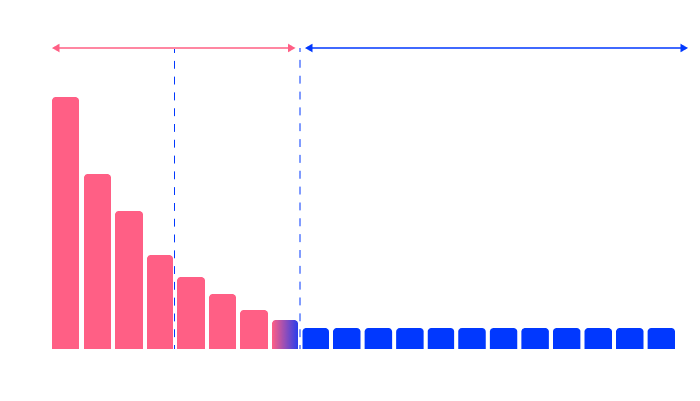
Most SEO strategies target the same competitive head terms and ignore the long-tail keywords where over 90% of search and AI demand actually sits. CMAX deploys AI agents that create, publish, and continuously update content across thousands of those high-intent queries, so every piece of content adds another connection point between what you sell and how people search for it. Integration takes two lines of code, and teams typically see measurable results within six weeks of launch.

If you’re rethinking what search engine optimisation should deliver at scale, CMAX was built for exactly that conversation.

References [1] – https://developers.google.com/search/docs/fundamentals/creating-helpful-content

Most working definitions of search engine optimisation definition stop at keywords and rankings, which leaves out half the system. A complete definition covers four connected conditions: technical access, relevance, usability, and credibility. Miss one and the others lose impact, because search engines evaluate pages as a whole, not in isolated parts. That connected view is central to how CMAX approaches organic growth at scale.

Search engine optimisation is broader than keywords.

What a complete SEO includes

A complete search engine optimisation definition covers more than keyword placement. It spans four distinct checks, and keyword placement is only a fraction of one of them.

First: can search engines crawl, render, and index the page? Without that access, nothing else on the page influences visibility. Second: does the content answer the query directly, with enough specificity to satisfy what the searcher actually came to resolve? Third: can a visitor navigate the page and complete the task they arrived with? Fourth: does the page demonstrate clear ownership, reliable sourcing, and genuine subject knowledge?

A definition that stops at “using the right keywords” fails three of those four checks entirely. The discipline covers the full chain from technical access through to demonstrated credibility, and each link depends on the one before it.

Working through the search engine optimisation definition reveals that a rigorous SEO definition must account for crawlability, relevance, usability, and credibility rather than any single factor alone.

Optimisation and optimisation mean the same

Search engine optimisation and search engine optimisation describe the same discipline. The spelling follows the English variant in use: British and Australian English use “optimisation,” American English uses “optimisation.” The underlying work is identical in either spelling: improving a page’s discoverability and usefulness so search engines can assess it accurately and people can act on it confidently.

Both terms appear across industry guidance and platform documentation. Treating them as separate concepts, or assuming one is more technical than the other, adds confusion without adding precision.

A complete definition must cover the full system.

Technical access comes first

Technical access is the first condition in any complete search engine optimisation definition. Search engines cannot assess a page they cannot properly crawl, render, or index. That means improvements to copy, layout, or internal linking carry no weight for that page until access is resolved. Fix the foundation before anything else. Effective search engine optimisation strategies address all four layers of the system: access, relevance, usability, and credibility. The search engine optimisation definition applies equally across spelling conventions, so efforts to define search engine optimisation in American English describe the same four-part system.

Relevance requires clear answers

A working search engine optimisation definition treats relevance as content that resolves the searcher’s question with enough specificity to satisfy the query. Repeating the keyword without explaining the topic, addressing the likely sub-question, or matching search intent gives search engines and readers no clear reason to prefer that page over a competing one. Specificity is what separates a page that ranks from one that stalls.

Usability supports interpretation and intent

Page structure, navigation, readability, and mobile use all affect whether a visitor can complete the task they came for. Applying the right search engine optimisation techniques to these elements, such as improving load speed, simplifying navigation, or refining mobile layouts, directly supports both user satisfaction and search engine interpretation. Those same signals help search engines recognise the page’s purpose and how it fits within the broader site. A page that frustrates users also frustrates the systems trying to categorise it.

Credibility reinforces search visibility

Credibility strengthens visibility when a page makes authorship and ownership clear, cites reliable sources where the topic requires evidence, and demonstrates first-hand or practitioner knowledge. Unsupported assertions give search engines little to work with when evaluating whether a page deserves to rank for a given query. A complete search engine optimisation definition answers the same underlying question as search engine optimisation what is by confirming that the discipline spans technical access, content quality, usability, and demonstrated credibility.

The mechanism becomes clear in a worked example.

Fix SEO problems in sequence

A concrete search engine optimisation example makes the sequence visible. Take a service page with three common problems: crawling is blocked by a misconfigured robots directive, the copy names the service without explaining it, and there are no references or authorship signals to support the claims made. Each problem sits in a different layer of the SEO system, and fixing them out of order produces limited results. Managing search engine optimisation cost starts with knowing which layer to fix first, because resources spent on credibility signals while crawling is still blocked deliver no return.

The worked example of a service page with blocked crawling and vague copy illustrates precisely what search engine optimisation means in practice, that visibility depends on fixing access, relevance, usability, and credibility in sequence.

Search engines need access before they can evaluate anything else on the page. Once crawling and indexing are resolved, relevance becomes assessable. Only then can credibility signals, authorship, sourcing, demonstrated knowledge, reinforce what the content already establishes. Skipping ahead, or treating any one layer as sufficient on its own, leaves the others unable to do their work.

Proof point by shared mechanism

This is what a working search engine optimisation definition looks like in practice. Google’s own Search guidance prioritises helpful, reliable, people-first content.[1] When it comes to search engine optimisation Google aligns that framing directly with the four-part system: access, relevance, usability, credibility.

The same mechanism shows up in practice. In one CMAX engagement, a search engine optimisation business operating as a B2B omnichannel hospitality retailer added 5,000 long-tail product pages and recorded a 255% organic traffic increase over 12 months. The driver was expanding crawlable, query-specific coverage across the full range of ways customers search, rather than concentrating effort on a narrow set of head terms. Search visibility grew because each layer of the system was addressed at scale.

The sequence is the same whether a site has ten pages or ten thousand.

A completeness test can reveal definition gaps.

Can your definition pass?

A practical way to stress-test any search engine optimisation definition is to run it through a short checklist that checks whether it describes SEO as a connected system, rather than a single tactic or channel.

Run through it quickly. Does your definition account for whether search engines can crawl, render, and index the page? Does it require content that answers a specific query clearly and in enough detail to satisfy intent? Does it address whether a visitor can navigate the page and complete the task they came for? Does it include signals of authorship, sourcing, and subject knowledge?

If any of those checks are missing, the definition is incomplete, and the gaps tend to show up in performance. A team optimising only for keywords while ignoring crawl access, or producing detailed content on a page with no clear authorship, is working from a partial picture. The parts they skipped don’t disappear; they just go unmanaged.

A definition that covers all four checks, technical access, relevance, usability, and credibility, gives a team a diagnostic frame they can actually use. When evaluating search engine optimisation services against this frame, the question becomes which condition is failing, not whether to add more keywords or publish more content.

Running a completeness test against the search engine optimisation definition is a practical way to approach the question of SEO what is SEO, because it shifts the focus from a single tactic to the full connected system.

A search engine optimisation specialist can use this test to audit any existing definition and identify exactly where to look first.

Yes or no, does your definition mention whether search engines can crawl, render, and index the page?

If the answer is no, the definition skips the first condition search engines apply before anything else is evaluated.

A page that blocks crawling through a disallow rule, fails to render JavaScript correctly, or sits outside the index is invisible to search regardless of how well-written or relevant its content is. Copy quality, internal linking, and credibility signals are all assessed after access is confirmed. Without access, none of those factors reach the evaluation stage.

This is the check most keyword-focused definitions omit entirely. They describe SEO as a content or copy discipline and leave out the technical layer that determines whether content is reachable at all.

A complete search engine optimisation definition names crawlability, renderability, and indexability as the starting condition, not an optional technical footnote. If yours does not, the definition describes only part of the system and will produce incomplete diagnoses when applied to a real site.

Yes or no, does it require content that answers a specific search query clearly and in enough detail to satisfy intent?

If your definition stops at “content that matches the keyword,” it’s incomplete.

A search query carries intent. Someone searching “search engine optimisation definition” wants a clear, authoritative answer with enough specificity to act on, not a paragraph that restates the phrase in different words. A definition that doesn’t account for this misses the mechanism that drives relevance.

Ask directly: does your definition require content to resolve the searcher’s actual question? Repeating a target term without addressing the likely sub-question, the context behind the query, or the level of detail the searcher needs gives search engines no clear signal to prefer that page over a more specific one.

Satisfying intent means the content covers the query at the right depth. A definitional query needs a precise answer. A how-to query needs steps. A comparison query needs criteria. The format and depth should match what the searcher came to do, not what’s easiest to produce.

If your definition doesn’t specify this, it leaves a gap that keyword density, meta tags, or internal linking alone won’t close. Relevance is earned at the content level, and it requires a deliberate match between what the searcher asked and what the page actually delivers.

Frequently Asked Questions (FAQ)

How does SEO work exactly, and how can you make the most of it?

SEO works by helping search engines access, interpret, and index pages, while giving users content that matches the reason they searched. A reliable search engine optimisation definition should describe how these steps connect. In practice, the clearest gains come from removing crawl and indexing barriers first, then improving relevance, usability, and credibility in that order. Each layer builds on the one before it: a page search engines can’t access won’t benefit from better copy, and better copy won’t compensate for a page visitors can’t use. Whether work is manual or falls under AI search engine optimisation, the underlying system still requires crawlability, relevance, usability, and credibility.

Is SEO really that important?

People search long before they’re ready to contact sales or buy. Whether you need search engine optimisation Perth teams can deliver or coverage in any other market, a site that appears only for a small set of obvious terms misses the informational and commercial queries that shape consideration earlier in the decision process.

How long does SEO take to work?

Timelines depend on what’s broken, how competitive the search landscape is, and whether the work involves technical fixes, content improvements, or broader site expansion. Some technical changes can be recognised relatively quickly; gains from better coverage and stronger credibility typically take longer to compound. This holds true regardless of whether you’re investing in search engine optimisation Sydney businesses rely on or targeting less competitive regions.

What’s the difference between SEO and SEM?

SEO improves unpaid visibility through better accessibility, relevance, usability, and credibility. SEM refers to paid search activity, where visibility comes from ad bidding and campaign settings rather than organic evaluation.

The search engine optimisation definition continues to evolve as practitioners consider how AI search environments interpret and surface content differently from traditional ranked results.

What is the importance of website optimisation in SEO?

Page speed, internal linking, mobile usability, content structure, and clear on-page signals all affect whether search engines can process a page properly and whether visitors can use it without friction. For businesses pursuing search engine optimisation Melbourne conditions demand, local site performance is especially critical. Weaknesses in any of these areas can limit visibility regardless of how strong the content is.

Two Lines of Code, Thousands of Keywords

CMAX is an agentic SEO platform built for long-tail scale.

Most SEO strategies target the same competitive head terms and ignore the long-tail keywords where over 90% of search and AI demand actually sits. CMAX deploys AI agents that create, publish, and continuously update content across thousands of those high-intent queries, so every piece of content adds another connection point between what you sell and how people search for it. Integration takes two lines of code, and teams typically see measurable results within six weeks of launch.

If you’re rethinking what search engine optimisation should deliver at scale, CMAX was built for exactly that conversation.

References [1] – https://developers.google.com/search/docs/fundamentals/creating-helpful-content

Author

Jeremy Tang

Founder and CEO of CMAX
Jeremy Tang is the Founder and CEO of CMAX. With over 2 decades of experience in business consulting and digital marketing, he has successfully driven seven startup businesses, six of which achieved $1 million in revenue from zero in less than 16 months, 5 of which grew to multi-million dollar a year ventures without any external funding. Jeremy's expertise lies in streamlining business processes through technology and leveraging digital (in particular SEO) for business growth. He resides in Australia, travels extensively, and draws inspiration from his global experiences.