Search Engine Optimisation Platform with Reporting, Governance & Scale

Updated: 05/08/26

Most teams evaluating a search engine optimisation platform already have tools for keyword research, rank tracking, and technical audits. The harder problem is what happens after the data: who owns the work, how pages get approved, and whether anything actually ships. That gap between insight and execution is where platform choice matters most, especially when multiple teams publish at scale and manual review stops working. CMAX was built around that operational layer, connecting research, content production, governance, and reporting inside a single workflow.


The right platform matches your team, site, and growth model.

Suite vs execution platform

The first question to answer is where the real bottleneck sits, because that determines which type of search engine optimisation platform will actually move the needle. Teams evaluating search engine optimisation Australia often face this fork early: consolidate visibility or accelerate execution.

An all-in-one suite is usually the right call when the core problem is fragmented visibility: keyword research lives in one tool, technical audits in another, rankings in a third, and reporting gets stitched together manually before every stakeholder meeting. Consolidating those signals into a single view reduces the overhead of reconciling data across tools and gives the team a shared picture of what is happening across the site.

An execution-focused platform fits a different problem. When the team already has visibility but the bottleneck is turning that data into approved pages, shipped technical fixes, or prioritised work that product and engineering will actually act on, a suite adds capability the team does not need. The gap is operational, and the platform has to close it. A search engine optimisation Sydney team may weight integrations differently from a search engine optimisation Melbourne team because site complexity varies by market.

Workflows, not isolated dashboards

A dashboard that surfaces issues is not the same as a workflow that resolves them. Enterprise teams need a connected sequence: opportunity discovery leads to ownership assignment, prioritisation, review, and delivery. Without that chain, search opportunities stall in the handoff between SEO, content, product, and engineering.

A dashboard cannot assign work, show task status, enforce approval steps, or flag when a high-priority page has been sitting in review for three weeks. Those gaps are where organic growth slows down, regardless of how complete the data looks.

A search engine optimisation platform is sometimes searched for under the term web search optimisation, which refers to the same discipline of improving a site’s visibility and relevance in organic search results.

The strongest platforms combine insight, execution, governance, and scale.

Connected SEO workflow

A search engine optimisation platform becomes easier to measure and operationalise when research, audits, content production, rank tracking, and reporting sit inside one workflow. When those capabilities are separated across tools, the chain of accountability breaks. You can identify an opportunity in one system, brief content in another, track rankings in a third, and still have no clear answer to the question a CFO will ask: did that work move the needle? A platform built around this connected workflow often overlaps with what practitioners mean by search engine optimisation, covering research, audits, content, rankings, and reporting inside a single system.

A connected workflow makes that chain visible. It shows which opportunity was identified, what action followed, who owns it, and whether the resulting change produced indexation, visibility, or conversion movement. That traceability is what turns SEO from a cost centre into a measurable growth function.

Governance for scaled publishing

Governance becomes a buying criterion the moment more than one team is publishing at scale. Review rules, approved source content, permission controls, and duplicate-page safeguards all determine what actually goes live, and a search engine optimisation platform without them shifts that risk onto whoever is closest to the publish button.

The stakes are highest when a site spans many products, services, or locations. At that scale, manual review cannot keep pace. Without platform-level controls, teams end up with thin pages, duplicated content, or off-brand copy that creates technical debt faster than search engine optimisation can recover from it. The platform’s governance layer is what keeps publishing velocity from becoming a liability. A search engine optimisation platform is the operational answer to the question that SEO what is SEO poses, it is the system through which research, execution, governance, and measurement are connected into a repeatable workflow.

A scored fit test makes platform choice clearer.

Can your SEO platform pass this fit test?

A demo that looks complete is not the same as a platform your team will actually use six months after rollout. The factors that determine whether a search engine optimisation platform will be used after rollout are adoption and output, scored against real workflow checks rather than feature count.

When evaluating a search engine optimisation platform, buyers who search for an SEO definition are asking the same foundational question, what capabilities and outcomes should this investment actually deliver?

Run the platform against six checks before you commit:

Actionability. Does the platform turn keyword data into prioritised next steps with a named page, content brief, or technical fix attached? If the output is a report your team then has to interpret and re-prioritise manually, the bottleneck has not moved.

Governance. Can you control who publishes what, enforce review rules, and prevent duplicate pages from going live without relying on manual spot-checks? At scale, governance is a capability, not a process.

Integrations. Does it connect to your CMS, analytics stack, and product feed without custom development your team cannot maintain after the implementation team leaves?

Setup effort. What does onboarding actually require in terms of time, technical resource, and internal ownership? Scoring search engine optimisation cost against expected workflow savings clarifies whether the platform justifies its licence. A platform that takes six months to configure before it produces anything is a risk your CFO will flag.

Ownership. Is it clear which team member owns each identified opportunity from discovery through to delivery? Ambiguous ownership is where search opportunities stall.

Scale. Can the platform operate across thousands of keyword targets, not just the head terms that fit neatly into a spreadsheet?

Score each check as a pass, partial, or fail. A platform with two or more fails in this list is unlikely to perform differently from the tools you already have.

Does the platform turn keyword data into prioritised actions with clear page, content, or technical next steps, not just reports?

A search engine optimisation platform should convert keyword data into prioritised next steps, yet most stop at the data layer: they show what is broken or missing, then leave prioritisation, ownership, and delivery to a separate process that often lives in a spreadsheet or a Slack thread. A report that surfaces 4,000 keyword gaps is only useful if someone can act on it by end of week.

The gap between insight and action is where SEO programmes stall. A platform that converts keyword data into a ranked work queue, with each item tied to a specific page type, content brief, or technical fix, removes that gap. The output is an assigned task with a clear next step that a content editor, developer, or product manager can pick up without a briefing call. For teams that previously relied on an external search engine optimisation service, this shift moves execution coordination inside the platform itself.

Prioritisation logic matters here. Not every keyword gap warrants a new page. A capable platform distinguishes between gaps that need a net-new page, gaps that need an existing page updated, and gaps that need a technical change such as a crawl fix or internal link. That distinction shapes how work is scoped, sequenced, and handed off across teams.

A search engine optimisation platform that drives prioritised action often needs to support SEO website copywriting as part of the same workflow, so that identified opportunities move directly into reviewed, publishable content. The question of how to do search engine optimisation then becomes a workflow problem solved by the platform’s task queue, rather than a knowledge gap filled by ad-hoc research.

When evaluating any search engine optimisation platform, ask whether the output of a keyword analysis is a dashboard or a work order. If the answer is a dashboard, the execution burden stays with your team. If the answer is a work order with ownership, priority, and a defined next step, the platform is doing the job it was bought to do.

Can your team control approvals, brand rules, source inputs, and who can publish what?

Governance is a buying criterion, not a bonus feature. When multiple teams publish at scale across products, services, or locations, what goes live is determined by the controls the platform enforces, not by the intentions of the people using it.

The checks that matter most are specific: Can you define which source content is approved before it feeds into page production? Can you set review rules that require sign-off before a page publishes? Can you restrict publishing permissions by role, team, or content type? Can the platform detect and prevent duplicate pages before they reach the index?

Without these controls, scale creates risk. A site spanning hundreds of product or location pages cannot rely on manual spot-checks. Brand rules drift. Unapproved claims go live. Thin or near-duplicate pages accumulate and draw quality signals down across the whole domain.

The governance layer also affects how confidently a senior stakeholder can approve a scaled content programme. A CFO or legal team asking “who approved this?” needs a clear answer the platform can produce, not a spreadsheet reconstructed after the fact. Controls that govern Google search optimisation data flowing into your reporting stack reduce manual reconciliation.

When evaluating a search engine optimisation platform on governance, score it against your actual publishing workflow: how many teams touch content before it goes live, how many page types you run at scale, and whether your current process would catch a brand or duplication error before or after indexation. If the platform cannot map to that workflow, governance will fall back on people, and people are not a scalable control.

Does it fit your CMS, analytics, product feed, and reporting stack without custom work your team cannot maintain?

Integration questions are where platform evaluations get honest. An enterprise search engine optimisation platform that requires bespoke middleware to connect with your CMS, a separate export to pull data into your analytics stack, or manual reconciliation between your product feed and your keyword targeting is a platform that adds operational debt from day one.

The practical test is straightforward: can the platform read from and write to the systems your team already owns, without engineering involvement that outlasts the implementation sprint? That means native or documented connections to your CMS for page creation and updates, a clean data path to your analytics and reporting tools, and the ability to ingest structured product or service data without reformatting it each time.

Reporting fit is a separate check. If SEO performance data lives inside the platform but cannot be pulled into the dashboards your CFO or board already reviews, the reporting layer creates a translation problem every month. The platform should output to the formats and tools your stakeholders already use. The best search engine optimisation outcome depends on whether the platform matches your CMS and reporting stack, not on how many features the vendor lists on a comparison page.

Maintenance ownership is the final variable. Custom integrations built during onboarding often depend on the vendor’s implementation team or a developer who has since moved on. Before sign-off, confirm which integrations are maintained by the vendor, which require your team to manage, and what breaks if a connected system updates its API. That answer tells you the real cost of fit.

Frequently Asked Questions (FAQ)

Can SEO be automated?

Partly. Data collection, page creation workflows, internal linking suggestions, and reporting can all run with meaningful automation. Strategy, approvals, source quality checks, and publication controls still require human review. That’s especially true when teams are scaling content across hundreds or thousands of pages, where duplication and thin pages become real risks without oversight built into the workflow.

What sections do you include and how do you break down the information?

A search engine optimisation platform evaluation usually breaks information into capability areas: research, technical health, content workflow, governance, integrations, reporting, and scale. That structure lets buyers assess both feature coverage and whether the platform fits how work actually moves across SEO, content, product, and engineering teams.

How do you structure your Weekly/Monthly SEO reports?

Weekly reports focus on movement and blockers: newly identified issues, work completed, indexation changes, ranking shifts, and actions waiting on other teams. Monthly reports are better suited to trend review, covering visibility changes, conversion movement, completed work by priority area, and what those patterns indicate for the next cycle of SEO work.

How do you scale SEO across multiple products?

Scaling across products requires a platform that maps recurring query patterns to structured page types, enforces templates and review rules, and reports performance by product group. Product-led SEO stalls when every page is treated as a one-off content task rather than part of a repeatable publishing system.

How will Google Search prevent poor quality AI content from taking over search results?

Google’s systems are generally understood to evaluate content quality and usefulness rather than production method. That’s why platform controls, including approved source content, review workflows, and duplication checks, remain critical when teams automate parts of content production. Automation without those controls increases the risk of publishing pages that fail quality evaluation regardless of how they were created.

A search engine optimisation platform that handles governance and review workflows is increasingly relevant as teams navigate AI search environments where content quality signals carry greater weight.

A search engine optimisation platform addresses the same discipline that searchers mean when they look up define search engine optimisation, the structured practice of improving a site’s relevance, authority, and visibility in organic results.

Most Search Demand Goes Untargeted, CMAX Was Built to Fix That

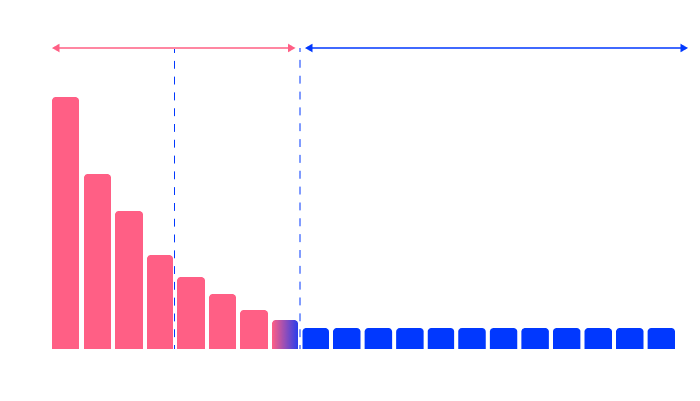
The long tail accounts for the vast majority of how people actually search.

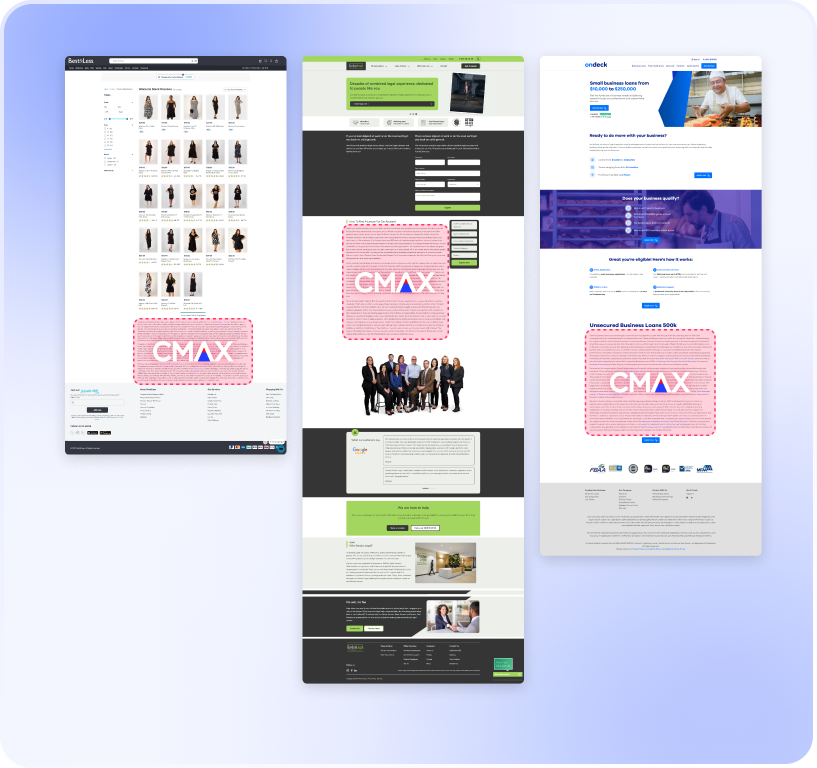
CMAX is an agentic SEO platform that deploys and continuously updates content across thousands of long-tail keyword variations, the high-intent queries most teams lack the bandwidth to target manually. It integrates with two lines of code, requires no large content team, and is built to show measurable traction within six weeks of deployment. Every page it produces acts as another node in a growing content structure designed to capture traffic that traditional platforms leave on the table.

If you’re evaluating a search engine optimisation platform on execution speed, scale and governance rather than dashboards alone, CMAX is worth a closer look.

Most teams evaluating a search engine optimisation platform already have tools for keyword research, rank tracking, and technical audits. The harder problem is what happens after the data: who owns the work, how pages get approved, and whether anything actually ships. That gap between insight and execution is where platform choice matters most, especially when multiple teams publish at scale and manual review stops working. CMAX was built around that operational layer, connecting research, content production, governance, and reporting inside a single workflow.

The right platform matches your team, site, and growth model.

Suite vs execution platform

The first question to answer is where the real bottleneck sits, because that determines which type of search engine optimisation platform will actually move the needle. Teams evaluating search engine optimisation Australia often face this fork early: consolidate visibility or accelerate execution.

An all-in-one suite is usually the right call when the core problem is fragmented visibility: keyword research lives in one tool, technical audits in another, rankings in a third, and reporting gets stitched together manually before every stakeholder meeting. Consolidating those signals into a single view reduces the overhead of reconciling data across tools and gives the team a shared picture of what is happening across the site.

An execution-focused platform fits a different problem. When the team already has visibility but the bottleneck is turning that data into approved pages, shipped technical fixes, or prioritised work that product and engineering will actually act on, a suite adds capability the team does not need. The gap is operational, and the platform has to close it. A search engine optimisation Sydney team may weight integrations differently from a search engine optimisation Melbourne team because site complexity varies by market.

Workflows, not isolated dashboards

A dashboard that surfaces issues is not the same as a workflow that resolves them. Enterprise teams need a connected sequence: opportunity discovery leads to ownership assignment, prioritisation, review, and delivery. Without that chain, search opportunities stall in the handoff between SEO, content, product, and engineering.

A dashboard cannot assign work, show task status, enforce approval steps, or flag when a high-priority page has been sitting in review for three weeks. Those gaps are where organic growth slows down, regardless of how complete the data looks.

A search engine optimisation platform is sometimes searched for under the term web search optimisation, which refers to the same discipline of improving a site’s visibility and relevance in organic search results.

The strongest platforms combine insight, execution, governance, and scale.

Connected SEO workflow

A search engine optimisation platform becomes easier to measure and operationalise when research, audits, content production, rank tracking, and reporting sit inside one workflow. When those capabilities are separated across tools, the chain of accountability breaks. You can identify an opportunity in one system, brief content in another, track rankings in a third, and still have no clear answer to the question a CFO will ask: did that work move the needle? A platform built around this connected workflow often overlaps with what practitioners mean by search engine optimisation, covering research, audits, content, rankings, and reporting inside a single system.

A connected workflow makes that chain visible. It shows which opportunity was identified, what action followed, who owns it, and whether the resulting change produced indexation, visibility, or conversion movement. That traceability is what turns SEO from a cost centre into a measurable growth function.

Governance for scaled publishing

Governance becomes a buying criterion the moment more than one team is publishing at scale. Review rules, approved source content, permission controls, and duplicate-page safeguards all determine what actually goes live, and a search engine optimisation platform without them shifts that risk onto whoever is closest to the publish button.

The stakes are highest when a site spans many products, services, or locations. At that scale, manual review cannot keep pace. Without platform-level controls, teams end up with thin pages, duplicated content, or off-brand copy that creates technical debt faster than search engine optimisation can recover from it. The platform’s governance layer is what keeps publishing velocity from becoming a liability. A search engine optimisation platform is the operational answer to the question that SEO what is SEO poses, it is the system through which research, execution, governance, and measurement are connected into a repeatable workflow.

A scored fit test makes platform choice clearer.

Can your SEO platform pass this fit test?

A demo that looks complete is not the same as a platform your team will actually use six months after rollout. The factors that determine whether a search engine optimisation platform will be used after rollout are adoption and output, scored against real workflow checks rather than feature count.

When evaluating a search engine optimisation platform, buyers who search for an SEO definition are asking the same foundational question, what capabilities and outcomes should this investment actually deliver?

Run the platform against six checks before you commit:

Actionability. Does the platform turn keyword data into prioritised next steps with a named page, content brief, or technical fix attached? If the output is a report your team then has to interpret and re-prioritise manually, the bottleneck has not moved.

Governance. Can you control who publishes what, enforce review rules, and prevent duplicate pages from going live without relying on manual spot-checks? At scale, governance is a capability, not a process.

Integrations. Does it connect to your CMS, analytics stack, and product feed without custom development your team cannot maintain after the implementation team leaves?

Setup effort. What does onboarding actually require in terms of time, technical resource, and internal ownership? Scoring search engine optimisation cost against expected workflow savings clarifies whether the platform justifies its licence. A platform that takes six months to configure before it produces anything is a risk your CFO will flag.

Ownership. Is it clear which team member owns each identified opportunity from discovery through to delivery? Ambiguous ownership is where search opportunities stall.

Scale. Can the platform operate across thousands of keyword targets, not just the head terms that fit neatly into a spreadsheet?

Score each check as a pass, partial, or fail. A platform with two or more fails in this list is unlikely to perform differently from the tools you already have.

Does the platform turn keyword data into prioritised actions with clear page, content, or technical next steps, not just reports?

A search engine optimisation platform should convert keyword data into prioritised next steps, yet most stop at the data layer: they show what is broken or missing, then leave prioritisation, ownership, and delivery to a separate process that often lives in a spreadsheet or a Slack thread. A report that surfaces 4,000 keyword gaps is only useful if someone can act on it by end of week.

The gap between insight and action is where SEO programmes stall. A platform that converts keyword data into a ranked work queue, with each item tied to a specific page type, content brief, or technical fix, removes that gap. The output is an assigned task with a clear next step that a content editor, developer, or product manager can pick up without a briefing call. For teams that previously relied on an external search engine optimisation service, this shift moves execution coordination inside the platform itself.

Prioritisation logic matters here. Not every keyword gap warrants a new page. A capable platform distinguishes between gaps that need a net-new page, gaps that need an existing page updated, and gaps that need a technical change such as a crawl fix or internal link. That distinction shapes how work is scoped, sequenced, and handed off across teams.

A search engine optimisation platform that drives prioritised action often needs to support SEO website copywriting as part of the same workflow, so that identified opportunities move directly into reviewed, publishable content. The question of how to do search engine optimisation then becomes a workflow problem solved by the platform’s task queue, rather than a knowledge gap filled by ad-hoc research.

When evaluating any search engine optimisation platform, ask whether the output of a keyword analysis is a dashboard or a work order. If the answer is a dashboard, the execution burden stays with your team. If the answer is a work order with ownership, priority, and a defined next step, the platform is doing the job it was bought to do.

Can your team control approvals, brand rules, source inputs, and who can publish what?

Governance is a buying criterion, not a bonus feature. When multiple teams publish at scale across products, services, or locations, what goes live is determined by the controls the platform enforces, not by the intentions of the people using it.

The checks that matter most are specific: Can you define which source content is approved before it feeds into page production? Can you set review rules that require sign-off before a page publishes? Can you restrict publishing permissions by role, team, or content type? Can the platform detect and prevent duplicate pages before they reach the index?

Without these controls, scale creates risk. A site spanning hundreds of product or location pages cannot rely on manual spot-checks. Brand rules drift. Unapproved claims go live. Thin or near-duplicate pages accumulate and draw quality signals down across the whole domain.

The governance layer also affects how confidently a senior stakeholder can approve a scaled content programme. A CFO or legal team asking “who approved this?” needs a clear answer the platform can produce, not a spreadsheet reconstructed after the fact. Controls that govern Google search optimisation data flowing into your reporting stack reduce manual reconciliation.

When evaluating a search engine optimisation platform on governance, score it against your actual publishing workflow: how many teams touch content before it goes live, how many page types you run at scale, and whether your current process would catch a brand or duplication error before or after indexation. If the platform cannot map to that workflow, governance will fall back on people, and people are not a scalable control.

Does it fit your CMS, analytics, product feed, and reporting stack without custom work your team cannot maintain?

Integration questions are where platform evaluations get honest. An enterprise search engine optimisation platform that requires bespoke middleware to connect with your CMS, a separate export to pull data into your analytics stack, or manual reconciliation between your product feed and your keyword targeting is a platform that adds operational debt from day one.

The practical test is straightforward: can the platform read from and write to the systems your team already owns, without engineering involvement that outlasts the implementation sprint? That means native or documented connections to your CMS for page creation and updates, a clean data path to your analytics and reporting tools, and the ability to ingest structured product or service data without reformatting it each time.

Reporting fit is a separate check. If SEO performance data lives inside the platform but cannot be pulled into the dashboards your CFO or board already reviews, the reporting layer creates a translation problem every month. The platform should output to the formats and tools your stakeholders already use. The best search engine optimisation outcome depends on whether the platform matches your CMS and reporting stack, not on how many features the vendor lists on a comparison page.

Maintenance ownership is the final variable. Custom integrations built during onboarding often depend on the vendor’s implementation team or a developer who has since moved on. Before sign-off, confirm which integrations are maintained by the vendor, which require your team to manage, and what breaks if a connected system updates its API. That answer tells you the real cost of fit.

Frequently Asked Questions (FAQ)

Can SEO be automated?

Partly. Data collection, page creation workflows, internal linking suggestions, and reporting can all run with meaningful automation. Strategy, approvals, source quality checks, and publication controls still require human review. That’s especially true when teams are scaling content across hundreds or thousands of pages, where duplication and thin pages become real risks without oversight built into the workflow.

What sections do you include and how do you break down the information?

A search engine optimisation platform evaluation usually breaks information into capability areas: research, technical health, content workflow, governance, integrations, reporting, and scale. That structure lets buyers assess both feature coverage and whether the platform fits how work actually moves across SEO, content, product, and engineering teams.

How do you structure your Weekly/Monthly SEO reports?

Weekly reports focus on movement and blockers: newly identified issues, work completed, indexation changes, ranking shifts, and actions waiting on other teams. Monthly reports are better suited to trend review, covering visibility changes, conversion movement, completed work by priority area, and what those patterns indicate for the next cycle of SEO work.

How do you scale SEO across multiple products?

Scaling across products requires a platform that maps recurring query patterns to structured page types, enforces templates and review rules, and reports performance by product group. Product-led SEO stalls when every page is treated as a one-off content task rather than part of a repeatable publishing system.

How will Google Search prevent poor quality AI content from taking over search results?

Google’s systems are generally understood to evaluate content quality and usefulness rather than production method. That’s why platform controls, including approved source content, review workflows, and duplication checks, remain critical when teams automate parts of content production. Automation without those controls increases the risk of publishing pages that fail quality evaluation regardless of how they were created.

A search engine optimisation platform that handles governance and review workflows is increasingly relevant as teams navigate AI search environments where content quality signals carry greater weight.

A search engine optimisation platform addresses the same discipline that searchers mean when they look up define search engine optimisation, the structured practice of improving a site’s relevance, authority, and visibility in organic results.

Most Search Demand Goes Untargeted, CMAX Was Built to Fix That

The long tail accounts for the vast majority of how people actually search.

CMAX is an agentic SEO platform that deploys and continuously updates content across thousands of long-tail keyword variations, the high-intent queries most teams lack the bandwidth to target manually. It integrates with two lines of code, requires no large content team, and is built to show measurable traction within six weeks of deployment. Every page it produces acts as another node in a growing content structure designed to capture traffic that traditional platforms leave on the table.

If you’re evaluating a search engine optimisation platform on execution speed, scale and governance rather than dashboards alone, CMAX is worth a closer look.

Author

Jeremy Tang

Founder and CEO of CMAX
Jeremy Tang is the Founder and CEO of CMAX. With over 2 decades of experience in business consulting and digital marketing, he has successfully driven seven startup businesses, six of which achieved $1 million in revenue from zero in less than 16 months, 5 of which grew to multi-million dollar a year ventures without any external funding. Jeremy's expertise lies in streamlining business processes through technology and leveraging digital (in particular SEO) for business growth. He resides in Australia, travels extensively, and draws inspiration from his global experiences.