The value of SEO and AI is scale you can explain. The work behind optimisation gets faster, and you can still describe it to your CEO.
For a homewares retailer, search engine optimisation reaches well past “dining table”. Customers search by size, material, location and budget.
Picture a tailor who stocks three suit sizes. Most people who walk in leave empty-handed because nothing fits their measurements.
The tailor down the road cuts to measure and sells to the people the first shop turned away. Your category pages are the three sizes, and the exact searches customers type are the measurements.
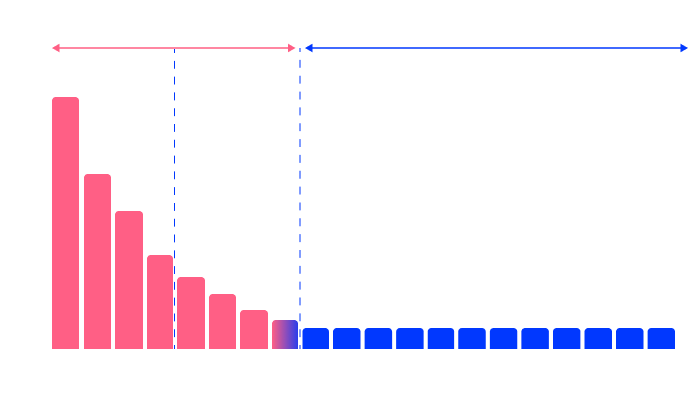
Those exact searches are the long tail. In this context, long-tail coverage means having a page that fits each specific way customers search, instead of a few pages cut for the average.
AI Overviews now answer more of those searches directly. The real question is whether you have a useful answer for the searches you’re missing, since ranking for a few obvious terms covers less of the picture.
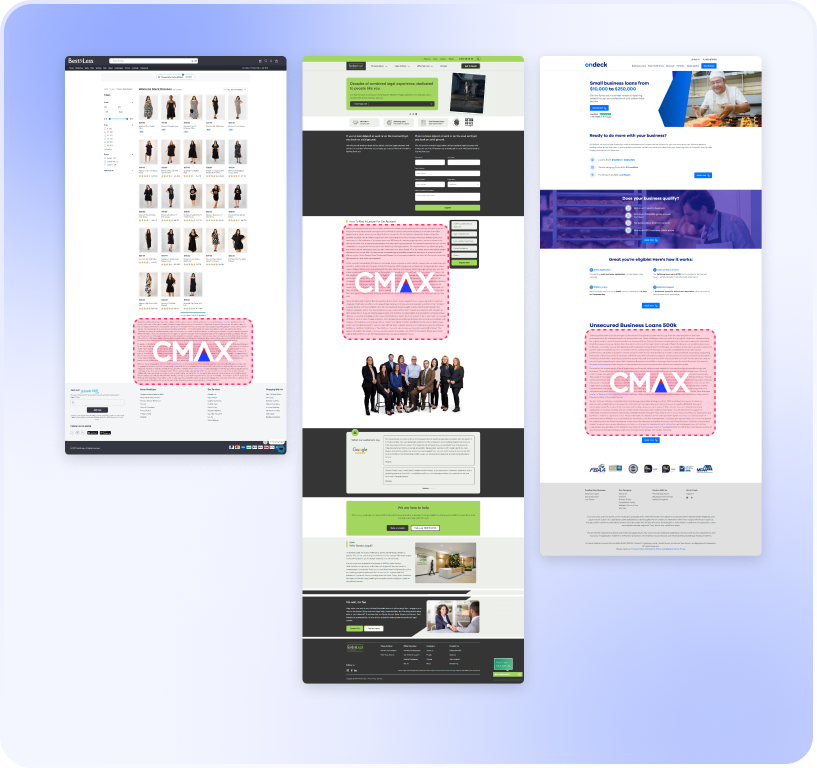
CMAX works on that long-tail coverage directly. A generative AI SEO service expands category and collection pages and keeps content tied to approved brand facts and real performance data.
An AI SEO Service Expands Long-Tail Coverage Without Losing Control
AI Across the Content Workflow
An AI SEO service scales the work behind SEO. That covers finding specific searches, mapping them to the right pages, drafting copy, optimising existing content and refreshing pages when performance changes.
Using AI for keyword research can uncover needs such as an eight-seat solid oak dining table delivered to Sydney.
It is a different thing from hands-off automation or a promise of first place in AI answers. It also sits inside your existing SEO.
It isn’t a separate channel.
Long tail means the specific, detailed searches people type, such as “solid oak dining table seats 8 delivery Sydney” instead of “dining table”. AI Overviews handle complex questions directly and collapse what used to be several searches into one.
That makes specificity count for more. Location is part of it: a buyer who searches for AI SEO Brisbane wants Brisbane, and Australia-wide support answers a different question.
Why Long-Tail Coverage Matters
Over 90% of search and AI demand is in the long tail. A search engine optimisation service should cover the thousands of ways customers describe size, material, use case, location, budget, problem and comparison.
Visibility comes down to content surface area: how many of those searches you have a useful answer for. Most reporting platforms track positions, as do SEO ranking tools.
Even the best of them can’t report on a page you haven’t built. CMAX expands content surface area across the category and collection pages identified through Search Console.
CMAX Combines Speed, Freshness and Brand-Safe Execution
Brand-Safe Scaling on Approved Assets
CMAX is trained on human-reviewed, client-approved content. Scaled copy then reflects your product facts, tone, compliance language and commercial priorities.
This differs from generic AI content marketing tools. The service works from approved source material inside your CMS and expands category, collection and supporting pages, with human calibration and review built into the operating model.
Any AI SEO company can promise speed, and many AI automation companies sell little else. Ask where the content comes from.
Continuous Updating, Linking and Optimisation
After publication, the platform supports Dynamic Internal Linking, Full Body SEO and performance-led content updates. Google’s own guidelines confirm that AI-assisted content is acceptable when it’s helpful and created for people.
The line is automation used mainly to manipulate search results.
A fair comparison of AI SEO services looks at how each provider updates, links and measures content after launch.
Measurement Ties Content to Revenue Signals
Reporting Beyond Visits
A session count tells you people showed up. It doesn’t tell you whether the right buyer landed.
A crowded shop with an empty till has plenty of browsers too.
Search Console shows which searches your site appeared for. You can see whether new long-tail pages earn impressions and clicks for buying-pattern queries such as comparisons, product attributes and problem-led searches.
CMAX connects automated SEO reporting with conversions, assisted value, revenue from organic landing pages and shifts in paid search dependency.
Long-Tail Growth Measured Against Outcomes
An AI SEO service can connect long-tail coverage with sales reporting. CMAX targets that same long-tail demand.
Most SEO programmes run by conventional agencies, using outdated methods, tell clients to expect results in six months. CMAX’s methods allow clients to start seeing clicks in 6 to 8 weeks.
Timelines still depend on the site, its competition and how the work is executed.
A three-day review of Google Analytics and Search Console sets a defined scope, so SEO services pricing ties to the site’s commercial opportunity. That scope also makes search engine optimisation cost easier to explain to finance.
The right test of AI for SEO is whether the programme adds useful coverage, keeps pages fresh with performance data, connects related content and reports on commercial signals the finance team can recognise.
Frequently Asked Questions (FAQ)
Can Google Penalise AI-Generated SEO Content?
Google does not penalise content because AI produced it. Google’s stated focus is content quality, whatever the production method.
Using automation mainly to manipulate search results does violate its spam policies.
The practical safeguard: CMAX defines an AI SEO service as controlled scaling from approved source material, with human calibration setting the initial content.
Can Google Detect AI Content?
Google can identify patterns linked to low-value or scaled spam. No reliable public standard exists for detecting whether a specific page was AI-written.
OpenAI discontinued its own AI text classifier, citing low accuracy and stating it is impossible to reliably detect all AI-written text.
The more useful buying question for teams comparing AI SEO Australia is whether the content is accurate, on-brand and tied to a real search need. Comparisons of search engine optimisation Australia with US programmes should account for Australian spelling and local compliance requirements before judging content quality.
Can AI-Generated Pages Cause Keyword Cannibalisation?
Yes, when multiple pages target the same keyword and satisfy the same search intent, your own URLs compete with each other. Semrush defines keyword cannibalisation as multiple pages targeting the same keywords and harming each other’s visibility.
It also notes that multiple pages ranking for the same term don’t always create a problem.
A controlled AI SEO service maps each search intent to the right page type, then uses internal links to reinforce that signal to Google. That lets it expand coverage without creating avoidable cannibalisation.
AI SEO Service Expands Long-Tail Coverage
An AI SEO service matters when it helps you cover more of the searches customers use. CMAX is built around that idea.
Most demand sits in the long tail, so growth comes from adding useful coverage across the many specific ways people search. CMAX is an Agentic SEO Platform that gives a SEO service specialist an operating model for expanding that coverage across approved category, collection and supporting pages.
If you’ve ever searched “what is SEO consulting services”, the short answer is a specialist who sets direction while the platform scales the work. Our agents scale content on approved brand assets, keep pages fresh as performance shifts and connect related pages so Google has more context.
For teams comparing providers, the real test of AI SEO after launch is whether the work keeps expanding content surface area and ties that visibility to commercial signals.
The quickest way to see where your site is missing long-tail demand is to have someone map it for you. A review asks for an hour of your time and no commitment.
If you’re curious as to how you’re performing on AI, book in a Missing Customer Map review with our Growth Team.
Author
Jeremy Tang
Founder and CEO of CMAX
Jeremy Tang is the Founder and CEO of CMAX. With over 2 decades of experience in business consulting and digital marketing, he has successfully driven seven startup businesses, six of which achieved $1 million in revenue from zero in less than 16 months, 5 of which grew to multi-million dollar a year ventures without any external funding. Jeremy's expertise lies in streamlining business processes through technology and leveraging digital (in particular SEO) for business growth. He resides in Australia, travels extensively, and draws inspiration from his global experiences.