The framing of SEO vs AI search is misleading. AI search and classic Google results run on the same index, the same eligibility rules, and the same ranking basics that have always applied.
The interface changed. The underlying requirement did not.
Your pages still need to be found and eligible before any AI summary can pull from them. The shift is that one search can now branch into several related searches, which means the brands showing up are the ones answering more of the specific questions buyers ask, not just the obvious category terms.
That is the gap CMAX was built to close.
SEO and AI Work Together Because AI Changes the Interface, Not the Need for Coverage
AI Tools Still Use Search Indexes
Within Google Search, SEO and AI share the same indexing and eligibility requirements. A page must be indexed and eligible to appear in classic Google Search before it can support AI Overviews or AI Mode.
Your site content shapes whether a buyer finds a standard result, a supporting link, or the answer inside an AI summary. The entry point is the same regardless of which format they land on.
Longer Queries Raise Long-Tail Value
Google’s AI features can use a query fan-out technique: one question triggers several related searches across subtopics before an answer is assembled. Think of it like a customer walking into a large department store and asking one question at the front desk.
That question actually contains five smaller questions the staff need to answer before the customer commits to anything.
In this context, SEO content writing means producing content that answers all of the smaller sub questions before giving the user the final answer. That makes an AI SEO service most valuable when it covers the detailed ways buyers compare options, check fit and narrow a shortlist.
The Brands That Show Up Most Often Cover More Customer Questions and Keep That Content Fresh
Category Leaders Still Miss Demand
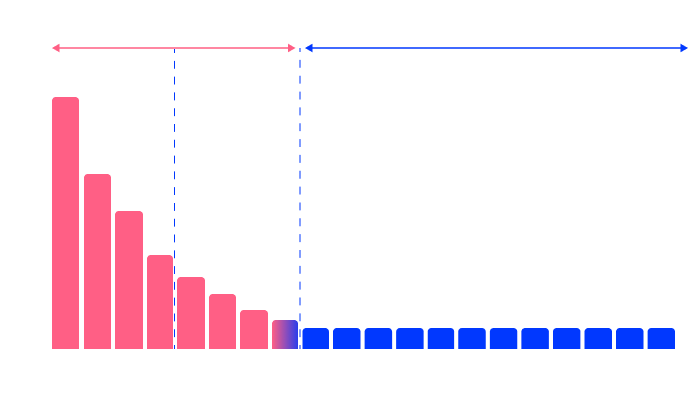
Even the biggest brands capture only a slice of SEO and AI demand in their category. Customer questions keep splitting into new comparisons, locations, use cases and product qualifiers.
Google reports that 15% of daily searches are brand new, so a small set of head terms will never fully cover the market.
Broader visibility comes from answering the specific questions buyers ask before they convert: price, suitability, delivery and alternatives. A search engine optimisation cost assessment should account for implementation, coverage and revenue reporting, not recommendations alone.
Teams evaluating SEO ranking tools should apply the same test: does the tool show you where coverage is missing, or does it only confirm what you already rank for?
Freshness and Context Affect Relevance
Product ranges change. Policies change.
The words customers use to search change. A page published once and left alone drifts out of step with all three.
Google evaluates pages within the wider site and surfaces supporting links based on how relevant they are to the specific query, so a page that was right six months ago may not be the right answer today.
For an AI SEO company, freshness carries real weight on any topic where buying criteria or product details shift over time. The phrase generative engine optimisation GEO describes improving content coverage for generative experiences.
It is not about buying off-site mentions or seeded reviews.
CMAX Helps Teams Scale SEO Coverage Without Treating AI as a Replacement for Strong Fundamentals
CMAX Covers More Long-Tail Demand
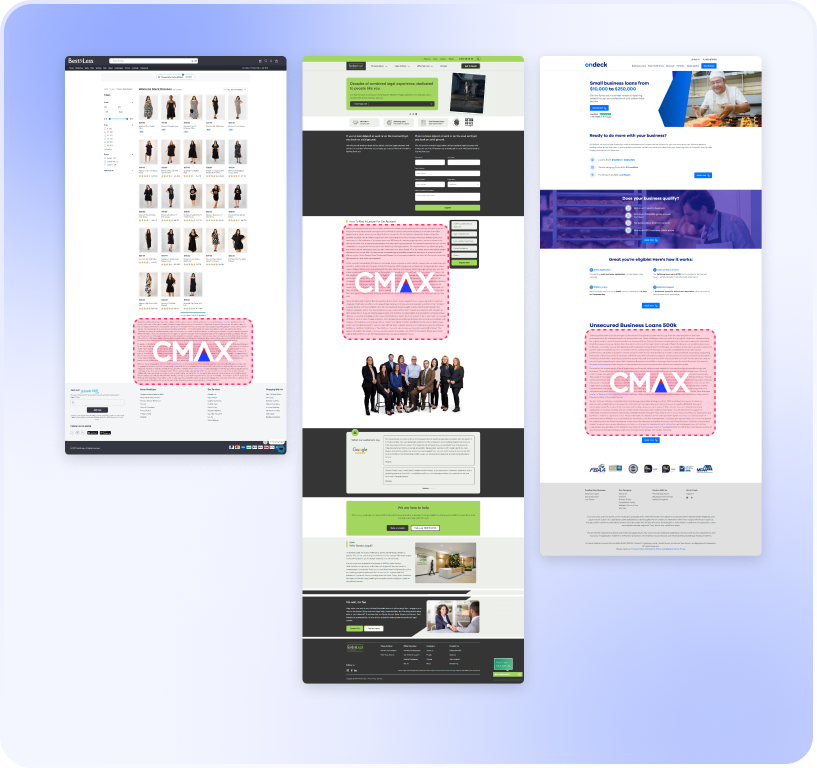
Over 90% of search and AI demand is in the long tail, and CMAX targets the 90% of search demand in the long tail by refreshing content across the many ways customers search for what you sell. When one AI prompt can split into multiple related searches, the visibility challenge is coverage at scale, not publishing a handful of cornerstone pages and hoping they carry the category.
CMAX defines SEO and AI as coordinated coverage across classic results, AI experiences and the long-tail questions behind both. The platform uses Automated Dynamic Internal Linking and Smart Optimisation to keep that coverage connected and current across your existing site.
Among the best generative engine optimisation platforms, the ones that compound results are those that combine automated coverage with ongoing freshness, not those that publish once and stop.
Brand-Safe, Agentic Content Generation
CMAX is the Agentic SEO Platform. As part of its AI SEO services, it generates content through Automated Content Generation trained on your approved brand assets, which prevents off-brand output and keeps claims compliant.
CMAX is trained on human-reviewed, client-approved content, so what goes live reflects your voice, your product range and your compliance requirements.
In regulated categories, generative AI search engine optimisation requires controlled claims and approved messaging. Publishing creates the first version.
Our agents support generative engine optimisation services through ongoing refreshes and a client approval workflow, so the content stays accurate as your range evolves.
Frequently Asked Questions (FAQ)
How can I track whether my brand appears in AI search answers?
Google Search Console now includes a generative AI performance report covering AI Overviews and AI Mode impressions. Unlike standalone SEO ranking software, when using AI for SEO, pair that performance data with a fixed set of priority prompts, branded queries and high-intent category terms to compare visibility over time.
Check which pages earn those impressions and whether they answer the comparison, use-case or compliance questions buyers ask before they convert.
Does a top Google ranking guarantee an AI citation?
No. Google’s AI features may use query fan-out and identify supporting pages across subtopics, producing a wider, more diverse set of links than a classic results page. A strong ranking helps because the page must be indexed and eligible for Google Search, but a citation depends on whether the content directly supports the specific question the AI system is answering.
Eligibility, relevance and direct support for each question determine how SEO and AI contribute to visibility.
Can AI-generated content rank consistently on Google?
It can, though results depend on how the content is used, edited and maintained. Google applies the same foundational SEO criteria to AI features as to classic results, with the emphasis on helpful, reliable, people-first content.
The practical question is whether the final page is accurate, differentiated, on-brand and kept fresh as search demand shifts. An AI content writer for SEO cannot by itself make that happen.
Local spelling, approved claims and compliance requirements shape programmes for AI SEO Australia, while campaigns in other markets must reflect their own conventions. Teams looking for regional support can explore options through AI SEO Brisbane and related local offerings.
SEO and AI Start With Search Coverage
SEO and AI work together because AI still pulls from Google’s index, just through a different interface. The question “What is generative engine optimisation?” comes down to making useful content eligible and relevant for retrieval in AI-generated answers.
CMAX is built around that gap. Its approach to AI SEO expands content coverage across the long tail and updates that content as search behaviour changes, rather than relying on a handful of head terms or pages left to age on their own.
Full Body SEO gives teams a structured way to close that coverage gap on the site they already have. The best AI SEO platforms work the same way: they do not replace sound fundamentals; they apply them at a scale a team cannot sustain manually.
The clearest way to see where you stand is to look at which customer questions your site currently answers and which it misses. If you’re curious as to how you’re performing on AI, book in a Missing Customer Map review with our Growth Team.
Author
Jeremy Tang
Founder and CEO of CMAX
Jeremy Tang is the Founder and CEO of CMAX. With over 2 decades of experience in business consulting and digital marketing, he has successfully driven seven startup businesses, six of which achieved $1 million in revenue from zero in less than 16 months, 5 of which grew to multi-million dollar a year ventures without any external funding. Jeremy's expertise lies in streamlining business processes through technology and leveraging digital (in particular SEO) for business growth. He resides in Australia, travels extensively, and draws inspiration from his global experiences.