A long tail keyword is a specific search a buyer actually types. The broad category term everyone bids on in Google Ads is the opposite.
For a homewares brand, “modular sofa delivery Sydney” is long tail. “Sofa” is the broad term.
Your SEO keyword strategy decides whether each specific customer problem gets its own page, a section in a guide, or nothing new. Picture a library.
One reader asks the librarian for a book on sofas. Another asks for a guide to stain resistant fabric for a house with kids.
The librarian doesn’t commission a new book for every phrasing. She checks the shelf.
If the answer needs different chapters, she orders a new book. If the question only swaps one word, she points to the book the library already holds.
In this context, SEO keyword strategy means deciding which specific searches need a new book and which only need a pointer to a book you already have.
Most sites miss this because growth rarely comes from ranking higher on a few obvious terms. At enterprise scale, SEO keyword meaning goes beyond the phrase itself to the product, location, constraint or buying problem behind it.
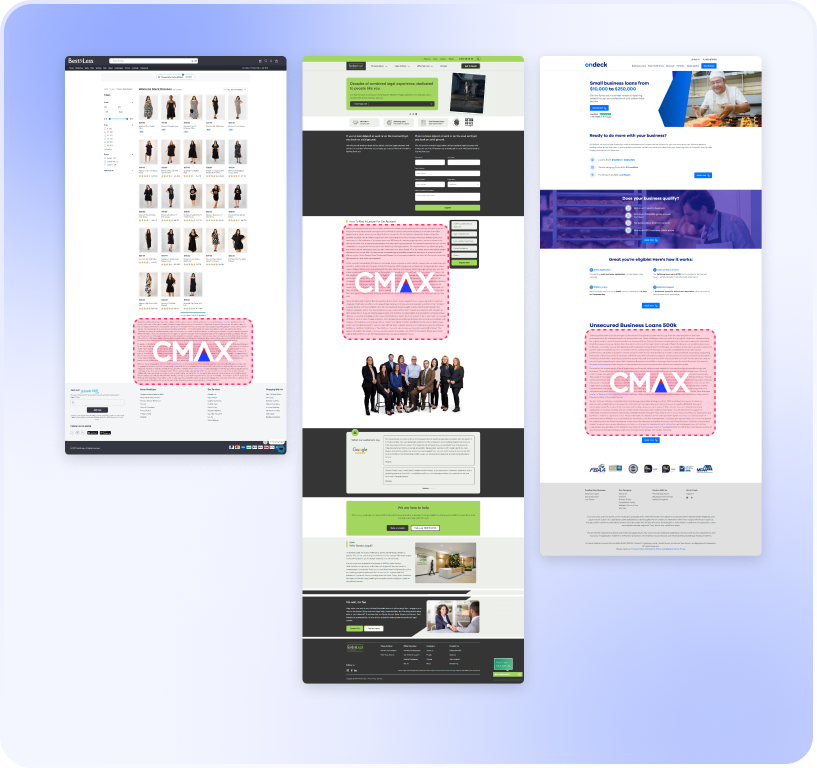
CMAX, the Agentic SEO Platform, maps that demand from your own Search Console data. Search Console is the free Google report that shows which searches already put your site in front of people.
We start there instead of guessing from keyword volume.
Long-tail keyword research shows the specific searches that make up most demand
What Long Tail Means
Long tail means the detailed searches people type when they know what they need or are close to comparing options. “Sofa” is broad.
“Modular sofa delivery Sydney” and “stain resistant fabric sofa for kids” are long tail, and each names a location, use or constraint that points to one useful page. Put plainly, the long tail keywords meaning comes down to specific problems, and the wording tells you whether a guide or a dedicated page answers them better.
Search Console adds to keyword research tools. It shows impressions (how often your page appeared), clicks and average position, and it surfaces long tail queries that broad keyword tools miss.
The commercial gap is coverage you don’t have yet, especially across the long tail keywords your site has no useful page for.
Good opportunities are defined by intent, fit, and how many connected pages support them
How to Judge Opportunities
Useful longtail keywords have clear intent and fit something you sell or explain. They also need a page of yours that can answer better than the pages already ranking.
Search intent is what the buyer wants when they type: to learn, to compare or to buy.
A long tail keyword research tool earns its place when you filter Google Keyword Planner data by intent, business fit and the need for distinct proof. Volume alone is a weak filter.
A low-volume query still matters when the buyer names a product type, comparison, location, constraint or pain point. Free keyword research is a fair first pass, and plenty of people search for a long tail keyword research tool free of charge or an SEO keyword tool free to try.
Those tools give you phrases. They don’t tell you which phrase needs a page.
The decision rule is short. If a query needs different examples, proof, objections and calls to action, it may deserve its own page.
If it only swaps one word and the answer stays the same, it belongs inside a broader page. Take this SEO strategy example: “leather sofa care” and “leather sofa cleaning” share one page, while “leather sofa for pets” gets its own.
Cluster Pages Without Overlap
Build keyword clusters around what each page does. A spreadsheet will happily group two words that need two different answers.
A phrase counts as long tail when it adds a product, comparison, location, constraint or pain point. That is the practical answer to what is a long tail keyword.
Before you approve another page, longtail keyword research checks whether its examples, objections and calls to action differ from the existing cluster. If they don’t, effective long tail keyword research combines those terms on one stronger page.
That prevents thin content and cannibalisation (two of your pages competing for the same search) and gives internal links a clearer job. The same question shows up in keyword research for Amazon, where a phrase either earns its own listing or joins an existing one.
CMAX helps teams find, map, and keep these opportunities fresh at scale
Before a team can map the right opportunities, it has to answer what are long tail keywords for its own business, then keep that answer current as demand changes. The question how do SEO keywords work has a short answer: they connect specific language to the page whose purpose, evidence and internal links best satisfy that intent.
How CMAX Finds Demand
CMAX is trained on human-reviewed, client-approved content, so longtail keyword research runs all the time instead of once. A Search Console export is a snapshot.
Our agents read new query patterns as they appear and map them to pages you have or are missing. That matters because buyer language shifts, old pages decay, and a manual workflow can’t review thousands of specific opportunities consistently.
Why Breadth and Freshness Matter
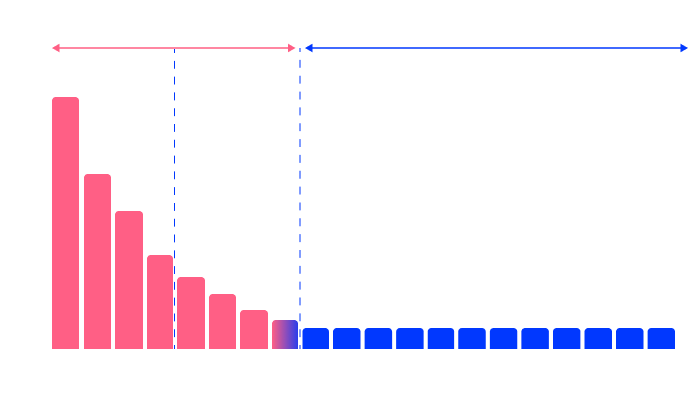
Over 90% of search and AI demand is in the long tail. CMAX targets that demand through Dynamic Internal Linking and Full Body SEO, in line with how buyers phrase what they want.
Dynamic Internal Linking connects related pages so they support each other instead of sitting alone. Full Body SEO treats the whole page and its surrounding cluster as the asset.
AI tools run multiple Google searches to build each answer, so detailed pages that already cover specific queries contribute directly to search and AI visibility.
Frequently Asked Questions (FAQ)
Are Zero-Search-Volume Keywords Worth Targeting?
Yes, when the intent is clear. Longtail keyword research connects specific queries to evidence you already hold, such as sales calls, support tickets and Search Console.
Keyword tools often underreport or round down low-frequency searches, and Search Console can still show real impressions and clicks once Google has added a page to its index. A zero-volume keyword is worth testing when it matches the wording in internal site search, product filters or a known buying objection.
A standalone page is rarely worth it when the wording is a slight variation of a stronger existing page. If you want a plain answer to what is SEO strategy, this choice is a good example: expand an existing page, or build a new one with materially different proof and objections.
How Can You Validate a Zero-Volume Keyword?
Start with first-party evidence, meaning data you own: Search Console queries, internal site search, sales call notes, CRM notes and product filter data. Check these before you look at keyword difficulty, which is a tool’s score for how hard a term is to rank for.
They show whether the need is commercially relevant. They also give you long tail keywords examples in the words your buyers use, before any keyword tool surfaces them.
Next, check whether Google Keyword Planner groups the term with close variants, and use Google Trends to test whether the broader topic has demand or is rising. If the results page shows product pages, comparison pages, forums or guides matching the same intent, that is enough evidence to create or expand content inside a relevant cluster.
How Do You Measure Long-Tail Keyword Performance?
Measure by page and cluster first, because visits spread across many small query variants instead of one large keyword. Search Console shows which queries produced impressions and clicks for each page, so you can see whether a page is picking up more relevant searches over time.
Track qualified clicks, growth in distinct relevant queries, assisted conversions, revenue-influencing landing pages, and whether linked pages in the same cluster improve together after updates.
Most SEO programmes run by conventional agencies, using outdated methods, tell clients to expect results in six months. CMAX’s methods allow clients to start seeing clicks in 6 to 8 weeks.
Timelines still depend on the site, the competition and how the work is done. We turn longtail keyword research into ongoing implementation.
Longtail Keyword Research Starts With Coverage Gaps
Most demand sits outside a few obvious terms. The commercial gap is usually missing coverage across the specific searches buyers use, where each query points to a product, location, constraint, comparison or buying problem.
That is the problem we built the platform around. As the Agentic SEO Platform, CMAX helps teams find long tail keywords, map them to the right pages and keep content fresh as buyer language changes across search and AI.
The quickest way to see which specific searches have no page on your site is to have someone map them.
If you’re curious as to how you’re performing on AI, book in a Missing Customer Map review with our Growth Team.
Author
Jeremy Tang
Founder and CEO of CMAX
Jeremy Tang is the Founder and CEO of CMAX. With over 2 decades of experience in business consulting and digital marketing, he has successfully driven seven startup businesses, six of which achieved $1 million in revenue from zero in less than 16 months, 5 of which grew to multi-million dollar a year ventures without any external funding. Jeremy's expertise lies in streamlining business processes through technology and leveraging digital (in particular SEO) for business growth. He resides in Australia, travels extensively, and draws inspiration from his global experiences.