Within an ongoing programme, a managed SEO service connects strategy, implementation, content updates and reporting to qualified visits and sales influence. Someone does the work every month, and you can see what it did.
In regulated fields, SEO for lawyers needs more than a static checklist. Reporting should connect shipped work with qualified leads and sales outcomes.
The useful question is whether the work keeps shipping. Pages get updated, new pages get indexed (found and stored by Google), content gets published and results get measured.
Then the loop repeats as search results and search behaviour shift. Four SEO factors tell you whether the cycle keeps moving: pages shipped, pages indexed, clicks and sales impact.
That cycle separates a managed service from a list of recommendations someone hands you once a quarter. Research, implementation and reporting run together, so managed SEO responds when search results and search behaviour change.
CMAX runs on this model. Strategy, content production and reporting sit inside the CMS and approval process you already use, so you can see what’s shipping and what it’s doing for sales.
This service keeps SEO moving beyond a one-off audit
A managed SEO service is an ongoing operating model for brands that need Google visibility to turn into qualified visits and sales influence. Strategy, implementation, content updates and reporting run in one workflow, so the work can respond when search results shift, Google’s index changes or customers search in new ways.
The SEO business meaning is plain: searches become customers you can count.
Ongoing research, implementation and reporting
With limited internal capacity, SEO for startups works best as a repeatable loop. Analyse Search Console (Google’s free tool showing which searches your site appears for), find the demand you’re missing, update pages, fix priority technical issues, publish or refresh content, then measure what changed.
That loop separates SEO outsourcing companies that implement the work from those that only deliver recommendations. White label SEO outsourcing means an agency resells another provider’s work under its own name, so ask who does the work on your site.
Managed execution beyond advice
This model suits teams that know SEO matters but lack spare developer, content and analyst time to clear a backlog each month. “What is SEO outsourcing?” in practice?
You pay an outside team to do that work. The SEO in house vs outsourcing choice comes down to capacity: if your team can’t ship the backlog, advice alone changes nothing.
A monthly block of outside capacity also makes SEO services for local businesses practical. Judge a managed SEO partner on what gets shipped, indexed, seen and sold, and give the slide deck less weight.
The right programme connects content, technical work and measurement
For an ecommerce brand, a managed SEO service ties content production, technical fixes and reporting to commercial searches. You should be able to see whether work on category, product, comparison and advice pages is moving indexed pages, clicks and impressions in Google Search.
Priorities tied to revenue searches
Commercial priorities make SEO services pricing easier to assess, because you can compare quotes against product, comparison, location and use-case work instead of a list of head terms. The average cost for SEO services varies with scope, so compare what each quote ships as well as the monthly figure.
Let’s say you run a hair salon that offers one cut. Customers who want a fade, a colour, a kids’ trim or a beard tidy walk past, because nothing in the window says you do those.
The fix is obvious from the street: list each service. In this context, SEO longtail means having a page for each specific thing customers search for, so every search finds a window that says you do it.
You still can’t rank for something you don’t talk about.
Reporting on indexed pages and impact
An e commerce SEO agency should connect indexed category and product pages with clicks, assisted conversions and ecommerce revenue. Your SEO agency dashboard should show what changed in indexed pages, clicks, impressions and average position, and which pages bring in qualified visitors.
It should also tie the work to sales signals such as assisted conversions, revenue, lead quality or direct visits, so you can judge whether organic work supports commercial outcomes.
CMAX acts as an extension of your marketing team
CMAX delivers a managed SEO service inside your existing CMS and approval workflows, so you don’t inherit a static backlog of recommendations. Approvals, CMS workflows and reporting cadences stay intact, so internal teams keep control of brand and compliance.
Channel managers, content leads and compliance reviewers keep their normal sign-off while the work keeps moving.
If you hire an SEO agency for SaaS, approved product messaging and human-reviewed content should guide every update across any CMS. Additional compliance controls and human review are available for regulated industries.
Release notes, legal sign-off paths and product naming can stay aligned with your publishing rules when copy is refreshed at scale. This suits quarterly launches, pricing updates, migration clean-up and feature rollouts, where stale page copy slows publishing and adds review cycles.
Agentic SEO Platform with brand-safe updates
Our Agentic SEO Platform works from your approved messaging, product detail and tone of voice. CMAX is trained on human-reviewed, client-approved content, so the pages it publishes match your brand and not a generic template.
Long-tail coverage and Dynamic Internal Linking
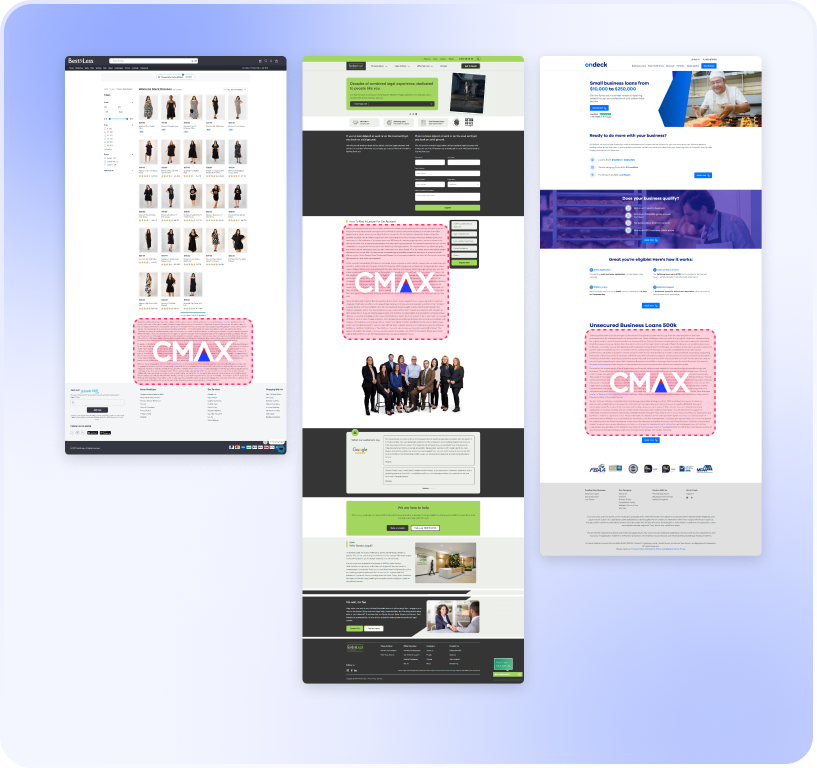
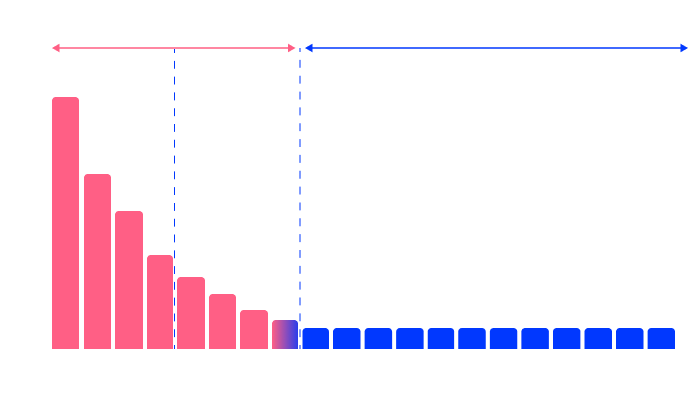
Over 90% of search and AI demand is in the long tail. Pages built for long tail SEO answer the specific searches customers make, and SEO automation lets our agents keep expanding and refreshing those answers.
For SEO management Perth, approval schedules can follow AWST, while Sydney teams work to AEST or AEDT when coordinating CMS updates. Dynamic Internal Linking connects related pages so Google can see the full depth of a topic.
Full Body SEO builds breadth and freshness across those connected pages.
Frequently Asked Questions (FAQ)
How long does managed SEO take to show results?
Timelines depend on the site, its competition and how the work is done. Most SEO programmes run by conventional agencies, using outdated methods, tell clients to expect results in six months.
CMAX’s methods allow clients to start seeing clicks in 6 to 8 weeks.
What happens to SEO results when you stop the service?
Published content can keep attracting visitors after a service ends, but growth tends to slow. Search positions depend on ongoing maintenance.
Content built for longtail SEO has to respond as competitors update pages, new searches appear and freshness starts to matter more. Positions soften when content updates, technical fixes and internal linking stop.
Who owns SEO content created under the agreement?
Confirm ownership before work starts. Buyers should verify they keep the rights to published copy, briefs, page updates, data exports and supporting assets, and that nothing stays tied to the provider’s platform.
The contract should state this plainly, so a managed SEO service stays accountable after the agreement ends.
Managed SEO Service Starts With Shipped Work
A managed SEO service only works when strategy, implementation and reporting stay in one loop. We scope the work from real search data, ship it into your CMS, then measure it against indexed pages, clicks and sales signals.
SEO performance comes from covering more of the ways customers search, then keeping that content fresh and connected as demand changes. Any SEO management company you hire should maintain that cycle, so useful pages keep growing and supporting sales.
We work as an extension of your marketing team, with follow-through that keeps approved work moving. The focus pairs broader coverage with semantic SEO, which matches pages to the meaning behind a search as well as its exact words, and with reporting that shows whether organic work contributes to commercial outcomes.
Before you commit to any provider, it helps to see where your site is missing customers today. A short review shows you, and you can decide what to do with it afterwards.
If you’re curious as to how you’re performing on AI, book in a Missing Customer Map review with our Growth Team.
Author
Jeremy Tang
Founder and CEO of CMAX
Jeremy Tang is the Founder and CEO of CMAX. With over 2 decades of experience in business consulting and digital marketing, he has successfully driven seven startup businesses, six of which achieved $1 million in revenue from zero in less than 16 months, 5 of which grew to multi-million dollar a year ventures without any external funding. Jeremy's expertise lies in streamlining business processes through technology and leveraging digital (in particular SEO) for business growth. He resides in Australia, travels extensively, and draws inspiration from his global experiences.