When someone needs a lawyer, they don’t type “lawyer.” They type “family lawyer Parramatta” or “what happens after a first drink driving charge.”
That’s where hiring intent lives, and it’s where most law firm websites are invisible.
Firms that chase broad terms capture a fraction of actual search demand. The rest, the practice-area, location, and circumstance searches, goes to whoever has built enough specific content to answer them.
That’s the gap SEO for law firms exists to close.
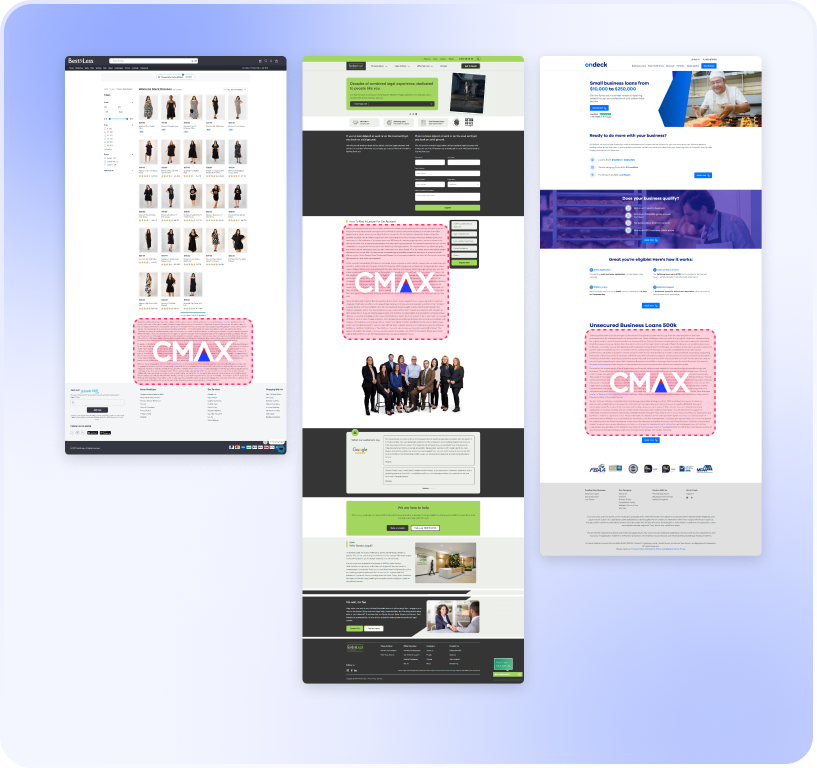
CMAX was built for exactly this. Our managed SEO service expands long-tail legal search coverage without turning every page into a separate project.
Within law firm internet marketing, the focus is on depth and coverage, not a handful of head terms and a monthly report on where pages appear.
SEO for lawyers starts with showing up in the searches that actually drive enquiries.
Search intent narrows fast in legal.
Legal search demand gets specific the moment someone adds a practice area, a location, or a case detail. “Lawyer” gets you nothing useful.
“Divorce lawyer Canberra contested property” gets you a client ready to call.
SEO for criminal lawyers, for example, depends on pages that address specific matters: a first offence, a particular charge, what the likely process looks like. Think of a legal website like a court registry index.
A registry that lists only broad categories, “civil,” “criminal,” “family,” tells you almost nothing. The one that indexes by matter type, jurisdiction, and date is the one a clerk can actually use.
Your website works the same way: specific pages for specific situations are what search engines retrieve when someone describes their exact problem. Broad service pages don’t answer those questions, so they don’t appear for them.
While SEO for startups focuses on emerging product categories, legal campaigns also need to account for jurisdiction and the circumstances of a case. A criminal law firm in New South Wales and one in Queensland need different pages, even for the same offence.
Google says local results are based on relevance, distance, and prominence. That means jurisdiction-specific pages, a complete Google Business Profile, and service pages that clearly state who the firm helps all have to work together for local SEO for lawyers to show up in distance-based results.
Coverage matters across every search surface.
AI tools like ChatGPT don’t run one search. When someone asks an AI a legal question, the AI runs several smaller searches to build its answer.
This is called query fan-out: one prompt becomes eight to twelve separate Google searches, each retrieving different pages. AI Overviews now reach more than 2.5 billion users a month, and AI Mode has passed 1 billion monthly users (Google figures reported by TechCrunch, May 2026).
A firm visible for only a handful of head terms is absent from most of that.
For legal topics where things change, a page that was authoritative when it was written can slip behind a newer, more specific page, even if the newer page is thinner on background. In this context, SEO for law firms means authority is something you tend continuously, not something you establish once.
The best legal SEO builds trust with depth, freshness, and clear credibility signals.
Depth means specific pages for specific situations.
Practice-area pages, location pages, and scenario-led articles are what make SEO longtail coverage work for law firms. They match how people actually describe legal problems: “divorce lawyer in Canberra,” “what happens after a drink driving charge,” “immigration lawyer bridging visa refused.”
Broad service pages don’t answer these questions with enough specificity to appear for them.
A legal marketing consultant may shape the strategy. Implementation means building and maintaining practice-area, location, and scenario-led content, with internal linking and ongoing updates so pages stay current.
SEO for immigration lawyers sits in Google’s highest-scrutiny category, where immigration advice affects legal status and family decisions, so accurate authorship, evidence, and current jurisdiction details aren’t optional.
Thin pages do active damage.
Legal content sits in Google’s YMYL category: “your money or your life,” the pages where bad information has real consequences. Google applies its highest scrutiny here.
A thin page on a legal topic, one that doesn’t address jurisdiction limits, likely processes, timescales, or what evidence matters, isn’t just unhelpful. It signals that the firm can’t be trusted to answer the question.
Outdated advice compounds that, because users rely on legal content for decisions affecting finances, family, or safety.
CMAX is the Agentic SEO Platform for firms that need broader coverage and ongoing improvement.
Agentic coverage expands the long tail.
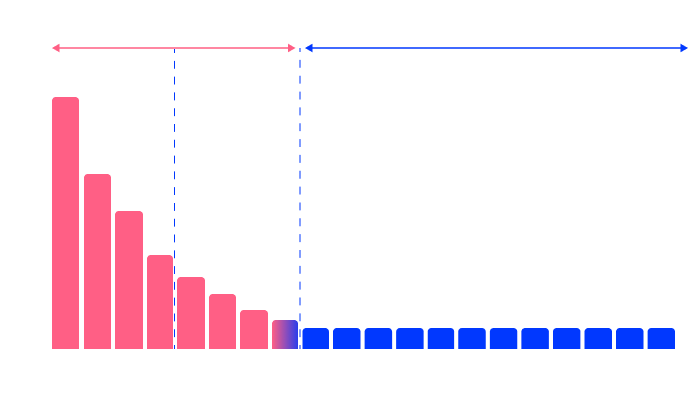
Over 90% of search and AI demand is in the long tail: the specific, detailed searches people type, as opposed to short general terms. Most law firm websites cover a fraction of that.
The long tail SEO opportunity in legal is the thousands of ways people describe their problem before they know who to call.
CMAX targets that majority of search demand sitting in the long tail. We apply SEO marketing for lawyers across detailed legal questions through Dynamic Internal Linking and Full Body SEO, expanding content surface area across the full range of searches relevant to a firm’s practice areas.
The platform is trained on human-reviewed, client-approved content, which keeps regulated legal topics accurate and current.
Measure gaps, freshness, and progress.
CMAX surfaces coverage gaps directly in Search Console (Google’s free tool showing which searches your site appears for), so you can see which long-tail searches your existing pages miss and prioritise the ones most likely to drive enquiries.
Unlike a broad law firm digital marketing agency that might manage social, paid, and creative alongside SEO, our focus is search coverage, internal linking, and performance-led content updates. Clients see first clicks in 6-8 weeks, with programmes maturing around month six.
To find out where your firm sits, start with the Free SEO Fast Track: “Show me my long-tail gap.”
Frequently Asked Questions
How long does SEO take to work for a law firm?
Using CMAX, law firm SEO typically produces first clicks in 6-8 weeks, with programmes maturing around month six. Timing depends on site health and existing coverage.
SEO automation makes publishing, internal linking, and content updates more consistent as a CMAX programme scales, so the compound effect builds faster. Google Ads for lawyers delivers immediate exposure but stops the moment the budget does.
Organic coverage keeps working.
Is SEO worth it for a solo law firm?
A solo practice gets more traction from a focused set of pages targeting specific services, locations, and common client questions than from competing on broad terms. Google’s local results depend on relevance, distance, and prominence, not firm size or ad spend.
Law firm social media marketing can build profile, but it doesn’t replace the visibility that comes from showing up when someone searches for your specific service in your suburb.
Which is better for a law firm: SEO or PPC?
Google local service ads for lawyers and PPC both deliver immediate exposure. SEO for attorneys builds reusable visibility across practice-area, location, and question-led searches at a lower marginal cost over time.
As AI breaks one question into multiple underlying searches, longtail SEO builds the breadth of coverage needed across those supporting queries. PPC is a tap you turn on.
SEO is an asset that compounds.
SEO for lawyers starts with search coverage.
SEO for lawyers works when a firm shows up for more than a few broad terms. The real gap is usually coverage: the practice areas, locations, and case-specific searches your site doesn’t answer yet, across Google, local results, and AI-led search experiences.
CMAX supports SEO services for lawyers in Sydney with Australian jurisdiction and spelling; firms in other markets need state-specific legal pages matched to their usage.
CMAX is the Agentic SEO Platform built around that problem. We help firms expand useful content across the long tail, connect pages through semantic SEO that links related practice areas, locations, and legal questions, and keep content fresh as search demand changes.
Publishing a page is version one. Performance comes from improving it.
The clearest way to find your gaps is a diagnostic review, not a pitch. If you’re curious as to how you’re performing on AI, book in a Missing Customer Map review with our Growth Team.
Author
Jeremy Tang
Founder and CEO of CMAX
Jeremy Tang is the Founder and CEO of CMAX. With over 2 decades of experience in business consulting and digital marketing, he has successfully driven seven startup businesses, six of which achieved $1 million in revenue from zero in less than 16 months, 5 of which grew to multi-million dollar a year ventures without any external funding. Jeremy's expertise lies in streamlining business processes through technology and leveraging digital (in particular SEO) for business growth. He resides in Australia, travels extensively, and draws inspiration from his global experiences.