Search optimisation starts before anyone talks about keywords or positions. An effective search engine optimisation strategy first maps the specific product questions and comparisons your customers ask, then checks where each page appears.
The first test is whether your site has a page for what customers type into Google. That is usually far more specific than the handful of terms most brands plan around. Keyword research tools list those head terms well. They show far less of what sits underneath.
Most demand sits in searches so particular that no single category page can answer them. Picture a street directory that lists only suburbs. Your category page is the suburb name, and your customer is looking for a house number.
They reach the suburb, find no street signs and leave. That is why visibility plateaus even when the obvious keywords are covered. In this context, long-tail search means the street-level questions customers type, and each page that answers one is a street sign on your map.
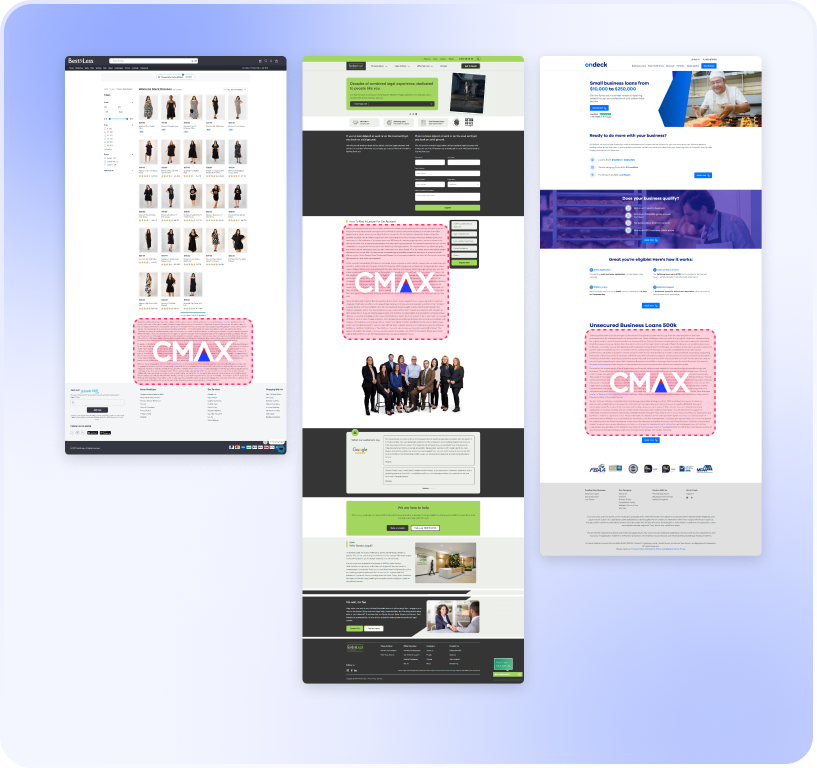
The brands gaining sustained visibility, whether they work internally or with search engine optimisation companies, build coverage for specific questions and comparisons at scale. They stop chasing one more ranking. CMAX works from the same premise. Search engine optimisation services built around long-tail content and internal linking help more of those searches lead back to your site.
Search optimisation starts with coverage
Visibility across Google and AI
In practical terms, website search optimisation makes sure buyers can find useful pages for the problems, products, comparisons and questions they search. If you need to define search engine optimisation for your CEO, use Google’s version: it helps search engines index your content and helps users find your site.
That holds whether the result appears in a traditional list or an AI-generated answer, and it shapes your website ranking. AI engines retrieve from Google, so crawlable, indexable, useful content still does the work behind the scenes. An SEO and sem strategy pairs paid clicks you rent with organic pages you keep.
Most demand sits in the long tail
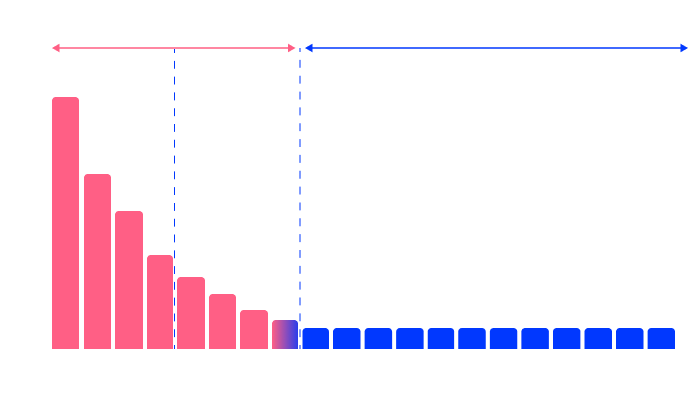
The long tail is the specific, detailed searches buyers type, like “modular sofa for small apartment with washable covers” instead of “sofa.” CMAX delivers organic search engine optimisation services for the detailed long-tail questions a fixed keyword list misses.
Ahrefs data shows keywords with fewer than 10 monthly searches account for almost 93% of its U.S. keyword database. Google has repeatedly confirmed roughly 15% of daily searches are new. A fixed keyword list misses most of how customers search.
Broader visibility comes from connected, fresh content
Surface area drives visibility
For broader coverage, search optimisation gives each use case, comparison and product objection its own useful page instead of relying on one category term. A strong category page is good at its job, and mind reading is not in the job description. It won’t capture buyers searching “best option for rental property” or “is this suitable for pets.”
If no page exists for that search, growth stops there. A local SEO strategy adds pages for the suburbs and stores you serve. Broader visibility comes from covering use cases, comparisons, attributes, objections, alternatives, local modifiers and post-purchase concerns.
Context and freshness matter
Connected pages strengthen topic context, and internal links help Google discover pages, per Google’s own crawlability guidance. A B2B SEO strategy must account for changing customer language, competitor positioning and the new searches that appear between planned content updates.
Linking and updates at scale
A practical SEO checklist verifies internal links between each comparison page, category page and buying guide that serves the same need. Full Body SEO means the whole page stays useful, including the title tag, the body copy and any paragraph you add later.
CMAX brings search optimisation under continuous management
Built for long-tail deployment
CMAX is the Agentic SEO Platform that manages search optimisation through continuous content deployment and updates across the long-tail searches where over 90% of search and AI demand sits. When an AI tool answers a question, it runs several smaller Google searches and builds its response from what ranks across those results. Coverage across thousands of specific searches decides whether your brand appears.
Enterprise workflows and controls
CMAX is trained on human-reviewed, client-approved content, which supports an AI SEO strategy where brand, legal, financial and product language is never improvised on live pages. Unlike a conventional organic search agency workflow, CMAX’s CMS-agnostic workflows slot into your existing approval process and web stack without requiring migration. Your search engine optimisation specialist, in house or at an agency, can keep working inside that process.
Continuous management over one-off SEO
Most SEO programmes run by conventional agencies, using outdated methods, make clients expect results in six months. CMAX’s methods allow clients to start seeing clicks in 6 to 8 weeks, though timelines depend on the site, its competition and how the work is done.
Unlike one-off optimisation cycles, web search optimisation through CMAX’s long tail programme combines continuous deployment, content updates and internal linking. Content momentum drives organic performance.
Why isn’t Google indexing my new pages?
The standard search engine optimisation definition covers indexing, and a new page can stay outside Google’s library of known pages for several routine reasons. “Discovered – currently not indexed” in the Page indexing report means Google found the page but held off crawling it.
Duplicates, canonical conflicts and weak internal linking are other common causes. Ask three questions: is the page linked from somewhere Google can crawl, is it meaningfully different from existing pages, and is it worth indexing?
How do I identify technical SEO errors?
Start with Search Console, Google’s free tool that shows which searches your site appears for. It shows how search engine optimisation works in practice by separating crawl delays, canonical conflicts, noindex tags and duplicates from genuine defects.
Fix errors on high-margin category pages first. A warning on an old low-value page can wait. The answer to “how much does search engine optimisation cost” depends on site competition, implementation scope and the number of priority category pages.
Why can organic visits fall while positions stay the same?
As generative search optimisation becomes part of visibility planning, position alone explains less, because clicks depend on impressions, result formats and click-through rate. Google defines CTR as clicks divided by impressions, and average position averages across every impression and query. Diagnose with three numbers. If impressions are down, you have a demand or coverage problem. If CTR is down, check the title or result snippet. If both are flat but revenue is down, check conversion, product mix or attribution.
Search Optimisation Starts With Broader Coverage
Search optimisation supports sustainable growth. In practice, search engine optimisation means covering more of the specific ways people search, instead of concentrating effort on a short keyword list. CMAX is built around that gap: the coverage most teams lack, across the long-tail searches that drive both Google and AI answers.
As new searches appear, pages need to stay connected and current. Our agents apply search engine optimisation techniques, including continuous content refreshes and internal linking, as new long-tail searches appear.
A short review shows which of your customers’ searches have no page on your site yet. You can read the result and decide what to do with it.
If you’re curious as to how you’re performing on AI, book in a Missing Customer Map review with our Growth Team.
Author
Jeremy Tang
Founder and CEO of CMAX
Jeremy Tang is the Founder and CEO of CMAX. With over 2 decades of experience in business consulting and digital marketing, he has successfully driven seven startup businesses, six of which achieved $1 million in revenue from zero in less than 16 months, 5 of which grew to multi-million dollar a year ventures without any external funding. Jeremy's expertise lies in streamlining business processes through technology and leveraging digital (in particular SEO) for business growth. He resides in Australia, travels extensively, and draws inspiration from his global experiences.