SEO definition sounds simple until you try to explain it to your CEO in one sentence without jargon. When your CEO asks “What is SEO?” the answer needs to be plain and tied to business demand.
A practical SEO definition treats visibility as matching a useful, crawlable page to a specific problem, product, comparison or question.
Most descriptions of SEO marketing stop at search positions or keywords. That framing misses the point.
SEO is the work of making sure the right page shows up when someone searches for a problem your business solves. The search can be broad or oddly specific.
In plain English, search engine optimisation connects the right page with the question the buyer is actually asking.
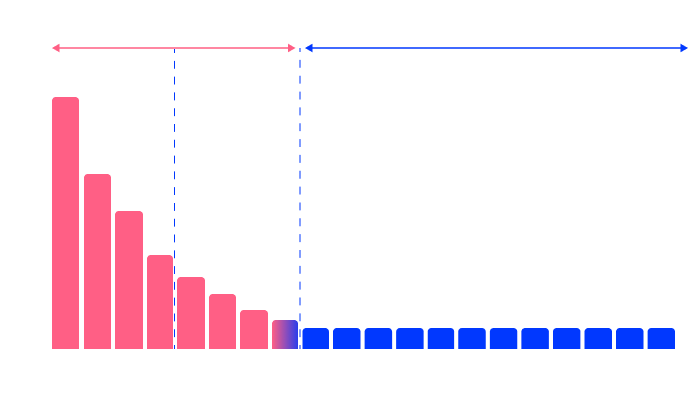
The specific searches matter more than people think, because most buying demand sits in the long tail, the many narrow searches behind the obvious head terms. Picture a lake with one famous fishing spot.
Every morning a crowd of boats packs into it, while the small coves around the edge hold plenty of fish and have no boats at all. In this context, the long tail means the coves, and SEO means putting a line in each one instead of adding another boat to the crowd.
If your content only chases the big keywords, you hand the rest of that demand to competitors, marketplaces and AI tools. We publish SEO definition content as part of our approach to long-tail coverage.
It gives you a plain-English grounding before you compare channels or tactics.
SEO means earning unpaid visibility by matching pages to real search intent
What SEO means
“What SEO means?” in practice is a useful, crawlable page for each search that can become demand. Google describes SEO as helping search engines find your content and helping users find your site.
A first-place trophy looks good on a shelf, but it doesn’t pay for the shelf.
Anyone looking for a SEO marketing definition wants the same thing: a credible answer to a real search, on a page that moves the buyer forward.
Why the long tail matters
Over 90% of search and AI demand is in the long tail, so “What is SEO in website?” becomes concrete when a narrow-apartment sofa page answers a detailed buying problem instead of targeting only “sofa.”
Measurable growth from marketing SEO services comes from covering many of these detailed searches. They show clearer intent, and they add up across a category.
Target only the obvious terms and you hand the rest to competitors, marketplaces, publishers and AI answers.
Measurable organic growth comes from coverage, measurement and ongoing updates
Measure business impact, not position alone
The business value of SEO services marketing is clearer once you treat search position as a signal and revenue as the outcome. Search Console connects impressions and clicks with revenue, lead quality and assisted conversions.
Asked “What is SEO business?”-wise, the answer is the sales those pages influence.
Read those numbers alongside direct visits. Then check whether the title matches what the searcher expected and whether the page moves the buyer forward.
SEO builds over time
For planning over time, any useful marketing SEO definition must account for your site, your competition and how the work is done. A useful answer to “What is SEO and how does it work?” covers stable technical basics, internal connections, topic depth and regular content updates.
Pages that once performed fade when nobody reviews them, updates them and reconnects them to newer related content.
How CMAX approaches scale and freshness
CMAX is the Agentic SEO Platform. CMAX is trained on human-reviewed, client-approved content, so brands can expand and refresh long-tail coverage without treating SEO as a one-off publishing project.
Our operating model is simple: scale approved long-tail content, measure performance, update pages and maintain internal connections with Dynamic Internal Linking.
Most SEO programmes run by conventional agencies, using outdated methods, tell clients to expect results in six months. CMAX’s methods allow clients to start seeing clicks in 6 to 8 weeks.
Frequently Asked Questions (FAQ)
Is SEO hard to learn?
The basics are learnable. Publish pages that answer real searches clearly, make them accessible to Google and connect them to related pages.
A good answer to “What is SEO audit?” covers crawlability, content gaps, internal links, slipping pages and how results are measured.
The hard part is the operating rhythm at scale. You research searches, publish the right pages, link them properly, measure what moved and update what is slipping.
You do all of it without producing thin, duplicated or outdated content across hundreds or thousands of searches.
Do I need an SEO specialist, or can I do this myself?
You can do meaningful SEO yourself if your site is small, your category is simple and someone owns writing, publishing, internal linking and monthly measurement. The honest answer to “How much is SEO per month?” depends on that scope: how many pages you need and who writes them.
When you weigh in-house against outside help, a muddled term like SEO definition marketing usually means SEO planning. The practical question is whether your team can create enough useful coverage, keep it fresh and connect it to sales.
Does SEO require coding?
SEO does not usually require coding to start. Many gains come from clearer page topics, better titles, sharper answers, stronger internal links and filled content gaps.
The answer to “What is SERP in SEO?” is the search engine results page, where titles, answers and linked pages compete for visibility.
Developers matter for site speed, crawlability, rendering problems, schema and template changes across many pages. The practical endpoint of any SEO definition is ownership: someone writes, publishes, links and measures each month.
SEO Definition Starts With Search Intent
A clear SEO definition sets the right benchmark for growth. If you reduce SEO to search positions, keywords or technical fixes, you miss the real driver of performance: useful pages for the many specific ways customers search.
We built CMAX around that gap in coverage. For us, a search engine optimisation strategy means closing the gap with useful long-tail pages, stronger internal connections and regular updates.
Our view is simple: you lose to the coverage you don’t have.
AI engines retrieve from Google, so any attempt to define SEO marketing must cover both traditional search visibility and retrieval by AI tools. Our agents expand and refresh long-tail content across search and AI, so visibility grows from broader coverage, stronger internal connection and content that stays current.
A review shows which specific searches your site answers today and which it leaves to competitors and AI answers. It is the quickest way to see where your gaps are.
If you’re curious as to how you’re performing on AI, book in a Missing Customer Map review with our Growth Team.
Author
Jeremy Tang
Founder and CEO of CMAX
Jeremy Tang is the Founder and CEO of CMAX. With over 2 decades of experience in business consulting and digital marketing, he has successfully driven seven startup businesses, six of which achieved $1 million in revenue from zero in less than 16 months, 5 of which grew to multi-million dollar a year ventures without any external funding. Jeremy's expertise lies in streamlining business processes through technology and leveraging digital (in particular SEO) for business growth. He resides in Australia, travels extensively, and draws inspiration from his global experiences.