Most marketing teams get a poor explanation of SEO marketing. Reports stop at keyword positions and never say what the channel means for the budget.
A ranking you can’t bank is a trophy.
The SEO meaning in marketing is the work that earns you unpaid visibility in Google. People already searching for what you sell can find you, and you don’t pay for every click.
That matters because paid search stops the moment spend stops. Organic visibility keeps working while your pages stay useful and easy for Google to read.
Ask “What does SEO stand for in marketing?” and the short answer is search engine optimisation. The revenue question is harder.
Is that visibility connected to sales, or is it a vanity number in a monthly summary?
CMAX approaches SEO as a growth system built around that connection. We tie organic content to measurable sales, with keyword positions as one input.
SEO marketing is organic search visibility that supports revenue
The SEO marketing definition is simple. You improve your unpaid visibility in Google so people already searching for what you sell, or the problem you solve, can find you.
It connects to qualified visits and sales, or it isn’t doing its job.
Google states that buying ads does not improve a site’s position in organic search results. That separation matters when you ask “What is SEO and how does it work?”
SEO is the unpaid side, and paid placement is a different line in your budget.
Organic, not paid
Good marketing SEO services earn placement in unpaid results by making pages useful and relevant to specific searches. Paid search stops the moment spend stops.
SEO can keep attracting visits after publication, if you maintain the content and keep the site easy for Google to read.
A channel inside digital marketing
If you define digital marketing as every online channel that reaches buyers, SEO is the one that captures demand that already exists. Category pages, comparison pages, pricing explainers and product pages are concrete SEO marketing examples.
Local pages answer a question like “How does local SEO work?”: each page tells Google where you trade and what nearby customers search for.
Search visibility depends on content, crawlability, and relevance
A page does not rank because it exists. If you’re asking “What is SEO audit?” It’s a check on discovery, indexing and relevance that finds the barriers before Google evaluates a page.
Google explains that its crawlers visit publicly accessible pages, render the content and organise what they find in the Search index. Google checks that index when it returns results.
Picture a library where a librarian walks the aisles, writes each new book into the catalogueue, and answers readers from the catalogueue, never from the shelves. Your page is the book, and a great book that never gets catalogueued never gets recommended.
In this context, crawling and indexing mean getting Google’s librarian to find each page and write it into the catalogueue, because ranking only happens to pages that are in it.
Crawl, index, then rank
Google must discover and crawl a page before it can earn search visibility. That order is why the basic SEO definition starts with discovery.
At the technical level, “What is SEO in website?” comes down to the same sequence: discovery, crawling, indexing, then ranking.
The URL Inspection tool in Search Console shows the indexed version of a page and its discovery, crawl and indexing details. Search Console is Google’s free tool showing which searches your site appears for.
Relevance needs structure and freshness
A useful SEO page answers one clear search intent. It uses headings that match the way buyers describe the topic, and it stays current as products, prices and competitors change.
Your SEO strategy checklist for each page is short: one intent, matching headings, current facts.
Google says its systems consider signals including keywords and website freshness, and that its crawlers revisit content because the web changes constantly. For marketing teams, the SEO marketing definition gives a framework for reviewing pages with impressions but falling clicks.
SEO and AI search work together
Google’s generative search features are rooted in core Search ranking and quality systems. Google says these features can use query fan-out: an AI tool runs several smaller Google searches and builds its answer from what it finds.
Formats change, but good SEO services marketing still depends on crawlable pages, useful answers and coverage of the detailed ways customers ask questions.
CMAX turns SEO into measurable organic growth
CMAX treats SEO marketing as a growth system. We ground the work in revenue and conversions, because a monthly report on a handful of keyword positions can’t tell you what sold.
If you want to know “What is SEO business?” In plain terms, it’s a channel with a budget, a target and a report.
Built for long-tail growth
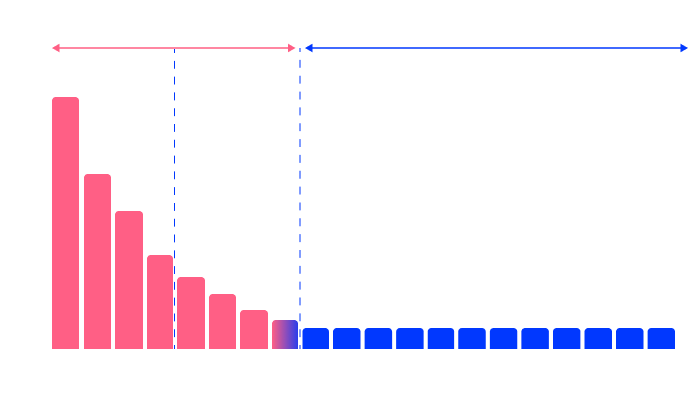
Over 90% of search and AI demand is in the long tail. The long tail is the specific, detailed searches buyers type, such as a product requirement, a comparison, a use case or a location.
A B2B SEO strategy wins here by answering those detailed requirements and comparisons.
Brand-safe by design
CMAX is trained on human-reviewed, client-approved content. That lets teams scale pages and keep control of tone, claims, product language and compliance rules.
This matters most in financial services, healthcare, legal, education, SaaS and enterprise ecommerce. In those categories a practical marketing SEO definition has to account for off-brand content and review bottlenecks, which cost more than they earn.
Breadth, freshness, and internal links
An AI SEO strategy built on Dynamic Internal Linking and Full Body SEO connects related pages while content updates follow performance data. Static publishing fits poorly in categories where new searches, products and buyer objections appear constantly.
Faster early click signals
Most SEO programmes run by conventional agencies, using outdated methods, tell clients to expect results in six months. CMAX’s methods allow clients to start seeing clicks in 6 to 8 weeks.
How long does SEO take to work? It depends on the site, the competition, search demand and how much useful content you can publish, update and connect.
Cost follows the same inputs. When you price “How much does SEO cost Australia?”, ask for a quote tied to pages and sales rather than hours.
Frequently Asked Questions (FAQ)
Are SEO and content marketing the same thing?
The wording in SEO definition marketing varies, yet SEO and content marketing overlap without being the same discipline.
A brand can publish strong guides, campaigns and thought leadership and still win few organic visits. The topics may not match demand, the pages may not be indexed, or internal links may not connect related answers.
Organic demand capture is the practical object of SEO marketing. Thought leadership can serve broader campaign goals.
How do you attribute revenue to SEO?
Start by measuring organic search as a channel. Then connect organic landing pages to key events, leads, opportunities and closed revenue in your analytics and CRM.
GA4’s acquisition reporting shows where visitors come from, including Organic Search, with metrics for key events and total revenue.
The strongest view combines channel data with page-level reporting, so you can see which SEO pages influence sales. The question “Is SEO marketing worth it?” gets a real answer once that reporting shows which pages bring in revenue.
Does social media affect SEO?
Likes and shares are not Google ranking signals, so social media is no direct shortcut to higher organic positions. It can still support SEO by putting useful pages in front of more people, increasing branded search and helping content earn visits and links over time.
Treat social as distribution and SEO as demand capture. One helps people notice the content.
The other helps buyers find it when they search.
SEO Marketing Definition Starts With Demand Capture
To define SEO marketing in practical terms, earn more unpaid visibility for the searches buyers already make, then connect that visibility to sales. That is the lens we bring to search and AI visibility, because coverage matters more than ranking for a small set of obvious terms.
CMAX is the Agentic SEO Platform built to expand your content surface area across the long tail, keep pages fresh and connect related pages so Google can make sense of them. For teams measuring channel performance, that means treating SEO as a growth system tied to qualified visits, conversions and revenue.
Gaps are easier to judge once you can see them. A review of where your pages appear in search and AI answers is the plain way to find out.
If you’re curious as to how you’re performing on AI, book in a Missing Customer Map review with our Growth Team.
Author
Jeremy Tang
Founder and CEO of CMAX
Jeremy Tang is the Founder and CEO of CMAX. With over 2 decades of experience in business consulting and digital marketing, he has successfully driven seven startup businesses, six of which achieved $1 million in revenue from zero in less than 16 months, 5 of which grew to multi-million dollar a year ventures without any external funding. Jeremy's expertise lies in streamlining business processes through technology and leveraging digital (in particular SEO) for business growth. He resides in Australia, travels extensively, and draws inspiration from his global experiences.