SEO services help Google find and trust your pages enough to show them when customers search. Most people think SEO is about repeating the right keywords, but a page can mention your product twenty times and still lose to a competitor who answers size, care, shipping, and trust questions better.
SEO meaning in business comes down to revenue: visibility only matters when useful pages generate enquiries, purchases, or other measurable outcomes.
Google describes search in three stages: crawling, indexing, and ranking. A page has to pass all three before it ever reaches a customer.
The gap between being indexed and being chosen is where most SEO budgets quietly disappear.
CMAX has a plain-English breakdown of how this works, built for marketers who need to explain SEO to a CEO, not just read about it.
SEO Works by Helping Search Engines Find, Understand, and Trust Your Pages
Google’s job is to match a query to the best available page. Your job is to make sure that page is yours.
SEO explained means doing the work that earns that match: being findable, being trusted, and being the clearest answer for what your customer actually typed.
That framing makes SEO meaning in marketing concrete: your pages need to be findable, credible, and relevant to the query. Google’s three stages, crawling, indexing, and serving results, are the path to that outcome, and not every page clears all three.
The answer to “How does local SEO work?” starts with crawlable location pages, internal links, and accurate details about each service area.
Crawl, Then Index
Search engines cannot assess a page they cannot find. Category, product, service, and advice pages need to be linked from crawlable navigation or related pages, included in XML sitemaps, and free of technical settings that block access.
Google’s index is its library of pages it has analysed and knows about.
Rank by Intent and Credibility
Being in Google’s library is not the same as being chosen for a search. Effective search engine optimisation strategies align each page with a specific intent, whether that is compare, buy, or near-me.
When geography determines relevance, demand for SEO services Hobart must be met by pages that establish local context, just as it must for providers targeting Sydney. Google’s systems look for the most relevant and highest-quality pages, using many factors rather than one signal.
The Biggest Misconception Is That Keywords Alone Create Visibility
Keywords tell Google what a page is about, but no SEO company can make a weak page useful by repeating them twenty times. A product page that mentions “electric bikes” twenty times still loses to a competitor whose page answers size, care, range, shipping, reviews, and comparison questions.
Google’s spam policies list keyword stuffing as harmful, and the penalty is well-earned.
Indexed Is Not Visible
Treat indexing as the first checkpoint, not the finish line. A page can sit in Google’s index and earn almost no impressions.
When that happens in Search Console, the cause is usually a demand mismatch, low page quality, weak internal linking, or stronger competing answers. Search Console makes “What is SERP in SEO?” measurable by showing whether an indexed page earns impressions, clicks, and an average position, all for free.
More Than Keywords Matters
Run three checks before blaming the algorithm: does the page answer the specific query, do internal links signal it matters, and does the page give users a reason to trust it? For commercial pages, that means useful copy, clear product detail, and reviews or proof points.
Is SEO important? It becomes commercially clear the moment you see which indexed pages earn visibility because they answered those three questions well.
Long- tail Coverage Drives Growth
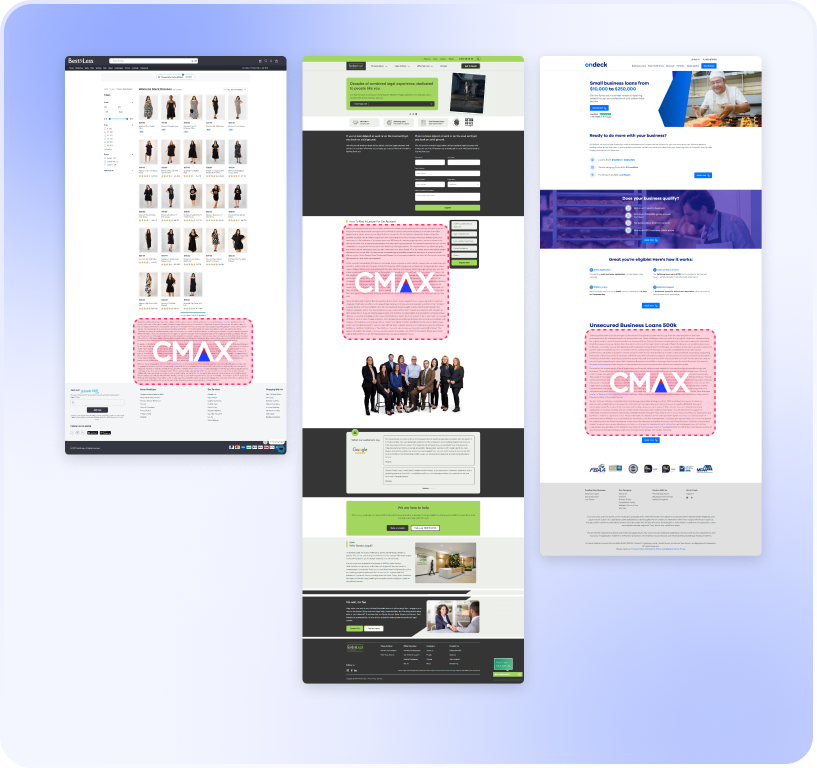
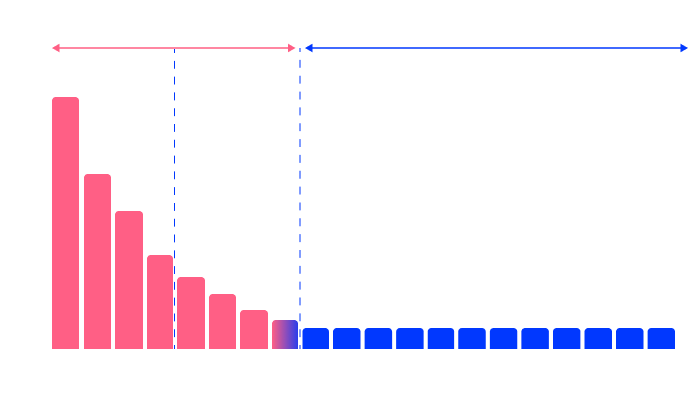
Over 90% of search and AI demand sits in the long tail: the specific, detailed queries real customers type. Think about a large hardware store: every aisle stocks a different product category, and a customer who needs M6 bolts does not want to be redirected to the paint section.
The store earns the sale because it stocked the right shelf. Your content surface area works the same way: growth comes from how many specific searches you have a useful page for, not from how many times your homepage mentions the category.
Any answer to “How long does SEO take to work?” depends on the site, competition, existing coverage, and how the work is delivered.
CMAX Turns Plain-English SEO Into Scalable Search Growth
The hard part of SEO is not grasping how it works. For CMAX, SEO explained is the foundation, while scalable growth requires producing, connecting, and updating useful content across thousands of specific searches.
Brand-Safe, Trained Content
CMAX is trained on human-reviewed, client-approved content, so every new page follows approved positioning, terminology, and compliance boundaries. Controlled AI search engine optimisation starts with human-reviewed, client-approved content that establishes the terminology, positioning, and compliance boundaries CMAX follows.
Linking and Freshness at Scale
Across large page sets, programmatic SEO depends on internal links that help Google discover content and interpret topic relationships throughout the site. Full Body SEO refreshes or replaces page content based on performance signals, and Dynamic Internal Linking and Full Body SEO are search engine optimisation techniques that help CMAX connect related pages and refresh content from performance signals.
Faster Time to First Clicks
Conventional agencies typically quote six months before results appear. CMAX clients start seeing clicks in 6 to 8 weeks, though timelines vary by site, competition, starting coverage, and volume of work deployed.
Frequently Asked Questions (FAQ)
How Do You Measure SEO Success Beyond Rankings?
Rankings are useful, but a ranking is not a business outcome. Track impressions, clicks, non-brand queries, landing pages gaining traffic, assisted conversions, leads, revenue, and the cost of organic acquisition versus paid search.
Search Console is the core source for whether visibility is turning into traffic, reporting queries, impressions, clicks, and average position for free.
How Do You Track Leads and Sales From Organic Search?
Connect organic landing pages that are SEO optimised to conversion events in analytics, then review which pages and query themes lead to forms, calls, demos, store visits, purchases, or repeat enquiries. A quote for “How much does SEO cost Australia?” should use Australian dollars, while a United States proposal uses US dollars and may cover a different scope.
Google Analytics 4 uses events such as generate_lead for enquiries and purchase for completed sales, and surfaces these directly in its lead acquisition and ecommerce reporting.
Does Paying for Search Ads Improve Organic Rankings?
No. Google does not accept payment to rank pages higher, and organic results are not influenced by whether a business buys ads. Organic relevance and paid placement are separate systems because Google does not accept payment for higher organic rankings.
SEO Explained Starts With Find, Then Trust
SEO explained in plain English is simple: Google has to find your pages, add them to its index, and judge them worth showing. That is why visibility does not come from keywords alone.
CMAX is built around the part most teams miss after that first step: coverage. CMAX approaches search engine optimisation for my website by expanding useful coverage across the specific ways customers discover a brand through Google and AI.
If you do not have useful pages for the many specific ways people search, across Google and AI, you leave demand on the table no matter how well a handful of pages are optimised.
CMAX helps brands expand that content surface area across search and AI, a space often discussed under labels such as AIO SEO. To see how that could support your next stage of organic growth, get in touch with CMAX.
If you’re curious as to how you’re performing on AI, book in a Missing Customer Map review with our Growth Team.
Author
Jeremy Tang
Founder and CEO of CMAX
Jeremy Tang is the Founder and CEO of CMAX. With over 2 decades of experience in business consulting and digital marketing, he has successfully driven seven startup businesses, six of which achieved $1 million in revenue from zero in less than 16 months, 5 of which grew to multi-million dollar a year ventures without any external funding. Jeremy's expertise lies in streamlining business processes through technology and leveraging digital (in particular SEO) for business growth. He resides in Australia, travels extensively, and draws inspiration from his global experiences.