The first decision in startup SEO is not which keywords to chase. It’s which one commercial action you want organic search to drive.
Demo requests, trial sign-ups, booked calls: pick one. Everything else, the pages you build, the searches you target, the links you connect, follows from that choice.
For startups, unlike more established strategies such as SEO for lawyers, the harder problem is proving that organic visibility can generate pipeline, not just pageviews. That proof only becomes possible once the goal is specific enough to measure.
CMAX works with early-stage and scaling companies on exactly this kind of foundation, using Search Console data and site structure to connect SEO work back to leads rather than volume numbers.
Start with the SEO basics that help startups earn qualified demand faster.
Focus keywords on one goal.
A focused startup SEO programme maps its first keyword set to one commercial outcome. That lets you judge whether organic search is moving pipeline, not just impressions.
Start with mid and bottom-funnel searches: pricing pages, comparison queries, use-case terms, integration questions. These sit closest to the decision.
A B2B SEO strategy organises those topics around one primary conversion action, so every piece of content has a job to do rather than a ranking to hit.
Build a crawlable site foundation.
Google discovers the vast majority of new pages through links. That one fact belongs on any SEO strategy checklist, because a page Google cannot find cannot rank.
Internal links between your core money pages, category pages, and supporting articles are the roads Google follows to build a picture of your site.
Within a managed SEO service, CMAX connects those pages through crawlable internal links so the right pages carry the right commercial intent from the start.
Build long-tail coverage around the searches your buyers already use.
Target specific buyer searches.
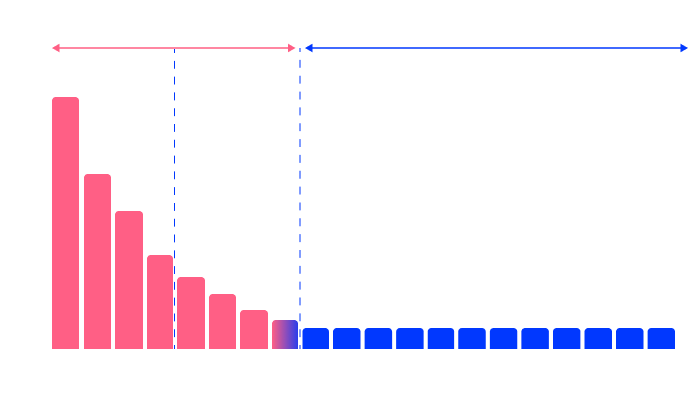
Backlinko’s analysis of 306 million keywords found that 91.8% were SEO longtail searches. The bulk of real buyer activity happens in specific, detailed queries, not broad category terms.
Specific searches about pricing, integrations, use cases and setup carry far clearer purchase intent than “best project management software” ever will.
Most startups spend their early budget chasing the same head terms as established players: the generic, high-volume searches where a two-year-old company has almost no chance. Think of a farmers’ market where a new stall holder sets up among a dozen vendors all selling the same ripe tomatoes.
The front of the market is loud and crowded, and the regulars already have their preferred supplier. The stall holder who brings heritage varieties and specific growing notes attracts a smaller crowd, but those buyers came specifically for that and leave with a full basket.
Long-tail SEO works the same way: you answer the specific queries where established competitors have not yet placed useful content, and you become the default answer for buyers who are already close to a decision. The catch worth knowing: some of those queries are quiet because nobody searches them.
Use keyword research tools to confirm actual demand before you invest in a page.
Grow content surface area.
Content surface area means how many of the ways customers search you have a useful answer for. Effective content marketing for startups gives each real buyer question its own page before expanding into adjacent questions that support the same buying decision.
Thin pages built to hit a publishing target tend to overlap, cannibalise intent, or leave the reader without a clear next step.
Use agentic coverage, not content bloat.
Over 90% of search and AI demand is in the long tail. A SEO diy guide can explain the fundamentals, but applying long-tail coverage at scale across commercially important pages requires something more systematic.
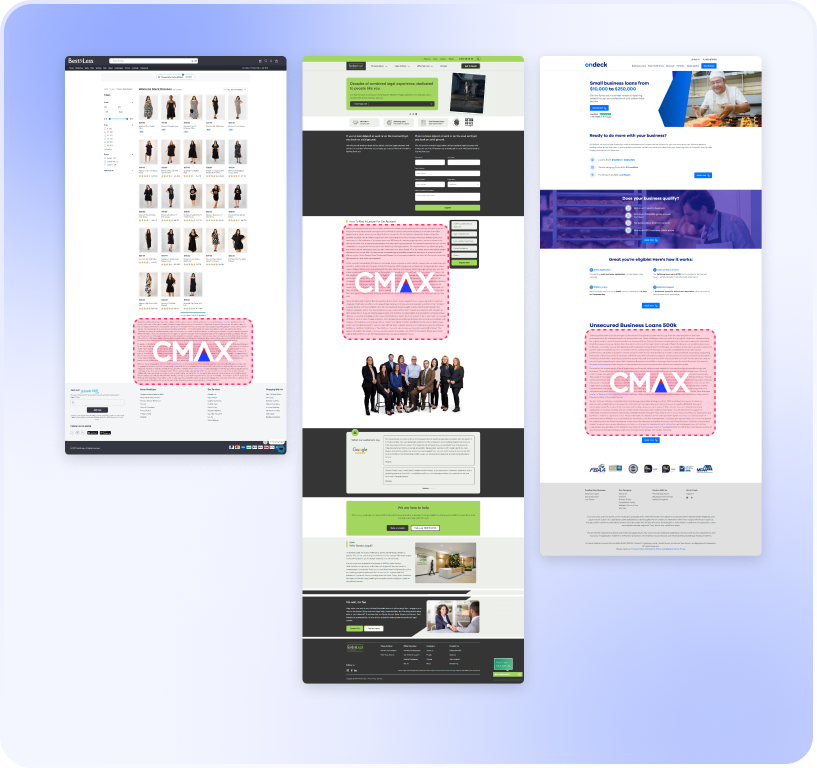
CMAX targets that majority of search demand in the long tail through its Agentic SEO Platform, applying long tail SEO across the pages that carry real buying intent. CMAX is trained on human-reviewed, client-approved content, so the coverage reflects the brand accurately rather than producing generic filler.
Measure traction by visibility, lead quality, and freshness, then scale what works.
Track visibility and lead quality.
Search Console is Google’s free tool showing which searches your site appears for. Its Performance report shows clicks and impressions over a default three-month window.
An AI SEO strategy still needs those numbers alongside qualified conversions to show whether visibility is doing commercial work. A rise in clicks that does not improve lead quality usually means the content is pulling the wrong searchers.
Keep content fresh and connected.
Pages updated to reflect current products, objections, pricing language, and terminology hold their positions better. SEO automation uses current performance data to keep pages in step with new searches instead of letting them read like last year’s market.
Dynamic Internal Linking connects related pages as a topic set grows, giving Google clearer signals about which pages belong together and which carries the main commercial intent. Broader startup marketing services may cover multiple channels; CMAX focuses this work specifically on search and AI visibility.
Scale what shows early traction.
SEO timelines depend on the site, its competition, and how the work is done. Treat any fixed promise with caution.
Most SEO programmes run by conventional agencies, using outdated methods, tell clients to expect results in six months. CMAX’s methods allow clients to start seeing clicks in 6 to 8 weeks.
Frequently Asked Questions (FAQ)
When should a startup start investing in SEO?
As soon as you have a clear offer, a live website, and one action worth driving organic visitors toward, startup SEO has a target to work against. Starting early lets you build internal links, publish core pages, and collect real search data before paid acquisition costs climb.
A local SEO strategy follows the same logic once you add a defined service area to the mix.
Should we do SEO or paid ads?
Paid ads and SEO solve different timing problems. Paid tests messaging and landing-page conversion quickly.
SEO builds non-paid visibility for the searches buyers keep running month after month. The better question is which one captures demand first and which one builds durable visibility over time.
Should a startup hire an SEO agency or do it in-house?
In-house works when the team already has technical, content, and analytics capacity, plus consistent time to update pages as the market shifts. A startup marketing plan should assign each of those responsibilities according to what the team can actually sustain.
When execution speed, content coverage, or keeping a growing site fresh and internally connected become the bottleneck, an agency or platform partner handling longtail SEO is often the faster path.
SEO for Startups Starts With Qualified Demand
SEO for startups works better when it starts with one commercial outcome, then expands into the specific searches that influence that action. Growth usually stalls not because a company picked the wrong headline term, but because it lacks coverage across the buyer searches that actually drive decisions.
CMAX supports an LLM SEO strategy by building useful long-tail coverage around the specific questions that move buyers closer to committing.
CMAX is the Agentic SEO Platform built to expand content surface area through semantic SEO across search and AI. It helps startup marketing teams publish and continuously update useful content for the long tail, so visibility grows around the real questions buyers ask and the commercial actions that matter.
Full Body SEO connects that long-tail coverage to core money pages through Dynamic Internal Linking, giving every layer of the site a commercial role.
A startup marketing agency or startup marketing consultant can help with strategy; a startup marketing package or startup marketing services arrangement with CMAX goes further by executing and maintaining that coverage at scale. SEO startup companies that start with one measurable goal and build outward into the long tail tend to see traction before those chasing the crowded head terms.
The straightforward way to find out where your gaps are is to look at the data rather than guess at it.
If you’re curious as to how you’re performing on AI, book in a Missing Customer Map review with our Growth Team.
Author
Jeremy Tang
Founder and CEO of CMAX
Jeremy Tang is the Founder and CEO of CMAX. With over 2 decades of experience in business consulting and digital marketing, he has successfully driven seven startup businesses, six of which achieved $1 million in revenue from zero in less than 16 months, 5 of which grew to multi-million dollar a year ventures without any external funding. Jeremy's expertise lies in streamlining business processes through technology and leveraging digital (in particular SEO) for business growth. He resides in Australia, travels extensively, and draws inspiration from his global experiences.