In regulated marketing such as SEO for lawyers, SEO automation can handle repeatable work like monitoring search positions, refreshing pages and adding internal links.
Programmatic SEO means publishing many pages from one approved pattern. It leaves an enterprise team with a single question: where does the line sit between what software handles and what a person signs off?
Picture a restaurant kitchen. Machines chop the onions the same way every time, and the head chef tastes each plate before it leaves the pass.
Nobody wants the chef chopping, and nobody wants an untasted plate going out. In this context, SEO automation means software does the prep at volume and a person approves each plate, meaning each claim, before it goes out.
That line matters more as teams scale, because the tasks that are safe to hand off differ from the ones that carry legal or brand risk. Many AI products speed up drafting or analysis, but regulated claims still need review against approved brand assets and compliance rules.
A retailer or regulated business can’t let claims or tone run on autopilot. Autopilot suits aircraft, and aircraft still carry pilots.
Reporting, link structure and content refreshes can get faster in the meantime.
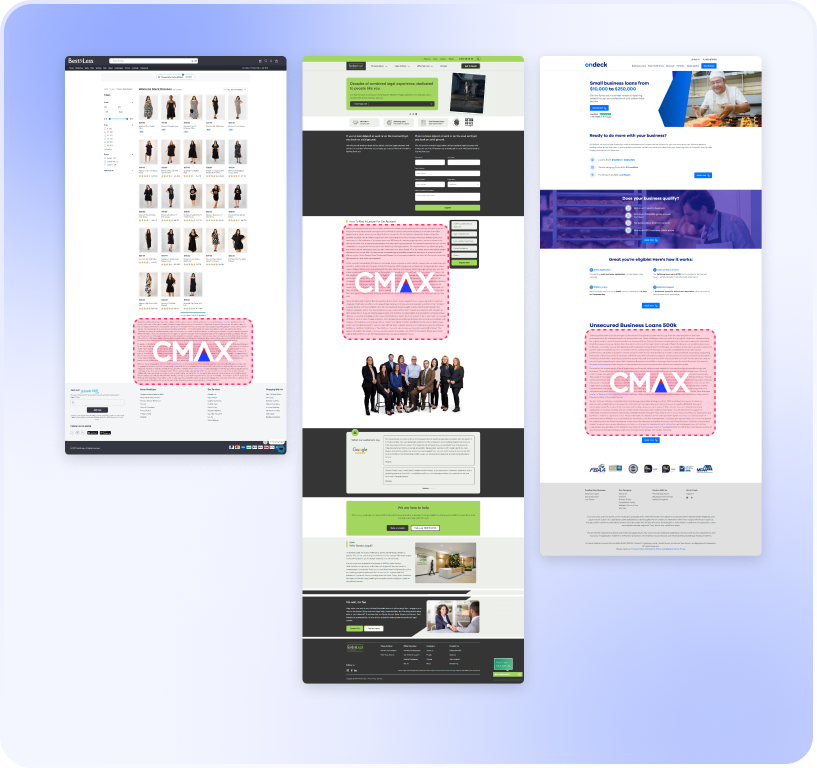
CMAX is built around this split. Our agents scale content deployment and internal linking, and the approved pattern your team sets stays the standard they work from.
CMAX is trained on human-reviewed, client-approved content.
SEO automation handles repeatable work while humans keep control
Tasks automation can handle
SEO automation earns its place where the rules are clear and the volume is high. That covers monitoring Search Console query growth, flagging pages that need a refresh, adding internal links between related pages, standardising reports and moving drafts through approval workflows.
People keep control of claims and priorities. The term SEO automation AI describes the same work when the software uses AI to do it.
Search Console is Google’s free tool showing which searches your site appears for, including impressions, clicks and position. Inside a well-run managed SEO service, it gives teams a baseline for which pages are gaining demand, losing freshness or missing obvious related queries.
What still needs human review
Humans own the decisions automation can’t safely make: whether a claim is legally acceptable, whether a comparison is fair, whether a product page matches the brand’s tone, and whether a topic is worth covering commercially. We connect automated SEO reporting to sales, and people decide what happens to each page.
For regulated or high-trust categories, the right model is faster production with review gates for facts, claims, compliance language and strategic priorities such as which pages to consolidate or expand.
CMAX scales content deployment and internal linking
Agentic, with people in charge
CMAX is an Agentic SEO Platform. Its agents deploy and continuously update content for the thousands of ways customers search for what you sell, across search and AI.
They apply SEO automation to content deployment, performance-led updates and Dynamic Internal Linking across new and existing pages on any CMS. Teams with a small headcount, such as those in SEO for startups, can hand that repeat work to agents too.
When you compare the best SEO automation tools, or any 2026 shortlist of AI platforms, check CMS deployment, refresh cycles, internal linking and approval controls. Claims of hands-off publishing tell you very little.
Enterprise teams need measurable coverage
Why old timelines persist
Most SEO programmes run by conventional agencies, using outdated methods, tell clients to expect results in six months. CMAX’s methods allow clients to start seeing clicks in 6 to 8 weeks.
Timelines still depend on the site, its competition and how the work is done.
A programmatic SEO agency, like any of the AI automation companies on your shortlist, should connect scaled publishing to query growth, page-level clicks and assisted revenue. The real question is whether the operating model can publish, refresh, link and measure enough useful content to match how customers search.
Some people write the idea as SEO longtail, with the words reversed.
Why long-tail coverage matters
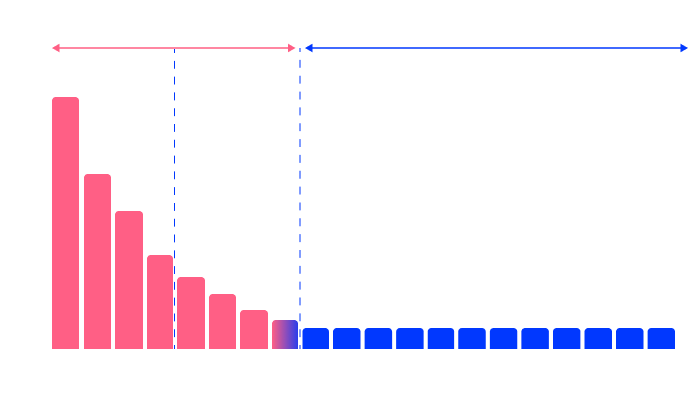
Over 90% of search and AI demand is in the long tail. A retailer is rarely missing one big keyword.
It is missing hundreds of specific answers around products, use cases, locations and buying moments. Imagine a market stall with ten jars of jam on the table and a street of shoppers, each asking for something different: a gift jar, a sugar-free jar, a flavour for a cheese board.
The ten jars serve the shoppers who want a popular jar, and the rest walk to the next stall. In this context, long tail coverage means a page for each specific ask, so the shopper who wants the odd jar finds it on your table.
Unlike hands-off publishing, SEO automation can expand long-tail coverage while approved content patterns govern claims and tone.
How to measure progress
SEO ranking tools track positions. Measure SEO automation by coverage and commercial movement: Search Console query growth, page-level clicks, indexed pages, refresh activity, internal links added, assisted revenue, and leads influenced by organic landing pages.
Search Console shows whether scaled publishing is opening new demand or just adding content inventory.
Frequently Asked Questions (FAQ)
How should a team pilot SEO automation before scaling it?
Run the pilot in one product line, category or service area. There, SEO automation means repeatable deployment, linking and measurement.
Before launch, lock in the approved content pattern, sensitive claims, required disclaimers, internal linking rules and the metrics that decide whether the pilot expands.
During the pilot, you can assess long tail SEO through changes in query breadth, indexed coverage, page-level clicks and assisted revenue, without creating cleanup work for legal or technical teams.
Can SEO automation support multilingual sites?
It can, once localisation rules and a clear URL strategy are set before content scales. Reviews of the best AI automation platforms assess this kind of setup.
Google expects separate URLs for each language or regional variant and uses hreflang annotations to identify them. The operational issue is accuracy: each localised page must map to the correct equivalent, and a translated page sitting outside the site structure fails that test.
How can SEO automation catch duplicate pages across a large site?
At the scale involved in longtail SEO, automation can compare titles, headings, body copy, canonicals, metadata, URL patterns and template structures across thousands of pages, then flag exceptions to an editor or technical SEO owner.
Google recommends specifying a canonical URL for duplicate or near-duplicate pages, and allows redirects, rel=”canonical” and sitemap inclusion to be combined as signals. Duplicate detection only creates value when the workflow also fixes the preferred version.
SEO Automation Starts With Human Review Gates
SEO automation works best when it takes repetitive work off the team and leaves decisions on claims and brand with people. That is the model we built CMAX around: scaling content deployment and internal linking while the content stays fresh.
You are usually missing coverage across the many specific ways customers search, and that surface area has to stay fresh. An effective SEO automation platform expands content surface area while approved claims and refresh rules stay under human control.
Automation and semantic SEO are useful when they help you publish and connect more of the content that matters, while you control what the business is willing to say. We keep the focus on measurable movement: query coverage and assisted revenue.
A review maps the searches your customers make that have no page of yours behind them. It is the plain way to find out where your gaps are.
If you’re curious as to how you’re performing on AI, book in a Missing Customer Map review with our Growth Team.
Author
Jeremy Tang
Founder and CEO of CMAX
Jeremy Tang is the Founder and CEO of CMAX. With over 2 decades of experience in business consulting and digital marketing, he has successfully driven seven startup businesses, six of which achieved $1 million in revenue from zero in less than 16 months, 5 of which grew to multi-million dollar a year ventures without any external funding. Jeremy's expertise lies in streamlining business processes through technology and leveraging digital (in particular SEO) for business growth. He resides in Australia, travels extensively, and draws inspiration from his global experiences.