In specialised fields such as SEO for lawyers, longtail SEO means showing up for the detailed searches customers actually type, and not only the broad category term everyone targets. Someone typing “cast iron casserole dish for induction cooktop” is closer to checking out than someone typing “cookware”.
For enterprise retailers, longtail SEO links a detailed need with the page built to answer it.
For an enterprise site with hundreds of category, product and location pages, content marketing and SEO have to work together to cover the specific phrasings behind most demand. AI search makes this harder to ignore.
AI engines retrieve from Google, and they split one question into several smaller searches. They favour brands with useful answers across many of those searches.
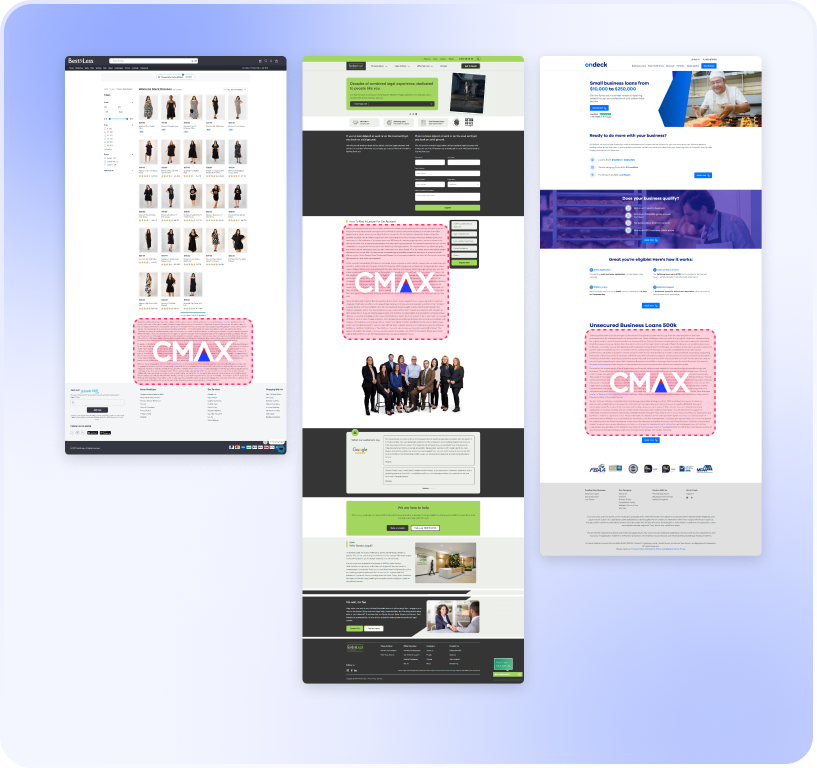
We inject longtail content onto pages already in your CMS and link them so Google can find and understand the connections. CMAX delivers organic search engine optimisation services through content injection and internal linking on pages already running in the client’s CMS.
Longtail SEO Reaches the Specific Searches Buyers Type
Specific Queries Show Stronger Intent
“Cookware” could come from anyone. “Cast iron casserole dish for induction cooktop” comes from someone who knows what they want.
The page that answers it is talking to a buyer close to a decision. Nobody has ever bought a casserole dish by typing “dish”.
Coverage Matters More Than a Few Terms
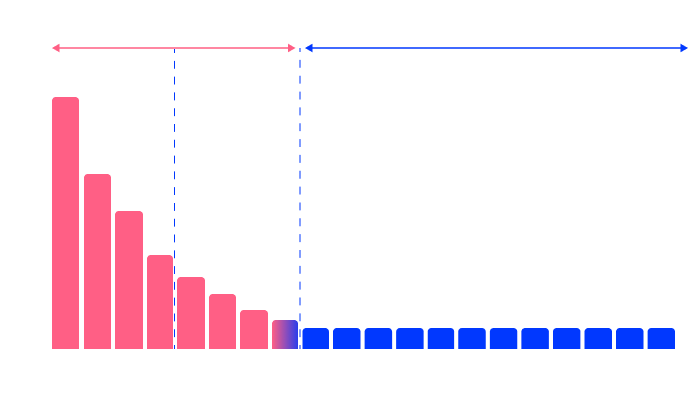
Over 90% of search and AI demand is in the long tail. That makes long tail in SEO a coverage problem, and a ranking report for ten keywords doesn’t measure it.
A managed SEO service built around coverage tracks how many of those searches you answer.
When an AI tool answers a question, it runs several smaller Google searches and builds its response from what it finds. Brands with useful answers across many specific phrasings, comparisons and use cases get retrieved more often.
CMAX Expands Coverage With Injected, Refreshed and Connected Pages
SEO for startups may prioritise fast market validation. Enterprise programmes need similar flexibility, plus more complex brand, product and compliance approvals.
A scalable AI SEO strategy needs approved source material, refreshed content and connected pages across those workflows.
Content Injection Expands Search Coverage
CMAX targets that same large share of search demand in the long tail. We do it by injecting content onto new and existing pages for the thousands of ways customers search.
On an enterprise site, that means approved content goes into existing category, product, service and location pages, with no CMS migration. A local SEO strategy works the same way: each location page answers the phrasings people use in that area.
Fresh, Connected Pages Help Discovery
Dynamic Internal Linking helps Google move through a site and read which pages relate to each other. Together with Full Body SEO and refresh cycles informed by performance data, it makes the on page SEO process continuous.
Brand-Safe Scale Matters in Regulated Sectors
CMAX is trained on human-reviewed, client-approved content. That matters when product claims, legal language, medical accuracy or financial wording can’t be improvised.
Content marketing for SEO in these sectors stalls when teams must review thousands of isolated drafts. Approved source material lets us scale longtail SEO across regulated content without that queue.
The Right Longtail SEO Strategy Turns Visibility Into Commercial Impact
Speed Depends on Method and Setup
Most SEO programmes run by conventional agencies, using outdated methods, tell clients to expect results in six months. CMAX’s methods allow clients to start seeing clicks in 6 to 8 weeks.
Timelines vary by site, competition and how the work is done. Ask any provider how they find gaps, get content approved, publish at scale and update pages once performance data arrives.
Measure Surface Area, Clicks and Revenue
Search Console is Google’s free tool. It shows which searches your site appears for, with impressions, clicks and average position.
When you read SEO longtail reports, look at content surface area first. That is how many customer searches you have a useful answer for.
Then connect growth in qualified clicks to assisted revenue, leads or product views. A useful SEO strategy checklist puts those three measures side by side.
Enterprise Teams Can Scale on Any CMS
An enterprise B2B SEO strategy has to handle multiple templates, brands, markets and approval workflows. It shouldn’t need a site rebuild or duplicated content.
CMAX works across any CMS and can be added to existing or new pages. For long tail SEO programmes, the operating question is whether you can expand search and AI visibility without rebuilding the site, duplicating content or adding another manual queue for your marketing team.
Frequently Asked Questions (FAQ)
How do I find long-tail keywords for my website?
Start with Search Console. It shows the searches your site already appears for, including queries with impressions but few clicks.
Group those queries by search intent types such as comparison, problem, audience and location, and by product feature. Then decide whether each gap needs better copy on an existing page, stronger internal links, a refreshed section or a new page.
Does long-tail SEO work for a small website?
It does. A small site builds traction by choosing narrow pages it can answer well.
Keyword research tools can expose precise product use cases, and clear internal links connect them. A SEO diy guide for a small team would start there, before it adopts SEO automation.
Are longer keyword phrases always better for SEO?
They aren’t. Length is a poor goal.
On page SEO analysis decides whether a detailed phrase needs a new page or belongs with related variations on an existing page. A longer phrase earns a page only if it reflects a real customer need, a different buying question or a measurable opportunity in Search Console.
Cover related variations on the strongest page when the intent is the same.
Longtail SEO, Scaled Through Existing Pages
Keyword research for small business starts with specific customer needs. The same principle explains why longtail SEO works when coverage grows beyond a handful of obvious terms.
CMAX is the Agentic SEO Platform built around that reality. It adds approved content to new and existing pages, then keeps it fresh as demand shifts.
Search performance grows from content surface area, connected pages and qualified clicks tied back to sales. For retailers investing in content marketing Australia wide, that tie to sales is the part worth checking first.
Across any CMS, we apply principles associated with semantic SEO by growing that surface area through connected pages, ongoing refreshes and reporting linked to sales.
The review shows which specific searches your pages already answer and which ones they miss. It is the quickest way to see your gaps before you decide anything.
If you’re curious as to how you’re performing on AI, book in a Missing Customer Map review with our Growth Team.
Author
Jeremy Tang
Founder and CEO of CMAX
Jeremy Tang is the Founder and CEO of CMAX. With over 2 decades of experience in business consulting and digital marketing, he has successfully driven seven startup businesses, six of which achieved $1 million in revenue from zero in less than 16 months, 5 of which grew to multi-million dollar a year ventures without any external funding. Jeremy's expertise lies in streamlining business processes through technology and leveraging digital (in particular SEO) for business growth. He resides in Australia, travels extensively, and draws inspiration from his global experiences.