Google’s AI search engine features, including AI Overviews and AI Mode, are features inside Google Search. They share its index and its rules, so the usual rules about indexing and visibility still apply. There is no AI search engine inside Google with a separate index to optimise for.
Treating AI visibility as its own channel solves the wrong problem. If you’re asking “What is AI search?” start with query fan-out: one question triggers several smaller Google searches, and Google builds one answer from the results. Google has confirmed its tools can do this behind the scenes. Say a customer asks a travel agent for a week in Bali.
The agent checks flights, hotels, airport transfers and insurance, then books the supplier who covers the most parts. If you sell only flights, the agent books someone else. In this context, query fan-out means Google acts like the travel agent: it checks the smaller questions behind one search, so you need a page that answers each part, not only the flights.
Search Console already holds data on this. One report shows impressions from AI Overviews and AI Mode by page, country and device. That makes Google AI overviews SEO analysis possible with data you already own. CMAX works from that same data to show where your coverage is thin and where the long tail of customer questions goes unanswered.
Understand how Google AI changes search visibility
AI search is still Google Search
Google treats AI Overviews and AI Mode as features inside Google Search. They have no separate index and no separate source of visitors. The link between generative AI and SEO starts with Google’s index: a page must be indexed and eligible to show a snippet before it can appear as a supporting link in either feature. People ask what is better than Google, and some try an uncensored AI search engine. Neither changes what Google needs from your pages.
Query fan-out expands discovery
Google says AI Overviews and AI Mode may use query fan-out: the AI runs several smaller Google searches and builds its answer from what it finds. Perplexity search can also retrieve multiple sources before it synthesises an answer, so specific supporting coverage matters there too.
A search like “best modular sofa for small apartment with pets” can fan out into stain-resistant fabric, apartment delivery, washable covers, warranty, price range and reviews. Visibility in AI Overview search depends on how many of those smaller searches your site answers. You still can’t rank for something you don’t talk about.
Explain what still drives visibility in AI search
Page position still shapes retrieval
Google has confirmed SEO best practices stay relevant for AI Overviews and AI Mode, with no extra requirements to appear in either. Effective generative SEO still depends on pages that rank, answer the query clearly and sit inside a credible topic cluster. GEO and AEO are SEO applied to a results page where Google may summarise before the click.
Fresh, connected coverage matters
Google’s models can identify more supporting pages while generating a response. Connected coverage across a topic increases how many of your pages Google considers in Google AI Search. One category page can’t answer thousands of buying questions. You need supporting pages for use cases, comparisons, pricing, risks and objections. Generative AI SEO platforms need to keep those pages current as prices, policies and stock change.
Show how brands can measure and improve coverage
Use Search Console to spot shifts
Search Console is Google’s free report on which searches your site appears for, including impressions, clicks and average position. For AI search Google visibility, it shows impressions from AI Overviews and AI Mode by page, country and device. Paid media is where many AI in advertising examples sit, such as automated bidding. This data covers unpaid visibility.
Ask which pages appear in AI search, which queries gain impressions without clicks, and whether movement sits in one market or device. A practical answer to how to improve your SEO ranking is to compare Search Console trends across query groups, markets, devices and page types. Reliable AI search analytics work at that level, because property-level chart totals can differ from page-level tables.
Improve long-tail coverage with CMAX
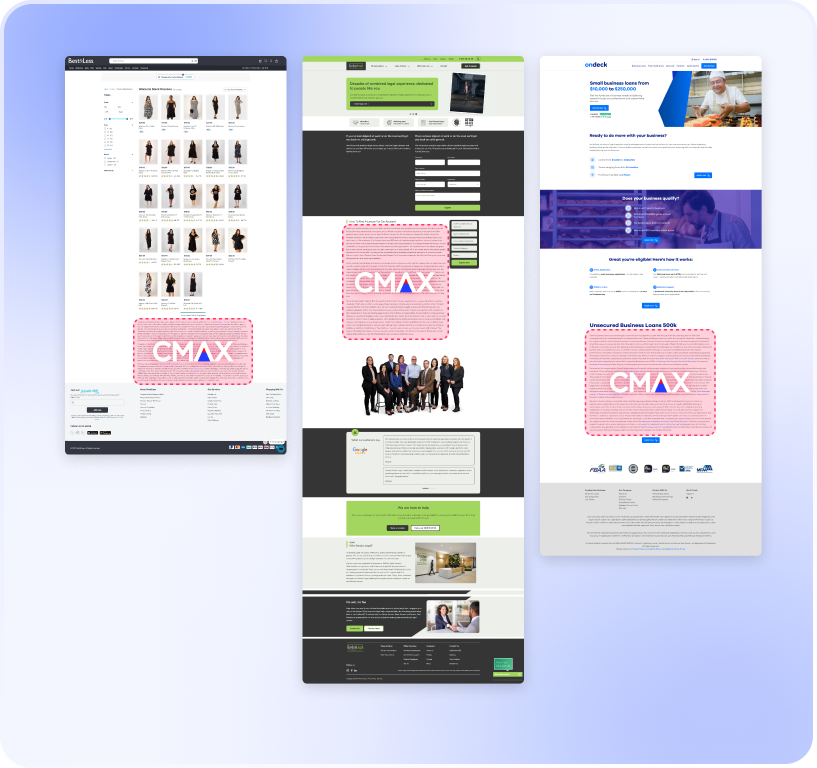
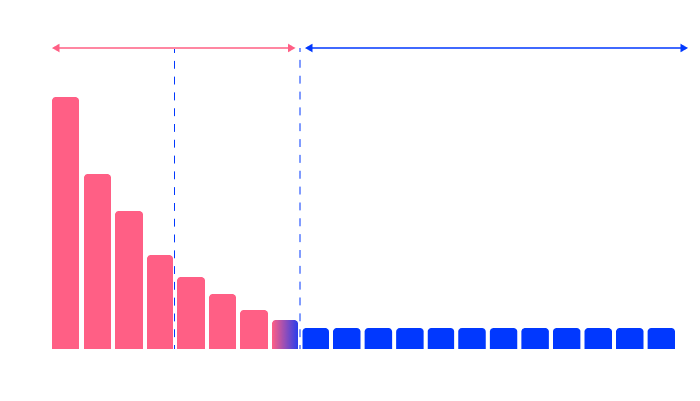
CMAX expands AI search Google coverage across the specific, detailed searches that make up the long tail. Over 90% of search and AI demand is in the long tail. CMAX is the Agentic SEO Platform that builds and maintains pages for the thousands of ways customers use AI search. Dynamic Internal Linking connects related pages so Google recognises the topic. Full Body SEO strengthens the content itself, beyond a title tag or keywords.
A generative AI SEO agency needs approved brand assets and performance data to keep automated content accurate, controlled and current. CMAX is trained on human-reviewed, client-approved content. Most SEO programmes run by conventional agencies, using outdated methods, tell clients to expect results in six months. CMAX’s methods allow clients to start seeing clicks in 6 to 8 weeks. Timelines still depend on the site, its competition and how the work is done. Agentic SEO keeps scaling content and freshness. Template pages get published once and left.
Can websites opt out of Google AI Overviews?
There’s no AI-Overviews-only opt-out. AI search Google remains subject to Search controls including robots.txt, nosnippet and noindex. For AI search optimisation, those controls decide how much of a page Google can crawl, index and quote across all of Search. That covers robots.txt, nosnippet, data-nosnippet, max-snippet and noindex.
Broad blocking can reduce normal search exposure alongside AI Overviews. An AI detector Google search can’t replace index controls, because robots.txt and noindex directly govern whether Google can crawl or display a page.
Will opting out of Google AI Overviews affect my regular search results?
It can. A page’s eligibility for AI search Google depends on its index status and snippet controls, including noindex and max-snippet.
Model the effect on impressions, clicks and revenue pages before you apply either control. Assess visibility changes in Perplexity AI search separately from Search Console data.
Are Google AI Overviews always accurate?
No. Generative systems can produce incomplete, oversimplified or mistaken answers, particularly on nuanced or fast-moving topics.
Treat AI Overviews as a discovery layer and check them against the cited pages and your Search Console data. If a competitor holds visibility for a question you should own, check whether you have a current, specific, connected page that answers it better. Together, cited pages and Search Console data make AI search Google visibility measurable without treating AI Overviews as a separate channel.
AI Search Google, Driven by Coverage Breadth
AI search Google visibility comes back to one question: does your site have useful, current pages for the many specific ways people search? The Perplexity AI search engine may retrieve supporting sources in a similar way. CMAX focuses on the coverage gaps across the long tail that Google and AI systems retrieve from.
Our Agentic SEO Platform helps brands build and keep that coverage fresh across collection, category and supporting pages, with internal linking that strengthens the topic around each page. That supports AI search marketing as it works today: page position and freshness still matter, and sites can’t appear for questions they never answer.
You don’t need to guess which customer questions your pages miss. A review shows you.
If you’re curious as to how you’re performing on AI, book in a Missing Customer Map review with our Growth Team.
Author
Jeremy Tang
Founder and CEO of CMAX
Jeremy Tang is the Founder and CEO of CMAX. With over 2 decades of experience in business consulting and digital marketing, he has successfully driven seven startup businesses, six of which achieved $1 million in revenue from zero in less than 16 months, 5 of which grew to multi-million dollar a year ventures without any external funding. Jeremy's expertise lies in streamlining business processes through technology and leveraging digital (in particular SEO) for business growth. He resides in Australia, travels extensively, and draws inspiration from his global experiences.