The Google AI Search engine is Google Search with an AI layer on top. The summary box above the normal results can answer a question without a site visit, which turns an informational query into a zero click search.
If you’re asking “What is AI search?” start with the systems beneath that box: Google’s existing crawling, indexing and ranking.
Google still finds pages (crawling), stores them (indexing) and orders them (ranking) the way it always has. The AI Overview changes how Google presents what it finds.
So ask one question about your brand: does your site have clear, current answers Google can find? That decides whether you appear.
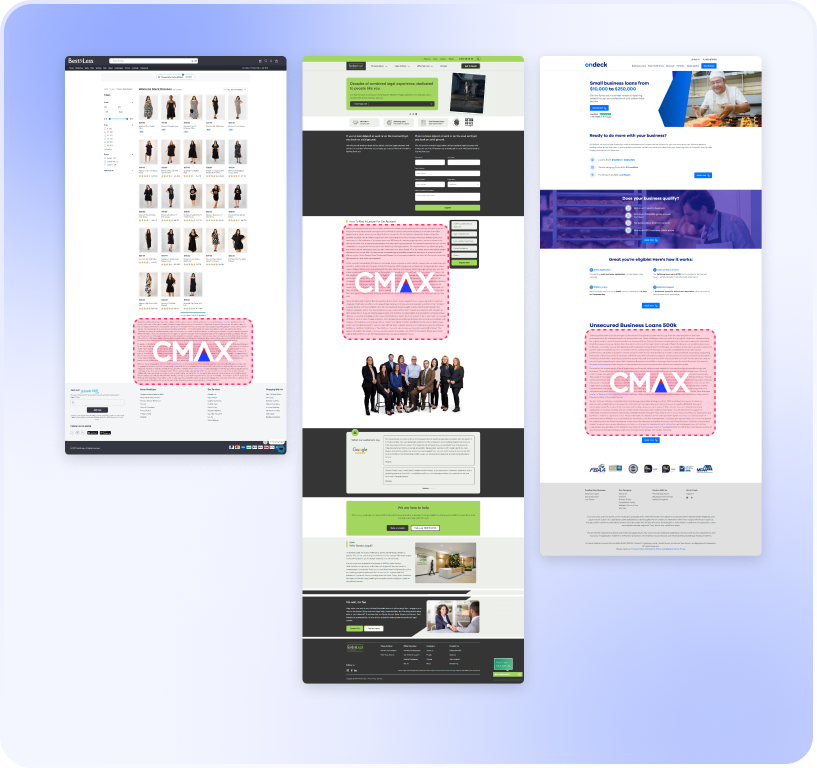
We built CMAX around that point. The platform expands the content Google has to work with, so your brand keeps surfacing in classic and AI-led results.
That’s generative search optimisation: more clear, current content for classic results, AI Overviews and AI Mode to draw on.
Google AI Search Is Still Google Search Underneath
AI Changed the Interface
AI Overviews and AI Mode sit inside Google Search. Existing ranking systems still choose the web sources they draw on.
People ask “is Google AI free.” That question is about access to the interface.
Your question is whether your site has useful, indexable content Google can find.
What Query Fan-Out Does
Query fan-out means an AI tool runs several smaller Google searches at once and builds its answer from what it finds. Picture a hotel guest asking the concierge for a good night out.
The concierge phones a restaurant, a taxi firm and a theatre box office, then stitches one recommendation from what they say. The venue that picks up and gives specifics gets recommended, and the one with a brochure saying “great atmosphere” gets skipped.
In this context, query fan-out means the AI splits one customer question into several smaller searches, and your site gets recommended only when it picks up the phone with a specific answer to each.
Generative search Google works this way. It can split one modular-sofa question into size, durability, delivery, reviews, price and cleaning.
Visibility depends on whether your site answers the specific details customers compare. One broad category page won’t do it.
Region adds another layer. Demand for AI search marketing Brisbane can involve local service areas and terminology that differ from the same questions asked about Melbourne.
Ranking Still Matters, but Coverage and Freshness Matter More
Index, Related Pages, and Recency
Google can only surface pages it has crawled and added to its index, which is its stored list of known pages. Effective Google AI Overviews SEO starts with crawlable, indexed pages that carry current details: seasonal ranges, shipping terms and prices.
Whether you handle updates in-house or through an AI search optimisation agency, a page listing last season’s range is a time capsule, and customers don’t buy from time capsules. Old shipping terms and outdated pricing give Google less reason to surface the page and customers less reason to trust it.
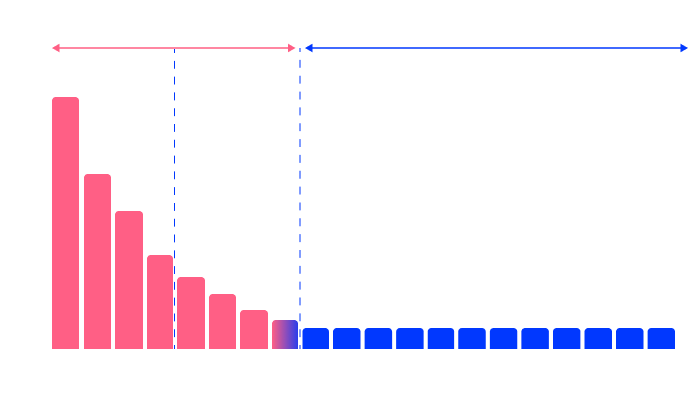
Why Long-Tail Coverage Matters
The long tail is the specific searches people actually type, like “washable linen quilt cover king sage” instead of “bedding.” Google says AI experiences are driving longer, more nuanced queries.
The more specific pages you have, the more of those queries you can answer. For detailed product questions, your coverage in the Google AI Search engine depends on indexed answers about fabric, delivery, price and cleaning.
A customer who finds a product through AI image search still lands on a page, and that page needs the same clear details.
Brands Need Content That Stays Current Across More Searches
How CMAX Adapts Content
Some AI search monitoring tools repeatedly test generated answers. AI mainly made existing coverage gaps harder to ignore.
You still can’t rank for a question your site doesn’t answer, and AI-led results now show customers who are ready to buy exactly where your answer is missing. Other answer tools, such as the perplexity AI search engine, also need pages that cover the detail, so the same content work applies to Perplexity search.
CMAX is the Agentic SEO Platform, built to expand long-tail coverage and keep content fresh, then measure performance through Search Console data. That supports generative AI search engine optimisation, so AI Overviews and AI Mode stay part of one Google Search strategy with no separate project.
CMAX is trained on human-reviewed, client-approved content, and it scales pages and updates from there.
Why Self-Updating Content Helps
Content goes stale when stock changes or competitors update their ranges. New customer questions appear and the page has no answer for them.
Agentic, self-updating content gets refreshed from real performance data. Static template output gets left as it is.
That’s the practical difference from AI search engine optimisation, which publishes at scale and stops. Visibility in the Google AI Search engine improves when CMAX refreshes content from Search Console performance data.
Frequently Asked Questions (FAQ)
Are Google AI Overviews always accurate?
No. Google warns that AI responses may include mistakes, and its own documentation says the Google AI Search engine doesn’t always get it right. AI Overviews are designed to appear when Google has high confidence in the response, and high confidence isn’t a guarantee of accuracy.
Treat them as summaries to verify, particularly for prices, availability, and medical, legal or financial information.
In regulated industries, any AI search optimisation services should keep source material current and preserve the qualifications that medical, legal or financial claims require. That’s what Google AI Overview SEO looks like in those industries.
Can you turn off Google AI Overviews?
Not completely. Google’s help documentation describes AI Overviews as a core Google Search feature that can’t be turned off, though users can select the Web filter after searching to see link-based results.
That’s the short answer to Google turn off AI Overview. Brands should assume most customers will keep seeing AI Overviews in normal Google searches.
Can Google AI Mode use your search history to personalise answers?
Yes, in some cases. Google says AI Mode personalisation is available for eligible signed-in users with history and personalised recommendations enabled.
It can reference previous searches saved in Search Services History to tailor suggestions. Personalisation can make AI search engines emphasise different details for similar questions, so brands need accurate content across the many ways customers research before buying.
Accurate coverage of those earlier questions keeps your brand in the answer when AI Mode personalises suggestions.
Google AI Search Engine, Still Built on Google Search
Google AI Search engine is loose shorthand for a real shift in how results appear within Google Search. We take that distinction seriously, because visibility still comes down to one thing: whether your site covers the specific questions customers ask with useful, current content Google can surface.
Most teams have a gap in that environment: missing coverage. As search and AI produce more detailed queries, CMAX expands and updates connected long-tail content to build search visibility across a broader share of relevant demand.
Our generative search optimisation services run on that connected content, which updates from performance data and supplies the freshness and coverage this article has described.
You can’t fix a gap you haven’t seen. The review shows you where customers ask and your site stays quiet.
If you’re curious as to how you’re performing on AI, book in a Missing Customer Map review with our Growth Team.
Author
Jeremy Tang
Founder and CEO of CMAX
Jeremy Tang is the Founder and CEO of CMAX. With over 2 decades of experience in business consulting and digital marketing, he has successfully driven seven startup businesses, six of which achieved $1 million in revenue from zero in less than 16 months, 5 of which grew to multi-million dollar a year ventures without any external funding. Jeremy's expertise lies in streamlining business processes through technology and leveraging digital (in particular SEO) for business growth. He resides in Australia, travels extensively, and draws inspiration from his global experiences.